Waymo's Expansion Playbook: From Phoenix Pilot to Multi-City Network
Waymo One, Alphabet's commercial robotaxi service, has graduated from a single-city science experiment to a multi-market transportation network. As of early 2026, the service operates fully driverless rides across portions of Phoenix, San Francisco, Los Angeles, and Austin, with announced expansion targeting additional metros throughout the year. For EV shoppers and urban commuters tracking the Waymo new cities rollout, the practical questions are concrete: Where can you actually hail one today? What does it cost? And how does the safety record stack up against human drivers and rideshare?
This guide maps Waymo's current operational footprint, breaks down the Jaguar I-PACE-based fleet's technology stack, compares per-mile pricing against Uber and Lyft, and examines the National Highway Traffic Safety Administration (NHTSA) and state-level data behind the safety claims.
SAE Automation Level: Level 4 (High Automation, Geofenced)
Waymo One operates at SAE Level 4 — the vehicle performs all driving tasks without any human intervention within its defined operational design domain (ODD). There is no steering wheel, no driver seat occupant, and no expectation that a passenger will take over. This is fundamentally different from SAE Level 2 systems like Tesla Autopilot, Ford BlueCruise, or GM Super Cruise, which require continuous driver supervision. Level 5 — full autonomy in all conditions everywhere — does not exist in any commercial deployment today.
Where Can You Use Waymo Right Now? Live Service Areas
Waymo's service areas are geofenced — the vehicles operate only within mapped, approved zones that expand incrementally. Here is the current operational status by market as of Q1 2026:
| City | Status | Service Area Coverage | Operating Hours |
|---|---|---|---|
| Phoenix, AZ | Fully operational | ~225 sq mi (Chandler, Gilbert, Mesa, Tempe, Scottsdale, parts of Phoenix proper) | 24/7 |
| San Francisco, CA | Fully operational | Most of SF proper, including downtown, Sunset, Richmond; limited highway segments | 24/7 |
| Los Angeles, CA | Fully operational | Santa Monica, Hollywood, Downtown LA, Beverly Hills, West Hollywood (~80+ sq mi) | 24/7 |
| Austin, TX | Operational (launched 2025) | Downtown, South Austin, select suburban corridors | Limited hours, expanding |
| Additional markets | Announced / testing | Waymo has signaled further expansion; check waymo.com/waymo-one for live updates | N/A |
Important caveat: "Announced" or "testing" does not mean you can hail a ride. Waymo typically begins with a trusted tester program (invite-only, safety rider aboard) before graduating to paid, fully driverless service. If the Waymo One app doesn't show a pickup pin at your location, the service is not yet live there — regardless of press coverage.
How to Ride and What It Costs vs. Uber and Lyft
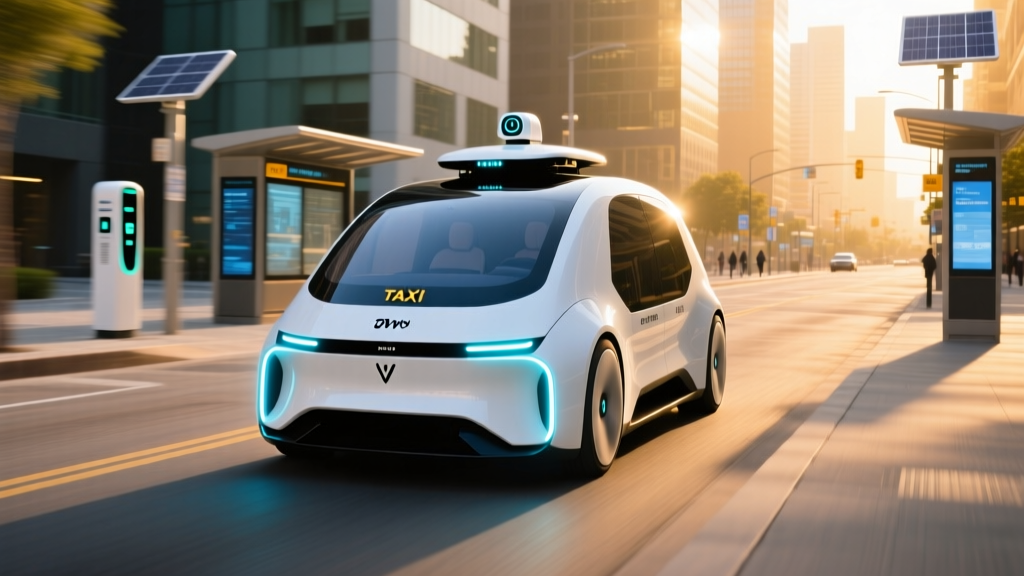
Using Waymo One mirrors a standard rideshare workflow: download the app, set pickup and dropoff within the service zone, confirm the ride, and a Jaguar I-PACE EV pulls up with no one in the driver's seat. The app displays the vehicle's license plate, live location, and an unlock code or automatic door release upon arrival.
Pricing Breakdown: Waymo vs. Rideshare
Waymo uses dynamic pricing similar to Uber and Lyft, with base fares, per-mile rates, and per-minute rates that fluctuate with demand. Based on aggregated rider reports and published fare comparisons:
| Route Example | Waymo One | UberX | Lyft Standard |
|---|---|---|---|
| SF: Mission to Embarcadero (~4 mi) | $14–$19 | $12–$22 | $11–$20 |
| Phoenix: Chandler to Sky Harbor (~18 mi) | $32–$45 | $28–$48 | $26–$44 |
| LA: Santa Monica to DTLA (~16 mi) | $30–$42 | $25–$50 | $24–$46 |
Key takeaway: Waymo pricing is broadly competitive with standard UberX and Lyft — not cheaper, but not significantly more expensive. The value proposition is consistency (no driver rating pressure, no conversation obligation, climate-controlled EV cabin) rather than discount pricing. Surge pricing affects all three platforms; Waymo's surges tend to be less volatile than rideshare peaks but can still push fares 1.5–2x during high-demand windows.
Waymo also offers Waymo One memberships and occasional promo credits for new riders in newly launched cities, which can reduce effective per-mile cost below rideshare for early adopters.
The Technology Stack: Lidar, Cameras, and the 6th-Gen Driver
Waymo's current fleet consists of all-electric Jaguar I-PACE vehicles equipped with the company's 6th-generation "Waymo Driver" sensor suite. Unlike Tesla's camera-only approach, Waymo relies on sensor redundancy across three modalities:
Waymo 6th-Gen Sensor Architecture
- Lidar: Multiple roof-mounted and body-integrated lidar units providing 360° 3D point-cloud mapping out to 500+ meters. Lidar is the primary depth-perception sensor, unaffected by lighting conditions.
- Cameras: High-resolution visible-light cameras covering 360° for lane marking detection, traffic signal recognition, pedestrian intent prediction, and construction-zone interpretation.
- Radar: Imaging radar for velocity detection of moving objects, performance in rain and fog where lidar and cameras degrade.
- Audio sensors: External microphones to detect emergency vehicle sirens and directional audio cues.
- HD Maps: Centimeter-precision pre-mapped routes that the vehicle cross-references with live sensor data. This is why Waymo requires geofencing — the maps must be built and validated before service launches in any new zone.
The compute platform processes sensor fusion in real time, running Waymo's proprietary planning and prediction models. The Jaguar I-PACE's 90 kWh battery pack provides sufficient energy for all-day autonomous operation, with vehicles returning to depots for charging (typically overnight at dedicated Level 2 and DC fast-charging hubs).
This multi-sensor approach stands in direct contrast to Tesla's vision-only FSD (Supervised) architecture. Waymo's position — backed by its safety data — is that lidar redundancy is essential for Level 4 operation where no human backup exists. Tesla's counter-argument is scalability: cameras are cheaper and theoretically generalizable to any road. As of 2026, Waymo's approach has produced commercially deployed driverless service; Tesla's remains a supervised Level 2 system.
Safety Record: What the Data Actually Shows
Waymo has accumulated over 40 million fully autonomous miles across its operational cities, with millions more in simulation. The company publishes periodic safety reports benchmarking its performance against human driver baselines.
Waymo Safety Data (as reported through 2025)
- Autonomous miles driven: 40+ million (fully driverless, no safety operator)
- Injury-causing crash rate: ~85% lower than human benchmark in comparable urban environments (per Waymo's peer-reviewed methodology comparing police-reportable injury crashes per million miles)
- Police-contacted crash rate: ~57% lower than human benchmark
- Contact events: The vast majority of incidents where Waymo vehicles contacted another object involved low-speed, low-severity events (e.g., being rear-ended at stoplights, sideswipe in congestion) — consistent with urban crash profiles
- NHTSA Standing General Order: Waymo, like all ADS operators, reports qualifying crashes to NHTSA under the agency's standing order. Individual incident reports are publicly searchable at nhtsa.gov
Context matters: Waymo operates in dense urban environments at moderate speeds (typically under 45 mph), which inherently limits crash severity compared to highway driving. The comparison baselines use human crash rates in similar urban settings, not national averages that include rural highways. Source: Waymo Safety Reports.
No robotaxi fleet is incident-free. Waymo vehicles have been involved in collisions — primarily as the struck party in low-speed urban scenarios — and have occasionally exhibited overly conservative behavior (stopping unexpectedly, blocking lanes during construction-zone confusion). The NHTSA Standing General Order data provides a public record of reported incidents, though interpreting raw counts without mileage context can be misleading.
Regulatory Landscape: Who Approves Robotaxi Operations?
Robotaxi deployment in the United States is governed by a patchwork of state and local authorities — there is no single federal "robotaxi license." Here's how the approval chain works:
- State Public Utilities Commissions (PUCs) / DMVs: In California, the California Public Utilities Commission (CPUC) issues permits for driverless passenger service. The California DMV separately issues testing and deployment permits. Waymo holds both.
- State legislation: Arizona, Texas, and other states have passed legislation explicitly permitting driverless commercial operations, often with fewer procedural hurdles than California.
- City and county coordination: Local governments negotiate operating agreements covering curb access, parking, emergency response protocols, and data sharing. San Francisco's Board of Supervisors held extensive public hearings before approving expansion.
- Federal (NHTSA): NHTSA retains authority over vehicle safety standards (FMVSS) and investigates safety defects. NHTSA has granted limited exemptions to companies like Waymo and Zoox for vehicles without traditional controls (steering wheels, mirrors). NHTSA does not "approve" robotaxi services but can investigate and order recalls.
For any Waymo new cities expansion, the company must secure state-level authorization, local operating agreements, and complete geofence mapping before a single paying passenger is carried. This regulatory sequencing is why expansion timelines often stretch longer than press announcements suggest.
Current Limitations: Where Waymo Cannot (Yet) Operate
Level 4 autonomy within a geofence is a remarkable engineering achievement, but the constraints are real and affect daily usability:
Known Operational Limitations
- Geofence boundaries: If your destination falls outside the mapped service zone, Waymo One will not offer the ride. You cannot request a trip to an unmapped suburb, even if it's only 2 miles beyond the boundary.
- Heavy weather degradation: Waymo vehicles may reduce availability or suspend service during heavy rain, fog, or unusual weather events. Phoenix's dry climate was chosen partly for this reason. San Francisco fog and LA rain events have caused temporary pullbacks.
- Construction zones: While Waymo handles many construction scenarios, complex or rapidly changing work zones can cause the vehicle to stop, request remote assistance, or reroute — adding time to your trip.
- No highway service (most markets): Waymo primarily operates on surface streets. Limited highway segments are approved in some markets, but long-distance intercity trips are not available.
- Accessibility constraints: The Jaguar I-PACE fleet requires passengers to enter a standard vehicle. Wheelchair-accessible vehicles are limited. Waymo has announced plans for accessible fleet options via partnerships (e.g., with Stellantis for a custom vehicle), but availability is not yet widespread.
- Pickup/dropoff precision: The vehicle stops at a safe, legal curb — not necessarily the exact front door you might prefer. In dense urban areas, this can mean a short walk from the dropoff point.
- No multi-stop trips or errands: You cannot ask the vehicle to wait while you run into a store. It's point A to point B, then the vehicle leaves.
What This Means for the Waymo New Cities Pipeline
Waymo's expansion cadence is deliberate: new cities typically move from announcement to mapping and testing (6–12 months) to trusted-tester launch (3–6 months) to full commercial availability. Markets under active consideration generally share characteristics: favorable state regulatory frameworks, dense urban cores with high rideshare demand, manageable weather profiles, and sufficient depot/charging infrastructure for fleet operations.
For EV owners and prospective buyers watching this space, the practical implication is that robotaxi availability will remain a metro-by-metro rollout for years — not a national flip-of-a-switch. If you live outside a current Waymo city, the service is likely 18–36 months away at minimum, contingent on regulatory approval and mapping completion.
Frequently Asked Questions
Is Waymo truly self-driving, or is there a remote human operator?
Waymo vehicles are fully driverless — there is no human in the vehicle, and no remote "joystick" operator driving the car in real time. Waymo does employ remote assistance staff who can provide high-level guidance (e.g., confirming a route around a construction zone), but the vehicle's onboard system executes all steering, braking, and acceleration decisions autonomously. This is the defining distinction of SAE Level 4.
How much does a Waymo ride cost compared to owning an EV?
At roughly $1.50–$2.50 per mile (varying by market and demand), Waymo is more expensive per mile than the operating cost of a personally owned EV (which averages $0.04–$0.08 per mile for electricity, plus maintenance and insurance). Waymo makes economic sense for occasional urban trips, not as a daily-commute replacement for ownership. For high-mileage commuters, personal EV ownership remains significantly cheaper.
What happens if the Waymo vehicle gets confused or encounters an emergency?
The vehicle is programmed to execute a "minimal risk condition" — typically pulling over to a safe curb position and stopping. Remote assistance can then provide routing guidance. In the event of a collision, the vehicle contacts emergency services automatically, and Waymo's response team coordinates with local first responders. Passengers can also contact support via an in-vehicle button or the app.
Can I use Waymo to get to the airport?
In Phoenix, yes — Waymo serves Phoenix Sky Harbor International Airport with a dedicated pickup/dropoff zone. In San Francisco, SFO service has been in testing/limited availability. LAX service depends on the current LA geofence coverage and airport authority agreements. Always check the app for real-time airport availability in your market.
Will Waymo come to my city in 2026?
Waymo has publicly signaled continued expansion but does not typically pre-announce specific city names and dates far in advance. The most reliable indicator is whether Waymo has begun mapping and testing operations (often visible via spotted test vehicles with the distinctive roof-mounted sensor array). Follow waymo.com and local transportation reporting for your metro area.