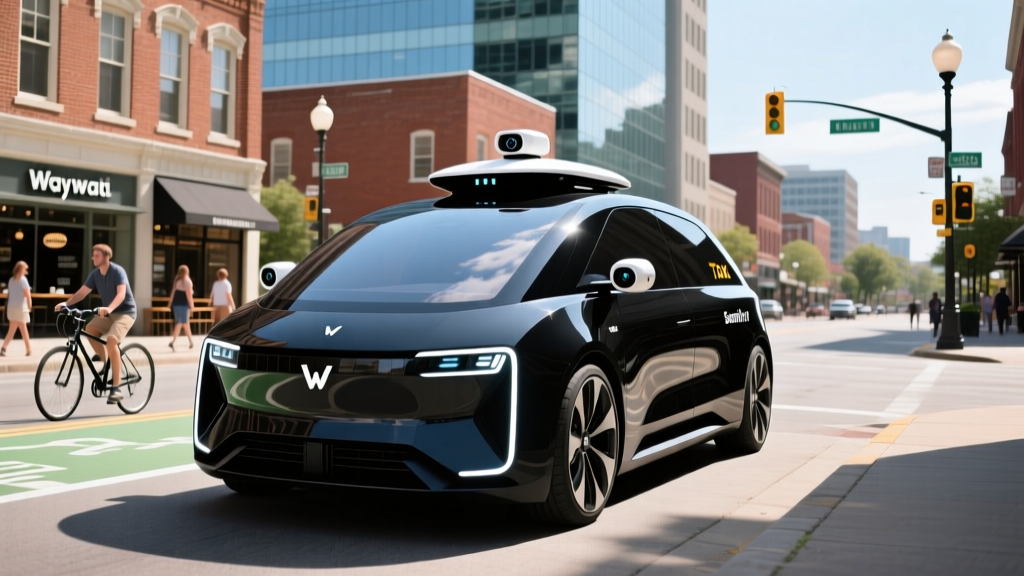
If you've watched Waymo's driverless Jaguar I-PACE SUVs navigate the streets of Phoenix, San Francisco, or Los Angeles, you might be wondering when that same experience will arrive in Nashville. The short answer: Waymo is not currently operating a commercial robotaxi service in Nashville, Tennessee, and no official launch date has been announced as of early 2026. But the longer answer involves a web of state regulation, geofencing requirements, and Waymo's methodical city-by-city expansion strategy — all of which determine whether Music City will join the robotaxi map.
This guide breaks down exactly where Waymo operates today, what it would take for Nashville to get service, how the technology and safety record stack up, and what a driverless ride actually costs compared to Uber or Lyft.
Where Can You Actually Ride a Waymo Robotaxi Right Now?
Waymo One — the company's commercial ride-hailing service — is live in a limited but growing set of metro areas. Service is geofenced, meaning the vehicles operate only within precisely mapped boundaries, not across an entire city.
| City | Status | Service Area Notes |
|---|---|---|
| Phoenix, AZ | Fully commercial | Largest geofenced area (~600+ sq mi); includes Chandler, Tempe, Mesa, Scottsdale, Sky Harbor Airport |
| San Francisco, CA | Fully commercial | City-wide geofence expanded through 2025; includes SFO airport routes |
| Los Angeles, CA | Fully commercial | Santa Monica, Hollywood, Downtown LA, Beverly Hills, LAX routes |
| Austin, TX | Commercial launch (2025–2026) | Initial geofenced zones in central and south Austin |
| Nashville, TN | Not announced | No public testing or commercial service confirmed |
Waymo has historically expanded one city at a time, spending 12–24 months mapping roads, conducting paid-employee pilot programs, and securing state and local regulatory approval before opening service to the public. Nashville does not appear on Waymo's current public roadmap, though the company has expressed interest in Sun Belt and Southeast markets longer term.
Is Waymo Truly Self-Driving? Understanding SAE Level 4
This is the single most important distinction in the autonomous vehicle conversation. Consumer vehicles like Tesla's FSD (Supervised), GM's Super Cruise, and Ford's BlueCruise are SAE Level 2 driver-assist systems — the human driver must remain engaged and is legally responsible for the vehicle at all times.
Waymo One is fundamentally different.
SAE Automation Levels — Where Waymo Sits
| SAE Level | Name | Who Drives? | Examples |
|---|---|---|---|
| Level 0 | No Automation | Human | Standard car, no assist |
| Level 1 | Driver Assistance | Human (one feature assisted) | Adaptive cruise control OR lane-keep |
| Level 2 | Partial Automation | Human (must supervise) | Tesla Autopilot/FSD, Super Cruise, BlueCruise |
| Level 3 | Conditional Automation | System (in narrow conditions); human on standby | Mercedes DRIVE PILOT (limited markets) |
| Level 4 | High Automation | System (within geofenced ODD); no driver needed | Waymo One, Zoox, Cruise (pre-suspension) |
| Level 5 | Full Automation | System (everywhere, all conditions) | Does not exist commercially |
Bottom line: Waymo One operates at SAE Level 4 within its geofenced Operational Design Domain (ODD). There is no human driver in the vehicle. This is not driver-assist — it is driverless.
Waymo's Technology Stack: Lidar, Cameras, and HD Mapping
Unlike Tesla's camera-only approach to autonomy, Waymo's 5th-generation and 6th-generation "Waymo Driver" systems use a multi-sensor fusion architecture. This redundancy is a key reason regulators have granted driverless deployment permits.
Core Sensor Suite (6th-Gen Waymo Driver on Jaguar I-PACE)
- Lidar: Multiple roof-mounted and body-integrated lidar units providing 360° 3D point-cloud mapping up to ~500 meters. Lidar works independently of ambient light, giving reliable performance at night and in glare conditions where cameras struggle.
- Cameras: 29+ high-resolution cameras covering 360° with overlapping fields of view for object classification, traffic-light state detection, and lane-reading.
- Radar: 6 imaging radar units for velocity detection of moving objects and performance in rain and fog where lidar and cameras degrade.
- HD Maps: Centimeter-precision pre-mapped routes. Waymo vehicles don't just "see" the road — they already know every lane marking, curb height, speed limit, and intersection geometry before they arrive.
- Compute: Custom onboard processing running Waymo's perception, prediction, and planning stack, making real-time decisions at superhuman reaction speeds.
The trade-off is cost and scalability. A Waymo-equipped Jaguar I-PACE carries an estimated $100,000–$150,000+ in sensor hardware, making the vehicle far too expensive for consumer ownership. This is why Waymo's business model is fleet-based robotaxi service, not selling cars to individuals.
How Much Does a Waymo Ride Cost vs. Uber or Lyft?
Waymo One pricing is designed to be competitive with traditional rideshare, though it varies by city, time of day, and demand. Based on publicly reported fares from Phoenix, San Francisco, and Los Angeles:
| Metric | Waymo One | UberX | Lyft Standard |
|---|---|---|---|
| Base fare (typical) | $3.50–$5.00 | $2.50–$4.00 | $2.50–$3.50 |
| Per-mile rate | $1.25–$1.75 | $1.00–$1.50 | $0.95–$1.40 |
| Per-minute rate | $0.25–$0.40 | $0.20–$0.35 | $0.18–$0.30 |
| 5-mile trip (midday) | $12–$18 | $10–$16 | $9–$15 |
| Surge pricing | Limited/no surge currently | 1.5x–3x during peaks | 1.5x–3x during peaks |
| Tipping | Not expected (no driver) | Expected ($2–$5+) | Expected ($2–$5+) |
In practice, a Waymo ride often costs within $1–$3 of an equivalent UberX trip — and can be cheaper during peak surge periods since Waymo doesn't currently apply aggressive surge multipliers. The absence of a human driver also eliminates the social pressure and cost of tipping, which saves $2–$5 per ride.
How to use it: Download the Waymo One app (available in service cities), enter your destination, confirm pickup, and a driverless vehicle arrives — typically within 3–8 minutes in well-covered zones. You unlock the car via the app, and the ride begins automatically.
Waymo's Safety Record: What the Data Actually Shows
Safety is the most scrutinized aspect of robotaxi operations. Waymo has published the most transparent safety data in the industry, and third-party analyses have largely corroborated their claims.
Waymo Safety Data (Through Late 2025)
- Total autonomous miles driven: Over 40 million fully driverless miles (cumulative across all cities)
- Injury-causing crash rate: Waymo reported an 85% reduction in injury-causing crashes per million miles compared to human benchmarks in their operating cities, based on a peer-reviewed study published with Swiss Re (Waymo Safety Data).
- Police-contactable incidents: Across millions of rides, Waymo has reported a small number of minor contact incidents — predominantly low-speed collisions with other road users, not single-vehicle loss-of-control events.
- NHTSA Standing General Order: Waymo, like all AV operators, is required to report crashes to NHTSA within defined timelines. These reports are publicly accessible.
Context: No robotaxi system is incident-free. But the data consistently shows that Level 4 robotaxis in geofenced urban environments have lower rates of serious crashes per mile than human drivers in the same environments — primarily because they eliminate drunk, distracted, and fatigued driving.
It's worth noting that Cruise (GM's robotaxi subsidiary) had its California permit suspended in late 2023 after a serious incident in San Francisco, underscoring that regulatory oversight is active and consequential. Waymo has avoided similar enforcement actions, a distinction that matters for expansion credibility.
What Would It Take for Waymo to Launch in Nashville?
Nashville faces several specific hurdles before robotaxi service could become reality:
1. Tennessee State Regulation
Tennessee passed autonomous vehicle legislation (SB 151, enacted in 2023) that allows AV testing and operation but places permitting authority with the Tennessee Department of Transportation (TDOT) and local municipalities. The regulatory framework exists, but no robotaxi operator has yet completed the permitting process for commercial passenger service in the state. Compare this to Arizona, which has had permissive AV laws since 2015, and California, which has a mature DMV/CPUC dual-permitting system.
2. HD Mapping and Geofencing
Waymo requires centimeter-precision mapping of every road within its service area before a single ride is offered. Nashville's rapid construction, frequent lane reconfigurations, and sprawling suburban road network would require a significant upfront mapping investment — likely 12–18 months of work before service could begin.
3. Weather Considerations
Nashville's climate includes ice storms, heavy rain events, and occasional snowfall — conditions where lidar and camera performance degrades. Waymo's current ODD (Operational Design Domain) restricts operations in heavy precipitation. Phoenix and Los Angeles were chosen in part because of their mild weather; Nashville would require additional validation for winter conditions.
4. Fleet and Infrastructure Investment
Each Waymo vehicle costs well over $100,000. A viable Nashville fleet would likely require 200–500 vehicles, a local operations depot for charging and maintenance, and a regional support staff. Waymo has historically prioritized markets with high ride density to justify this capital outlay.
Current Limitations of Robotaxi Service (Every City)
Even in cities where Waymo is live, the service has meaningful constraints that Nashville riders should understand:
What Waymo One Cannot Do (as of 2026)
- Heavy rain, snow, or ice: Service is suspended or restricted during severe weather. Nashville's January ice storms would shut down operations entirely.
- Outside the geofence: You cannot request a ride to a destination beyond the mapped service area. Suburban and rural areas are excluded.
- Highway driving (limited): Waymo has begun limited freeway operations in Phoenix, but most rides still use surface streets. Interstate-heavy commutes (e.g., I-65 from Franklin to Downtown Nashville) may not be supported initially.
- Complex construction zones: Temporary lane shifts and flagger-controlled zones can trigger remote-assistance pauses, extending trip time.
- Car seats and accessibility: Waymo vehicles do not currently provide child car seats. Wheelchair-accessible vehicles are in limited pilot, not standard fleet.
- Pets and excessive luggage: Service animals are permitted, but pets and oversized cargo are not — unlike a human Uber driver who might accommodate.
- No human judgment calls: A Waymo vehicle will not make a U-turn to avoid a blocked road if it's not in its programmed playbook. It may wait for remote guidance, adding delay.
Regulatory Landscape: Who Approves Robotaxi Service?
Robotaxi deployment in the United States involves a layered approval process:
- Federal (NHTSA): Sets vehicle safety standards (FMVSS). Currently, NHTSA has granted limited exemptions for vehicles without steering wheels/pedals (like the Zoox carriage), but Waymo's Jaguar I-PACE is a production vehicle that meets standard FMVSS requirements. NHTSA also mandates crash reporting via Standing General Order.
- State level: States control whether driverless testing and commercial operation are permitted. Arizona, California, Texas, and a growing list of states have AV-enabling legislation. Tennessee's 2023 law provides a framework but has not yet been tested by a commercial robotaxi operator.
- Local/municipal: Cities often require separate operating agreements covering curb access, pickup/dropoff zones, first-responder interaction protocols, and data sharing. Nashville's Metro government would need to negotiate these terms directly with Waymo.
This multi-layered process is why expansion is slow. Each new city is essentially a regulatory startup — not just a technical one.
Waymo Nashville: Frequently Asked Questions
Can I hail a Waymo in Nashville today?
No. Waymo One is not available in Nashville, and no testing or pilot program has been publicly announced for the city. The nearest active Waymo markets are Phoenix (~1,400 miles away) and Austin (~870 miles).
Will Waymo come to Nashville eventually?
It's plausible but not imminent. Waymo has signaled interest in Southeast expansion, and Nashville's population growth, tourism economy, and ride-demand density make it a reasonable candidate. However, state permitting, mapping, and fleet investment mean a realistic timeline — even if announced today — would be 2028 at the earliest.
Is Waymo safer than a human Uber driver?
The available data suggests yes, in the specific conditions where Waymo operates. Waymo's published research (peer-reviewed with Swiss Re) shows an approximately 85% reduction in injury-causing crash rates per million miles versus human benchmarks. However, Waymo operates in geofenced, mapped, mostly fair-weather urban environments — not the full range of conditions a human driver handles.
How does Waymo compare to Tesla's FSD?
These are fundamentally different systems. Tesla FSD (Supervised) is an SAE Level 2 driver-assist system — the human driver must pay attention, keep hands available, and is legally responsible. Waymo One is SAE Level 4 — fully driverless within its geofence, with no human in the loop. Tesla FSD can theoretically drive anywhere; Waymo can only drive where it has been mapped and permitted. Neither approach is "better" universally — they solve different problems.
What happens if something goes wrong during a Waymo ride?
Waymo vehicles have a rider support button inside the cabin that connects to a live remote-assistance operator. The operator cannot "joystick" the car but can provide high-level guidance (e.g., confirming it's safe to proceed around an obstacle). For emergencies, the vehicle is programmed to pull over safely and contact emergency services. All rides are monitored in real time by Waymo's fleet operations center.
How much would a Waymo ride cost in Nashville if it launched?
Based on current pricing in other cities, expect fares comparable to UberX — roughly $12–$18 for a typical 5-mile ride — with the advantage of no surge pricing and no tipping. Airport runs (BNA to Downtown, ~8 miles) would likely cost $15–$25.
The Bottom Line for Nashville
Waymo's robotaxi service is real, operational, and demonstrably safer than human driving in its current markets — but Nashville is not on the near-term expansion list. The combination of Tennessee's still-maturing AV regulatory framework, Nashville's weather variability, and the massive capital required for mapping and fleet deployment means Music City residents will likely need to wait until at least 2028–2029 for driverless rides.
In the meantime, if you want to experience a Level 4 robotaxi, a trip to Phoenix or San Francisco will get you into a Waymo One vehicle today — no driver, no steering input from a human, just the quiet hum of an electric Jaguar I-PACE navigating city streets autonomously. For more on the current state of autonomous vehicles and driver-assist technology, see IIHS's ADAS research and the NHTSA AV safety portal.