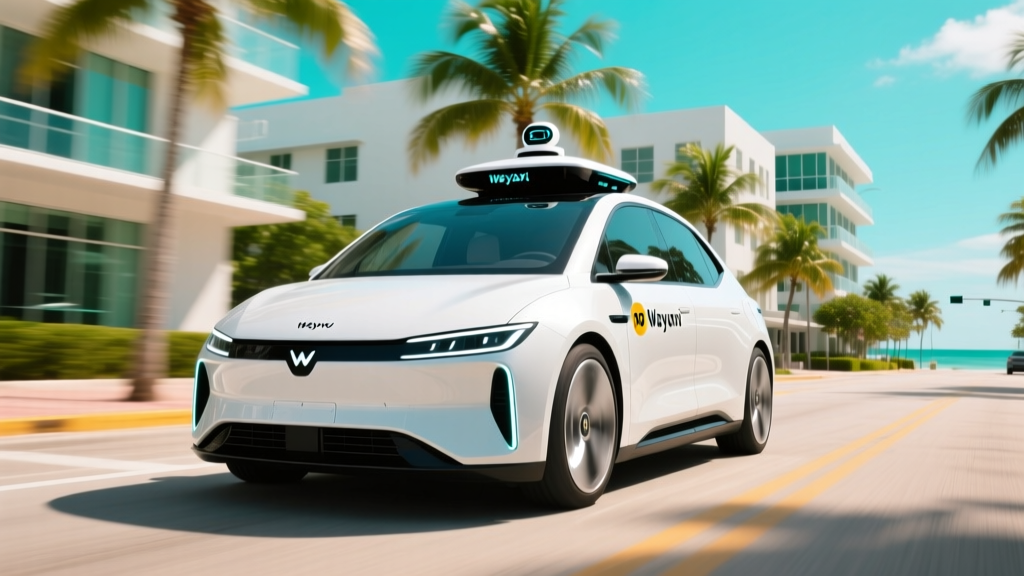
Miami residents and visitors have been asking a persistent question: when is Waymo coming to Miami? As Alphabet's autonomous ride-hailing arm continues its methodical city-by-city expansion across the United States, South Florida represents a logical — but not yet confirmed — next frontier. This guide breaks down everything we know about Waymo's Miami timeline, where the service operates today, what the technology actually does, and what realistic expectations look like for a Miami launch.
SAE Automation Level: What Waymo Actually Is
Waymo operates at SAE Level 4 — high automation within a defined operational design domain (geofenced area, specific conditions). The vehicle handles all driving tasks with no human behind the wheel. This is fundamentally different from SAE Level 2 systems like Tesla Autopilot or GM Super Cruise, which require continuous driver supervision. Level 4 robotaxis carry no steering wheel accessible to passengers and no expectation of human intervention.
Where Waymo Operates Right Now (2026 Service Map)
Before projecting a Miami arrival, it's essential to understand Waymo's current footprint. The company has expanded deliberately, prioritizing cities with favorable regulatory environments, mapped infrastructure, and manageable weather profiles.
| City | Status | Service Area Size | Hours | Notes |
|---|---|---|---|---|
| Phoenix, AZ | Fully commercial | ~225+ sq mi | 24/7 | Flagship market; highway-capable routes to airport |
| San Francisco, CA | Fully commercial | ~50+ sq mi | 24/7 | Dense urban; hills, fog, cyclist-heavy corridors |
| Los Angeles, CA | Fully commercial | ~80+ sq mi | 24/7 | Expanded from initial Hollywood/Santa Monica zones |
| Austin, TX | Commercial / expanding | Growing coverage | Limited hours initially | Announced expansion; phased rider access |
| Atlanta, GA | Announced / testing | TBD | TBD | Partnership with Uber for initial rider access |
| Miami, FL | Not yet announced | — | — | No official timeline as of early 2026 |
Waymo has historically announced new cities 12–18 months before full commercial launch, beginning with mapping, testing with safety drivers, and a trusted-tester phase before opening to the public. Miami does not appear on Waymo's official city list or announced pipeline as of this writing.
When Could Waymo Actually Arrive in Miami?
Based on Waymo's expansion cadence and the factors that determine city selection, a realistic Miami timeline likely falls in the 2027–2028 window, assuming the company announces intent in late 2026 or 2027. Several variables influence this projection:
- Regulatory approval: Florida has relatively permissive autonomous vehicle legislation (F.S. §316.86), which allows testing and deployment without a special state permit beyond standard registration and insurance. This is a positive signal for Miami.
- Weather considerations: Miami's frequent heavy rain and tropical storms present sensor challenges. Waymo's lidar and radar stack handles rain better than camera-only systems, but torrential downpours still degrade perception. The company must validate performance in South Florida's unique weather patterns.
- Mapping and infrastructure: Waymo requires HD mapping of every lane, intersection, and construction zone before deployment. Miami's ongoing road construction and seasonal detours add complexity.
- Fleet logistics: Waymo needs local depot infrastructure for charging, cleaning, and maintenance of its Jaguar I-PACE fleet (and next-generation vehicles).
- Competitive dynamics: Waymo's expansion priority may favor cities where it can establish market dominance before competitors. Miami's rideshare density and tourism economy make it attractive but not necessarily urgent.
For context, Waymo announced Austin in early 2024 and began commercial rides roughly 18 months later. Atlanta followed a similar pattern. If Miami enters the announcement pipeline in 2026, expect a trusted-tester phase by mid-2027 and a commercial launch no earlier than late 2027 or 2028.
How Much Does Waymo Cost vs. Uber and Lyft?
Waymo prices its rides competitively with traditional rideshare, often at a slight premium for the novelty and reliability of a driverless experience. Pricing varies by city, time of day, and demand — similar to surge pricing models.
| Ride Type | Waymo One | UberX | Lyft Standard |
|---|---|---|---|
| Short trip (~3 mi, off-peak) | $8–$12 | $7–$11 | $7–$10 |
| Medium trip (~7 mi, off-peak) | $15–$22 | $14–$20 | $13–$19 |
| Airport run (~15 mi) | $30–$45 | $28–$42 | $26–$40 |
| Surge / peak hours | Moderate increase | 1.5x–3x typical | 1.5x–2.5x typical |
Waymo's pricing advantage emerges during peak demand: because the service doesn't pay a human driver, it has less incentive to surge aggressively. In Phoenix and San Francisco, users report Waymo pricing that undercuts Uber/Lyft during rush hour by 15–30%. Waymo also offers Waymo One membership and promotional credits for new riders in newly launched markets.
Tipping is not expected (there is no driver), though the app allows optional feedback ratings.
Waymo's Safety Record: What the Data Shows
Waymo Safety Data — Cumulative Through 2025
- Total autonomous miles driven: Over 40 million fully driverless miles (as reported by Waymo)
- Contact rate: Waymo's internal data and NHTSA incident reports show a contact-rate (collision per million miles) significantly lower than human benchmarks for comparable urban driving
- Severity: The vast majority of reported incidents involve low-speed contact, often with the Waymo vehicle stationary or at fault of another party (e.g., rear-ended at a stoplight)
- Regulatory reporting: Waymo submits Standing General Orders to NHTSA for every crash involving its ADS, providing transparency that human drivers do not
Sources: Waymo Safety Report, NHTSA AV Safety Data
For comparison, the human-driver injury rate in U.S. urban driving is approximately 1.53 injuries per million vehicle miles, per NHTSA data. Waymo's published collision data indicates rates well below this benchmark, though direct comparison is complicated by geofencing (Waymo avoids the most dangerous roads) and fleet size (smaller sample). The IIHS has noted that robotaxis eliminate impairment, distraction, and fatigue — the top three causes of human-caused crashes.
The Technology Stack: Lidar, Radar, Cameras, and Geofencing
Waymo's 6th-generation autonomous driving system (deployed on the Jaguar I-PACE and next-gen platforms) uses a multi-sensor fusion approach — a deliberate contrast to Tesla's camera-only FSD strategy.
Waymo 6th-Gen Sensor Suite
- Lidar: Multiple roof-mounted and integrated lidar units providing 360° 3D point-cloud mapping up to 500+ meters. Lidar works in darkness and is less affected by glare than cameras.
- Cameras: High-resolution surround cameras for traffic-light state recognition, signage reading, and object classification (pedestrian vs. cyclist vs. cone).
- Radar: Imaging radar for velocity detection of moving objects and performance in rain/fog where lidar scatters.
- Audio detection: External microphones detect sirens from emergency vehicles before they are visually in range.
- HD Maps: Centimeter-precision maps of every geofenced road, updated continuously to reflect construction and lane changes.
The vehicle's compute platform processes sensor data through deep-learning perception models, a prediction layer (forecasting what pedestrians and other cars will do), and a planning layer (choosing the safest trajectory). The entire system is designed with redundancy: if one lidar unit fails, others compensate. If GPS signal drops, the vehicle can localize using lidar against its HD map.
The I-PACE platform itself provides a 90 kWh battery pack (NMC chemistry), supporting the heavy compute and sensor power draw. Fleet vehicles return to depots for Level 2 charging (~11 kW AC) overnight and between shifts.
Regulatory Landscape: Who Approves Robotaxi Operations?
Robotaxi deployment in the U.S. involves a patchwork of federal, state, and local oversight:
- Federal (NHTSA): The National Highway Traffic Safety Administration sets vehicle safety standards (FMVSS) and requires crash reporting via Standing General Orders. NHTSA does not currently "approve" ADS software, but investigates incidents and can issue recalls.
- State level: States control whether driverless testing and commercial deployment are legal. California (CPUC and DMV), Arizona (minimal regulation), and Texas (permissive) have been the most favorable. Florida statute §316.86 permits fully autonomous vehicles on public roads without a human operator, provided the vehicle is properly registered and insured.
- Local/municipal: Cities often negotiate operational boundaries, hours, and fleet caps. San Francisco's initial rollout involved extensive negotiation between Waymo, the CPUC, and city agencies over geofence boundaries and school-zone restrictions.
For Miami, Florida's existing AV statute removes the largest regulatory barrier. The primary approval process would involve local coordination with Miami-Dade County and the Florida DOT for geofence definition and road-readiness assessment.
Current Limitations: What Waymo Cannot Do
Operational Limitations — Honest Assessment
- Geofence boundaries: Waymo vehicles will not travel outside their mapped zone. If you request a ride to an unmapped suburb, the app will reject the destination or suggest a drop-off at the geofence edge.
- Heavy weather: While the 6th-gen stack handles moderate rain, torrential downpours, flooded roads, and tropical-storm conditions will trigger a pull-over or service suspension. Miami's summer thunderstorm patterns are a specific challenge.
- Construction zones: Waymo can navigate mapped construction with updated HD maps, but sudden, unmapped lane closures may cause the vehicle to stop and request remote guidance (a human teleoperator confirms a safe path).
- Unprotected left turns: In some cities, Waymo has restricted unprotected left turns at complex intersections during initial deployment, gradually enabling them as the system gains local experience.
- No highway driving (initially): Waymo began limited highway-capable routes in Phoenix (e.g., airport runs on mapped freeways), but most city deployments focus on surface streets. Miami's I-95 and I-395 corridors would require separate validation.
- Accessibility: Waymo's I-PACE fleet includes wheelchair-accessible vehicles in select markets, but availability is limited. Miami deployment would need to meet ADA coordination requirements.
How to Use Waymo (When It Arrives in Your City)
The Waymo One app (iOS/Android) is the primary interface. The process mirrors rideshare:
- Download the Waymo One app and create an account.
- Enter your pickup and drop-off locations.
- Confirm the fare upfront (no surge surprise — price is locked at confirmation).
- Walk to the designated pickup pin (Waymo cannot pull into private driveways or garages).
- Unlock the vehicle using the app when it arrives.
- Start the ride via the in-seat screen or app. Music and climate controls are available to passengers.
- Exit at your destination. The vehicle drives itself back into the fleet.
In newly launched cities, Waymo typically begins with a "Trusted Tester" waitlist before opening general access. Miami residents should download the app now and join the waitlist to gain early access when the city launches.
Frequently Asked Questions
Is Waymo truly self-driving, or is someone watching remotely?
Waymo is SAE Level 4 — fully driverless within its geofenced area. There is no human in the vehicle. However, Waymo employs remote fleet responders who can assist the vehicle if it encounters an ambiguous situation (e.g., a police officer directing traffic with hand signals). The remote responder does not "drive" the car via joystick; they confirm a path or provide high-level guidance while the vehicle's own system executes the maneuver.
How much will a Waymo ride cost in Miami?
Based on pricing in existing cities, expect Miami rides to be comparable to UberX/Lyft Standard with less surge volatility. A South Beach to Brickell trip (~4 miles) would likely cost $10–$15 off-peak. An MIA airport run (~8 miles from downtown) would likely be $20–$35.
Why hasn't Waymo launched in Miami yet?
Waymo expands deliberately, prioritizing cities where it has completed HD mapping, validated weather performance, secured local coordination, and built fleet infrastructure. Miami's heavy rain patterns, ongoing construction, and dense tourist traffic require additional validation compared to drier, more grid-like cities such as Phoenix.
Will Waymo work during Miami hurricane season?
No. Waymo suspends service during severe weather events including tropical storms and hurricanes. Even routine summer thunderstorms may temporarily limit availability in affected zones. This is a safety-first design decision, not a system failure.
Can I use Waymo at Miami International Airport?
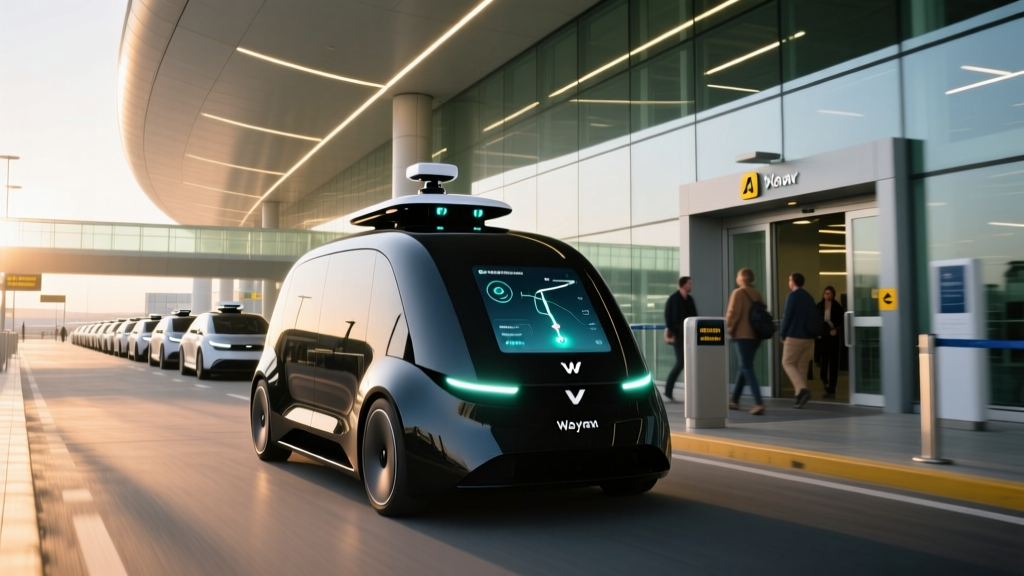
Airport service depends on local agreements. In Phoenix, Waymo serves Sky Harbor with dedicated pickup zones. If Miami launches, MIA and FLL access would require separate negotiation with airport authorities and would likely be part of a Phase 2 expansion after the initial surface-street geofence is validated.
How does Waymo compare to Tesla's Full Self-Driving?
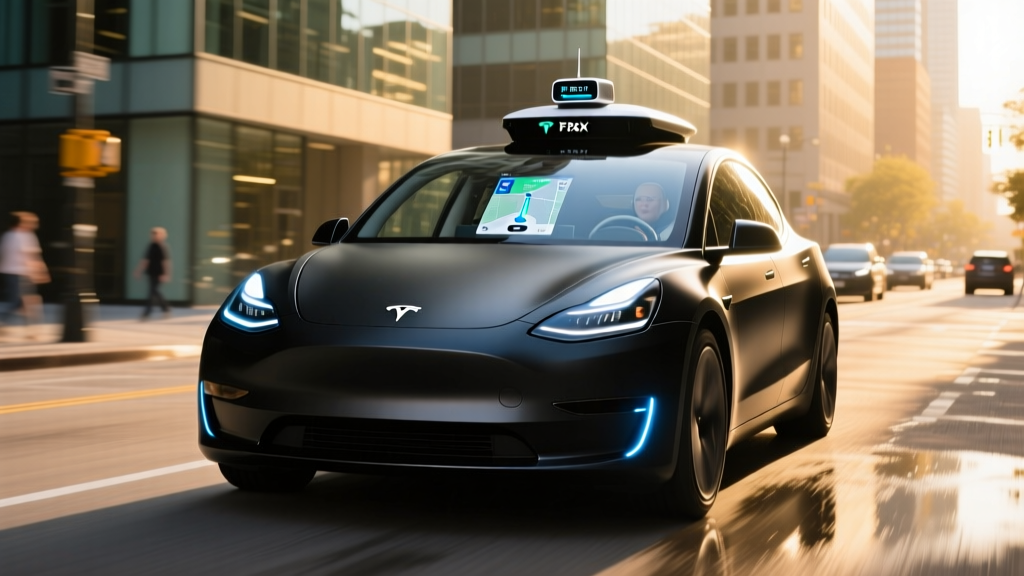
They are fundamentally different products. Tesla FSD (Supervised) is an SAE Level 2 driver-assistance system — the driver must remain engaged, hands on or near the wheel, and is legally responsible for the vehicle. Waymo is SAE Level 4 — fully driverless within its operational zone, with no human oversight required. Tesla FSD can drive anywhere but requires you; Waymo drives itself but only in specific mapped areas.