Waymo's Los Angeles Expansion: What 'Waymo LAX' Actually Means
If you've searched for Waymo LAX recently, you're likely trying to figure out whether you can hail a driverless robotaxi to or from Los Angeles International Airport — or more broadly, how Waymo's Los Angeles service operates in 2026. Waymo, the Alphabet-owned autonomous vehicle company, has been operating commercial robotaxi rides across parts of Los Angeles since late 2024, and the service area has continued to expand. However, airport access remains one of the most closely watched — and regulated — frontiers for robotaxi operators.
This guide breaks down exactly where Waymo operates in LA today, what a ride costs compared to Uber and Lyft, the real safety data behind the service, the Level 4 technology that makes it possible, and the hard limitations you'll encounter as a rider.
Is Waymo Truly Self-Driving? Understanding SAE Level 4
Before booking a ride, it's critical to understand what you're getting into — and what you're not. Waymo's robotaxi service operates at SAE Level 4 automation within its geofenced service area. This is fundamentally different from the Level 2 driver-assistance systems found in consumer vehicles like Tesla's Autopilot or Ford's BlueCruise.
SAE Level 4 vs. Level 2 — Why It Matters
Level 2 (Consumer ADAS): The car can steer, accelerate, and brake under certain conditions, but the human driver must remain fully engaged, eyes on the road, hands available. Examples: Tesla Autopilot, GM Super Cruise, Ford BlueCruise. The driver is legally responsible.
Level 4 (Waymo Robotaxi): The vehicle handles all driving tasks within a defined operational design domain (geofenced area, specific conditions) with no human driver present and no expectation of human intervention. If the system encounters a scenario it cannot handle, it executes a safe stop — it does not hand control to a passenger. Waymo is liable for the driving task.
When you step into a Waymo vehicle in LA, there is no one in the driver's seat. The car navigates traffic, makes unprotected left turns, handles four-way stops, and pulls over for emergency vehicles — all without human input. This is not a test program with a safety driver; it is a fully commercial, driverless service open to the public through the Waymo One app.
Where Can You Use Waymo in Los Angeles Right Now?
Waymo's LA service area has grown significantly since its initial launch, but it remains geofenced — meaning the robotaxi will only operate within approved boundaries. As of early 2026, the service covers a broad swath of central and western Los Angeles.
| Zone | Status | Key Destinations |
|---|---|---|
| Santa Monica / Westside | Live | Santa Monica Pier, Venice Beach, Third Street Promenade |
| Beverly Hills / West Hollywood | Live | Rodeo Drive, Sunset Strip, Cedars-Sinai |
| Downtown LA | Live | Staples Center, LA Live, Financial District, Arts District |
| Hollywood / Mid-City | Live | Universal Studios, Hollywood Bowl, LACMA |
| Westchester / LAX Adjacent | Live (limited) | Areas surrounding LAX; airport terminal access under negotiation |
| LAX Terminals (direct) | Not yet live | Pickup/dropoff at LAX terminals pending airport authority agreement |
| San Fernando Valley | Not yet available | — |
| South Bay / Long Beach | Not yet available | — |
The LAX question: As of 2026, Waymo vehicles can navigate streets in the Westchester neighborhood adjacent to LAX, but direct terminal pickup and dropoff at Los Angeles International Airport has not yet been approved by Los Angeles World Airports (LAWA). Riders heading to LAX can take a Waymo to the perimeter and use the LAX-it lot or airport shuttle for the final leg. Waymo and LAWA have been in discussions about a formal airport access agreement, similar to the arrangement Waymo secured with Phoenix Sky Harbor, but no launch date has been announced.
How to Ride and What It Costs vs. Uber and Lyft
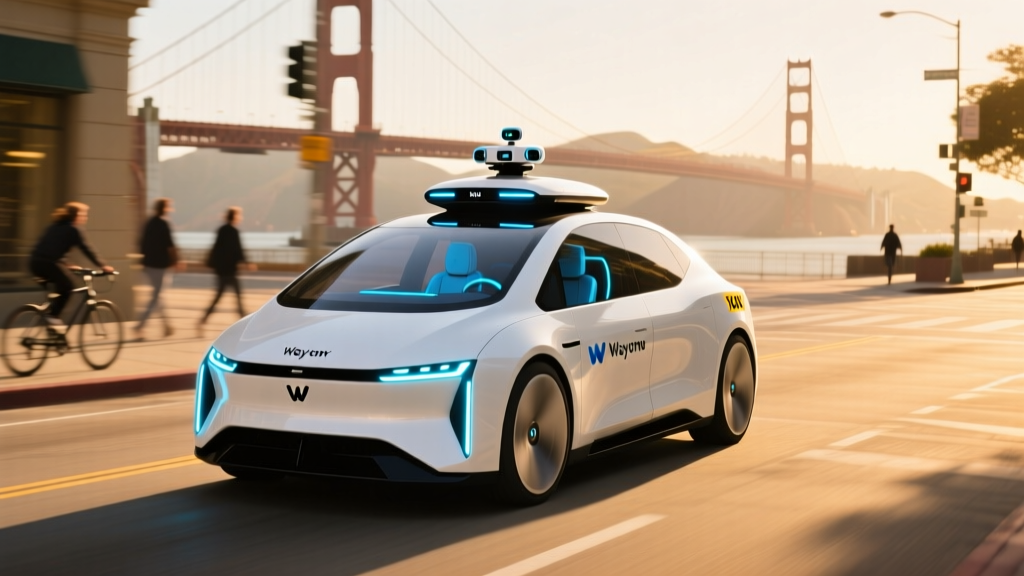
Using Waymo in LA works almost identically to a standard rideshare app. Download the Waymo One app (iOS/Android), create an account, enter your pickup and dropoff locations, and request a ride. If both points fall within the geofenced service area and the system determines conditions are safe, a 5th-generation Waymo Driver-equipped Jaguar I-PACE (or the newer Zeekr RT robotaxi, which Waymo began deploying in select markets) will arrive within minutes.
| Route | Distance | Waymo One | UberX | Lyft Standard |
|---|---|---|---|---|
| Santa Monica → Downtown LA | ~16 mi | $28–$36 | $24–$38 | $22–$35 |
| Hollywood → Beverly Hills | ~6 mi | $14–$19 | $12–$20 | $11–$18 |
| Westchester → Santa Monica | ~7 mi | $16–$22 | $14–$22 | $13–$20 |
| DTLA → Universal Studios | ~10 mi | $19–$26 | $16–$25 | $15–$23 |
Waymo's pricing is broadly competitive with UberX and Lyft Standard — not dramatically cheaper, but not more expensive either. Unlike human-driven rideshare, Waymo fares don't surge in the traditional sense, though wait times may increase during peak demand. Tipping is not expected (there's no driver), and the fare shown at booking is the fare you pay. Waymo occasionally offers promotional credits for first-time riders in new markets.
One practical difference: Waymo cannot make multiple stops mid-trip, and you cannot ask the vehicle to wait for you. It's point-A-to-point-B only.
Waymo Safety Record: What the Data Actually Shows
Safety is the single biggest question for prospective robotaxi riders, and it deserves a data-driven answer rather than marketing reassurances. Waymo has accumulated tens of millions of fully driverless miles across its operating cities (Phoenix, San Francisco, Los Angeles, and Austin), and the company has published peer-reviewed safety analyses.
Waymo Safety Data Points (through 2025, published sources)
- Driverless miles: Over 30 million fully autonomous (no safety driver) miles completed across all markets as of late 2025, per Waymo's safety reporting.
- Injury-causing crash reduction: A study published by Waymo and reviewed by external researchers found an 85% reduction in injury-causing crash rates compared to human-driven vehicle benchmarks in comparable urban environments.
- Police-reportable crash reduction: Approximately 57% fewer police-reportable crashes per million miles compared to human baselines.
- Contact events: The majority of Waymo vehicle contact events involve low-speed incidents (under 15 mph), typically with other human-driven vehicles rear-ending or side-swiping the robotaxi — not the Waymo vehicle initiating contact.
- NHTSA standing: Waymo vehicles are subject to NHTSA reporting requirements for all crashes involving ADS-equipped vehicles. Waymo's reported incident rate per million miles has remained below the national human average for urban driving.
It's important to contextualize these numbers. Robotaxis operate primarily in dense urban environments at moderate speeds — a different risk profile than highway driving. Waymo's vehicles are also highly visible (roof-mounted sensor arrays, distinctive branding), which may cause surrounding drivers to give them extra space. The data is promising but still represents a limited sample compared to the trillions of miles driven annually by humans nationwide.
The Technology Stack: Lidar, Cameras, and Geofencing
Waymo's approach to autonomy is sensor-rich and fundamentally different from camera-only systems (like Tesla's FSD). The 5th-generation Waymo Driver, used on the Jaguar I-PACE fleet, integrates multiple overlapping sensor systems:
Waymo 5th-Gen Sensor Suite
- Lidar: Custom-built, roof-mounted spinning lidar units providing a real-time 360° 3D point cloud of the vehicle's surroundings. Lidar measures distance by timing laser pulses and works in darkness, fog (to a degree), and direct sunlight — providing depth data that cameras alone cannot reliably produce.
- Cameras: A surround array of high-resolution cameras covering 360° with overlapping fields of view. These handle lane-line detection, traffic-light state recognition, sign reading, and object classification (pedestrian vs. cyclist vs. vehicle).
- Radar: Multiple radar units for velocity detection of moving objects (especially useful for tracking other vehicles' speed in rain or occlusion) and redundancy.
- Audio detection: External microphones that detect emergency vehicle sirens and trigger appropriate pull-over behavior.
- HD Maps + Geofencing: Waymo vehicles rely on centimeter-precision maps of every street in their service area. The vehicle knows the exact location of every curb, crosswalk, speed bump, and traffic signal before it arrives. The geofence defines the boundary of where these maps exist and where the system is approved to operate.
This multi-sensor redundancy is a core differentiator. If one sensor modality is degraded (e.g., camera glare at sunset), lidar and radar continue providing spatial data. The tradeoff is cost: each Waymo-equipped I-PACE carries well over $100,000 in sensor hardware, though Waymo has stated each generation reduces this figure substantially. The newer Zeekr RT platform, designed from the ground up for autonomy, integrates sensors more cleanly into the vehicle body and is expected to further reduce per-unit costs.
Regulatory Landscape: Who Approves Robotaxi Operations?
Robotaxi deployment in the United States is governed by a patchwork of state and local regulations — there is no single federal framework that licenses autonomous ride-hailing. In California, two agencies play primary roles:
- California Department of Motor Vehicles (DMV): Issues permits for testing and deployment of autonomous vehicles on public roads. Waymo holds a Deployment of Autonomous Vehicles permit, which allows commercial driverless operations. The CA DMV maintains a public list of all permitted operators and their status.
- California Public Utilities Commission (CPUC): Regulates commercial passenger transportation, including robotaxi fare-charging. Waymo received CPUC approval to operate a commercial, fare-charging driverless service, which is the authorization that allows Waymo One to accept payment for rides.
At the local level, individual cities and authorities have their own approval processes. This is precisely why LAX access requires a separate agreement with LAWA — the airport is its own jurisdiction with its own ground-transportation rules. Similarly, expansion into new LA neighborhoods sometimes requires coordination with local transportation departments regarding curb management, pickup zones, and emergency-response protocols.
At the federal level, NHTSA retains authority over vehicle safety standards. Current Federal Motor Vehicle Safety Standards (FMVSS) still assume a human driver (steering wheel, pedals, mirrors), which is why Waymo uses a modified Jaguar I-PACE rather than a purpose-built, steering-wheel-free vehicle for most of its fleet. The Zeekr RT and other next-generation platforms may eventually seek FMVSS exemptions, but that regulatory pathway remains complex.
Current Limitations: Where Waymo Still Falls Short
Level 4 autonomy is impressive within its domain, but that domain has hard edges. Here are the real limitations you'll encounter as a Waymo rider in LA:
- Geofence boundaries: If your destination falls outside the mapped service area, the app simply won't let you book the ride. There is no manual override. Service area maps can be checked in-app before requesting.
- Heavy rain and flooding: While Waymo vehicles can operate in light rain, heavy downpours degrade lidar and camera performance. The system may pause service or restrict operations during severe weather events — a common occurrence during LA's winter storm season.
- Construction zones: Major, unmapped road construction can confuse the HD map-based navigation. Waymo vehicles will typically slow down, proceed with extreme caution, or reroute — but prolonged or complex construction zones may cause the vehicle to execute a safe stop and request remote assistance.
- No highway driving (yet): Waymo's LA operations are primarily on surface streets and lower-speed arterials. High-speed freeway routing (e.g., taking the 405 from Westside to Valley) is not currently part of the LA service profile, though Waymo has tested highway-capable autonomy in other markets.
- No multiple stops or waiting: You cannot ask the car to wait outside a restaurant while you pick up food, nor can you add a mid-trip stop. Every ride is a single, direct origin-to-destination trip.
- Limited accessibility options: The Jaguar I-PACE fleet is not wheelchair-accessible. Waymo has acknowledged this gap and has discussed deploying wheelchair-accessible vehicles, but availability remains limited as of 2026.
- Edge-case delays: Unusual scenarios — a fallen tree, an erratic pedestrian, a double-parked delivery truck blocking a narrow lane — can cause the vehicle to stop and wait for remote guidance. These pauses typically last seconds to a couple of minutes, but they do happen and can extend trip times.
Waymo LAX FAQ
Can I take a Waymo directly to LAX terminals in 2026?
Not yet. Waymo's service area extends to the Westchester neighborhood adjacent to LAX, but direct terminal pickup and dropoff requires a ground-transportation agreement with LAWA that has not been finalized. Riders can take a Waymo to nearby streets and transfer to the LAX-it lot shuttle for the final segment.
How much does a Waymo ride cost compared to Uber or Lyft in LA?
Waymo fares are comparable to UberX and Lyft Standard — typically within $2–$5 on most LA routes. A 16-mile trip from Santa Monica to Downtown LA generally costs $28–$36 with Waymo. There is no surge pricing in the traditional sense, and no tipping.
Is Waymo really safer than a human driver?
Waymo's published data shows an 85% reduction in injury-causing crashes and a 57% reduction in police-reportable crashes compared to human benchmarks in similar urban environments. However, the total driverless mileage (tens of millions of miles) is still a small fraction of overall driving, and robotaxis operate under more constrained conditions (geofenced, moderate speeds, favorable weather). The data is strong but still maturing.
What happens if the Waymo vehicle encounters a situation it can't handle?
The vehicle will execute a minimal-risk condition — typically a controlled pull-over to the side of the road. A remote support team can then assess the situation and either guide the vehicle through the scenario or dispatch roadside assistance. Passengers are never asked to "take over" driving.
Does Waymo operate 24/7 in Los Angeles?
Waymo's LA service hours are extensive but not always 24/7. Service availability varies by time of day and demand patterns. The app will show real-time availability when you attempt to book. Phoenix, Waymo's most mature market, has operated around the clock; LA has been expanding hours progressively.
What vehicle will I ride in?
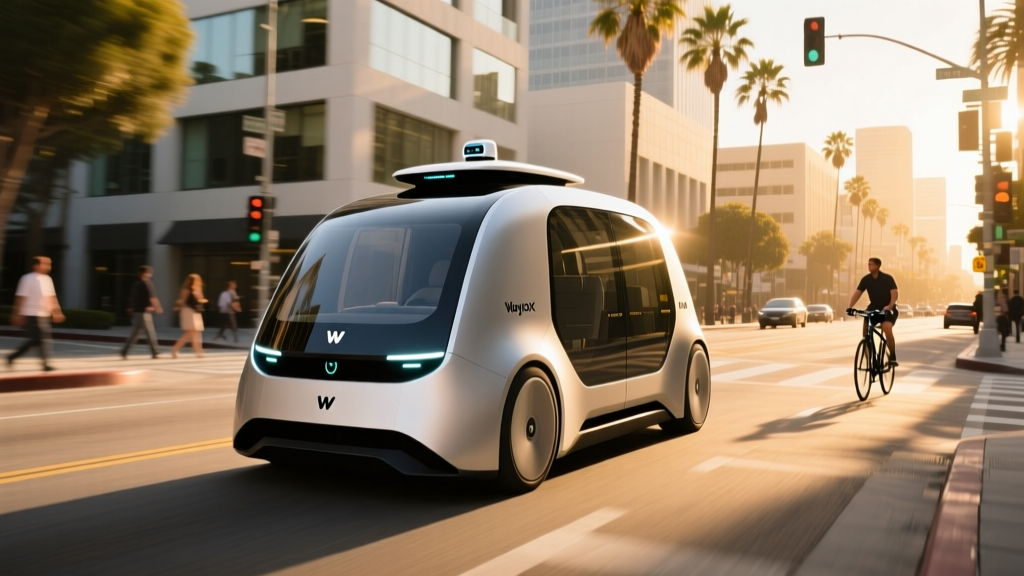
Most LA rides currently use the Jaguar I-PACE equipped with the 5th-generation Waymo Driver. Waymo has begun introducing the Zeekr RT — a purpose-built robotaxi with a lower floor, sliding doors, and more interior passenger space — in select markets, and it may appear in LA as fleet deployment progresses.
How does Waymo's tech compare to Tesla's FSD?
They are fundamentally different categories. Waymo is a Level 4 driverless service: no human driver, no steering wheel involvement, geofenced operation, multi-sensor (lidar + cameras + radar). Tesla FSD (Supervised) is a Level 2 driver-assist system: the human driver must remain fully engaged and is legally responsible, it uses cameras only (no lidar), and it operates anywhere rather than within a pre-mapped geofence. They solve different problems and carry different risk profiles.