Is There Waymo in Las Vegas Right Now?
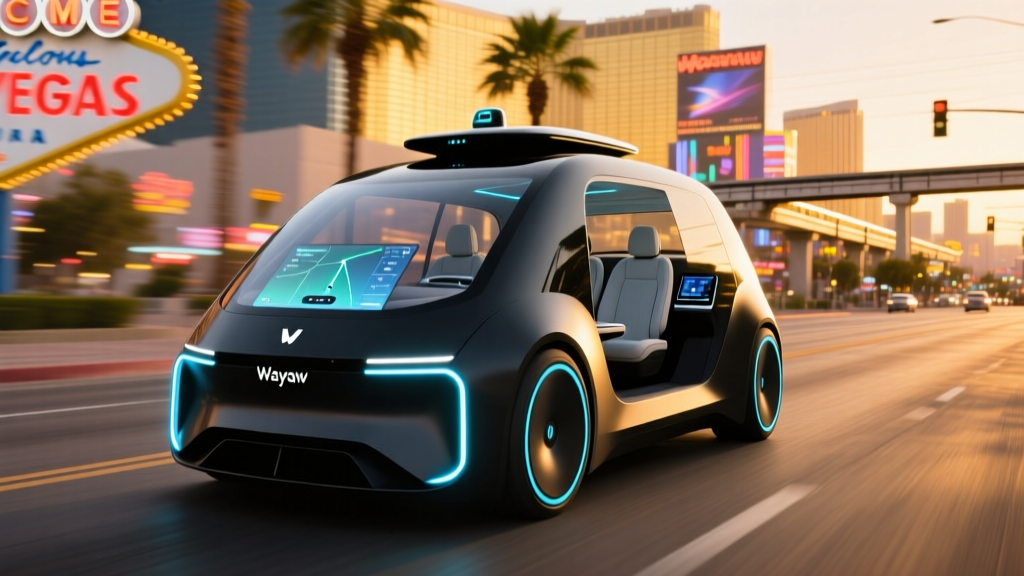
The short answer: Waymo operates a limited, invitation-only pilot program in Las Vegas as of early 2026, but it is not yet open to the general public the way its Phoenix, San Francisco, and Los Angeles services are. If you're visiting Vegas and hoping to hail a driverless Waymo One ride from the Strip to the airport, you'll need to check the Waymo app for current access — availability remains geofenced and capacity-constrained.
Las Vegas represents one of Waymo's newer expansion markets, and understanding what's actually live versus what's still in testing matters before you plan your trip. This guide breaks down exactly where you can ride, what it costs, how safe the technology is, and what the regulatory picture looks like in Nevada.
Waymo's robotaxis operate at SAE Level 4, meaning the vehicle handles all driving tasks within its defined operational design domain (geofenced area, fair weather, mapped roads) with no human driver present. This is fundamentally different from Level 2 systems like Tesla Autopilot or GM Super Cruise, which require continuous driver supervision. In a Waymo, there is no one in the driver's seat.
Where Can You Use Waymo Right Now?
Waymo One — the company's commercial ride-hailing product — is available to the general public in several U.S. metros, with Las Vegas in a more limited status. Here's the current operational landscape:
| City | Status (2026) | Service Area | Public Access |
|---|---|---|---|
| Phoenix, AZ | Fully operational | ~225 sq mi (Chandler, Tempe, Mesa, Scottsdale, Sky Harbor Airport) | Yes — open to all Waymo One users |
| San Francisco, CA | Fully operational | ~50 sq mi (city-wide including SFO airport routes) | Yes — open to all Waymo One users |
| Los Angeles, CA | Fully operational | ~80 sq mi (Santa Monica, Hollywood, Downtown, LAX routes) | Yes — open to all Waymo One users |
| Las Vegas, NV | Limited pilot / expansion | Geofenced zones (portions of the Strip corridor and downtown) | Waitlist / invitation-based |
| Austin, TX | Testing / early access | Limited geofenced area | Waitlist |
For Vegas visitors, this means you may be able to request a ride if you've been accepted into the local pilot, but you cannot yet rely on Waymo as a primary transportation option the way Phoenix or San Francisco residents can. The geofenced zone covers high-traffic tourist corridors but does not extend to all suburban areas or McCarran International Airport (Harry Reid) on a consistent basis.
How Much Does Waymo Cost vs. Uber and Lyft?
Where Waymo One is fully operational, pricing is structured similarly to UberX or Lyft Standard — you pay per ride based on distance, time, and demand. Waymo does not currently use surge pricing in the same aggressive way Uber and Lyft do, which can make it cheaper during peak hours.
| Route (Example) | Waymo One | UberX | Lyft Standard |
|---|---|---|---|
| Airport to Downtown Phoenix (~7 mi) | $15–$22 | $14–$28 (surge dependent) | $13–$26 |
| SF Downtown to Mission District (~3 mi) | $10–$15 | $12–$24 | $11–$22 |
| Santa Monica to LAX (~8 mi) | $18–$25 | $16–$35 | $15–$32 |
How to use it: Download the Waymo One app (available on iOS and Android), create an account, enter your pickup and dropoff within the service area, and confirm. The vehicle arrives without a driver, you unlock it via the app, and the ride proceeds autonomously. Tipping is not required (there's no driver), though the app offers an option.
In Las Vegas, because the service is still in limited pilot, pricing data is less standardized. Early riders have reported promotional or free rides during the testing phase, but expect pricing to align with UberX/Lyft baselines once the service opens fully.
How Safe Are Waymo Robotaxis? The Real Data
This is the question that matters most, and Waymo has published more operational safety data than any other Level 4 operator. As of late 2025, Waymo reported over 30 million fully autonomous miles driven across its commercial fleet with no human behind the wheel.
- Total autonomous miles: 30+ million (driverless, no safety operator)
- Injury-causing crashes: Waymo's published data shows a ~85% reduction in police-reported injury-causing crashes compared to human benchmarks in comparable urban environments
- Contact rate: Property-damage-only contact incidents occur at roughly 1 per 100,000–200,000 miles, predominantly low-speed (under 10 mph) and involving other road users striking the Waymo vehicle
- NHTSA Standing General Order: Waymo reports all incidents as required; data is publicly filed with NHTSA
Source: Waymo Safety Report, NHTSA incident filings, and IIHS research on autonomous vehicle crash rates.
For context, the average human driver in urban environments experiences a police-reported crash roughly every 500,000 miles. Waymo's data suggests their vehicles are involved in fewer injury-causing incidents per mile, though the comparison requires nuance — Waymo operates in geofenced, well-mapped areas and tends to drive more conservatively than humans.
The most common incidents involve other drivers rear-ending or side-swiping a Waymo vehicle at low speeds, particularly at intersections. There have been no fatalities attributed to Waymo's driverless operations in commercial service.
What Technology Powers Waymo's 6th-Generation Vehicles?
Waymo's current fleet primarily uses the Jaguar I-PACE (a fully electric vehicle with a 90 kWh NMC battery and ~234-mile EPA range) equipped with the 6th-generation Waymo Driver sensor suite. The technology stack is notably different from camera-only approaches used by some competitors:
- LiDAR: Multiple solid-state and spinning LiDAR units providing 360° 3D point-cloud mapping out to 500+ meters. LiDAR is the core sensor for object detection and distance measurement independent of lighting conditions.
- Cameras: High-resolution surround cameras (8+ units) for lane detection, traffic signal recognition, pedestrian intent reading, and redundancy.
- Radar: Imaging radar units for velocity detection of moving objects, functioning in rain and fog where LiDAR and cameras degrade.
- Audio sensors: External microphones that detect emergency vehicle sirens and trigger appropriate pull-over or yield behavior.
- HD Maps: Centimeter-precision pre-mapped routes within the geofence, updated continuously. The vehicle localizes itself against these maps in real time.
- Compute: Custom-built onboard computing platform processing sensor fusion, prediction, and planning at hundreds of cycles per second.
The multi-sensor approach — particularly the reliance on LiDAR — gives Waymo a redundancy advantage in challenging conditions like direct sun glare, nighttime driving, and partially occluded objects. This is a deliberate architectural choice that contrasts with Tesla's camera-only FSD approach. The trade-off is higher per-vehicle hardware cost, which Waymo absorbs as a fleet operator rather than passing to consumers.
Nevada's Regulatory Landscape for Autonomous Vehicles
Nevada was actually the first U.S. state to pass autonomous vehicle legislation (AB 511 in 2011), creating a permissive framework for testing and deployment. However, the regulatory environment has evolved:
- Testing permits: The Nevada Department of Motor Vehicles (DMV) issues autonomous vehicle testing permits. Companies must carry minimum insurance ($5 million liability coverage) and report disengagement data.
- Commercial deployment: Nevada allows commercial driverless operations, but local jurisdictions (Clark County, City of Las Vegas, City of Henderson) can impose additional requirements on where and how robotaxis operate.
- Federal oversight: NHTSA regulates vehicle safety standards and investigates incidents. The Federal Motor Vehicle Safety Standards (FMVSS) still require certain equipment (mirrors, steering wheels) that purpose-built robotaxis like the Zoox vehicle have needed exemptions for.
- No statewide ride-hailing commission: Unlike California's CPUC which regulates TNCs and robotaxi permits, Nevada's oversight is more fragmented between state DMV and local authorities.
For Waymo in Las Vegas specifically, the company has been working with Clark County and the Las Vegas Convention and Visitors Authority to establish operating parameters for the Strip corridor, where pedestrian density, construction zones, and event-driven traffic surges present unique challenges.
Current Limitations: What Waymo Cannot Do
Understanding what robotaxis cannot handle is as important as knowing what they can. Waymo's Level 4 system has defined boundaries:
- Weather: Waymo vehicles will not operate in heavy rain, snow, ice, or dense fog. Las Vegas's dry climate is actually an advantage here, but monsoon-season dust storms can trigger service pauses.
- Geofence boundaries: The vehicle will only operate within its pre-mapped service area. Request a ride outside the geofence and the app will reject it.
- Construction zones: Major road construction with lane shifts, temporary barriers, or unmapped detours can cause the vehicle to stop and request remote assistance. Waymo has improved here, but complex construction remains a challenge.
- Unusual road configurations: Unpaved roads, private driveways, parking garages (beyond designated pickup zones), and off-road scenarios are outside the operational design domain.
- Emergency vehicle interactions: While Waymo detects sirens and attempts to pull over, complex multi-vehicle emergency scenes with hand-directed traffic can cause the vehicle to stop and wait.
- Passenger behavior: No in-vehicle camera monitoring of passengers in the current fleet (privacy policy), but the vehicle will not depart if doors are not closed and seatbelts are not fastened.
- No highway operation in most markets: Waymo's commercial service primarily covers surface streets. Highway driving at 65+ mph is in testing but not broadly deployed in commercial service as of early 2026.
For Vegas visitors, the most practical limitation is that the geofence may not cover your specific hotel, restaurant, or attraction. The Strip corridor is partially covered, but side streets, parking structures, and routes to distant suburbs like Summerlin or Henderson may fall outside the service area.
Waymo vs. Other Robotaxi Options in Las Vegas
Waymo is not the only autonomous vehicle player with eyes on Las Vegas. Here's how the competitive landscape looks:
| Company | SAE Level | Vegas Status (2026) | Vehicle |
|---|---|---|---|
| Waymo (Alphabet) | Level 4 | Limited pilot, waitlist access | Jaguar I-PACE (6th-gen Driver) |
| Motional (Hyundai/Aptiv) | Level 4 | Previous testing; scaled back operations | Hyundai Ioniq 5 |
| Zoox (Amazon) | Level 4 | Testing in Las Vegas (purpose-built vehicle) | Zoox Gen 3 (no steering wheel) |
| Tesla (FSD Supervised) | Level 2 | Available everywhere (driver-required) | Model 3/Y (camera-only) |
Zoox, Amazon's autonomous vehicle subsidiary, has been testing its purpose-built robotaxi (a carriage-style vehicle with no steering wheel or pedals) in Las Vegas since 2023 and has expanded its testing footprint. However, Zoox has not yet launched a commercial ride-hailing service open to the general public in any market as of early 2026.
Motional, the Hyundai-Aptiv joint venture, previously conducted extensive Level 4 testing in Las Vegas but significantly scaled back operations in 2024-2025 as the company restructured. Their timeline for commercial deployment remains unclear.
Frequently Asked Questions
Can I just download the Waymo app and get a ride in Vegas today?
Not reliably. You can download the Waymo One app and check availability, but Las Vegas is still in a limited pilot phase. You may be placed on a waitlist or offered rides only in specific zones at certain hours. Phoenix, San Francisco, and Los Angeles have full public access.
Is Waymo truly self-driving, or is there a hidden driver?
Waymo's commercial robotaxis are genuinely driverless — there is no human in the vehicle. This is SAE Level 4 autonomy within the geofenced service area. The vehicle handles all driving tasks, and a remote support team can assist if the vehicle encounters a scenario it cannot resolve (pulling over safely and waiting for instructions).
What happens if the Waymo vehicle gets confused or stuck?
The vehicle is programmed to pull over to a safe location and contact Waymo's remote assistance team. A human operator does not "drive" the vehicle remotely but can provide guidance (e.g., confirming it's safe to proceed around an obstacle). If the issue cannot be resolved, the ride is canceled and you're not charged for the incomplete trip.
Is Waymo cheaper than Uber or Lyft in Las Vegas?
Where fully operational, Waymo One pricing is comparable to UberX/Lyft Standard, typically within a few dollars either way. The main cost advantage comes during peak surge periods when Uber/Lyft prices spike and Waymo's pricing remains more stable. In Las Vegas's current limited pilot, rides may be discounted or complimentary.
Does Waymo operate at night in Las Vegas?
Yes — Waymo's LiDAR-based sensor stack functions equally well at night as during the day, and the service in fully operational markets runs 24/7. In Las Vegas's pilot, operating hours may be more limited initially.
Can Waymo take me from the Las Vegas Strip to Harry Reid International Airport?
This depends on whether the airport route falls within the current Las Vegas geofence. In fully operational markets like Phoenix (Sky Harbor) and San Francisco (SFO), airport routes are supported. Las Vegas airport access has not been consistently available during the pilot phase — check the app for your specific route.
How does Waymo compare to Tesla's Full Self-Driving?
These are fundamentally different systems. Waymo is SAE Level 4 — no driver present, no driver attention required, operating within a geofence. Tesla FSD (Supervised) is SAE Level 2 — the driver must remain fully attentive, hands near the wheel, and is legally responsible for the vehicle at all times. Waymo uses LiDAR, radar, and cameras; Tesla uses cameras only. Waymo is a ride-hailing service; Tesla FSD is a feature in a car you own.