Why the Waymo Ioniq 5 Is Now the Face of Robotaxis
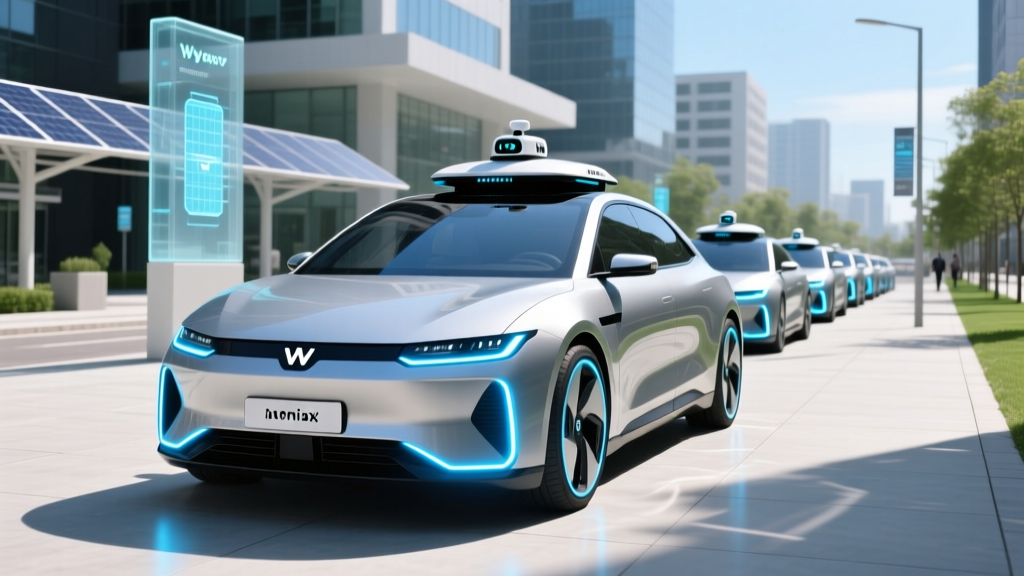
When Waymo retired its Chrysler Pacifica minivan fleet and replaced it with a fully electric Hyundai Ioniq 5 platform wrapped in its 6th-generation Driver hardware, it made a statement: robotaxis were no longer proof-of-concept oddities. By early 2026, the Waymo Ioniq 5 is the primary vehicle operating Waymo One, the company's paid, driverless ride-hail service. For EV shoppers and tech-minded commuters, it also doubles as a rolling showcase of what a production electric crossover can do when paired with industrial-grade autonomy hardware.
This guide breaks down the Waymo Ioniq 5 robotaxi from the perspective of someone who has actually ridden in one: the tech it uses, where it runs, what a ride costs, and what the safety record actually says — not what marketing departments claim.
SAE Automation Levels: Where Waymo Actually Sits
The most common confusion in autonomous driving is the gap between consumer driver-assist systems (Tesla Autopilot, Ford BlueCruise, GM Super Cruise) and true driverless robotaxis. The Society of Automotive Engineers (SAE) defines six levels, and the distinction is not academic — it determines who is liable when something goes wrong.
| Level | Name | Who Drives | Examples |
|---|---|---|---|
| 0 | No Automation | Human | Legacy vehicles |
| 1 | Driver Assistance | Human + one assist axis | Adaptive cruise OR lane keep |
| 2 | Partial Automation | Human (supervising) | Autopilot, FSD Supervised, BlueCruise, Super Cruise |
| 3 | Conditional Automation | System (limited ODD) | Mercedes Drive Pilot (traffic jam, ≤40 mph) |
| 4 | High Automation | System (geofenced) | Waymo One, Zoox, Cruise (pre-suspension) |
| 5 | Full Automation | System (anywhere) | Does not exist commercially |
Waymo's Ioniq 5 fleet is firmly Level 4. It does not need a safety driver, but it is also not Level 5 — it cannot operate outside its mapped geofence, in severe weather, or on unmaintained rural roads. Understanding that boundary is essential before comparing it to any consumer EV with an "assist" badge.
The Waymo Ioniq 5 Hardware Stack
Hyundai's Ioniq 5 was chosen because its E-GMP platform offers a flat floor, 800V electrical architecture, and a spacious cabin — but the autonomy system bolted onto it is entirely Waymo's own. The 6th-generation Waymo Driver, which began rolling out on the Ioniq 5 in 2024 and is standard on 2026 fleet vehicles, is a sensor-fusion system that emphatically does not rely on cameras alone.
- LiDAR: Multiple roof- and fascia-mounted LiDAR units providing a 360° 3D point cloud, effective beyond 300 meters and largely immune to direct sun glare or darkness.
- Cameras: High-resolution surround-view cameras for traffic-light state, signage, lane markings, and object classification.
- Radar: Imaging radar for velocity measurement of moving objects and redundancy in rain or fog where LiDAR backscatter increases.
- Audio detection: External microphones trained to localize emergency-vehicle sirens by direction and distance.
- HD maps: Centimeter-accurate pre-mapped routes updated continuously; the car drives within a known corridor rather than improvising.
- Compute: Custom in-house AI inference hardware running perception, prediction, and planning stacks in parallel.
This is a meaningfully different approach from Tesla's camera-only FSD (Supervised), which operates at SAE Level 2 with the driver liable. Waymo's redundancy philosophy — LiDAR plus radar plus cameras plus HD maps — is more expensive per vehicle (estimates put the sensor suite well above $100,000 per car), but it is what enables the removal of the human driver within the geofence.
Where Can You Actually Ride a Waymo Ioniq 5?
As of early 2026, Waymo One's Ioniq 5 fleet is operational in a limited set of metro areas. Service is geofenced — you can only hail within the mapped zone, and the car will not drive you outside of it. Expansion is incremental and requires regulatory approval in each new jurisdiction.
| City | Status | Approximate Geofence Coverage | Airport Service |
|---|---|---|---|
| Phoenix, AZ | Live, fully driverless | ~500+ sq mi across metro Phoenix | PHX Sky Harbor |
| San Francisco, CA | Live, fully driverless | Most of SF proper + parts of Daly City | SFO (limited) |
| Los Angeles, CA | Live, fully driverless | Santa Monica, Hollywood, Downtown, Westside | LAX (phased) |
| Austin, TX | Live / expanding | Central Austin core | Not yet |
| Atlanta, GA | Announced / early access | Limited pilot zones | Not yet |
Waitlists for Waymo One accounts still exist in some markets, particularly San Francisco and Los Angeles. Riders typically download the Waymo One app, set a pickup inside the geofence, and confirm. If you are outside the mapped zone, the app will simply not allow the request.
What a Ride Costs — and How It Compares to Uber/Lyft
Robotaxi pricing has settled into a band that undercuts traditional rideshare on short urban hops but can match or exceed it on longer trips. Waymo uses dynamic pricing similar to Uber/Lyft, with base fare, per-mile, and per-minute components, plus surge multipliers during peak demand.
| Trip Type | Waymo One | UberX | Lyft Standard |
|---|---|---|---|
| Short urban (~3 mi / 10 min) | $9 – $14 | $11 – $17 | $10 – $16 |
| Medium suburban (~10 mi / 25 min) | $22 – $32 | $20 – $30 | $19 – $28 |
| Airport run (~18 mi / 35 min) | $40 – $55 | $38 – $55 | $35 – $52 |
| Peak-hour surge multiplier | 1.3x – 1.8x | 1.5x – 2.5x | 1.4x – 2.3x |
Two practical notes: Waymo does not currently offer pooled/shared rides (every trip is private), and tipping is not expected — there is no driver. For frequent urban riders in Phoenix or SF, the per-trip cost tends to net slightly below UberX, with the added novelty and consistency of no driver-rating dynamic.
Safety Data: What the Numbers Actually Say
Any safety claim about robotaxis is only as credible as the data behind it. Waymo has published several safety studies, and independent researchers at the Insurance Institute for Highway Safety (IIHS) and the National Highway Traffic Safety Administration (NHTSA) have been scrutinizing Level 4 incident reports since the federal Standing General Order required them.
- Fully driverless miles driven: >10 million miles across Phoenix, SF, LA, and Austin.
- Injury-relevant crash rate: Waymo's published analysis claims ~85% fewer injury-causing crashes per million miles versus a human benchmark, and ~57% fewer property-damage-only crashes.
- Contact incidents: Most reported robotaxi incidents are low-speed (under 10 mph) contacts with backing trucks, delivery carts, or stationary objects — rarely involving other moving vehicles at speed.
- Fatalities: Zero reported fatalities in a Waymo-operated driverless vehicle as of the publication date. (Cruise's October 2023 pedestrian-dragging incident in SF, which led to its California suspension, involved a different operator.)
- Disengagements: Not a clean metric for Level 4 — the system handles edge cases via remote assistance rather than handing control to a non-existent driver.
Sources: Waymo Safety Reports, NHTSA Standing General Order filings, IIHS analysis.
The honest read: Level 4 robotaxis appear statistically safer than average human drivers in their operating domain, but the sample size is still small relative to the ~3 trillion miles Americans drive annually, and the operating domain is carefully chosen to avoid the hardest scenarios. Generalization to all driving conditions is not yet supported by the data.
Current Limitations and No-Go Scenarios
The Ioniq 5 robotaxi is impressive inside its domain, but that domain has real edges. Anyone evaluating robotaxis — or comparing them to a personal EV with Level 2 assist — should understand where the system will not operate.
- Geofencing: Cannot leave the mapped service area. A trip from SF to Sacramento is not possible.
- Heavy weather: Service is suspended or restricted during heavy rain, dense fog, and any snow/ice. Phoenix's monsoon downpours have triggered temporary pullbacks.
- Construction zones: Major unmapped roadwork can force the vehicle to reroute or request remote guidance, adding time.
- Unpaved / private roads: No service on dirt roads, gated communities without mapping, or parking garages with tight spirals.
- Pets and minors: Unaccompanied minors are not permitted; pets must be crated.
- Accessibility: Wheelchair-accessible vehicles remain limited; Waymo has been slowly adding WAV options but availability is not universal.
- Edge-case stops: The car may pull over and wait for remote assistance when encountering unusual obstacles (e.g., a fallen tree, an erratic human flagger).
For comparison, a personal EV with Tesla FSD (Supervised) or GM Super Cruise can physically drive anywhere the road goes — but the human driver is still liable and must remain attentive. The tradeoff is coverage versus responsibility.
Regulatory Landscape: Who Approves Robotaxi Operations
Level 4 robotaxi deployment in the United States is not federally licensed; it is permitted state-by-state and often city-by-city. The key regulatory bodies as of 2026:
- California Public Utilities Commission (CPUC) and California DMV: Joint oversight of driverless passenger service in CA. Waymo holds both a DMV driverless testing permit and a CPUC commercial passenger-service permit.
- Arizona: Among the most permissive regimes; no state-level permit is required to operate driverless taxis, which is why Phoenix was Waymo's launch market.
- Texas, Georgia: State legislatures have enabled AV operation, with local municipalities negotiating operating agreements.
- NHTSA: Federal oversight of vehicle safety standards and incident reporting via the Standing General Order, but no federal "robotaxi license."
For consumers, the practical effect is that robotaxi availability will remain patchwork for years. A city's political climate, its relationship with the operator, and high-profile incidents elsewhere all influence whether Waymo can expand there.
The Ioniq 5 Itself: What EV Shoppers Can Learn
Even if you never ride in a Waymo, the Ioniq 5's role as a robotaxi workhorse tells you something useful about the underlying vehicle. The Hyundai Ioniq 5 (consumer trims, not the Waymo-modified fleet variant) remains one of the most capable electric crossovers on the market, and its specs explain why Waymo selected it:
| Attribute | SE Standard Range | SEL AWD |
|---|---|---|
| Usable battery | 58 kWh (LFP) | 84 kWh (NMC) |
| EPA range | 245 mi | 290 mi |
| Peak DC fast charge | ~175 kW | ~240 kW |
| 10–80% DCFC time | ~22 min | ~18 min |
| Level 2 AC rate | 10.9 kW | 10.9 kW |
| 0–60 mph | 7.4 s | 4.5 s |
| Horsepower | 168 hp | 320 hp |
| Base MSRP | ~$42,600 | ~$49,600 |
| Federal §30D credit | Eligibility varies by sourcing; verify at irs.gov | Same |
The 800V E-GMP architecture that enables that 18-minute 10–80% charge on the AWD trim is exactly what a robotaxi fleet operator wants: short depot-charging downtime, high daily utilization, and predictable thermal behavior. The Ioniq 5's real-world highway range — expect ~230–260 miles on the AWD trim at 70 mph in moderate weather, lower in cold — is adequate for a shift-based robotaxi that returns to a depot every 6–8 hours.
Frequently Asked Questions
Is the Waymo Ioniq 5 truly self-driving, or is it driver-assist?
It is truly driverless (SAE Level 4) within its geofenced service area. There is no human behind the wheel, no steering controls accessible to the rider, and Waymo — not the passenger — is liable for the vehicle's operation. This is categorically different from Level 2 driver-assist systems such as Tesla FSD (Supervised), Ford BlueCruise, or GM Super Cruise, all of which require the human driver to remain engaged and legally responsible.
Where can I use a Waymo robotaxi right now?
Live, fully driverless service operates in Phoenix (metro-wide), San Francisco, Los Angeles (select zones), and Austin (central core). Atlanta is in early-access / announced status. Service is only available inside Waymo's mapped geofence — the app will block requests outside the zone.
How much does a Waymo ride cost compared to Uber or Lyft?
Typical short urban trips run $9–$14, medium suburban trips $22–$32, and airport runs $40–$55. This is broadly comparable to UberX and Lyft Standard, with Waymo often slightly cheaper on short hops and similar on longer trips. Surge multipliers exist but have historically been less aggressive than Uber's peak-hour spikes.
How safe are Waymo robotaxis — is there real data?
Waymo reports more than 10 million fully driverless miles with zero reported fatalities and an injury-crash rate significantly below the human benchmark. Independent analysis from IIHS and NHTSA filings support a favorable safety signal, but the sample is still small compared to total U.S. driving, and the operating domain is deliberately chosen to avoid the hardest scenarios.
What happens if the Waymo Ioniq 5 encounters something it can't handle?
The vehicle is designed to pull over safely and request remote assistance from a Waymo operations specialist, who can authorize a maneuver or reroute. The car does not hand control to the passenger — there is no mechanism to do so.
Can I hail a Waymo Ioniq 5 in heavy rain or snow?
Generally no. Service is restricted or suspended during heavy precipitation, dense fog, and any snow or ice. Phoenix monsoon storms and San Francisco atmospheric rivers have both triggered temporary fleet pullbacks.
Will Waymo come to my city soon?
Expansion is city-by-city and requires state and local regulatory approval plus HD mapping of the service area. Atlanta is the next announced major market. Rumors of additional cities surface regularly, but nothing is live until the app allows hails there.
Does riding in a Waymo count as "owning" an EV?
No — it is a ride-hail experience. But the underlying Ioniq 5 is the same Hyundai model available to consumers, and the fleet's use of it is a useful real-world validation of the platform's durability, charging speed, and uptime under high-utilization conditions.
Sources: Waymo official safety reports, NHTSA AV safety resources, IIHS, Hyundai Ioniq 5 spec sheets, and IRS §30D guidance. Regulatory status and service areas change frequently; verify on Waymo's official channels before planning trips around availability.