Quick Verdict: Waymo's Los Angeles Service at a Glance
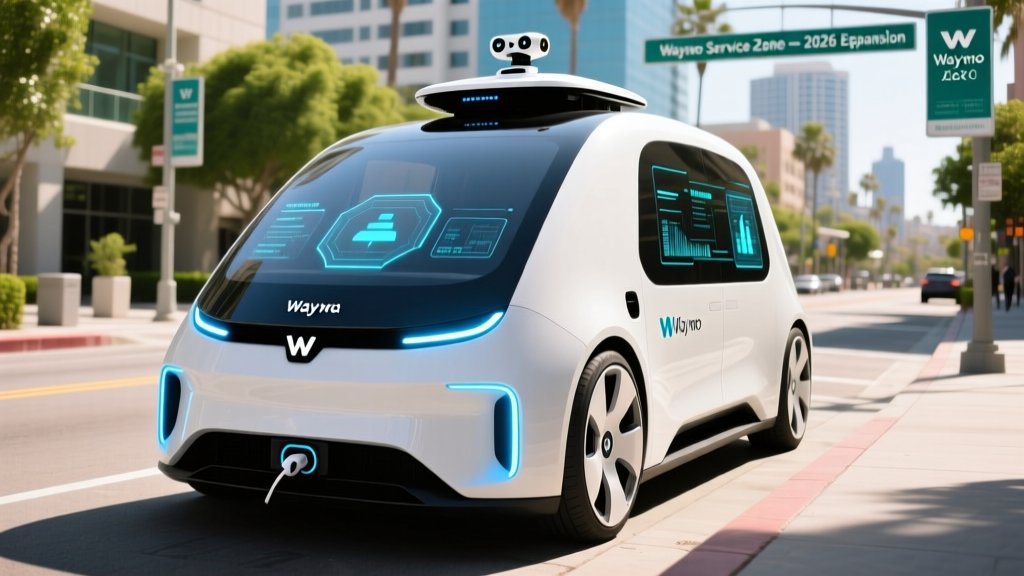
Waymo's commercial robotaxi service — branded as Waymo One — has been operating across significant portions of Los Angeles since mid-2024 and has continued expanding its geofenced service area into 2026. For riders in LA, this means you can hail a fully driverless vehicle (no human behind the wheel) in neighborhoods spanning from Santa Monica and Venice through Hollywood, Koreatown, Mid-Wilshire, Downtown LA, and increasingly into parts of the Westside and Valley corridor.
But "available" doesn't mean "everywhere." Waymo in LA operates within a defined geofence, has specific limitations around freeways and weather, and costs differently than you might expect compared to Uber or Lyft. This guide covers exactly where you can ride, what you'll pay, the real safety record, and the technology underneath — so you can decide whether to hail one or stick with rideshare.
Waymo One is a Level 4 autonomous service — meaning the vehicle handles all driving tasks within its operational design domain (ODD) with no human driver present or required. This is fundamentally different from Level 2 systems like Tesla Autopilot/FSD (Supervised), GM Super Cruise, or Ford BlueCruise, which require an attentive human driver at all times. When you ride in a Waymo in LA, the driver's seat is empty.
Where Can I Use Waymo in LA Right Now?
Waymo's Los Angeles service area has grown progressively since its initial commercial launch. As of early 2026, the operational geofence covers approximately 80+ square miles across central and western LA.
| Zone | Key Neighborhoods | Status |
|---|---|---|
| Westside / Coast | Santa Monica, Venice, Marina del Rey, Culver City | ✅ Active |
| Central LA | Hollywood, Mid-Wilshire, Koreatown, Westlake | ✅ Active |
| Downtown LA | Financial District, Arts District, Little Tokyo, USC area | ✅ Active |
| Mid-City / South LA | Baldwin Hills, Leimert Park, parts of South LA | ✅ Active (select areas) |
| Valley | Studio City, Sherman Oaks, parts of North Hollywood | ⚠️ Expanding |
| Eastside | Silver Lake, Echo Park, Boyle Heights | ⚠️ Partial / Expanding |
Key constraints to know: Both pickup and drop-off must be within the geofence. You cannot hail a Waymo to take you from Santa Monica to Pasadena if Pasadena falls outside the current boundary — the app will simply show the zone as unavailable for that trip. Waymo publishes its live service area within the Waymo One app, and the map updates as coverage expands.
Airport access: Waymo began offering LAX rides as part of its LA expansion. However, airport pickups and drop-offs follow specific staging-area protocols — the app guides you to designated Waymo pickup zones rather than standard rideshare curbs. Check the app for current LAX availability, as terminal access rules continue to evolve.
How Much Does Waymo Cost vs. Uber and Lyft?
Waymo One uses upfront pricing — you see the fare before confirming the ride, just like Uber and Lyft. There's no surge pricing in the traditional sense (no 2.5x multipliers at bar close), which is a significant advantage during peak demand periods. However, Waymo's base fares are not always cheaper.
| Route (~distance) | Waymo One | UberX | Lyft Standard |
|---|---|---|---|
| Santa Monica → Hollywood (~14 mi) | $22–$28 | $18–$35* | $17–$33* |
| Downtown LA → LAX (~18 mi) | $30–$38 | $25–$50* | $24–$48* |
| Koreatown → USC (~5 mi) | $12–$16 | $10–$18* | $9–$17* |
| Venice → Culver City (~4 mi) | $10–$14 | $9–$15* | $8–$14* |
*Uber/Lyft ranges reflect off-peak to surge pricing. During high demand, rideshare fares can spike 1.5–3x; Waymo fares remain stable.
The pricing takeaway: During normal demand, Waymo is typically comparable to or slightly more expensive than UberX/Lyft Standard. During surge periods — rush hour, weekend nights, event nights at SoFi or Crypto.com Arena — Waymo is often the cheaper option because its pricing doesn't spike. Waymo also periodically offers promotional credits for new riders and first-time users in newly expanded zones.
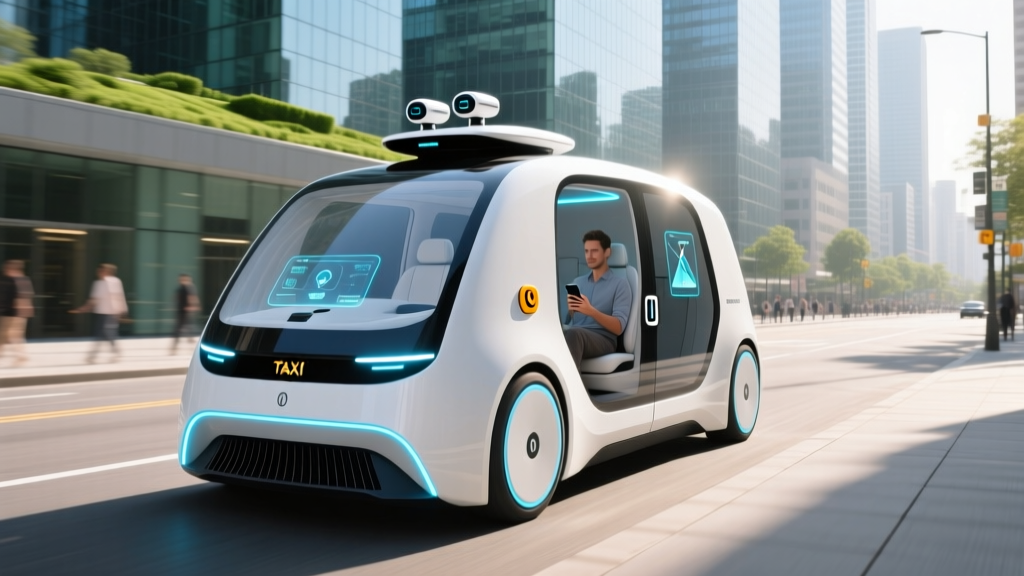
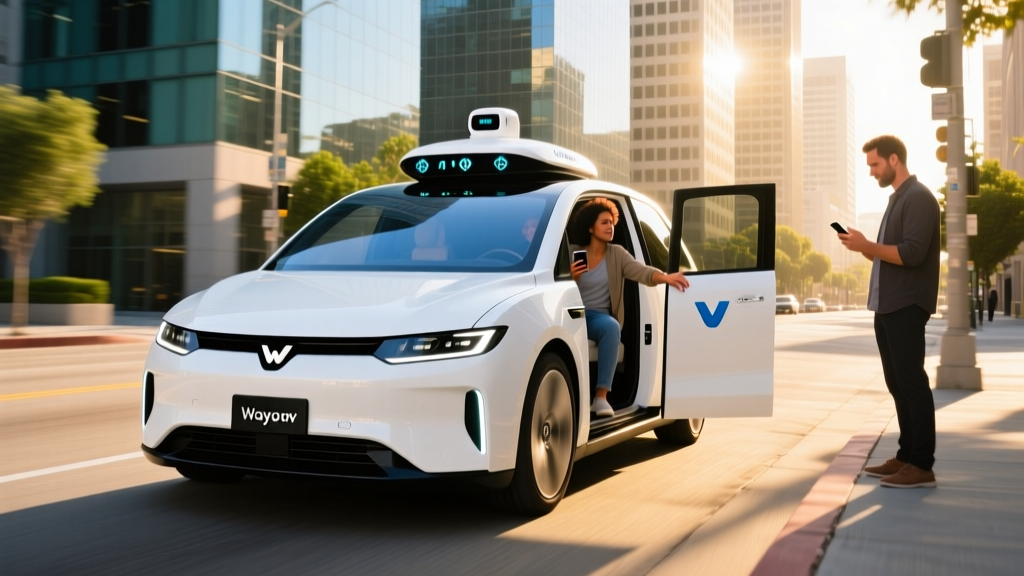
How to ride: Download the Waymo One app (iOS/Android), create an account, enter your pickup and drop-off locations, and confirm. The app shows the vehicle's location as it approaches, and you unlock the doors via the app when it arrives. Inside, there's a screen showing your route and a "start ride" button. You can also make intermediate stops and play your own music via Bluetooth.
How Safe Are Waymo Robotaxis? The Real Data
- Over 10 million paid autonomous trips completed across all Waymo One markets (LA, Phoenix, San Francisco) as of late 2025.
- Over 50 million fully autonomous miles driven without a human safety driver in the vehicle.
- Waymo's own published data and NHTSA-reported incidents show a significantly lower rate of injury-involved crashes compared to human benchmarks in equivalent urban environments.
- A IIHS-referenced study of Waymo's Phoenix and SF operations found property-damage crash rates approximately 75% lower than human-driven vehicles in comparable areas, and injury-related crash rates even lower.
What the data actually shows: Waymo's vehicles do get into minor incidents — most commonly low-speed contact events in parking lots, at stop signs, or during complex multi-point turns. These are overwhelmingly property-damage-only events with no injuries. The vehicles occasionally make conservative errors (stopping unexpectedly, taking wide turns) that cause minor inconvenience rather than danger.
Context for LA specifically: Los Angeles presents denser traffic, more unpredictable pedestrians, and more complex intersections than Phoenix (Waymo's first market). Waymo's expansion into LA was preceded by over a year of driverless testing in the city. The California Public Utilities Commission (CPUC) and the California DMV both track and publish incident data for autonomous vehicle operators in the state, and Waymo's disengagement and collision reports are part of the public record.
Important nuance: Comparing robotaxi safety to human drivers requires careful framing. Waymo vehicles drive primarily in mapped urban environments at moderate speeds — they don't do 80-mph rural highway driving or navigate unmapped rural roads. Within their operational domain, the data strongly favors Waymo over the human baseline. Outside that domain, the comparison doesn't apply.
The Technology: What Powers Waymo's 6th-Generation Vehicles
Waymo's current LA fleet primarily uses the 6th-generation Waymo Driver hardware integrated into vehicles like the Zeekr RT (a purpose-built electric robotaxi) and the Jaguar I-PACE (the earlier fleet vehicle). The system uses a sensor-fusion approach — fundamentally different from camera-only systems like Tesla's.
| Sensor Type | Function | 6th-Gen Specs |
|---|---|---|
| LiDAR | 3D point-cloud mapping of surroundings; precise distance measurement | Multiple roof-mounted units; 360° coverage; improved range and resolution over Gen 5 |
| Cameras | Traffic light/state detection, signage, lane markings, object classification | High-resolution surround cameras; improved low-light and high-dynamic-range performance |
| Radar | Velocity detection of moving objects; redundancy in poor visibility | Improved imaging radar for object tracking at distance |
| HD Maps | Pre-mapped route data; lane geometry, speed limits, signal positions | Centimeter-precision maps of the LA geofence; continuously updated |
| Compute | Real-time sensor fusion, prediction, and path planning | Custom Waymo hardware; reduced power consumption vs. Gen 5 |
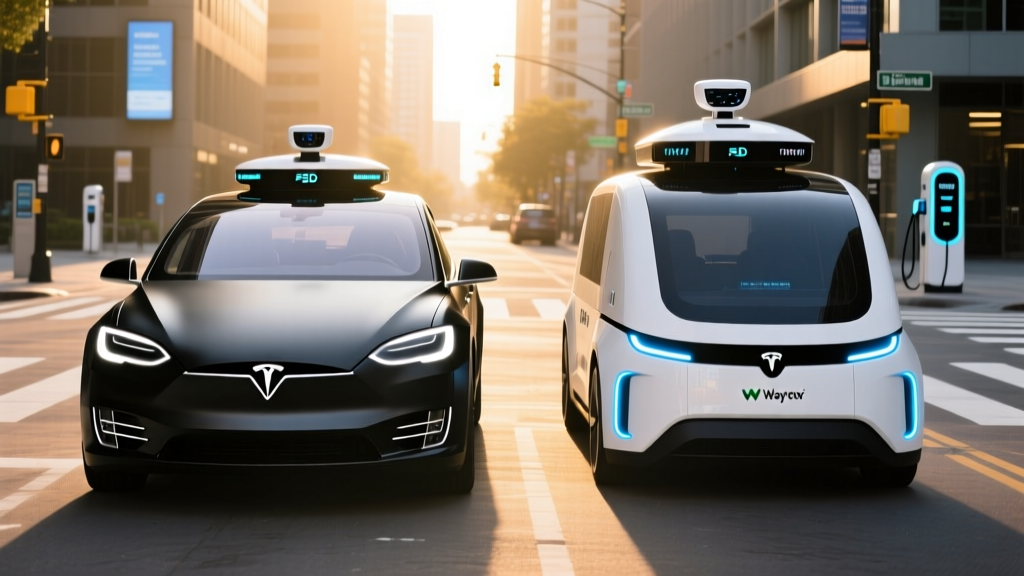
Why LiDAR matters: The LiDAR-versus-camera debate is central to autonomous driving. Tesla relies on a camera-only ("Tesla Vision") approach, arguing that humans drive with eyes alone and cameras should suffice. Waymo's position — supported by most of the autonomous driving industry — is that LiDAR provides critical redundancy: it works identically in darkness, directly into sun glare, and in situations where camera contrast fails. The trade-off is cost and complexity, but for a commercial fleet where each vehicle generates revenue across thousands of rides, the per-ride sensor cost becomes manageable.
Geofencing and HD mapping: Waymo vehicles don't drive just anywhere. Every road within the LA service area is pre-mapped at centimeter-level precision. The vehicle knows every lane boundary, speed limit, traffic signal position, and crosswalk before it arrives. This is why Waymo can't simply expand to a new neighborhood overnight — each area requires detailed mapping and validation before the geofence extends.
Regulatory Approval: Who Lets Waymo Operate in LA?
Waymo's LA operations sit under a layered regulatory framework:
- California DMV: Issues the autonomous vehicle testing and deployment permits. Waymo holds a DMV deployment permit allowing driverless commercial operations. The DMV publishes annual disengagement reports and collision logs.
- California Public Utilities Commission (CPUC): Regulates the commercial passenger service aspect — essentially, the CPUC authorizes Waymo to charge fares for rides, similar to how it regulates Uber and Lyft. The CPUC's Autonomous Vehicle Carrier program is the specific authorization framework.
- NHTSA (Federal): Sets vehicle safety standards (FMVSS). Waymo has received specific exemptions for vehicles without traditional controls (steering wheel, pedals) — relevant to the Zeekr RT fleet. NHTSA also operates the Standing General Order requiring crash reporting for Level 2+ and above systems.
- City of Los Angeles / LADOT: Local coordination on pickup/drop-off zones, curb management, and airport (LAWA) access agreements.
Why this matters for riders: Unlike a startup testing without clear oversight, Waymo operates under multiple regulatory umbrellas with public reporting requirements. If you're concerned about accountability, the DMV and CPUC both maintain public records of Waymo's operational incidents and compliance status.
Current Limitations: Where Waymo in LA Falls Short
- Freeway driving: Waymo's LA service primarily uses surface streets. While Waymo has been testing freeway capabilities, most LA rides avoid the 405, 10, 101, and other freeways. This means cross-town trips can take longer than a rideshare that hops on the highway.
- Outside the geofence: If your destination falls outside the mapped service area, the app won't let you book the ride. No partial coverage — both ends must be inside.
- Heavy rain and flooding: While LA isn't known for rain, when it does rain hard, LiDAR performance degrades and road conditions become unpredictable. Waymo may restrict or suspend service during significant rain events.
- Construction zones: Major roadwork with shifted lanes, temporary barriers, or flaggers can confuse the system. Waymo may reroute around known construction or, in some cases, be unable to complete a trip through an unmapped detour.
- Complex parking structures: Waymo drops you at the curb. It won't navigate multi-level parking garages, valet areas, or private driveways with complex access.
- Car seats and accessibility: Waymo vehicles do not currently provide child car seats. Riders with specific accessibility needs (wheelchair-accessible vehicles) have limited availability — Waymo has been working on accessible vehicle options, but standard fleet vehicles require the rider to be able to enter a standard sedan/crossover.
- Food/grocery transport: You can bring items with you, but the vehicle is unattended — don't leave belongings behind, as recovering them requires contacting Waymo support.
The freeway limitation is the biggest practical gap. A trip from Santa Monica to Downtown LA via surface streets takes 45–70 minutes in typical traffic. A human Uber driver might take the 10 freeway and cut that to 25–40 minutes. Until Waymo's freeway operations are fully commercialized in LA, surface-street routing is the default — and it affects both travel time and fare (longer route = higher distance-based cost).
Waymo in LA vs. Other Cities: How Does It Compare?
| Market | Service Area | Freeway Access | Airport Service | Fleet Size |
|---|---|---|---|---|
| Los Angeles | ~80+ sq mi | Limited / Testing | LAX ✅ | Growing (hundreds) |
| Phoenix (Metro) | 200+ sq mi | Partial ✅ | PHX ✅ | Largest fleet |
| San Francisco | Most of SF proper | Partial ✅ | SFO ✅ | Hundreds |
| Austin (expanding) | Limited / Launching | Not yet | Not yet | Ramping |
Phoenix remains Waymo's most mature market — the largest geofence, the most freeway integration, and the longest operational history. San Francisco is comparable to LA in complexity but has a slightly more established freeway-riding capability. LA's service is newer and still expanding, which means more areas will come online through 2026, but riders should expect the current limitations to persist in the near term.
Frequently Asked Questions
Is Waymo in LA truly self-driving, or is there a driver?
Truly self-driving. Waymo One vehicles in LA have no human driver — the driver's seat is empty. This is SAE Level 4 autonomy within the geofenced service area. There is no remote "teleoperation" where a human is driving the car in real-time; the vehicle's onboard AI handles all driving decisions. Remote assistance exists only for edge-case guidance (e.g., the vehicle encountering an unusual obstruction and requesting a routing hint), not for continuous driving.
How do I get started with Waymo One in LA?
Download the Waymo One app from the App Store or Google Play, create an account with a payment method, and enter your pickup location. If you're within the LA service area, the app will show available rides and upfront pricing. Wait times typically range from 3 to 10 minutes depending on your location and time of day.
What vehicle will pick me up?
Waymo's LA fleet includes the Jaguar I-PACE (an all-electric SUV with ~85 kWh battery and EPA-estimated 234-mile range) and the newer Zeekr RT, a purpose-built electric robotaxi designed for ride-hailing with a lower floor, wider door openings, and a more spacious rear cabin. Both are fully electric, so your ride produces zero tailpipe emissions.
Is Waymo cheaper than Uber at night or during surge?
Often, yes. Waymo doesn't use surge pricing, so a Friday night ride from Hollywood to Santa Monica will cost roughly the same as a Tuesday afternoon ride for the same distance. Uber and Lyft can surge 1.5–3x during peak demand, making Waymo the more predictable and often cheaper option during busy periods.
What happens if the Waymo vehicle gets confused or stops?
The vehicle is designed to pull over safely if it encounters a situation it can't resolve. You can contact Waymo support through the in-vehicle screen or the app at any time. In most cases, the vehicle resolves the situation on its own (waiting for a pedestrian to clear, re-routing around an obstruction). Total trip-stopping events are rare but do happen — budget an extra 5–10 minutes for unexpected pauses if you're on a tight schedule.
Can I use Waymo to get to LAX?
Yes, LAX service is available. The app will direct you to specific Waymo pickup/drop-off zones at the airport, which may differ from standard rideshare areas. Confirm your terminal and follow the in-app directions when you arrive.
How does Waymo's safety compare to a human Uber driver?
Within its operational domain (mapped urban surface streets, moderate speeds, fair weather), Waymo's published crash data shows significantly lower rates of both property-damage and injury-involved incidents compared to human driving benchmarks in similar environments. The key qualifier is "within its operational domain" — Waymo doesn't drive in conditions where it isn't confident, which is itself a safety feature. For detailed data, refer to Waymo's published safety reports and the California DMV's autonomous vehicle collision records.