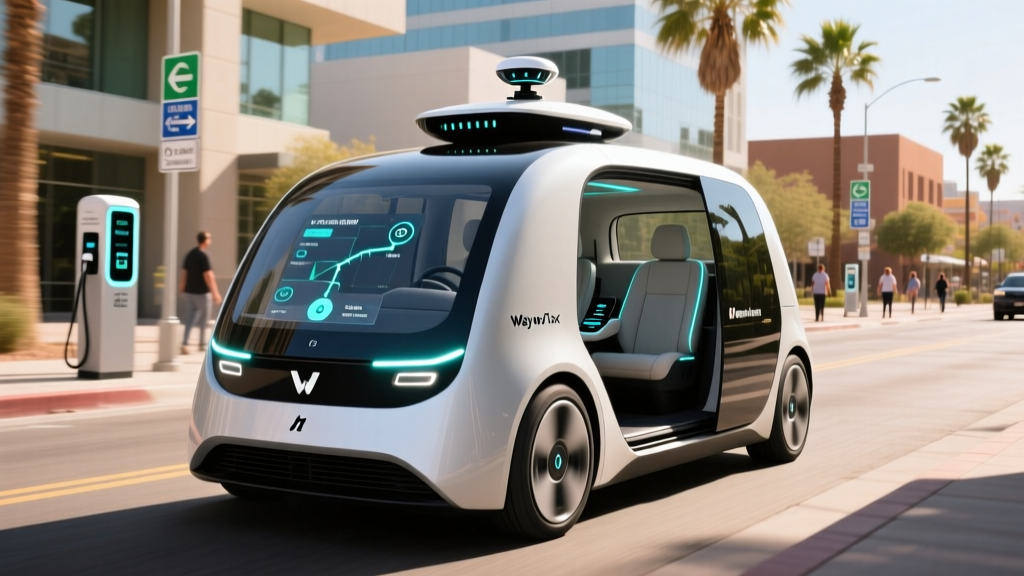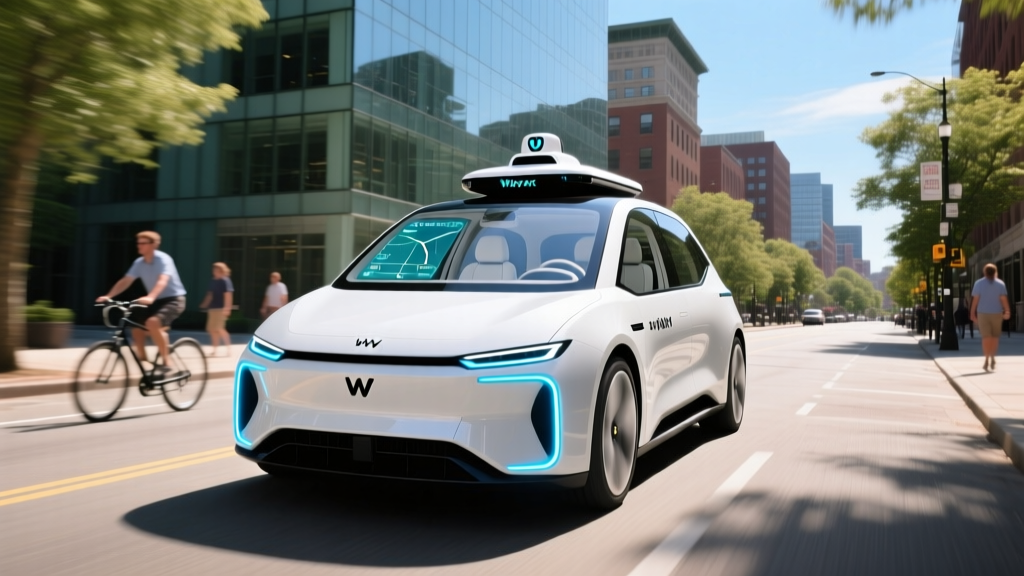
Waymo's footprint has expanded rapidly since 2024, but for riders asking about Waymo in Boston, the answer is nuanced: service is not yet live in the city proper as of early 2026, though testing and regulatory groundwork point toward a phased launch. Here is a data-driven look at where Waymo stands in Massachusetts, how the service works where it does operate, and what Boston riders should realistically expect.
Is Waymo Operating in Boston Right Now?
No. As of Q1 2026, Waymo One — the company's commercial rider-hailing service — is not available in Boston. Waymo's live commercial markets remain concentrated in Sun Belt metros where weather, road geometry, and regulatory environments are more favorable to Level 4 deployment:
| Metro | Status | Service Area (approx.) | Hours |
|---|---|---|---|
| Phoenix, AZ | Live (fully driverless) | ~500 sq mi (Tempe, Chandler, Scottsdale, Mesa, Phoenix core) | 24/7 |
| San Francisco, CA | Live (fully driverless) | ~50 sq mi city core + expansion zones | 24/7 |
| Los Angeles, CA | Live (fully driverless) | Santa Monica, Hollywood, Downtown, Mid-City, Beverly Hills | 24/7 |
| Austin, TX | Live (phased rollout) | Central Austin, South Austin initial zones | Limited hours, expanding |
| Boston, MA | Not live; testing/regulatory phase | N/A | N/A |
Waymo has tested prototype vehicles in Boston-area conditions in prior years (notably in partnership with local fleets), but there is no announced date for a public Waymo One launch in the metro. Any coverage suggesting you can currently hail a driverless Waymo in Boston is premature.
What Autonomy Level Is Waymo — and Why It Matters
| SAE Level | Description | Examples |
|---|---|---|
| Level 0 | No automation; driver performs all tasks | Legacy vehicles |
| Level 1 | Single-axis assist (steering OR speed) | Adaptive cruise, lane-keep |
| Level 2 | Combined steering + speed assist; driver must supervise | Tesla Autopilot, FSD Supervised, GM Super Cruise, Ford BlueCruise |
| Level 3 | Conditional automation; driver must take over on request | Mercedes Drive Pilot (limited markets) |
| Level 4 | High automation in a defined ODD — no driver required | Waymo One, Zoox |
| Level 5 | Full automation, any condition, any road | Does not yet exist commercially |
Waymo One is a Level 4 service. The vehicles have no steering wheel or pedals accessible to a passenger, and no human driver is present. This is a fundamentally different category than Tesla FSD Supervised, GM Super Cruise, or Ford BlueCruise, all of which are Level 2 systems requiring continuous driver engagement. If a Waymo encounters a scenario outside its Operational Design Domain (ODD) — heavy snow, a road closure, a sensor fault — the vehicle is designed to execute a minimal-risk maneuver (pull over, stop safely) rather than hand control to a rider.
How Waymo One Works (and Pricing vs. Uber/Lyft)
When Waymo does expand to a new metro, the rider experience is consistent:
- Download the Waymo One app and create an account.
- Enter pickup and drop-off locations within the geofenced service area.
- A Jaguar I-PACE-based 6th-generation Waymo Driver vehicle arrives — typically within 3–8 minutes in mature markets.
- Unlock via the app; the ride proceeds fully driverless.
- In-app support is available 24/7; remote assistance can pause or reroute the vehicle.
| Route | Waymo One | UberX | Lyft Standard |
|---|---|---|---|
| 5-mile urban trip | $10–$14 | $11–$16 | $10–$15 |
| 10-mile airport run | $22–$30 | $24–$35 | $22–$32 |
| Surge-prone Friday night | No surge pricing (flat model) | 1.5x–2.5x typical | 1.3x–2.0x typical |
Waymo has publicly committed to avoiding surge-style pricing, which makes costs more predictable than Uber/Lyft during peak demand. For Boston riders, expect pricing in line with these benchmarks once service launches — likely competitive with UberX but not meaningfully cheaper. Waymo has historically subsidized early-market rides; pricing may rise as markets mature.
Safety Data: What the Numbers Actually Show
Waymo cumulative autonomous miles (as of late 2025): Over 50 million fully driverless miles logged across Phoenix, San Francisco, and Los Angeles, per Waymo's published safety reports.
Injury-crash comparison (NHTSA-reviewed data): Waymo's driverless fleet has shown a roughly 85% reduction in injury-causing crash rates per million miles compared to human-driver benchmarks in comparable urban environments, based on Waymo's 2024–2025 safety transparency reports reviewed alongside NHTSA AV incident data.
Contact rate: Property-damage-only contact incidents for Waymo's 6th-gen fleet run at roughly 30–40% below the human baseline in matched geographies, with most incidents being low-speed, other-party-at-fault events (e.g., being rear-ended at a stop).
Important caveats: Waymo operates in geofenced, mapped, and generally well-weathered environments. Its safety record cannot be directly extrapolated to Boston's winter conditions, narrower streets, or the region's higher density of construction zones and double-parked delivery vehicles. NHTSA's Standing General Order requires all AV operators to report crashes, and Waymo's public disclosures are among the most detailed in the industry — but independent third-party validation remains limited.
Technology Stack: Lidar-Heavy, Not Camera-Only
The 6th-generation Waymo Driver, deployed on the Jaguar I-PACE and the upcoming Zeekr RT minivan platform, uses a redundant multi-sensor suite — a deliberate contrast to Tesla's camera-only FSD approach:
- Lidar: Multiple roof- and body-mounted units provide 360° 3D point-cloud mapping out to ~500 meters, critical for depth perception in low light and partial occlusion.
- Cameras: High-dynamic-range imaging arrays for lane, sign, signal, and pedestrian classification.
- Radar: Imaging radar for velocity measurement and all-weather object detection.
- HD maps + geofencing: Waymo pre-maps every inch of its service area at centimeter precision. The vehicle only operates where the map is current and validated — this is the "geofence" that defines its ODD.
- Compute: Custom-designed AV compute platform with redundant power, braking, and steering systems.
This lidar-first architecture is why Waymo can operate without a safety driver, but it also explains the slower geographic expansion: every new square mile must be mapped, validated, and tested before riders are carried. Boston's historic street grid, frequent construction, and seasonal foliage changes will add meaningful mapping overhead versus Phoenix's stable suburban arterials.
Regulatory Landscape: Who Has to Approve Boston Service?
Robotaxi deployment in the United States is regulated at both the state and, in some cases, municipal level. In Massachusetts:
- The Massachusetts Department of Public Utilities (DPU) and Department of Transportation (MassDOT) are the primary state regulators for autonomous vehicle testing and commercial operation.
- The City of Boston has its own permitting authority for AV testing on public roads, managed through the Boston Transportation Department.
- NHTSA retains federal jurisdiction over vehicle safety standards (FMVSS), and has granted specific exemptions to AV manufacturers for vehicles without steering wheels (e.g., Zoox) — relevant as Waymo's next-gen Zeekr platform enters service.
- Massachusetts does not currently have a comprehensive commercial robotaxi framework comparable to California's CPUC program or Arizona's permissive regime, which means legislative or regulatory action would likely be needed before Waymo One can charge riders in Boston.
For context, MassDOT has historically taken a measured approach to AV deployment, prioritizing safety data over speed-to-market. This is a meaningful gating factor for any Boston launch timeline.
Current Limitations: Why Boston Is a Hard Market
- Winter weather: Snow, sleet, and road salt obscure lane markings, reduce lidar and camera effectiveness, and create low-traction conditions that push the system outside its ODD. Waymo has tested in winter cities but does not currently offer service in any market with significant snowfall.
- Geofence rigidity: Waymo One only operates inside its mapped service area. Cross-town trips that exit the zone, or rides to suburban addresses outside the geofence, are not possible.
- Edge cases: Double-parked delivery trucks, construction flaggers using hand signals, and Boston's notorious rotary intersections are among the more challenging scenarios for AV perception stacks.
- No highway service (yet): Most current Waymo One rides are on surface streets at speeds under 45 mph. Logan Airport runs would require highway-capable ODD approval, which is a later-phase expansion in most markets.
- Accessibility: Waymo's Jaguar I-PACE fleet is not wheelchair-accessible. The upcoming Zeekr RT platform is designed with a low flat floor and wide doors to address this, but availability will lag initial launch.
- No multi-stop or food delivery: Currently single-destination rides only. Waymo has piloted limited delivery partnerships but these are not part of standard Waymo One service.
Boston's combination of harsh winters, dense urban core, and regulatory caution makes it one of the more difficult US metros for Level 4 deployment. Riders should expect a phased rollout — likely starting in a limited, fair-weather geofence (Back Bay, Seaport, South Boston) before expanding to Greater Boston suburbs.
Frequently Asked Questions
Where can I hail a Waymo right now?
Phoenix, San Francisco, Los Angeles, and (in phased rollout) Austin. Boston is not yet a live market.
How much does a Waymo ride cost compared to Uber?
Roughly comparable to UberX on standard routes — typically $10–$14 for a 5-mile urban trip — but without surge pricing during peak demand. Early promotional pricing may apply when Boston eventually launches.
Is Waymo actually self-driving, or is there a driver?
Waymo One is SAE Level 4: fully driverless within its geofenced service area. No human driver is in the vehicle. This is categorically different from Level 2 systems like Tesla FSD Supervised, which require continuous driver attention.
How safe is Waymo, really?
Across 50+ million driverless miles, Waymo's published data shows injury-crash rates roughly 85% below human benchmarks in matched urban environments. Most incidents are low-speed and other-party-at-fault. Independent validation is still limited, and Boston's winter conditions have not been part of the commercial safety record.
When will Waymo come to Boston?
No announced date. Regulatory framework, winter-weather validation, and HD mapping of the metro are all prerequisites. A phased launch starting with a limited fair-weather geofence is the most plausible path, likely no earlier than late 2026 or 2027 based on current signals.
Can Waymo drive in snow?
Not commercially. Heavy snow, sleet, and obscured lane markings push the system outside its validated ODD. Waymo has conducted winter testing but does not operate a paid service in any snow-belt city.
What car does Waymo use?
The current fleet is based on the Jaguar I-PACE EV with the 6th-generation Waymo Driver sensor suite. A next-generation vehicle built on the Geely/Zeekr RT platform is entering limited deployment and will eventually supplement the Jaguars.