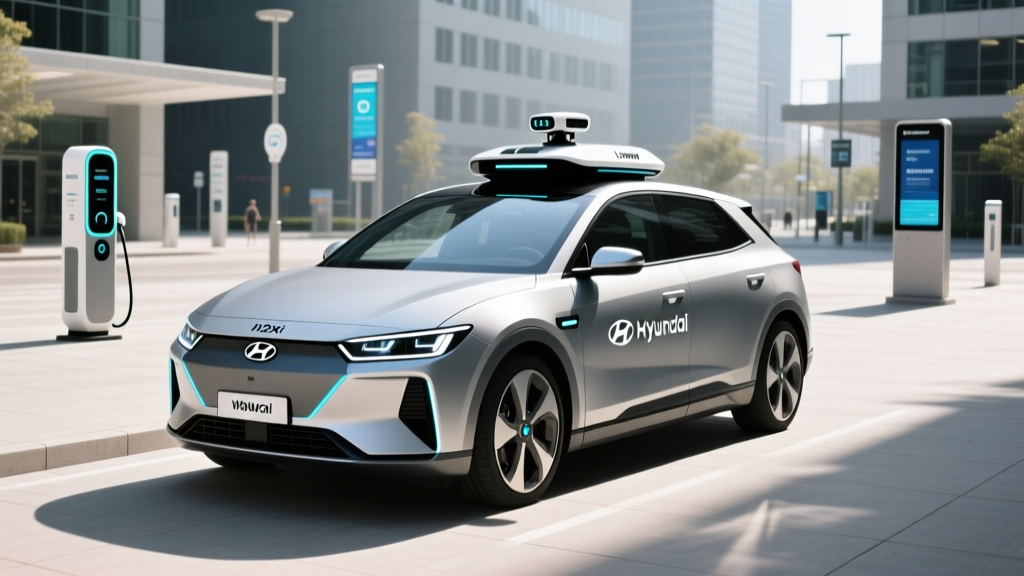
When Waymo announced it would expand beyond the Chrysler Pacifica and Jaguar I-PACE, the Waymo Hyundai Ioniq 5 integration signaled a major shift: a mass-market EV platform retrofitted with Level 4 autonomous hardware, deployed at scale across multiple U.S. cities. By 2026, the Ioniq 5 has become one of the most visible vehicles in Waymo's commercial robotaxi fleet, alongside the purpose-built Zeekr RT and remaining Jaguar I-PACE units.
This guide breaks down exactly what the Waymo-Hyundai Ioniq 5 robotaxi is, where you can hail one, how the technology works, what the safety record shows, and the real limitations that still define Level 4 operations today.
SAE Automation Level: What Level 4 Actually Means
Before examining the Ioniq 5 fleet, it's critical to understand where Waymo sits on the SAE autonomy scale — and why that distinction matters for riders and regulators alike.
| Level | Name | Driver Required? | Example |
|---|---|---|---|
| Level 0 | No Automation | Yes — full control | Conventional vehicles |
| Level 1 | Driver Assistance | Yes — hands on wheel | Adaptive cruise control |
| Level 2 | Partial Automation | Yes — must supervise | Tesla Autopilot, BlueCruise |
| Level 3 | Conditional Automation | Sometimes — must be ready | Mercedes Drive Pilot (limited) |
| Level 4 | High Automation | No — within geofenced ODD | Waymo One, Zoox |
| Level 5 | Full Automation | No — anywhere, any condition | Does not yet exist commercially |
The Hyundai Ioniq 5 robotaxi operates at Level 4. That means zero human input inside the geofenced service area, zero remote teleoperation for routine driving, and zero expectation of passenger intervention. Waymo does employ remote assistance for edge-case routing decisions, but the vehicle handles all dynamic driving tasks autonomously.
Where Can You Use the Waymo Hyundai Ioniq 5 Right Now?
Waymo's commercial service, Waymo One, has expanded steadily since its Phoenix launch. As of early 2026, the Hyundai Ioniq 5 is deployed across multiple metros, though availability within each city is geofenced to approved zones.
| City | Status | Primary Vehicle(s) | Service Zone Notes |
|---|---|---|---|
| Phoenix, AZ (Metro) | Fully operational — 24/7 | Ioniq 5, Jaguar I-PACE, Zeekr RT | Covers 225+ sq mi including Tempe, Scottsdale, Mesa, Chandler; airport service live |
| San Francisco, CA | Fully operational — 24/7 | Ioniq 5, Jaguar I-PACE | City-wide coverage including highway segments; freeway access approved |
| Los Angeles, CA | Fully operational | Ioniq 5 | Downtown, Hollywood, Santa Monica, Westside, LAX corridor |
| Austin, TX | Operational (expanding) | Ioniq 5 | Central Austin, South Congress, Domain; phased geographic expansion |
| Atlanta, GA | Early Rider / phased launch | Ioniq 5 (announced) | Initial zones in Midtown, Buckhead; expansion planned through 2026 |
Geofencing matters. You cannot hail a Waymo outside the approved service zone. The app will reject pickup or dropoff requests that fall beyond the mapped ODD. Expansion is incremental — Waymo maps and validates each new zone before opening it, rather than relying on over-the-air software unlocks.
The Ioniq 5 Robotaxi Tech Stack: Sensors, Compute, and Redundancy
The consumer Hyundai Ioniq 5 is an 84 kWh (usable), NMC-battery EV with up to 305 miles of EPA range and 250 kW peak DC fast charging. Waymo's robotaxi variant retains the core powertrain but replaces the interior driver controls and adds a comprehensive sensor and compute suite.
Waymo Driver (6th-Generation Hardware on Ioniq 5)
- LiDAR: Multiple roof-mounted and bumper-integrated LiDAR units providing 360° 3D point-cloud mapping at up to 500+ meters range. LiDAR operates independently of lighting conditions — a key advantage over camera-only approaches.
- Cameras: High-resolution vision array covering all directions, used for traffic-light state detection, sign reading, lane-marking identification, and object classification.
- Radar: Millimeter-wave radar units for velocity detection of surrounding objects, particularly in adverse weather where camera and LiDAR performance can degrade.
- Compute: Custom Waymo-designed autonomous driving computer with redundant processing paths. The system can execute a safe pullover even if one compute module fails.
- HD Maps: Centimeter-precision pre-mapped routes within the geofenced ODD, updated continuously as infrastructure changes.
- V2I (Vehicle-to-Infrastructure): Select integration with traffic signal systems in supported cities for signal phase and timing data.
This sensor-fusion approach — combining LiDAR, cameras, and radar — is a deliberate contrast to Tesla's camera-only FSD system. Waymo's position is that redundant sensing modalities provide safer fallback in edge cases: LiDAR sees in total darkness, radar penetrates fog, and cameras read color (traffic lights, signs). The tradeoff is higher per-vehicle hardware cost, which Waymo absorbs as a fleet operator rather than passing to consumers.
The Ioniq 5's 800V electrical architecture, originally designed for ultra-fast charging, also supports the high power draw of the autonomous compute and sensor suite without excessive auxiliary battery drain.
Pricing: Waymo One vs. Uber and Lyft
One of the most common questions from prospective riders: how does a Waymo robotaxi fare compare to a conventional rideshare? Pricing varies by city, time of day, and distance, but here's a representative comparison based on published rider reports and Waymo's transparent upfront pricing model.
| Service | Typical Fare Range | Surge Pricing? | Tipping |
|---|---|---|---|
| Waymo One | $12 – $18 | Dynamic pricing in high-demand periods (generally less aggressive than rideshare surge) | Optional in-app tip (no driver to receive it; goes to cleaning/maintenance crews) |
| UberX | $11 – $22 | Yes — can 1.5x–3x during peak | Expected (15–20%) |
| Lyft Standard | $10 – $20 | Yes — Prime Time pricing | Expected (15–20%) |
| Waymo (with promos) | $8 – $14 | N/A | N/A |
Key takeaways:
- Waymo's base fares are generally competitive with UberX/Lyft on standard trips, especially when factoring in that no tip is expected.
- Waymo uses upfront pricing — you see the exact fare before confirming, with no post-ride surprises from route changes.
- During peak demand, Waymo's dynamic pricing tends to be less extreme than rideshare surge multipliers, though wait times can increase as fleet capacity is finite.
- Waymo periodically offers promotional credits for new riders and frequent-use discounts, which can push per-ride costs below rideshare.
Safety Record: What the Data Actually Shows
Safety is the single most scrutinized aspect of robotaxi operations. Waymo publishes periodic safety reports and is subject to NHTSA oversight, California DMV incident reporting, and state-level regulatory audits.
Waymo Safety Data — Key Metrics (Through 2025/Early 2026)
- Total autonomous miles driven: Over 50 million fully driverless miles across all fleet vehicles (as of Waymo's published milestones).
- Police-reported crash rate: Waymo's published analysis shows its fleet is involved in police-reported crashes at a rate approximately 57% lower than human benchmark drivers in comparable urban environments, and 67% lower for injury-causing crashes. (Source: Waymo Safety Report, peer-reviewed methodology comparing to human baselines in the same operating cities.)
- Contactless disengagement rate: Extremely low in mature markets (Phoenix, SF). The vast majority of rides complete without any system-initiated pullover or remote-assistance intervention.
- Incident severity: The majority of Waymo-involved incidents are low-speed, minor-contact events (e.g., being rear-ended at a stop, brushing a parked vehicle) — consistent with urban driving environments. No confirmed fatalities involving a Waymo driverless vehicle in commercial operation as of early 2026.
- Regulatory actions: Waymo has faced temporary operational pauses or restrictions in specific jurisdictions following incidents (notably a school bus contact incident in Phoenix and a cyclist-related event in San Francisco), but has generally resumed service after demonstrating corrective measures to regulators.
For the latest official data, refer to NHTSA's automated vehicle safety resources and Waymo's published safety reports.
Context matters. Robotaxi safety data must be compared to human-driver baselines in the same environments — urban, dense, mixed-traffic settings where crash rates are inherently higher than rural or highway driving. Waymo's comparison methodology uses insurance-claim and police-report data from human drivers in the same zip codes and conditions.
Current Limitations: Where the Ioniq 5 Robotaxi Cannot Go
Level 4 autonomy is powerful within its ODD, but the boundaries are firm. Here are the real-world constraints riders encounter:
- Geofence boundaries: The vehicle will not operate outside its mapped zone. Trips that cross into unmapped suburban or rural areas are rejected at the booking stage.
- Heavy weather: While the Ioniq 5 robotaxi can handle light rain and nighttime driving (LiDAR is lighting-independent), severe conditions — heavy monsoon rain (Phoenix haboobs), dense fog, flooding — trigger operational pauses or zone restrictions. Waymo does not operate in snow/ice conditions currently.
- Construction zones: Rapidly changing road configurations (lane shifts, temporary barriers, flaggers) remain challenging. Waymo maps are updated frequently, but active construction may cause the vehicle to take conservative routes or initiate a safe pullover if confidence drops.
- Airport and highway access: These require specific regulatory approval per jurisdiction. Phoenix Sky Harbor and select SF/LA freeway segments are approved, but not all highway on-ramps or airport terminals are accessible.
- Edge-case stops: If the vehicle encounters an unmapped obstacle (double-parked delivery truck, fallen tree), it may stop and wait, request remote routing assistance, or execute a safe pullover — adding time to your trip.
- Passenger capacity: The robotaxi Ioniq 5 is configured for up to 3 passengers (rear seating only, no front passenger seat in driverless configuration). No car seats or wheelchair-accessible configurations are currently standard — Waymo has WAV options in select markets but availability is limited.
- No intercity travel: All trips must begin and end within the geofenced zone. Phoenix-to-Tucson or SF-to-Sacramento trips are not possible.
Regulatory Landscape: Who Approves Robotaxi Operations?
Robotaxi deployment in the U.S. involves a patchwork of federal, state, and local authorities:
- Federal (NHTSA): Sets vehicle safety standards (FMVSS). Waymo has received limited exemptions for vehicles without traditional controls (steering wheel, pedals). NHTSA also investigates incidents and can issue recalls or standing general orders for crash reporting. See NHTSA's AV safety page.
- State level: California (DMV and CPUC), Arizona (minimal regulation — permissive environment), Texas, and Georgia each have distinct frameworks. California requires both a DMV driverless testing permit and a CPUC commercial passenger-service permit. Arizona has been notably permissive, which is why Phoenix was Waymo's first market.
- Local/municipal: City councils, transportation departments, and police departments influence operational zones, curbside pickup rules, and incident-response protocols. Community pushback (as seen in San Francisco's early debates) can slow or reshape expansion.
The regulatory environment is evolving. As of 2026, there is no single federal framework for commercial robotaxi operations — each new city requires navigating local approvals, which is a primary reason expansion is measured in years, not months.
The Hyundai Ioniq 5 as a Robotaxi Platform: Why This EV?
Hyundai's Ioniq 5 is an interesting choice for a robotaxi workhorse. Here's what makes it work from an engineering and fleet-operations perspective:
| Specification | Consumer Ioniq 5 (2026) | Waymo Robotaxi Variant |
|---|---|---|
| Battery (usable) | 84 kWh, NMC | 84 kWh, NMC (same pack) |
| EPA Range | Up to 305 mi (Long Range RWD) | Estimated ~220–250 mi (added sensor/compute load + stop-go urban duty cycle) |
| DC Fast Charge (peak) | 250 kW (10–80% in ~18 min) | 250 kW capable (fleet charges at depots) |
| Architecture | 800V E-GMP | 800V E-GMP (supports high auxiliary power draw) |
| Drivetrain | RWD or AWD | AWD (typical for fleet redundancy) |
| 0–60 mph | ~5.0 sec (AWD) | Similar (performance not a priority) |
The E-GMP platform's 800V architecture is particularly valuable: the autonomous compute and sensor suite draws significant continuous power (estimated 1.5–3 kW for the full Waymo Driver system), and the 800V bus handles this without excessive current or thermal strain on the 12V auxiliary system. The 250 kW DC fast-charge capability also means fleet vehicles can turnaround quickly at depot chargers, maximizing daily utilization.
The real-world range reduction from the EPA sticker is expected. Urban robotaxi duty cycles involve constant acceleration, climate control for passenger comfort, and the parasitic load of the autonomy stack — all of which reduce effective range versus the EPA's mixed-cycle test. Fleet operators manage this with opportunity charging at depots between ride blocks.
Frequently Asked Questions
Is the Waymo Hyundai Ioniq 5 truly self-driving, or is there a human operator?
It is truly driverless — SAE Level 4. There is no human in the driver's seat, no steering wheel, and no pedals accessible to passengers. The vehicle handles all driving tasks within its geofenced service area autonomously. Remote assistance exists for rare routing decisions, but not for real-time vehicle control.
How do I hail a Waymo Ioniq 5 robotaxi?
Download the Waymo One app (available on iOS and Android), create an account, and request a ride within an active service zone. The app shows an upfront price, estimated pickup time, and vehicle location. When the Ioniq 5 arrives, you unlock it via the app (enter a PIN on the rear door screen or use the app's unlock button). The ride proceeds autonomously to your destination.
How much does a Waymo ride cost compared to Uber or Lyft?
Waymo fares are generally comparable to UberX and Lyft Standard on equivalent trips, typically $12–$18 for a 5-mile urban ride. The key difference: no tip is expected, and surge pricing is generally less aggressive. Promotional credits for new users can make initial rides significantly cheaper.
What happens if the Waymo Ioniq 5 encounters a situation it can't handle?
The vehicle is designed to enter a "minimal risk condition" — it will signal, pull to the side of the road, and stop safely. It will not hand control to the passenger. Remote assistance may help route the vehicle around the obstacle, or a roadside-assistance team may be dispatched. This can add time to your trip but is a safety-first design choice.
Can I use a Waymo robotaxi in bad weather?
Light rain and nighttime driving are handled well — the LiDAR-based system does not depend on visible light. However, heavy rain, dense fog, or extreme weather events can trigger service pauses or zone restrictions. Waymo does not currently operate in snow or ice conditions. The app will notify you if service is unavailable due to weather.
Is the Waymo Ioniq 5 robotaxi available in my city?
As of 2026, Waymo One is fully operational in Phoenix (metro-wide), San Francisco, Los Angeles, and Austin, with Atlanta in early/phased launch. Expansion to additional cities is ongoing but moves at the pace of regulatory approval and mapping validation — expect new markets to be announced incrementally rather than all at once.
How does Waymo's LiDAR approach compare to Tesla's camera-only FSD?
Waymo uses a sensor-fusion stack (LiDAR + cameras + radar) with HD maps within a geofenced zone — this is a Level 4 system designed for specific areas. Tesla FSD (Supervised) is a Level 2 camera-only system that requires driver supervision everywhere. The two approaches solve fundamentally different problems: Waymo eliminates the driver within a limited area; Tesla assists a driver across all roads but does not remove them. They are not directly comparable in capability or regulatory classification.
The Waymo Hyundai Ioniq 5 robotaxi represents the most scaled deployment of Level 4 autonomy on a mainstream EV platform in the United States. It is not a concept, not a pilot, and not a promise — it is a commercial service completing hundreds of thousands of paid rides per week across multiple cities. The technology is real, the safety data is substantive, and the limitations are clearly defined. For riders within a Waymo One service zone, the question is no longer "does this work?" but rather "when will it reach my neighborhood?"