Alphabet and Waymo: Understanding the Ownership Structure
If you've been following the autonomous vehicle space, you've likely asked: how much of Waymo does Google own? The short answer is that Waymo is a wholly owned subsidiary of Alphabet Inc., Google's parent company. Alphabet restructured in 2015, placing Waymo under its "Other Bets" portfolio alongside companies like Verily and Wing. As of 2026, Alphabet retains 100% ownership of Waymo — there is no public stock, no outside majority investor, and no spin-off plan currently on file with the SEC.
What has changed is Waymo's valuation and external funding. In mid-2024, Waymo completed a $5.6 billion funding round led by Alphabet, with participation from external investors including Andreessen Horowitz, Silver Lake, and Tiger Global. This round valued Waymo at approximately $30 billion — up from a reported $17 billion internal valuation in 2022. Despite outside capital entering, Alphabet's controlling ownership remains undisputed. Think of it like this: outside investors hold equity stakes, but Alphabet holds the steering wheel.
Bottom line: Google (via Alphabet) owns Waymo outright. Outside investors hold minority equity from recent funding rounds, but Waymo operates as a fully consolidated Alphabet subsidiary.
SAE Automation Levels: Where Waymo Actually Sits
Before evaluating any robotaxi, you need to understand the SAE International automation framework. This is not marketing — it's an engineering taxonomy that defines exactly what a vehicle can and cannot do without human intervention.
| Level | Name | Who Drives? | Example Systems |
|---|---|---|---|
| 0 | No Automation | Human | Standard vehicle, no assist |
| 1 | Driver Assistance | Human (system assists steering OR speed) | Adaptive cruise, lane-keep |
| 2 | Partial Automation | Human (must supervise at all times) | Tesla Autopilot, GM Super Cruise, Ford BlueCruise |
| 3 | Conditional Automation | System in limited conditions; human must take over when requested | Mercedes Drive Pilot (limited markets) |
| 4 | High Automation | System fully — no human driver needed within operational design domain | Waymo One, Zoox |
| 5 | Full Automation | System everywhere, all conditions | Does not exist commercially |
Waymo One is SAE Level 4. This means the vehicle operates without any human driver behind the wheel, but only within a defined geofenced area under mapped conditions. This is fundamentally different from Level 2 driver-assist systems like Tesla FSD (Supervised) or GM Super Cruise, where a licensed driver must remain attentive and legally responsible at all times. When you ride in a Waymo, there is nobody in the driver's seat.
Where Can You Use Waymo One Right Now?
As of early 2026, Waymo One — the company's commercial rider-hailing service — is operational in several U.S. metro areas. Expansion has been deliberate rather than rapid, with each new city requiring regulatory approval, mapping, and local testing.
| City / Region | Status | Service Area Notes |
|---|---|---|
| Phoenix, AZ (Metro) | ✅ Fully commercial | Chandler, Tempe, Mesa, Scottsdale — largest continuous geofence; ~225+ sq mi |
| San Francisco, CA | ✅ Fully commercial | City-wide coverage including downtown, SOMA, Sunset, Richmond districts |
| Los Angeles, CA | ✅ Fully commercial | Santa Monica, Hollywood, Downtown LA, Beverly Hills — expanding |
| Austin, TX | ✅ Commercial (limited) | Central Austin and select corridors; expanding through 2026 |
| Mountain View, CA | ✅ Commercial | Alphabet HQ area; limited but operational |
| Atlanta, GA | 🔜 Announced | Expected commercial launch 2026; currently in testing phase |
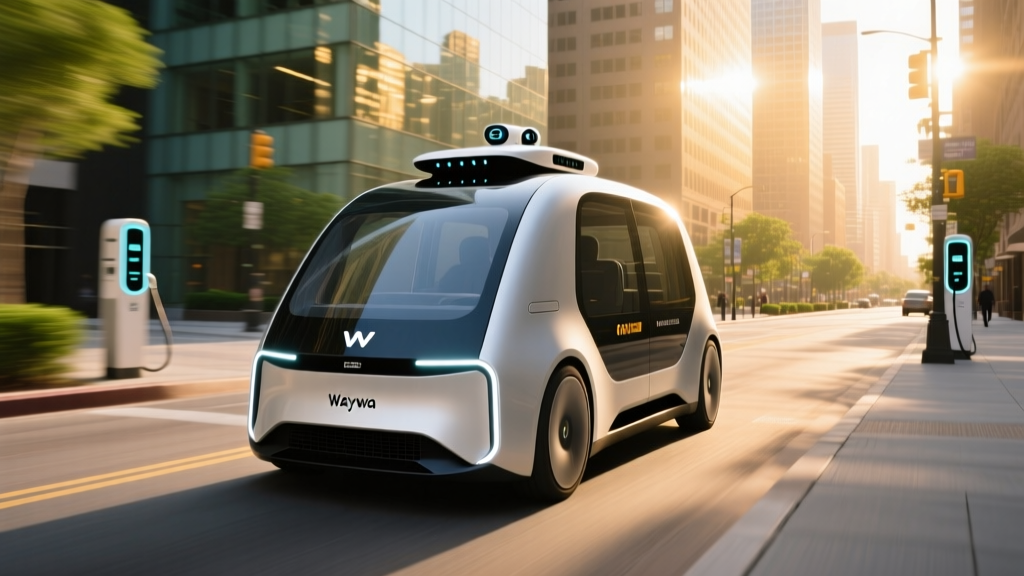
How to ride: Download the Waymo One app (iOS/Android), set your pickup and drop-off within the service area, and a 5th-generation Waymo Driver-equipped Jaguar I-PACE or the newer Zeekr RT custom robotaxi arrives without a human driver. Wait times in Phoenix and SF typically run 3–8 minutes during peak hours.
Waymo Pricing vs. Uber and Lyft: The Real Numbers
Robotaxi rides are not free, and Waymo does not publish a static rate card — pricing is dynamic based on distance, time, and demand, much like Uber or Lyft. However, based on rider reports and published fare data through late 2025, here's how Waymo One stacks up against conventional rideshare in comparable markets.
| Service | Typical Fare (5 mi) | Surge Potential | Tip Expected? |
|---|---|---|---|
| Waymo One | $12 – $18 | Low (no human driver supply constraint) | No (in-app option exists, optional) |
| UberX | $14 – $22 | High (2x–3x during peak) | Yes (15–20% customary) |
| Lyft Standard | $13 – $21 | High (prime-time pricing) | Yes (15–20% customary) |
| Waymo (promo/first ride) | $5 – $10 | N/A | No |
Waymo's structural advantage is the absence of surge pricing driven by driver availability. A rainy Friday evening in San Francisco might push UberX to 2.5x, but Waymo's fleet doesn't go home after a shift. That said, Waymo's base fares are not dramatically cheaper than rideshare — the company is not yet profitable on a per-ride basis and is pricing for market share and utilization, not undercutting aggressively.
Waymo Safety Data: What the Numbers Actually Show
Safety is the most scrutinized dimension of any robotaxi operation, and Waymo publishes more data than most competitors. As of late 2025, Waymo reported over 30 million fully autonomous miles driven across its commercial fleet, with no human driver behind the wheel.
Key safety data points (Waymo, 2024–2025 reporting):
- 30+ million fully driverless miles completed commercially
- Insurance claim rate approximately 85% lower than human-driven benchmarks for property damage (per Waymo's peer-reviewed study with Swiss Re, published 2024)
- Injury-related claims approximately 90% lower than human baseline in comparable urban environments
- NHTSA Standing General Order data: Waymo reported contact incidents, but the rate per million miles remains well below the national human average of ~1.3 crashes per million vehicle miles (NHTSA)
- Most reported contact events involve low-speed (<10 mph) encounters with erratic human drivers, cyclists, or pedestrians — not system failure
Waymo's safety record is not perfect. There have been documented incidents — including a 2024 event in San Francisco where a Waymo vehicle struck a pedestrian who stepped into traffic from behind a double-parked truck. The vehicle braked but could not avoid contact at low speed. NHTSA investigated and the vehicle's response was deemed within expected parameters. No fatalities have been attributed to Waymo's driverless operations as of early 2026.
For context, the National Highway Traffic Safety Administration estimates that human drivers cause approximately 40,000+ fatalities annually in the U.S. — roughly 1.35 deaths per 100 million miles. Waymo has not accumulated enough miles to make a statistically rigorous fatality-rate comparison, but its property-damage and injury-claim data suggest meaningful improvement over human baselines in urban settings.
Under the Hood: Waymo's Technology Stack
Waymo's approach to autonomy is sensor-redundant — it does not rely on cameras alone, which sets it apart from Tesla's vision-only FSD architecture. The 5th-generation Waymo Driver, currently deployed on Jaguar I-PACE vehicles, uses a layered sensor suite:
Waymo 5th-Gen Sensor Suite:
- LiDAR: Custom-built roof-mounted unit providing a 360° 3D point cloud out to ~500 meters. LiDAR is the primary depth-sensing layer and works identically in daylight and darkness.
- Cameras: 29 high-resolution cameras positioned around the vehicle for object classification, traffic-light state detection, and lane-reading.
- Radar: 6 radar units for velocity detection of moving objects, particularly useful in rain or fog where LiDAR and cameras degrade.
- Audio detection: External microphones to detect sirens from emergency vehicles and adjust behavior accordingly.
- HD Mapping: Centimeter-precision maps of every operational street, updated continuously. The vehicle always knows exactly where it is relative to the curb, crosswalk, and lane center.
Why this matters: Sensor redundancy means that if one layer degrades (e.g., heavy rain scatters LiDAR returns), radar and cameras compensate. Tesla's camera-only approach relies on neural-network inference from 2D images — powerful, but without independent depth verification from LiDAR or radar.
The newer Zeekr RT robotaxi, designed from the ground up for autonomous use (no steering wheel or pedals), carries a 6th-generation sensor suite with improved LiDAR resolution and reduced hardware cost. Waymo has not published full 6th-gen specs, but the system is expected to reduce per-vehicle sensor cost significantly — a critical factor for fleet scalability.
The Regulatory Landscape: Who Approves Robotaxis?
Robotaxi operations in the U.S. are governed by a patchwork of state and local regulations — there is no single federal "robotaxi license." Here's how the approval chain works:
- State level: Each state sets its own rules for autonomous vehicle testing and commercial deployment. In California, the California Public Utilities Commission (CPUC) and the California DMV both play roles — the DMV issues testing and deployment permits, while the CPUC regulates commercial passenger service. Arizona takes a lighter-touch approach, with executive orders enabling commercial operation with minimal state oversight.
- Federal level: NHTSA retains authority over vehicle safety standards (FMVSS). The challenge: current FMVSS rules assume a human driver (steering wheel, mirrors, pedals). Waymo's Zeekr RT, which lacks these, required a specific FMVSS exemption petition. The NHTSA AV safety framework continues to evolve.
- Local/municipal: Cities can impose operating restrictions — speed limits, geofence boundaries, hours of operation, school-zone behavior, and first-responder interaction protocols.
Waymo's expansion into each new city requires navigating all three layers. This is why growth is measured in years, not months.
Current Limitations: What Waymo Cannot Do Yet
Level 4 autonomy is powerful — but it is not Level 5. Waymo's operational design domain (ODD) has real boundaries, and understanding these is essential for anyone considering robotaxi use.
Known Waymo limitations (as of 2026):
- Geofencing: The vehicle will not operate outside its mapped service area. If your trip crosses the geofence boundary, the app will not let you book it.
- Weather: Heavy rain, fog, and dust storms can trigger service slowdowns or temporary suspension. Phoenix's monsoon season and San Francisco's dense fog are known edge cases. Snow and ice are not currently supported — no Waymo service in winter-climate cities.
- Construction zones: While Waymo can navigate many construction zones using updated mapping, sudden unmarked lane closures or flagger-directed traffic can cause the vehicle to pull over and wait for remote assistance.
- Highway driving: Waymo vehicles do operate on highways in Phoenix and Austin, but at posted speed limits (typically 65 mph max). Complex multi-lane merges at high speed remain a conservative-driving scenario — Waymo tends to yield more than a human driver would.
- Unusual cargo/passengers: No unaccompanied minors. Car seats are not provided. Large items (bicycles, furniture) are impractical given trunk space in the I-PACE.
- Remote assistance: In ambiguous situations, the vehicle may pause and contact a remote human operator for guidance. This is not remote driving — the operator confirms a path choice, but does not steer the vehicle.
Frequently Asked Questions
Is Waymo a separate company from Google?
Waymo is a separate legal entity — an LLC — but it is wholly owned by Alphabet Inc., Google's parent company. It operates under Alphabet's "Other Bets" segment and reports financials as part of Alphabet's quarterly earnings. You cannot buy Waymo stock independently.
Can I invest in Waymo?
Not directly. Waymo has no public stock. The only way to gain indirect exposure is through Alphabet (GOOGL/GOOG) shares. Some external investors like Andreessen Horowitz and Silver Lake hold minority stakes from the 2024 funding round, but those are private placements not available to retail investors.
Is Waymo truly self-driving, or is someone watching remotely?
Waymo One vehicles are SAE Level 4 — there is no human driver in the vehicle, and the system handles all driving tasks within its geofenced area. Remote operators exist but do not drive the car; they provide high-level route confirmation in edge cases. The vehicle makes all real-time driving decisions independently.
How does Waymo compare to Tesla's Full Self-Driving?
These are fundamentally different systems. Tesla FSD (Supervised) is SAE Level 2 — the driver must remain attentive, hands near the wheel, and legally responsible. Waymo One is SAE Level 4 — no driver, no steering wheel in the newer vehicles, and the company assumes liability during the ride. Tesla's camera-only approach contrasts with Waymo's LiDAR + camera + radar + HD mapping stack.
What happens if a Waymo vehicle gets into an accident?
Waymo carries commercial insurance for its fleet. In the event of a collision, the vehicle is designed to pull over safely, contact emergency services if needed, and notify Waymo support. The company's insurance covers rider injuries and third-party damages. NHTSA's Standing General Order requires Waymo to report all incidents involving its autonomous vehicles.
How much does a Waymo ride cost compared to owning a car?
At $12–$18 for a typical 5-mile urban trip, Waymo is competitive with rideshare but more expensive than personal vehicle ownership for daily commuting. A 10-mile daily round trip at $15/ride equals roughly $300/month — comparable to a car payment, insurance, and fuel combined for a modest vehicle. Waymo makes economic sense for occasional urban trips, not daily suburban commutes.