Can Waymo Go on the Freeway? The Short Answer
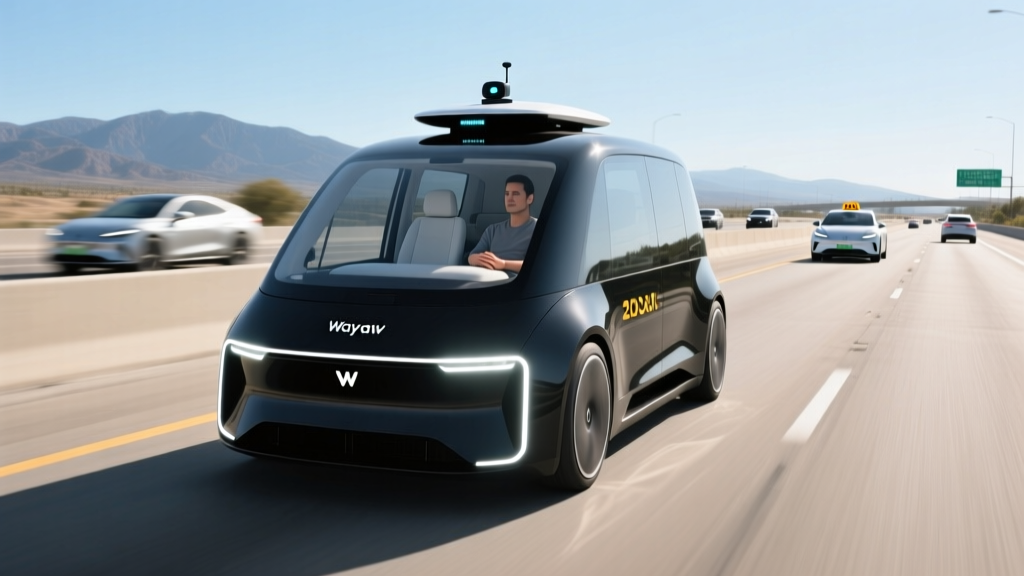
If you've booked a Waymo One ride and noticed the Jaguar I-PACE taking surface streets while a parallel freeway sits empty, you're not imagining things. Waymo can go on the freeway — but only in specific cities, on specific highway segments, and under specific conditions. As of early 2026, freeway-capable service is live in portions of Phoenix, Los Angeles, and the San Francisco Bay Area, while Austin and other markets remain largely surface-street only.
The reason isn't a technology ceiling. Waymo's 6th-generation Driver system is technically capable of highway-speed operation. The constraint is a deliberate, phased rollout governed by geofencing, regulatory approval, and safety-validation requirements. Here's exactly where freeway rides are available, how the technology handles merging and lane changes at 65 mph, and what the safety data actually shows.
Understanding Waymo's Autonomy Level: SAE Level 4, Not Level 2
Before mapping out where Waymo can operate on freeways, it's critical to distinguish what Waymo is — and what it isn't.
SAE Automation Level: Level 4 (High Automation)
Waymo's commercial robotaxi service operates at SAE Level 4 — meaning the vehicle handles all driving tasks within its defined Operational Design Domain (ODD) with no human driver required. There is no steering wheel accessible to the rider, no "driver" seat, and no expectation that you monitor the road.
This is fundamentally different from Level 2 driver-assistance systems like Tesla Autopilot, FSD (Supervised), GM Super Cruise, or Ford BlueCruise, which require an attentive human driver behind the wheel at all times. Waymo does not sell a consumer vehicle — it operates a mobility service where the car itself is the product.
| SAE Level | Definition | Examples | Driver Required? |
|---|---|---|---|
| Level 0 | No automation | Basic cruise control | Yes, full-time |
| Level 1 | Single-axis assist | Adaptive cruise OR lane-keep | Yes, full-time |
| Level 2 | Combined lateral + longitudinal assist | Tesla Autopilot, Super Cruise, BlueCruise | Yes, must supervise |
| Level 3 | Conditional automation (limited ODD) | Mercedes Drive Pilot (traffic-jam, ≤40 mph) | No, but must be ready to resume |
| Level 4 | High automation within defined ODD | Waymo One, Zoox | No — fully driverless in zone |
| Level 5 | Full automation, all conditions | None commercially available | No |
The key phrase is "within its defined ODD." Waymo's freeway capability exists inside carefully mapped, validated, and approved corridors — not on every highway in every city.
Where Can You Actually Use Waymo Right Now?
Waymo's commercial service footprint has expanded steadily, but availability is not uniform. Some metros have full freeway integration; others are limited to surface streets within a geofenced zone.
| Metro Area | Service Status | Freeway Access | Notes |
|---|---|---|---|
| Phoenix, AZ (East Valley + Downtown) | Live — open to public | Yes — select segments (Loop 101, Loop 202, portions of I-10) | Longest-operating market; freeway rides added progressively since late 2024 |
| San Francisco, CA | Live — open to public | Yes — portions of US-101, I-280, I-80 within city limits | Geofenced to SF proper; no cross-bay freeway trips to Oakland yet |
| Los Angeles, CA | Live — open to public | Yes — select corridors (I-10, US-101 segments within service zone) | Service zone centered on Santa Monica, Hollywood, Downtown |
| Austin, TX | Live — limited rollout | No — surface streets only within geofence | Freeway capability under testing; no rider-facing highway trips |
| Mountain View / Sunnyvale, CA | Testing / limited access | Limited — US-101 corridor testing | Not fully open to public via Waymo One app |
Critical nuance: Even in freeway-enabled cities, Waymo does not route on every highway. If your trip origin and destination are both within the service zone, the routing algorithm decides whether a freeway segment is the optimal path. You cannot request a freeway route — the system selects based on traffic, distance, and validated corridor availability.
How Waymo Handles Freeway Driving: The Technology Stack
Highway driving demands a different sensor-performance envelope than surface-street navigation. At 65–75 mph, the vehicle must detect objects at longer ranges, predict lane-change intentions of surrounding drivers, and execute merges with tighter timing margins.
Waymo 6th-Generation Driver: Sensor Suite
- LiDAR: Multiple roof-mounted and bumper-integrated units providing 360° 3D point clouds. Waymo uses custom-built, automotive-grade LiDAR (not off-the-shelf units), delivering detection at 500+ meters for highway-speed object classification.
- Cameras: High-resolution vision system covering all directions with optimized dynamic range for sun glare, tunnel transitions, and nighttime highway driving.
- Radar: Imaging radar for velocity measurement of surrounding vehicles, particularly useful in rain or fog where LiDAR and camera performance can degrade.
- HD Mapping + Localization: Pre-built centimeter-accurate maps of every approved route, including freeway lane geometry, on/off-ramp configurations, and merge-zone boundaries.
- Compute: Custom onboard AI platform processing sensor fusion, prediction, and planning in real time.
This sensor-redundant approach contrasts sharply with Tesla's camera-only ("Tesla Vision") strategy. Waymo's philosophy is that LiDAR provides a ground-truth depth measurement that cameras must infer — a critical advantage when a stopped vehicle appears on a freeway at night, where monocular depth estimation can struggle.
On the freeway specifically, the system must handle:
- Lane changes: Evaluating gap acceptance in dense traffic, signaling, and executing smooth lateral moves
- On-ramp merges: Accelerating to match highway speed while identifying insertion points
- Off-ramp exits: Decelerating from 65 mph to 25–35 mph within ramp geometry constraints
- Construction zones: Detecting temporary lane shifts, cones, and reduced-speed work zones
- Emergency vehicles: Pulling over or yielding when ambulances/fire trucks approach at speed
Waymo's Safety Record on Freeways and Surface Streets
Safety is the primary reason Waymo phases freeway access slowly. The company has published peer-reviewed safety data and responded to NHTSA standing orders for crash reporting.
Waymo Safety Data: Key Figures
- Total autonomous miles driven: Over 40 million fully driverless miles as of early 2026 (across all markets and road types). Source: Waymo Safety Reports.
- Injury-crash rate vs. human benchmark: Waymo's published analysis (peer-reviewed, using SHRP2 naturalistic driving data as a baseline) showed a 85% reduction in injury-causing crashes per million miles compared to human drivers in comparable operating environments.
- Property-damage-only contacts: Reduced by approximately 57% vs. human benchmarks.
- NHTSA Standing General Order crash reports: Waymo, like all ADS operators, must report crashes involving their vehicles. Most reported incidents involve low-speed, stationary or near-stationary contacts — typically other vehicles rear-ending or side-swiping the Waymo vehicle in surface-street traffic, not high-speed freeway collisions.
- Freeway-specific incidents: Waymo has not published a separate freeway-only incident rate. However, the company has stated that freeway operations undergo additional simulation validation (billions of simulated highway miles) before rider-facing deployment.
For context and independent verification, see NHTSA's automated vehicle safety resources and crash reporting data.
It's worth noting what the data does not show: Waymo's safety figures come from geofenced, well-mapped, favorable-weather environments. The comparison to human drivers is not apples-to-apples across all driving conditions — it reflects the specific ODD in which Waymo operates. A human driver navigating a blizzard on I-70 through the Rockies faces challenges Waymo simply does not encounter, because Waymo doesn't operate there.
How Much Does Waymo Cost vs. Uber and Lyft?
Waymo One pricing is dynamic, similar to rideshare, but the structure differs in important ways. There's no "surge pricing" in the Uber sense, though fares vary by distance, time, and demand.
| Route (Approximate) | Waymo One | UberX | Lyft Standard |
|---|---|---|---|
| Short trip: 3–5 miles, city center | $10–$15 | $9–$16 | $9–$15 |
| Medium trip: 8–12 miles, mixed surface/freeway | $20–$30 | $18–$32 | $17–$30 |
| Airport run: 15–20 miles (e.g., SFO to Downtown SF) | $35–$50 | $35–$55 | $33–$52 |
| Longer freeway trip: 25+ miles | Varies; may exceed zone | $50–$75+ | $48–$72+ |
Key differences from rideshare:
- No tipping: There's no driver to tip, which effectively reduces the total cost by 15–20% compared to a tipped Uber/Lyft ride.
- No surge multipliers: Waymo uses demand-based pricing but has historically avoided the 2x–3x surge spikes common on Uber during peak events.
- Wait times: In high-demand Phoenix and SF zones, wait times can be 5–15 minutes. Waymo's fleet size is finite and cannot scale as quickly as rideshare's gig-driver model.
- No shared/pool option: Waymo One is a private ride — you don't share with strangers (though you can add a co-rider at your pickup).
For most in-zone trips, Waymo pricing lands in the same range as UberX/Lyft Standard after tip. The value proposition isn't dramatically cheaper rides — it's a novel, consistent, and (for many riders) more comfortable experience without driver interaction variability.
Current Limitations: Where Waymo Cannot Go
Freeway access is constrained by multiple factors beyond just geography. Here's an honest accounting of what Waymo's robotaxi service cannot do in 2026:
Waymo Freeway & Service Limitations
- Geofencing: Waymo vehicles will not drive outside their approved ODD. If your destination is beyond the zone boundary, the app won't let you book the ride. There is no manual override.
- Weather restrictions: Heavy rain, fog, or dust storms can trigger service suspension or route avoidance. Phoenix monsoon season and SF fog events have caused temporary pullbacks. Waymo does not operate in snow or ice conditions.
- No cross-city freeway trips: Even in freeway-enabled markets, trips that would require extended highway driving outside the mapped corridor are not available. You cannot take a Waymo from San Francisco to San Jose via US-101, for example.
- Construction zone handling: While the system can navigate many work zones, complex or newly reconfigured construction areas may cause the vehicle to pull over safely and request remote assistance or reroute.
- No toll roads: Waymo vehicles currently avoid toll roads and express lanes within their service areas.
- Limited pickup/dropoff precision: On freeway-adjacent trips, the vehicle may drop you at a surface-street location near your destination rather than navigating a complex parking structure or private driveway.
- Emergency rerouting: If the vehicle encounters an unexpected freeway closure or accident ahead, it will exit and reroute on surface streets — potentially adding significant time to your trip.
The Regulatory Landscape: Who Approves Freeway Operations?
Robotaxi freeway access isn't simply a company decision — it requires state and, in some cases, local regulatory approval.
- California (CPUC + DMV): The California Public Utilities Commission (CPUC) issues permits for commercial passenger service, while the DMV handles autonomous vehicle testing and deployment permits. Waymo holds both. Freeway operations within SF and LA were approved after extensive safety-case submissions.
- Arizona (minimal regulation): Arizona has taken a permissive approach to AV deployment, with no specific state-level permit required for commercial robotaxi service beyond standard vehicle registration and insurance. This is why Phoenix was Waymo's first market and its most expansive freeway-access zone.
- Texas (TxDOT + local): Austin's regulatory environment requires coordination with TxDOT and local authorities. Freeway approval is a separate step from surface-street deployment.
- Federal (NHTSA): NHTSA does not "approve" AV operations but sets safety standards and investigates incidents. The agency's Standing General Order requires crash reporting from all ADS-equipped vehicles. See NHTSA's AV safety page for current requirements.
The patchwork regulatory environment means that even if Waymo's technology is freeway-ready in a new city, the legal permission to carry paying passengers on highways may lag by months or years.
Frequently Asked Questions
Can I request that my Waymo ride take the freeway?
No. Waymo's routing algorithm selects the route based on traffic conditions, distance, and validated corridor availability. You cannot override the route selection. If a freeway segment is within the ODD and is the fastest path, the system will use it automatically.
How fast does Waymo drive on the freeway?
Waymo vehicles observe posted speed limits and typically travel at or slightly below the flow of traffic. On a 65 mph freeway, expect the vehicle to travel at 60–65 mph. It will not exceed the speed limit to match aggressive traffic flow.
Is Waymo safer than a human driver on the highway?
Waymo's published data shows significantly lower injury-crash rates than human benchmarks within its ODD. However, this comparison is context-specific: Waymo operates in mapped, favorable-weather, geofenced environments. The data supports that Waymo is safer within the conditions it chooses to operate in — not necessarily across all driving scenarios humans face.
Can Waymo drive on the freeway at night?
Yes, in cities where freeway service is live. The sensor suite (LiDAR, radar, cameras with low-light capability) is designed for nighttime operation. Nighttime freeway rides are routinely completed in Phoenix, SF, and LA.
What happens if the Waymo vehicle encounters an emergency on the freeway?
The vehicle is programmed to safely pull onto the shoulder or exit the freeway, activate hazard lights, and contact Waymo's remote roadside-assistance team. A human remote-assistance operator can provide guidance (they don't "drive" the car remotely, but can authorize actions or dispatch help). In practice, most freeway disruptions result in a safe exit and surface-street reroute.
Will Waymo expand freeway access to more cities?
Yes, but incrementally. Austin is a likely candidate for freeway-capable service as testing progresses. New city launches typically begin with surface-street-only operations, with freeway corridors added after safety validation and regulatory approval. Waymo has not published a public timeline for specific freeway expansions.
Is this truly self-driving, or is there a human watching?
Waymo's rider-facing service is fully driverless — no one is in the driver's seat, and no remote operator is controlling the vehicle in real time. Remote assistance exists for edge cases (the vehicle may request guidance in an ambiguous situation), but the driving is entirely autonomous within the ODD. This is SAE Level 4, not Level 2 driver-assist.
The Bottom Line for Riders
Waymo can go on the freeway — but only where it has been validated, mapped, and permitted to do so. As of 2026, that means select highway corridors in Phoenix, San Francisco, and Los Angeles. The technology is capable of more; the constraint is a deliberate, safety-first expansion model that prioritizes validation over speed.
For riders in those cities, a freeway-capable Waymo ride is seamless: you book through the Waymo One app, the car arrives, and the routing system handles the rest. You may or may not end up on the freeway depending on your origin, destination, and real-time conditions. The experience is quiet, consistent, and — based on available data — remarkably safe within its operating domain.
For everyone else, freeway-capable robotaxi service is coming, city by city, corridor by corridor. The question isn't whether the technology can handle highway driving. It's whether the regulators, the maps, and the safety-validation pipelines are ready in your metro area.