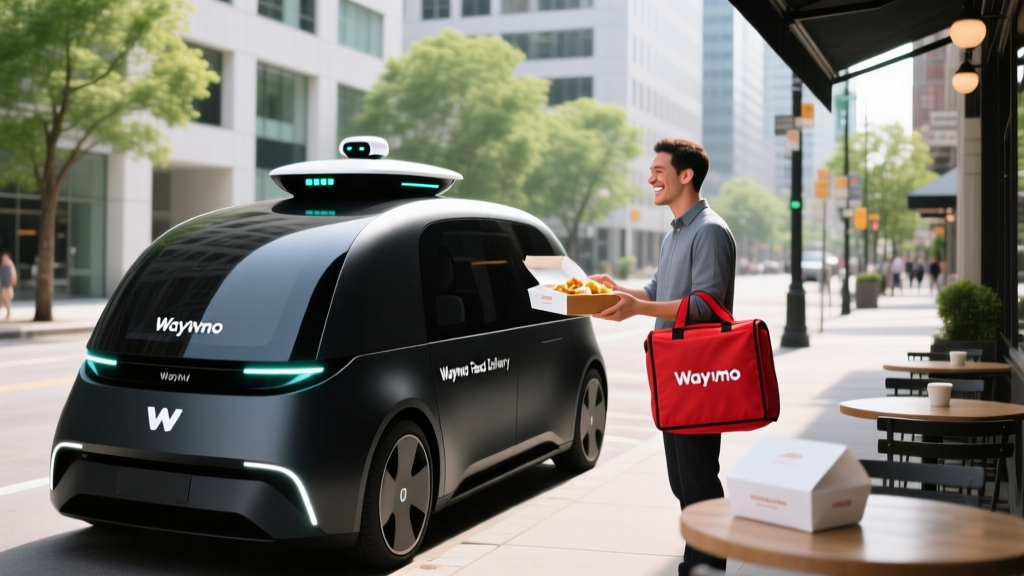
Waymo is best known for its driverless ride-hailing service, but the Alphabet-owned autonomous vehicle company has been expanding into logistics and delivery. If you've searched for Waymo food delivery and wondered whether a robot can actually bring dinner to your door — and how that compares to traditional delivery apps — this guide covers exactly where the service operates, what it costs, the safety record behind it, and the real-world limitations you should know before placing an order.
Is Waymo Food Delivery Actually Self-Driving?
Waymo's delivery and ride-hailing vehicles operate at SAE Level 4, meaning they drive fully autonomously within a defined operational design domain (ODD) — specific geofenced areas with mapped routes — without any human driver behind the wheel. This is fundamentally different from Level 2 driver-assist systems like Tesla Autopilot or GM Super Cruise, which require continuous human supervision. There is no steering wheel interaction or driver monitoring camera in a Waymo vehicle during operation. If the system encounters a scenario it cannot handle, it pulls over safely and can request remote human guidance — but no one is in the driver's seat.
This distinction matters enormously for setting expectations. When a Waymo vehicle arrives with your food, there is a person in the car only if a safety operator has been placed there during a testing phase. In fully commercial operations, the vehicle is empty save for your order. Understanding this SAE Level 4 classification helps you evaluate safety claims and regulatory permissions accurately.
Where Can You Use Waymo Food Delivery Right Now?
As of early 2026, Waymo's delivery capabilities are not a standalone consumer app like Uber Eats or DoorDash. Instead, Waymo has pursued business-to-business partnerships for delivery logistics. Here is the current landscape:
| Service Type | City / Region | Partner | Status (2026) |
|---|---|---|---|
| Autonomous ride-hailing (Waymo One) | Phoenix metro, AZ (East Valley, Downtown, expanding) | Direct (Waymo app) | Live — fully driverless |
| Autonomous ride-hailing (Waymo One) | San Francisco, CA (citywide) | Direct (Waymo app) | Live — fully driverless |
| Autonomous ride-hailing (Waymo One) | Los Angeles, CA (select zones) | Direct (Waymo app) | Live — fully driverless |
| Autonomous ride-hailing (Waymo One) | Austin, TX (expanding zones) | Direct (Waymo app) | Live — limited zones |
| Grocery delivery pilot | Phoenix (Chandler/Gilbert area) | Walmart | Active pilot / limited rollout |
| Package / last-mile delivery | Phoenix metro | UPS | Active — package routes |
| Restaurant food delivery | Not yet available as consumer service | N/A | Not launched |
The key takeaway: Waymo does not currently offer a direct-to-consumer restaurant food delivery service the way DoorDash or Uber Eats does. You cannot open an app, browse local restaurants, and have a Waymo Jaguar I-PACE pull up with your pad thai. What Waymo does offer in the delivery space are B2B logistics partnerships — primarily grocery delivery with Walmart in the Phoenix area and package delivery with UPS.
For consumers in Phoenix, this means you may receive a Walmart grocery order delivered by a Waymo vehicle, but you're ordering through Walmart's platform, not Waymo's. The autonomous vehicle is the logistics layer, not the storefront.
How Waymo's Delivery Tech Stack Works
5th-Generation Waymo Driver System
Waymo's delivery and ride-hailing vehicles use the same sensor suite, whether carrying passengers or cargo. The 5th-generation hardware includes:
- Lidar: Multiple custom-built lidar units providing 360° high-resolution 3D point clouds, effective to ~300+ meters. This is the core differentiator from camera-only systems.
- Cameras: High-dynamic-range cameras covering all directions, optimized for traffic light detection, sign reading, and pedestrian recognition in varied lighting.
- Radar: Short- and long-range radar units for velocity detection of nearby objects, performing reliably in rain and fog where lidar and cameras degrade.
- External audio sensors: Microphones that detect sirens from emergency vehicles, enabling the system to pull over appropriately.
- HD mapping + geofencing: Every operational area is pre-mapped at centimeter-level precision. The vehicle only operates within this defined ODD — it will not drive into unmapped territory.
- Compute: Custom-designed onboard computing handling sensor fusion, prediction models, and path planning in real time.
This lidar-camera-radar fusion approach contrasts sharply with Tesla's camera-only FSD stack. Waymo's redundancy across sensor modalities means that if heavy rain degrades camera visibility, lidar and radar continue providing object detection. The trade-off is higher per-vehicle hardware cost — each Waymo vehicle's sensor suite is estimated to cost tens of thousands of dollars — but for a fleet operator, this cost amortizes over thousands of driverless trips.
Waymo's Safety Record: What the Data Shows
Safety Performance by the Numbers
- Total autonomous miles driven: Over 10 million fully driverless miles completed across Phoenix, San Francisco, and Los Angeles as of late 2025 (Waymo Safety Report).
- Injury-reducing crash rate: Waymo's driverless fleet showed an 85% reduction in injury-causing crashes compared to human benchmark rates in comparable urban driving environments, per a study published by Waymo and validated by third-party researchers (Swiss Re partnership data, 2023–2024).
- Property-damage-only crashes: Approximately 57% fewer than human drivers per million miles in the same operating domains.
- Contact rate: Waymo vehicles make contact with objects or other vehicles at a significantly lower rate than human drivers in equivalent urban settings, though low-speed contact events (e.g., brushing a cone, minor bumper tap at <5 mph) do occur.
Sources: Waymo Safety Data, Swiss Re collaborative study. For broader autonomous vehicle incident reporting, see NHTSA AV Safety Reporting.
These numbers are encouraging, but context is essential. Waymo's vehicles operate in geofenced, mapped urban and suburban environments at relatively moderate speeds. They do not currently handle rural highways, construction zones with complex temporary lane shifts, or severe weather conditions. The safety advantage is real within the ODD, but extrapolating these results to all driving conditions would be premature.
Notable incidents have occurred — including a 2024 event in San Francisco where a Waymo vehicle struck a pedestrian who had been pushed into the roadway after a separate collision. NHTSA investigated, and Waymo issued software updates to improve prediction of vulnerable road users in complex multi-party scenarios. Transparency about these events, and the software iterations that follow, is part of what distinguishes Level 4 operators from companies that make unsubstantiated safety claims.
Delivery Pricing: Waymo vs. Traditional Delivery Apps
Because Waymo food delivery is not a direct consumer service, there is no "Waymo delivery fee" to compare directly with DoorDash or Uber Eats. However, we can examine the economics from two angles: what it costs Waymo to operate, and what partner pricing looks like for Walmart grocery delivery.
| Service | Typical Delivery Fee | Service/Platform Fee | Estimated Total Cost (Order + Fees) |
|---|---|---|---|
| DoorDash (standard) | $1.99 – $5.99 | $1.50 – $3.00 | Order + ~$5–$9 fees + tip |
| Uber Eats (standard) | $0.99 – $4.99 | $2.00 – $3.50 | Order + ~$5–$8 fees + tip |
| Walmart Delivery (human driver) | $6.95 – $9.95 (or free w/ Walmart+) | Included | Order + $7–$10 fee (or $0 w/ membership) |
| Walmart via Waymo (Phoenix pilot) | Comparable to standard Walmart delivery | Included | Order + standard delivery fee — no tip required |
The critical economic insight: you don't tip a robot. For a typical food delivery order, the driver tip adds $3–$8. With autonomous delivery, that cost disappears for the consumer. For Waymo's B2B partners, the value proposition is long-term cost reduction — eliminating the per-delivery labor cost that makes last-mile logistics the most expensive segment of the delivery chain. Industry estimates put the cost of human-driven last-mile delivery at $5–$12 per drop; autonomous delivery could eventually reduce this to $1–$3 per drop at scale, though Waymo has not publicly confirmed its per-delivery cost.
Current Limitations of Waymo Delivery
What Waymo Delivery Cannot Do (Yet)
- No direct restaurant food delivery: You cannot order from a restaurant through Waymo. Only B2B partnerships (Walmart groceries, UPS packages) are active.
- Geofenced operation only: Waymo vehicles operate within tightly mapped zones. If your address falls outside the Phoenix East Valley ODD or the specific San Francisco/LA zones, the vehicle simply cannot reach you.
- Weather restrictions: Heavy rain, fog, and especially snow can cause Waymo to suspend operations. Lidar performance degrades in heavy precipitation, and the system is programmed to pause rather than risk unsafe driving. Phoenix's dry climate is ideal; expansion to Chicago or Minneapolis would face significant weather challenges.
- No apartment/complex delivery navigation: The vehicle delivers curbside. It cannot navigate a gated community, find your apartment door, or carry items up stairs. For groceries, this means you need to meet the vehicle at the curb — a meaningful limitation for elderly or mobility-impaired users.
- No alcohol or age-restricted items: Delivery of items requiring ID verification (alcohol, certain medications) is complicated without a human to check identification. Walmart's Waymo pilot has excluded age-restricted products.
- Construction zones and road closures: While Waymo handles standard construction zones reasonably well, complex temporary lane reconfigurations can cause the vehicle to reroute or pause, adding delivery time.
- Limited cargo capacity: The Jaguar I-PACE used for deliveries has finite cargo space. Large orders (multiple grocery bags for a family of five) may not fit, requiring a human-driven vehicle for oversized deliveries.
Regulatory Landscape: Who Approves Waymo's Operations?
Autonomous vehicle operations in the United States are governed by a patchwork of state and federal regulations. For Waymo specifically:
- Federal (NHTSA): The National Highway Traffic Safety Administration sets vehicle safety standards and can issue exemptions for vehicles without steering wheels or pedals (relevant for the upcoming Waymo-customized Zeekr vehicles). NHTSA also mandates crash reporting for AV operators via its Standing General Order. (NHTSA AV Safety)
- Arizona: The most permissive major AV market. Arizona does not require a specific AV operating permit — Waymo has operated commercially in Phoenix since 2020 under general business licensing. The state's approach has been "deploy and monitor" rather than "approve and restrict."
- California (CPUC + DMV): The most regulated major AV market. Waymo must hold a Deployment Permit from the California Public Utilities Commission (CPUC) for commercial ride-hailing and delivery, plus a Driverless Testing Permit from the DMV. The CPUC has imposed reporting requirements, and in some cases, operational caps. San Francisco operations were expanded gradually after extensive public hearings and safety data review.
- Texas: Austin operations are active under a state framework that allows AV deployment with a licensed operator entity. Texas requires AVs to comply with all traffic laws and carry insurance, but does not impose the same permitting complexity as California.
For food and grocery delivery specifically, no separate federal or state "delivery license" exists for autonomous vehicles. The regulatory framework treats the delivery as an extension of the ride-hailing deployment permit — the vehicle is operating commercially on public roads, and the cargo happens to be goods rather than passengers.
What's Next for Waymo Food Delivery?
Waymo has signaled that delivery is a strategic growth area, but the company is deliberately cautious about expansion. The likely near-term trajectory (2026–2027) includes:
- Expanded Walmart partnership: Broader rollout in Phoenix and potential expansion to other Walmart-dense markets where Waymo operates (Los Angeles, Austin).
- Restaurant delivery partnerships: Waymo has discussed partnerships with food delivery platforms, but no announcements have been made as of early 2026. The logistical challenge is integrating with restaurant pickup workflows — a human driver can walk into a kitchen and resolve a missing item; a robot cannot.
- Custom delivery vehicles: Waymo's partnership with Zeekr (Geely) to produce a custom autonomous vehicle without a steering wheel is primarily aimed at ride-hailing, but a cargo-optimized variant could serve delivery routes more efficiently.
- New city launches: Waymo has announced plans for expansion into additional U.S. cities. Each new city requires extensive mapping, regulatory approval (especially in California-style permitting environments), and fleet deployment.
Frequently Asked Questions
Can I order food from a restaurant using Waymo right now?
No. As of 2026, Waymo does not offer a consumer-facing restaurant food delivery service. You cannot browse menus and order through Waymo. The company's delivery operations are B2B partnerships — currently Walmart grocery delivery and UPS package delivery in the Phoenix area.
How does Waymo grocery delivery with Walmart work?
You place a grocery order through Walmart's website or app as you normally would. If your delivery address falls within the Waymo operational zone in the Phoenix East Valley (primarily Chandler, Gilbert, and surrounding areas), your order may be fulfilled by a Waymo autonomous vehicle. The vehicle drives to the Walmart store, is loaded by store staff, and delivers to your curb. You receive a notification when it arrives and retrieve your groceries from the vehicle.
Is Waymo delivery cheaper than DoorDash or Uber Eats?
Direct comparison isn't possible yet because Waymo doesn't offer restaurant delivery. For Walmart grocery delivery via Waymo, the fee is comparable to standard Walmart delivery pricing ($6.95–$9.95, or free with Walmart+ membership). The consumer advantage is that no tip is expected for an autonomous delivery, which can save $3–$8 per order compared to tipping a human driver.
How safe are Waymo vehicles compared to human drivers?
Based on Waymo's published safety data and the Swiss Re collaborative study, Waymo's driverless fleet has demonstrated an approximately 85% reduction in injury-causing crashes compared to human benchmarks in comparable urban environments, across more than 10 million fully autonomous miles. This data is specific to Waymo's geofenced operating domains — well-mapped urban and suburban areas in fair weather conditions.
What happens if a Waymo delivery vehicle gets into an accident?
Waymo carries commercial insurance for its fleet operations. In the event of a collision, the vehicle is designed to pull over safely, contact Waymo's remote support team, and emergency services are dispatched if needed. For a delivery, the cargo would be compromised, and the customer would be notified and refunded or have the order re-delivered by a human driver.
Will Waymo food delivery come to my city?
Waymo's ride-hailing service is expanding to new cities through 2026, and delivery capabilities will likely follow. However, delivery operations require not just autonomous driving capability but also partnerships with retailers and restaurants, plus integration with pickup workflows. Cities with Waymo ride-hailing operations (Phoenix, San Francisco, Los Angeles, Austin) are the most likely candidates for future delivery expansion.