Where the Waymo Expansion Map Stands Today
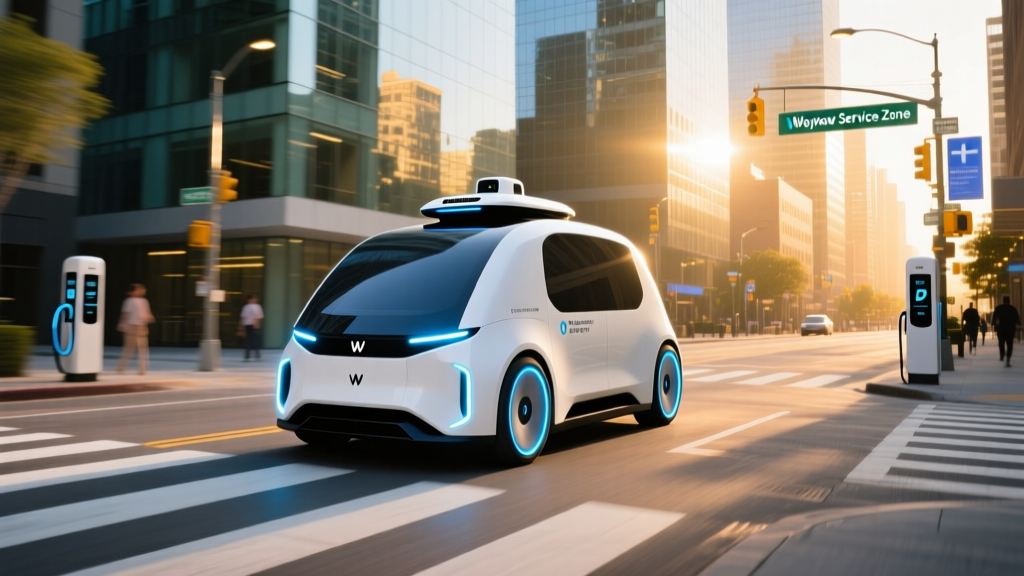
If you have searched for the Waymo expansion map hoping to hail a driverless ride in your city, the answer depends heavily on your zip code. As of early 2026, Waymo One — the company's commercial robotaxi service — operates fully driverless rides in four major U.S. metros, with additional cities in testing or early-access phases. Unlike Tesla's Full Self-Driving (Supervised), which remains a Level 2 driver-assist system requiring active human oversight, Waymo's vehicles operate at SAE Level 4: no human driver is present, and no one is expected to intervene.
SAE Automation Level: What Level 4 Actually Means
The Society of Automotive Engineers defines six levels of driving automation:
| Level | Name | Driver Required? | Example |
|---|---|---|---|
| 0 | No Automation | Yes — full control | Conventional car |
| 1 | Driver Assistance | Yes — hands on wheel | Adaptive cruise control |
| 2 | Partial Automation | Yes — hands on, eyes on | Tesla Autopilot, GM Super Cruise, Ford BlueCruise |
| 3 | Conditional Automation | Sometimes — must be ready to take over | Mercedes Drive Pilot (limited conditions) |
| 4 | High Automation | No — within geofenced ODD | Waymo One, Zoox |
| 5 | Full Automation | No — anywhere, any condition | Does not exist commercially |
Waymo's Level 4 designation means the vehicle handles all driving tasks within its defined Operational Design Domain (ODD) — a mapped, geofenced area with known road characteristics. Outside that zone, the vehicle will not operate. No Level 5 system exists anywhere in the world today.
Waymo Service Availability by City
Waymo's commercial footprint has grown steadily since its Phoenix launch in 2020. Here is where you can actually book a driverless ride right now, plus cities in the pipeline:
| City | Status | Service Area (approx.) | Hours | Vehicle |
|---|---|---|---|---|
| Phoenix, AZ | Live — open to public | ~230 sq mi (metro Phoenix incl. Scottsdale, Tempe, Chandler, Mesa) | 24/7 | Jaguar I-PACE (6th-gen sensor suite) |
| San Francisco, CA | Live — open to public | ~50 sq mi (most of SF proper, incl. SFO airport service) | 24/7 | Jaguar I-PACE |
| Los Angeles, CA | Live — open to public | ~80+ sq mi (Santa Monica, Hollywood, Downtown, Beverly Hills expanding) | 24/7 | Jaguar I-PACE |
| Austin, TX | Live — early access / waitlist | ~30+ sq mi (Downtown, South Austin, initial zones) | Limited hours expanding | Jaguar I-PACE |
| Atlanta, GA | Testing — no public rides yet | TBD | N/A | Hyundai Ioniq 5 / Jaguar I-PACE |
| Tokyo, Japan | Testing — closed course/limited | Pilot zones only | N/A | Jaguar I-PACE |
Key detail for riders: Phoenix remains Waymo's largest and most mature service area. San Francisco and Los Angeles have seen rapid geofence expansion throughout 2025 and into 2026, but dense urban environments still present edge cases (construction zones, double-parked delivery trucks) that can cause rerouting or extended wait times. Austin launched with a smaller initial zone and is expanding incrementally as Waymo validates performance on Texas road patterns.
For the most current Waymo One service map, check the official Waymo app — geofence boundaries update frequently and are not always reflected in third-party coverage maps.
How to Ride and What It Costs vs. Uber/Lyft
Booking a Waymo One ride works similarly to a standard rideshare: download the Waymo One app (iOS/Android), enter your pickup and drop-off locations, confirm the fare, and the vehicle arrives. There is no driver to rate, no surge pricing in the traditional sense, and no tipping.
| Factor | Waymo One | Uber/Lyft (standard) |
|---|---|---|
| Base fare structure | Per-mile + per-minute, similar to UberX | Per-mile + per-minute + booking fee |
| Typical 5-mile ride (Phoenix) | $12–$18 | $11–$20 (varies with surge) |
| Typical 5-mile ride (San Francisco) | $15–$22 | $14–$25 (varies with surge) |
| Surge/peak pricing | No traditional surge; wait times may increase | 1.5x–3x+ during peak demand |
| Tipping | Not applicable (no driver) | Expected ($2–$5+) |
| Promotional discounts | Frequent intro credits for new riders | Occasional promo codes |
| Wait time (average) | 3–8 minutes in core zones | 2–10 minutes |
Waymo's pricing is generally competitive with UberX and Lyft standard rides, and often cheaper during peak hours when human-driven rideshare surges. The absence of a driver tip — typically 15–20% of fare — makes the effective cost lower on comparable trips. However, Waymo does not currently offer shared/pool rides, premium vehicle tiers, or long-distance intercity trips the way Uber does.
Waymo's Safety Record: What the Data Shows
Safety is the most scrutinized aspect of robotaxi operations. Waymo has accumulated over 30 million fully driverless miles on public roads as of late 2025, with millions more added monthly across its four live cities. The company publishes periodic safety reports and has submitted data to the National Highway Traffic Safety Administration (NHTSA).
Key Safety Metrics (through 2025 reporting)
- Total driverless miles: 30+ million (public roads, all cities combined)
- Police-reported contact crashes: Waymo's published data shows a ~57% reduction in any-injury-involved crash rates compared to a human benchmark in comparable urban environments
- Severity: The vast majority of reported incidents are low-speed contact events (under 15 mph), often involving other human drivers rear-ending or sideswiping the stationary Waymo vehicle
- At-fault incidents: Extremely rare; most NHTSA-reported incidents involve the Waymo vehicle as the struck party, not the striking party
- Recalls: Waymo issued a voluntary software recall in 2023 after a Phoenix incident involving a school bus; the patch was deployed over-the-air within days
Sources: Waymo Safety Reports, NHTSA Standing General Order crash data.
For context, human drivers in U.S. urban environments experience approximately 1.5 police-reported crashes per million vehicle miles, according to NHTSA data. Waymo's reported rate is meaningfully lower, though direct comparison requires caveats: Waymo operates in geofenced, mapped areas, avoids extreme weather, and drives more conservatively than the average human. The comparison is directionally favorable but not a one-to-one apples match.
Technology Stack: Lidar, Cameras, and the 6th-Gen System
Waymo's approach to perception differs fundamentally from camera-only systems like Tesla's FSD. The current production fleet runs the 6th-generation Waymo Driver sensor suite, which fuses multiple redundant sensor modalities:
Waymo 6th-Gen Sensor Suite
- Lidar (Light Detection and Ranging): Multiple roof-mounted and body-integrated lidar units provide a real-time 360° 3D point cloud of the environment, accurate to centimeter-level resolution at 200+ meters. Lidar works independently of ambient light, giving Waymo a significant advantage in darkness, glare, and shadow conditions.
- Cameras: High-resolution cameras (visible spectrum) provide color, texture, and semantic information — reading traffic signs, detecting signal lights, classifying objects. The 6th-gen system uses improved dynamic range for better performance in direct sunlight and tunnel transitions.
- Radar: Imaging radar supplements lidar and cameras for velocity detection of moving objects, performing reliably in rain and fog where lidar reflectivity can degrade.
- External audio sensors: Microphones detect emergency vehicle sirens and adjust behavior (pulling over, yielding) accordingly.
- HD mapping: Waymo pre-maps every inch of its service area at centimeter precision. The vehicle localizes within this map in real time, providing a baseline understanding of lane geometry, speed limits, crosswalks, and traffic patterns that supplements live sensor data.
Why this matters: The multi-sensor redundancy means no single point of failure can blind the vehicle. If heavy rain degrades lidar returns, radar and cameras compensate. If a camera is blinded by direct sun at dusk, lidar and radar maintain object tracking. This is a fundamentally different design philosophy from vision-only approaches.
The compute platform runs Waymo's proprietary "Waymo Driver" software stack, which handles perception (what's around me?), prediction (what will those objects do next?), planning (what should I do?), and control (execute the maneuver). The 6th-gen hardware is also more cost-effective and manufacturable than prior generations, which Waymo has cited as key to scaling fleet size across new cities.
Regulatory Landscape: Who Approves Robotaxi Operations
Robotaxi deployment in the United States is governed by a patchwork of state and local regulations — there is no single federal "robotaxi license." Here is how approval works in practice:
- State-level authorization: Each state determines whether driverless testing and commercial deployment are legal. Arizona (home to Phoenix) has been permissive since 2015–2016, with minimal regulatory friction. California requires permits from both the California DMV (testing) and the California Public Utilities Commission (CPUC, for commercial passenger service). Texas and Georgia have their own frameworks.
- NHTSA oversight: At the federal level, NHTSA retains authority over vehicle safety standards. Waymo's Jaguar I-PACE vehicles are production-certified, but NHTSA's Standing General Order requires all ADS-equipped vehicles to report crashes. NHTSA can issue investigations or recalls.
- Local permits: Cities often require local operating agreements covering curb management, parking, data sharing, and emergency response protocols. San Francisco's expansion was delayed in part by negotiations with the city over these terms.
- Insurance and liability: Waymo carries commercial liability insurance for its fleet. In a Level 4 robotaxi with no human driver, Waymo (not the rider) bears liability for at-fault incidents.
This fragmented regulatory environment is a major reason the Waymo expansion map grows city-by-city rather than nationwide. Each new metro requires state-level legal clearance, local government negotiations, and CPUC-equivalent approvals — a process that takes 12–24 months per city even after technical readiness is established.
Current Limitations: Where Waymo Cannot (Yet) Operate
Level 4 autonomy is powerful within its domain, but the boundaries are real. Understanding these limitations is essential before booking:
Operational Limitations of Waymo One
- Geofencing: The vehicle will only drive within its mapped service area. If your destination falls outside the geofence, the app will not let you book the ride. Boundaries can be as specific as individual streets.
- Weather restrictions: Heavy rain, dense fog, and snow can degrade lidar and camera performance. In Phoenix, monsoon-season downpours may trigger temporary service pauses. San Francisco fog is generally manageable, but extreme atmospheric events can reduce availability. Snow operations remain unvalidated — do not expect Waymo in Minneapolis or Buffalo anytime soon.
- Construction zones: While Waymo handles routine construction with updated mapping and real-time cone detection, major unplanned road closures or complex temporary lane configurations can cause the vehicle to stop, wait, or reroute — adding time to your trip.
- No highway driving (most cities): Waymo's current service is predominantly surface-street and arterial-road focused. Limited highway segments are included in some geofences (e.g., airport approaches), but you cannot book a 60-mile interstate trip.
- Pickup/drop-off precision: The vehicle pulls to a safe, legal curb location — not necessarily the exact front door of your destination. In dense urban areas, you may walk a short block from the drop-off point.
- Child seats and accessibility: Waymo vehicles do not currently provide child safety seats. Wheelchair-accessible vehicles are in pilot but not broadly available across all cities.
- No intercity trips: Phoenix to Tucson, or San Francisco to Sacramento, is not possible. The service is strictly intra-metro.
These are not theoretical concerns. If you are visiting Phoenix and plan to use Waymo for a Scottsdale-to-Old-Town evening, it works seamlessly. If you need to reach a remote trailhead outside the geofence at 6 AM during a dust storm, you will need a conventional rideshare or rental car.
Frequently Asked Questions
Where can I use Waymo One right now?
Waymo One is live and open to the public in Phoenix (metro-wide, 24/7), San Francisco (most of the city, 24/7), and Los Angeles (core areas, expanding). Austin is in early-access with a growing waitlist. Atlanta and Tokyo are in testing phases with no public rides available yet.
How much does a Waymo ride cost compared to Uber or Lyft?
Waymo fares are comparable to UberX and Lyft standard pricing on a per-mile/per-minute basis — typically $12–$22 for a 5-mile urban trip depending on the city. The effective cost is often lower because there is no driver tip and no surge pricing. However, Waymo does not offer shared-ride discounts or long-distance trip options.
Is Waymo truly self-driving, or is there a human monitoring remotely?
Waymo operates at SAE Level 4, meaning there is no human driver in the vehicle and no remote joystick operator driving the car. The vehicle makes all driving decisions autonomously within its geofenced area. Waymo does have a remote assistance team that can provide guidance in unusual situations (e.g., an unexpected road closure), but this team does not "drive" the vehicle — they confirm or adjust the vehicle's proposed plan.
How safe are Waymo robotaxis compared to human drivers?
Waymo has logged over 30 million fully driverless miles. The company's published data shows approximately a 57% reduction in any-injury crash rates compared to a human benchmark in similar urban environments. Most reported incidents are low-speed contact events where the Waymo vehicle was struck by a human driver, not the at-fault party. Full data is available through Waymo's safety reports and NHTSA's Standing General Order crash database.
Can Waymo drive on highways?
Limited highway segments are included in some geofences (typically airport approach routes), but Waymo One is primarily a surface-street and arterial-road service. You cannot currently book long-distance highway trips between cities.
What happens if the Waymo vehicle encounters a situation it cannot handle?
The vehicle is designed to execute a "minimal risk condition" — it will safely pull over to the curb, activate hazard lights, and contact remote assistance if needed. It will not proceed through a scenario it cannot confidently navigate. This conservative behavior occasionally results in longer trip times but prioritizes safety.
Will Waymo come to my city?
Waymo has announced Atlanta as its next major expansion target, with testing underway. The company has also conducted pilot testing in Tokyo. Expansion to additional U.S. cities is expected but unannounced — regulatory approval, mapping, and fleet deployment typically require 12–24 months per new metro area.