When news surfaced that a Waymo robotaxi struck a dog in San Francisco, it reignited a familiar debate: how safe are driverless taxis, really? The incident — one of several involving small animals in the city — is not a catastrophic system failure. But it does expose the hard edge cases that Level 4 autonomy still struggles to handle, and it offers a useful lens for evaluating robotaxi safety in the real world.
This article examines the incident in context, reviews Waymo's published safety data, breaks down where the service operates today, and explains the technology and regulatory framework behind it. If you're considering riding in — or living alongside — a driverless taxi, here's what the numbers actually say.
The Incident: What Happened and Why It Matters
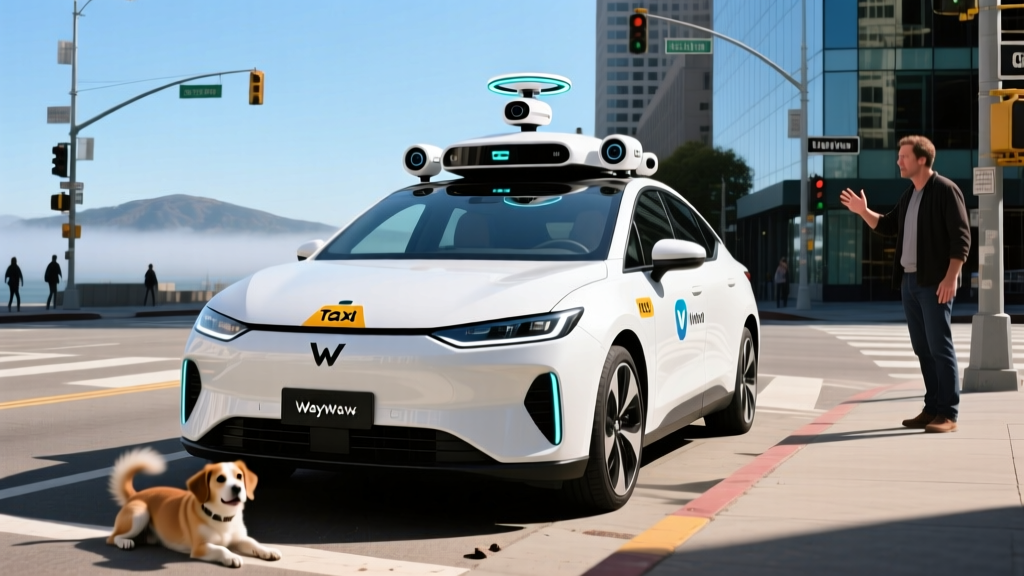
In the reported incident, a Waymo sixth-generation robotaxi (based on the Zeekr RT platform) struck a small dog that darted into the roadway in San Francisco. According to Waymo's public incident reports, the vehicle's sensor suite detected the animal but was unable to stop in time given the speed, distance, and road conditions at the moment of detection.
This is not the first such incident. Waymo's transparency dashboard has logged multiple animal-strike events in San Francisco and Phoenix over the past two years. In most cases, the animals were small dogs or cats that entered the vehicle's path suddenly, often from between parked cars or behind visual obstructions.
For context: human drivers in San Francisco strike animals regularly. The San Francisco SPCA and city animal control receive hundreds of reports of vehicle-animal collisions annually. The question is not whether robotaxis can match human performance in these edge cases — it's whether the overall safety record justifies their operation on public roads.
Waymo's driverless taxi service operates at SAE Level 4 — meaning the vehicle handles all driving tasks within a defined operational design domain (ODD) with no human driver required. This is fundamentally different from Level 2 systems like Tesla Autopilot or GM Super Cruise, which require constant driver supervision. At Level 4, the AI is the driver within its geofenced service area. There is no steering wheel accessible to passengers in Waymo's current fleet.
Waymo's Safety Record: The Data Behind the Headlines
Evaluating robotaxi safety requires looking beyond individual incidents to aggregate performance data. Waymo publishes periodic safety reports, and independent researchers have analyzed their crash and intervention rates.
Waymo Safety Data Snapshot (through early 2026)
| Total autonomous miles driven | ~45+ million fully driverless miles (cumulative across all cities) |
| Police-reported crash rate vs. human baseline | ~85% fewer injury-causing crashes per million miles vs. human drivers (per Waymo's 2024 safety study, validated by Swiss Re analysis) |
| Contact rate (any physical contact) | Lower than human benchmark for most crash severity categories; elevated for low-speed property-damage contacts in some urban scenarios |
| Remote-assistance interventions | Rare but not zero — Waymo uses remote fleet advisors (not remote drivers) to resolve edge cases; exact rate not publicly disclosed in real-time |
| Animal-strike incidents | Multiple documented events; classified as low-severity; detection but insufficient stopping distance in most cases |
Sources: Waymo Safety Reports, NHTSA Standing General Order crash data
The Swiss Re insurance analysis — one of the most rigorous independent reviews — found that Waymo's fully autonomous fleet had approximately 85% fewer bodily-injury liability claims and 75% fewer property-damage claims compared to a human-driver baseline, after controlling for mileage and operating environment.
However, the data also shows that robotaxis can struggle with unpredictable, fast-moving small objects (animals, debris, children darting from behind obstacles). These scenarios involve reaction-time physics that challenge even advanced sensor suites: at 25 mph, a vehicle travels roughly 37 feet per second, and braking distance adds another 20-30 feet minimum. If a dog enters the path at 15 feet, no system — human or machine — can always stop in time.
Where Can You Use Waymo Right Now?
As of early 2026, Waymo's commercial driverless service (branded "Waymo One") operates in several U.S. metro areas, with ongoing expansion. Service is geofenced — the robotaxi will only operate within approved zones, which are mapped and validated in advance.
| City | Status | Coverage Notes |
|---|---|---|
| San Francisco, CA | Fully operational, 24/7 | Most of SF proper; airport service (SFO) available |
| Phoenix, AZ (East Valley) | Fully operational, 24/7 | Chandler, Tempe, Mesa, Gilbert, Scottsdale; Sky Harbor airport service |
| Los Angeles, CA | Fully operational | Santa Monica, Hollywood, Downtown, Beverly Hills; expanding coverage area |
| Austin, TX | Operational (launched 2025) | Downtown and central Austin corridors |
| Atlanta, GA | Announced/expanding | Partnership with Uber; phased rollout |
To use Waymo One, you download the Waymo app, set your pickup and dropoff within the service area, and a vehicle arrives — no driver inside. Wait times vary by location and demand, typically 3-8 minutes in core service zones.
How Much Does Waymo Cost vs. Uber and Lyft?
Waymo prices its rides competitively with Uber and Lyft, though it does not use surge pricing in the same dynamic way. Fares are calculated based on distance, time, and demand, similar to traditional rideshare.
| Route Example | Waymo One | UberX | Lyft Standard |
|---|---|---|---|
| 3-mile city trip (off-peak) | $10–$14 | $9–$13 | $9–$12 |
| 8-mile cross-town trip | $18–$26 | $16–$24 | $15–$23 |
| Airport run (15+ miles) | $35–$50 | $30–$48 | $28–$45 |
| Peak-hour surge multiplier | Limited / less aggressive | 1.5x–3x common | 1.5x–3x common |
In practice, Waymo fares are typically within $1-$3 of comparable Uber/Lyft rides for standard trips. The key advantage Waymo users report: no surge pricing spikes during high-demand events, and a more consistent experience (no driver cancellations, no rating anxiety). The trade-off is that Waymo's service area is smaller, so some trips simply aren't available.
Waymo also offers Waymo One membership tiers and promotional pricing for new users. In some markets, introductory fares have been as low as $5 for short trips.
The Technology Stack: How a Waymo Robotaxi "Sees" the Road
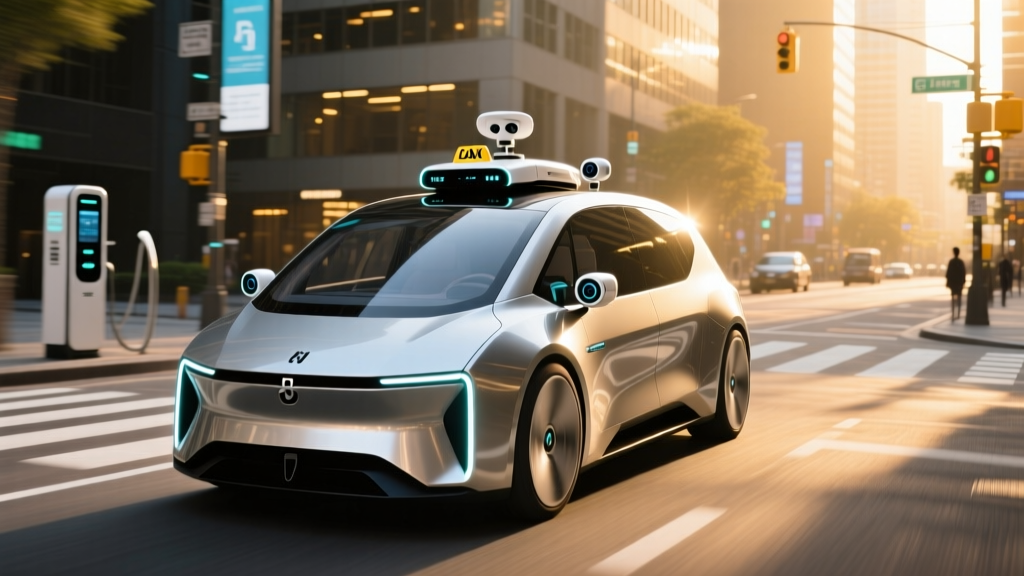
Understanding why a robotaxi might hit a small animal requires understanding its sensor suite. Waymo's sixth-generation "Driver" system — deployed on the Zeekr RT custom vehicle — uses a multi-modal perception approach:
Waymo 6th-Gen Sensor Suite
- LiDAR (Light Detection and Ranging): Multiple roof-mounted and body-integrated LiDAR units create a real-time 3D point cloud of the environment, accurate to centimeters, day or night. This is Waymo's primary spatial sensor.
- Cameras: High-resolution cameras (visible spectrum) surround the vehicle for object classification, traffic-light reading, sign recognition, and lane detection.
- Radar: Imaging radar units provide velocity data for moving objects and function in rain, fog, and other conditions where cameras and LiDAR degrade.
- External audio sensors: Microphones detect sirens, horns, and other auditory cues from emergency vehicles and surrounding traffic.
- HD Maps: Pre-built centimeter-accurate maps of every service-area road, updated regularly, provide a baseline layer of static environment data.
Key distinction: Waymo uses LiDAR as a core sensor, unlike Tesla's camera-only ("Tesla Vision") approach. This gives Waymo direct depth measurement independent of visual-light conditions, which matters for detecting low-profile objects like animals in shadows or at night.
Even with this sensor suite, a small dog darting from behind a parked SUV at close range represents a physics problem as much as a perception problem. The sensors may detect the animal, but if the detection occurs within the vehicle's minimum stopping distance, a collision is unavoidable — the same constraint a human driver faces.
Where robotaxis have an advantage: 360-degree simultaneous sensor coverage with no distraction, fatigue, or phone use. Where they currently lag: interpreting ambiguous scenarios that humans handle through intuition (e.g., recognizing a dog off-leash near a park and preemptively slowing down).
Regulatory Landscape: Who Approves Robotaxi Operations?
Robotaxi deployment in the United States is governed by a patchwork of state and local regulations. There is no comprehensive federal framework for autonomous vehicle operations, though NHTSA maintains safety oversight and a Standing General Order requiring crash reporting for vehicles with Level 2+ and above automation.
Key regulatory bodies for Waymo's current operations:
- California DMV: Issues autonomous vehicle testing and deployment permits. Waymo holds a Driverless Testing Permit and a Deployment Permit for commercial passenger service in San Francisco and Los Angeles.
- California Public Utilities Commission (CPUC): Regulates commercial passenger transport (including robotaxis) as a "passenger carrier." Waymo received CPUC approval for paid rides in SF in 2023 and expanded from there.
- Arizona: Has a more permissive regulatory environment. Waymo has operated commercially in Phoenix since 2020 with relatively fewer regulatory hurdles.
- Texas (Austin): State legislation enables autonomous vehicle operations; local coordination with the city governs specific deployment zones.
- Federal (NHTSA): Monitors safety data, can issue recalls or investigations. In 2024, NHTSA opened a preliminary evaluation into Waymo following several low-speed incidents, which was later closed without a recall.
For riders, this means: Waymo operates only where it has explicit regulatory approval, and those approvals come with reporting requirements, insurance mandates, and geofencing restrictions. The company cannot simply "turn on" service in a new city without going through state and local approval processes.
Current Limitations: What Waymo Cannot Do (Yet)
Known Limitations of Waymo's Level 4 Service
- Geofencing: The vehicle will not operate outside its mapped service area. If your destination is outside the zone, the ride cannot be requested.
- Weather constraints: Heavy rain, fog, and snow degrade LiDAR and camera performance. Waymo reduces operations or pauses service in severe weather (less of an issue in Phoenix and LA; more relevant in SF fog and future colder-climate cities).
- Unmapped or recently changed roads: Construction zones, road reconfigurations, or temporary closures that aren't reflected in HD maps can cause the vehicle to stop and request remote guidance.
- Small, fast-moving objects: As the pet-strike incidents demonstrate, animals, debris, or children emerging suddenly from occluded positions remain a challenge. Detection does not always equal avoidance when physics limits braking distance.
- No highway operation (most markets): Waymo's current service is primarily urban/suburban surface streets. Freeway/highway driving is limited or unavailable in most markets, though testing on highways has been underway.
- Passenger limitations: No eating, smoking, or open containers. Riders must be 18+. Car seats for children are not provided, and young children cannot ride unaccompanied.
- No trunk access for large items: The Zeekr RT has limited cargo space compared to an UberXL or SUV rideshare option.
- Remote assistance delays: In rare edge cases where the vehicle is confused (e.g., a police officer directing traffic with non-standard hand signals), it may stop and wait for a remote fleet advisor to resolve the situation. This can add minutes to a trip.
Pet Strikes in Context: What This Means for Robotaxi Safety
The headline "Waymo's driverless taxi has hit another pet in San Francisco" is alarming on its face. But context matters:
- Animal strikes are common for human drivers too. Insurance industry data shows millions of animal-vehicle collisions annually in the U.S., with an average claim cost around $5,000-$7,000. In dense urban areas, small pets off-leash are a frequent factor.
- Waymo's aggregate safety record is strong. The Swiss Re analysis and Waymo's own data show significantly lower injury-causing crash rates compared to human drivers across millions of miles.
- Each incident is reported transparently. Unlike human drivers who may not report minor animal strikes, every Waymo contact event is logged, reported to regulators, and in many cases published — which paradoxically makes the robotaxi safety record look worse in headlines while actually being more transparent.
- Software improves iteratively. After each incident, Waymo analyzes the sensor data and updates its prediction models. The system that struck a dog in 2026 is already different from the one that had a similar incident in 2024, with improved small-object detection and more conservative behavior near parks and residential areas.
None of this excuses the incidents — animal welfare matters, and residents near robotaxi zones have legitimate concerns. But it does suggest that the relevant question is not "are robotaxis perfect?" (they aren't), but rather "are they meaningfully safer than the alternative?" The data, so far, says yes for most crash categories.
Frequently Asked Questions
Is Waymo truly self-driving, or is there a human monitoring remotely?
Waymo operates at SAE Level 4, meaning the vehicle drives itself with no human in the driver's seat and no steering wheel for passengers. Remote "fleet advisors" can assist the vehicle in resolving confusing situations (like an unusual construction zone), but they do not steer or control the vehicle in real-time. They provide high-level guidance (e.g., "it's safe to proceed around the obstacle"), and the vehicle's AI executes the maneuver. This is fundamentally different from Level 2 systems like Tesla FSD (Supervised), which require an attentive human driver behind the wheel at all times.
How much does a Waymo ride cost compared to Uber or Lyft?
Waymo fares are typically within $1-$3 of comparable Uber/Lyft rides for standard trips. A 3-mile city ride generally costs $10-$14. Waymo does not use aggressive surge pricing, so during peak demand, it can actually be cheaper than rideshare. However, service is limited to geofenced areas, so not all trips are available.
What cities can I use Waymo in right now?
As of early 2026, Waymo One is fully operational in San Francisco, Phoenix (East Valley), Los Angeles, and Austin. Atlanta is in phased rollout. Expansion to additional cities has been announced but is not yet live. Service is available 24/7 in most markets.
How safe are robotaxis compared to human drivers?
According to the Swiss Re insurance analysis and Waymo's own published data, Waymo's driverless fleet has approximately 85% fewer bodily-injury liability claims per million miles compared to a human-driver baseline. However, robotaxis can struggle with unpredictable edge cases (animals, unusual road configurations, non-standard traffic control) where human intuition still has advantages.
What happens if a Waymo robotaxi gets confused or breaks down during my ride?
The vehicle will pull over safely and connect with a remote fleet advisor who can help resolve the situation. If the issue is mechanical, Waymo dispatches roadside assistance. Passengers can also contact Waymo support directly through the in-vehicle screen or app at any time. In practice, these events are rare but do occur — most commonly in complex construction zones.
Can Waymo robotaxis drive in heavy rain or snow?
Waymo reduces operations or pauses service in severe weather. Heavy rain and fog can degrade LiDAR and camera performance. This is managed through operational design domain (ODD) restrictions — the vehicle will not operate in conditions it cannot safely handle. In Phoenix, this is rarely an issue. In San Francisco, dense fog occasionally triggers service modifications.