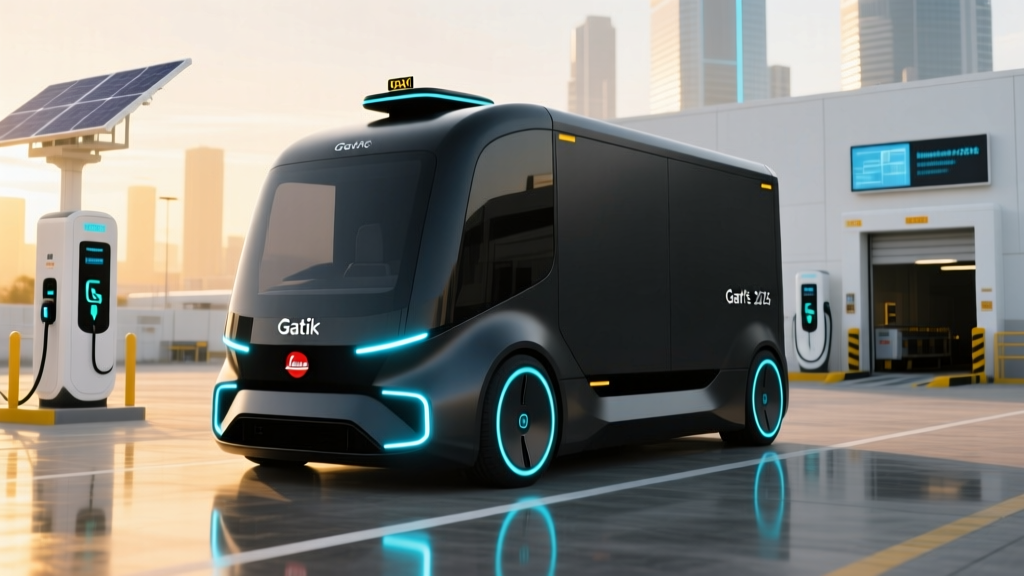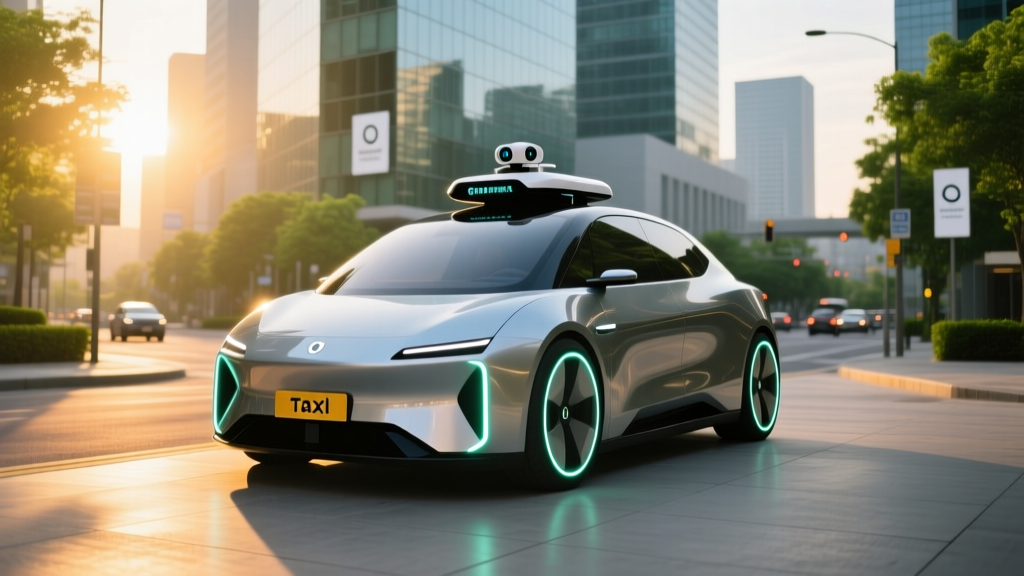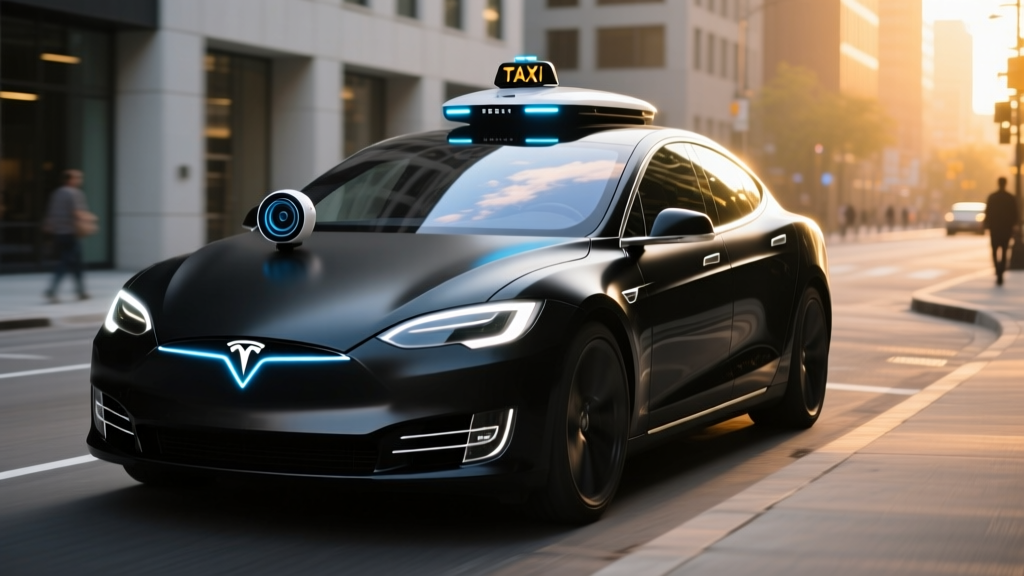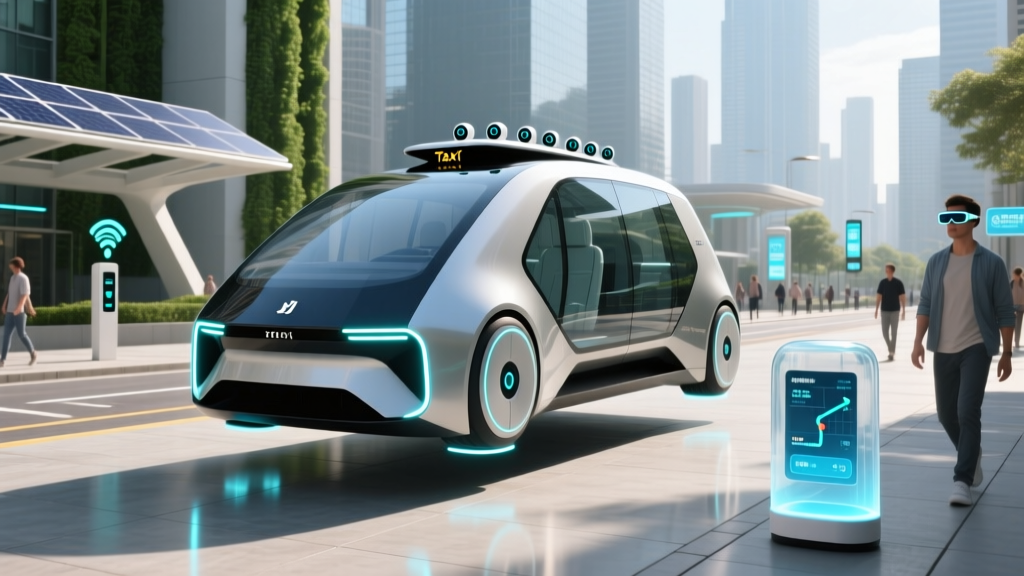
Waymo dominates the U.S. robotaxi conversation, but it's not the only operator running fully driverless rides in 2026. A growing field of Level 4 autonomous services — from Amazon-owned Zoox to China's Baidu Apollo and AutoX — has expanded into dozens of cities worldwide. This guide breaks down every active Waymo competitor, where you can actually hail one, what it costs, and how the safety data stacks up.
SAE Automation Levels: Why This Distinction Matters
Before comparing services, it's essential to separate consumer driver-assist systems from true robotaxis. Tesla Autopilot, FSD (Supervised), GM Super Cruise, and Ford BlueCruise are all SAE Level 2 — the driver must remain engaged and responsible at all times. Robotaxis like Waymo and Zoox operate at SAE Level 4, meaning the vehicle handles all driving tasks within a defined operational domain with no human behind the wheel.
| SAE Level | Definition | Examples | Driver Required? |
|---|---|---|---|
| Level 2 | Partial automation — steering + acceleration assist | Tesla Autopilot, GM Super Cruise, Ford BlueCruise | Yes, always |
| Level 3 | Conditional automation — car drives in limited scenarios, human must take over on request | Mercedes Drive Pilot (selected markets) | Yes, on demand |
| Level 4 | High automation — fully driverless within geofenced area | Waymo, Zoox, Baidu Apollo, Cruise | No (within ODD) |
| Level 5 | Full automation — any road, any condition | Does not exist commercially | No |
Sources: SAE International J3016, NHTSA
Every Waymo competitor covered in this article operates at Level 4. None of these services require a human driver in the vehicle during commercial operation.
Active Waymo Competitors: Service Availability by City
As of early 2026, these are the robotaxi services running paid, fully driverless rides for the public. Note that "announced" expansions are not included — only live, bookable services.
| Operator | Parent Company | Live Cities (2026) | Service Hours | Vehicle Platform |
|---|---|---|---|---|
| Waymo | Alphabet | Phoenix, San Francisco, Los Angeles, Austin | 24/7 (most markets) | Jaguar I-PACE (custom 6th-gen sensor suite) |
| Zoox | Amazon | Las Vegas (limited public), Foster City CA (employee/testing) | Limited hours | Zoox purpose-built carriage (no steering wheel) |
| Cruise | General Motors | Phoenix, Dallas, Houston (relaunching; SF suspended since Oct 2023, partial 2025 return) | Limited daytime hours in most markets | Chevrolet Bolt EV / Cruise Origin (paused) |
| Baidu Apollo (Luobo Kuaipao) | Baidu | Wuhan, Beijing, Shanghai, Shenzhen, Chongqing + 6 other Chinese cities | Mostly daytime, expanding to 24h in Wuhan | RT6 (6th-gen, BYD-manufactured) |
| AutoX | Independent (backed by SAIC) | Shenzhen, Beijing, Shanghai, Guangzhou | Daytime hours | Chrysler Pacifica, Lincoln MKZ, custom Gen6 platform |
| Pony.ai | Independent (IPO 2024) | Beijing, Guangzhou, Shenzhen; Irvine CA (testing, not commercial) | Daytime hours in China | Toyota Sienna Autono-MaaS, GAC Aion |
| WeRide | Independent | Guangzhou, Beijing, Nanjing; Abu Dhabi (pilot) | Daytime | Nissan Leaf, custom minibus |
The critical takeaway: outside of China, your practical options for a Level 4 robotaxi ride remain limited. Waymo is the only U.S. operator running 24/7 fully driverless service across multiple major metros. Cruise is rebuilding trust post-suspension, and Zoox's purpose-built vehicle is still in early public rollout.
How to Ride and What It Costs vs. Uber/Lyft
Most robotaxi services use a dedicated mobile app (not Uber/Lyft integration). Here's how access and pricing compare across major operators.
| Service | How to Book | Avg. Cost per Mile | Comparable UberX (same city) | Promo/Subsidized? |
|---|---|---|---|---|
| Waymo | Waymo One app (open to public in live cities) | $1.10–$1.50/mi | $1.00–$1.40/mi | Occasional promo credits; generally at parity |
| Cruise | Cruise app (waitlist in some cities) | $0.90–$1.20/mi (introductory) | $1.00–$1.30/mi | Yes — heavily discounted to rebuild ridership |
| Zoox | Invite-only / limited public access in Las Vegas | Free (pilot phase) | N/A | Fully subsidized during rollout |
| Baidu Apollo | Apollo Go / Luobo Kuaipao app (Chinese phone # required) | ¥1.5–2.5/km (~$0.30–$0.50/mi) | ¥2.0–3.0/km | Yes — deeply subsidized; some rides under ¥5 ($0.70) |
| AutoX | AutoX app (China markets) | ¥2.0–3.0/km | ¥2.0–3.0/km | Moderate subsidies |
In the U.S., Waymo rides are roughly on par with UberX — sometimes 10–20% higher during low-demand periods, but competitive during surge pricing when Uber/Lyft multiply. Cruise is deliberately underpricing to win back riders after its 2023 suspension. In China, Baidu Apollo is aggressively subsidized, with some Wuhan rides costing under $1 USD — a strategy to build market share ahead of profitability.
Safety Records: What the Data Actually Shows
Safety is the most scrutinized — and most contested — aspect of robotaxi operations. Here's what we know from reported data.
Key Safety Metrics by Operator
| Operator | Total Autonomous Miles (est.) | Reported Contact Incidents | Disengagement Rate | Notable Incidents |
|---|---|---|---|---|
| Waymo | 40+ million fully driverless miles (as of late 2025) | Lower than human baseline per million miles in Phoenix/SF (per NHTSA filings) | N/A (no driver to disengage) | Minor low-speed collisions; one incident involving a pedestrian in SF (Dec 2023, pedestrian sustained minor injuries) |
| Cruise | ~5 million driverless miles before suspension | Higher per-mile incident rate pre-suspension | N/A | Oct 2023: dragged a pedestrian ~20 ft after she was thrown into the vehicle's path by a human-driven car; led to CA DMV permit suspension and nationwide pause |
| Baidu Apollo | 100+ million km (~62 million miles) cumulative testing + commercial (2025 report) | Low reported rate; Chinese regulators do not publish granular incident data publicly | Declining year-over-year per Baidu reports | No widely reported serious injuries in commercial operation |
| Zoox | Limited (early public phase) | No public incidents reported in Las Vegas pilot | N/A | None publicly documented |
Sources: NHTSA AV Safety Reports, CA DMV disengagement reports, company disclosures
Waymo's internal analysis, partially validated by independent researchers, suggests its driverless fleet in Phoenix and San Francisco has a lower injury-causing crash rate per million miles than the human driving benchmark in those cities. However, robotaxis operate under different conditions — geofenced, lower speeds, fair weather in many markets — so direct comparisons require nuance.
Cruise's October 2023 incident remains the most consequential robotaxi safety event to date. The vehicle struck a pedestrian who had been thrown into its path by a human-driven car, then pulled over — but dragged her approximately 20 feet while attempting to move to a safe stop. California regulators suspended Cruise's permit, citing both the incident and the company's initial failure to fully disclose the dragging to investigators. Cruise has since overhauled leadership and is relaunching with safety-first messaging.
Technology Stacks: Lidar, Cameras, and the Sensor Debate
Every Level 4 robotaxi operator uses a multi-sensor approach — but the specific stack varies significantly.
| Operator | Primary Sensors | Lidar? | Camera Count | Radar | HD Maps / Geofencing |
|---|---|---|---|---|---|
| Waymo (6th-gen) | Custom lidar, cameras, radar, audio sensors | Yes — custom-built, roof + side-mounted | 29 cameras | 6 radar units | HD-mapped geofenced zones |
| Zoox | Lidar, cameras, radar (360° redundant) | Yes — dual roof-mounted | ~18+ cameras | Multiple radar | HD-mapped, tightly geofenced |
| Cruise | Lidar, cameras, radar | Yes — roof-mounted Luminar/proprietary | 16+ cameras | Multiple radar | HD-mapped geofenced zones |
| Baidu Apollo RT6 | Lidar, cameras, radar | Yes — 4 lidar units (roof + sides) | 12 cameras | 5 radar | HD-mapped, city-by-city |
| Tesla FSD (Supervised) | Camera-only (no lidar, no radar since 2022) | No | 8 cameras | None (removed) | No HD maps; vision-only, not geofenced |
The lidar-vs-camera debate remains one of the industry's defining splits. Every successful Level 4 robotaxi operator uses lidar as a core sensor — it provides precise 3D depth data independent of lighting conditions, which is critical for nighttime and high-contrast scenarios. Tesla's FSD (Supervised) is the notable outlier, relying solely on cameras and neural networks. However, FSD remains a Level 2 system requiring active driver supervision and is not a robotaxi service. Tesla's planned "Cybercab" robotaxi, announced for 2026 production, intends to use a camera-only Level 4 approach — but it has not yet entered commercial driverless operation.
All current Level 4 services rely on HD pre-mapping and geofencing: the vehicle will only operate in areas that have been meticulously mapped at centimeter-level precision. This is both a safety feature and a fundamental limitation.
Regulatory Landscape: Who Approves Robotaxi Operations
Robotaxi deployment in the U.S. requires a patchwork of federal, state, and local approvals:
- Federal (NHTSA): Sets vehicle safety standards. NHTSA can grant exemptions for vehicles without steering wheels or mirrors (e.g., Zoox, Cruise Origin). The AV STEP reporting rule (finalized 2024) requires operators to report crashes involving Level 2+ and Level 4 systems.
- State DMVs / PUCs: California's DMV issues testing permits; the California Public Utilities Commission (CPUC) approves commercial passenger service. Arizona takes a permissive approach with minimal state-level regulation. Texas requires municipal coordination.
- Local / Municipal: Cities negotiate operating agreements covering zones, hours, fleet size, and data sharing. San Francisco's Board of Supervisors famously voted to limit Waymo and Cruise expansion in 2023 before state regulators overrode local authority.
In China, the Ministry of Transport and local municipal governments issue commercial robotaxi licenses. Beijing, Wuhan, and Shenzhen have created specific regulatory frameworks that allow fully driverless (no safety operator) commercial service — and Baidu has been the primary beneficiary.
Current Limitations: What Robotaxis Still Cannot Do
Active Constraints Across All Level 4 Services
- Geofencing: Vehicles will not operate outside pre-mapped zones. A Waymo in Phoenix cannot drive to Tucson — it physically will not accept a ride outside its operational design domain (ODD).
- Weather degradation: Heavy rain, fog, and snow degrade lidar and camera performance. Most operators reduce fleet size or suspend service in severe weather. Waymo operates in light rain in Phoenix/SF but has historically paused during heavy storms.
- Construction zones: Unmapped lane closures, temporary barriers, and flaggers remain challenging. Operators rely on remote assistance (teleoperations) when the vehicle encounters an unmapped scenario it cannot resolve autonomously.
- Airport and highway access: Most robotaxis avoid high-speed limited-access highways. Waymo has begun limited highway-capable routes (e.g., Phoenix airport runs at ~65 mph), but this is not universal.
- Emergency vehicle interaction: Pulling over for ambulances and fire trucks remains an edge case. Cruise's 2023 incident partly involved confusion around emergency scenes.
- Accessibility: Current robotaxi fleets (Jaguar I-PACE, Chevy Bolt) are sedan-based and not wheelchair-accessible. Zoox's purpose-built carriage and Cruise's Origin (now paused) were designed with level-floor entry to address this, but neither is in widespread service.
- No-go scenarios: Unpaved roads, private property, parking garages, and drive-throughs are generally outside the ODD.
Who Wins? Decision Framework for Riders and Investors
Choose Waymo if:
- You live in Phoenix, SF, LA, or Austin and want reliable, on-demand driverless rides today
- You prioritize the largest operational fleet with the most validated safety data
- You're willing to pay UberX-equivalent pricing for the experience
Watch Cruise if:
- You're in Phoenix, Dallas, or Houston and want subsidized introductory pricing
- You're tracking whether a post-scandal operator can rebuild regulatory and public trust
Watch Zoox if:
- You care about purpose-built vehicle design (bidirectional driving, no steering wheel, level-floor entry)
- You're in Las Vegas and can access the limited pilot
Look to China (Baidu, AutoX, Pony.ai) if:
- You want to see the world's highest-volume robotaxi deployments (Wuhan alone has 1,000+ Baidu vehicles)
- You're studying how subsidized pricing affects consumer adoption at scale
Frequently Asked Questions
Where can I use a robotaxi service right now?
In the U.S., Waymo operates fully driverless rides open to the public in Phoenix, San Francisco, Los Angeles, and Austin. Cruise has relaunched limited service in Phoenix, Dallas, and Houston. Zoox runs a small pilot in Las Vegas. In China, Baidu Apollo operates in 11+ cities including Wuhan, Beijing, and Shenzhen — Wuhan is the world's largest robotaxi market by ride volume.
How much does a robotaxi cost vs. Uber or Lyft?
Waymo pricing is generally within 10–20% of UberX in the same city — roughly $1.10–$1.50 per mile, with dynamic pricing during peak hours. Cruise is currently offering discounted introductory rates below $1/mile in relaunch markets. Baidu Apollo in China is heavily subsidized, with rides sometimes under $1 total for short trips.
How safe are robotaxis — is there real data?
Waymo reports that its driverless fleet has a lower rate of injury-causing crashes per million miles compared to human drivers in the same cities, based on NHTSA-reported benchmarks. However, robotaxis operate in geofenced, generally lower-speed environments. Cruise's October 2023 pedestrian-dragging incident led to a nationwide suspension and remains the most serious robotaxi safety event. Comprehensive, independently verified comparative safety data across all operators is not yet publicly available in a standardized format.
What are the current limitations of robotaxi services?
Key limitations include geofencing (vehicles won't leave pre-mapped zones), weather restrictions (service pauses in heavy rain/snow), difficulty with unmapped construction zones, limited highway and airport access, lack of wheelchair-accessible vehicles, and inability to handle unpaved roads, parking garages, or drive-throughs. Remote teleoperations assist with edge cases but introduce latency.
Is Tesla FSD a robotaxi competitor?
No — not yet. Tesla's Full Self-Driving (Supervised) is an SAE Level 2 driver-assistance system that requires the driver to remain fully engaged and responsible. Tesla's announced "Cybercab" robotaxi, targeting Level 4 operation with no steering wheel, is slated for production in 2026 but has not entered commercial driverless service. Until it does, Tesla FSD is not a Waymo competitor in the robotaxi sense — it's a consumer ADAS product.
Do robotaxis work at night and in the rain?
Waymo operates 24/7 in most markets and handles light rain. Heavy precipitation, fog, and snow remain limiting factors for lidar-based systems. Baidu Apollo in Wuhan has expanded toward 24-hour operation. Cruise's relaunched service currently runs limited daytime hours in most markets as part of its cautious return.
Robotaxi availability, pricing, and regulatory status change frequently. Verify current service areas directly through operator apps and consult NHTSA and your state DMV for the latest autonomous vehicle regulations.