Waymo operates the largest commercial robotaxi fleet in the United States, completing over 10 million paid trips by early 2026. But availability remains tightly geofenced to specific metro areas, and the service works very differently from the Level 2 driver-assist systems in consumer EVs. This guide covers every live Waymo city, real pricing data, verified safety records, and the technology and regulatory framework behind the service.
SAE Automation Level: Why Waymo Is Not the Same as Autopilot or FSD
SAE Level 4 — High Automation (Driverless)
Waymo's robotaxi service operates at SAE Level 4 within its defined operational design domain (ODD). This means the vehicle handles all driving tasks — steering, braking, navigation, hazard response — with no human driver present and no expectation of human intervention within its geofenced service area. If the system encounters a scenario it cannot handle, it executes a minimal-risk maneuver (typically pulling over safely) rather than handing control to a passenger.
This is fundamentally different from the SAE Level 2 systems available in consumer vehicles — Tesla Autopilot/FSD (Supervised), GM Super Cruise, Ford BlueCruise, and similar. Those systems require an attentive, licensed driver behind the wheel at all times, ready to take over instantly. Level 2 is driver-assist; Level 4 in a Waymo is driverless.
| SAE Level | Who Drives | Example | Human Required? |
|---|---|---|---|
| Level 2 | System + human monitors | Tesla FSD (Supervised), Super Cruise | Yes — always |
| Level 3 | System in specific conditions | Mercedes Drive Pilot (limited markets) | Conditional — must be ready |
| Level 4 | System fully (within ODD) | Waymo One, Zoox | No — no driver present |
| Level 5 | System everywhere, all conditions | Does not exist commercially | No |
Waymo Cities in 2026: Where You Can Actually Ride Today
Waymo's commercial service, Waymo One, is live in a limited number of U.S. metro areas as of early 2026. Expansion happens incrementally — new cities go through extensive testing, regulatory approval, and phased public rollout before becoming fully available. Below are the confirmed live-service cities:
| City | Service Area | Launch Status | Approximate Coverage |
|---|---|---|---|
| Phoenix, AZ | Greater Phoenix metro (Chandler, Tempe, Mesa, Scottsdale, parts of downtown Phoenix) | Fully commercial since 2020; largest coverage area | ~315 square miles |
| San Francisco, CA | City-wide (most neighborhoods) | Fully commercial since 2023 | ~47 square miles |
| Los Angeles, CA | Central LA, Hollywood, Santa Monica, Beverly Hills, expanding | Fully commercial since 2024 | ~80+ square miles |
| Austin, TX | Central Austin and surrounding areas | Commercial service launched 2025; expanding zones | ~45+ square miles |
Important context: Service areas within these metros are geofenced. You cannot hail a Waymo to a destination outside the operational boundary — the app will simply show the trip as unavailable. Waymo has also announced testing or planned expansion in additional cities, but announced plans are not live service. Always check the Waymo One app for your specific pickup and dropoff availability.
Pricing: Waymo vs. Uber and Lyft in 2026
Waymo One uses a dynamic pricing model similar to rideshare, but without a human driver's earnings factored in. Pricing varies by city, time of day, and demand. Based on rider reports and Waymo's published pricing structure:
| Factor | Waymo One | UberX / Lyft Standard |
|---|---|---|
| Base fare (typical 3-mile trip) | $8–$14 | $10–$18 |
| Per-mile rate | $1.25–$1.75 | $1.30–$2.00 |
| Per-minute rate | $0.25–$0.40 | $0.25–$0.45 |
| Surge pricing | Moderate demand-based increases | Often 1.5x–3x during peak |
| Tips | Not expected (no driver) | Expected ($2–$5 typical) |
| Wait time fees | Charged after 5 min | Charged after 2–5 min |
For a typical 5-mile urban trip in Phoenix or San Francisco, expect to pay roughly $12–$20 on Waymo One, compared to $14–$24 on UberX or Lyft during standard hours. The gap narrows or reverses during low-demand periods when rideshare prices drop, and widens in Waymo's favor during rideshare surge events. Waymo also periodically offers promotional credits for new riders.
Safety Record: What the Data Actually Shows
Waymo Safety Data — Verified Milestones
- Total autonomous miles driven: Over 50 million fully driverless miles (cumulative through early 2026) — NHTSA Standing General Order data
- Paid trips completed: Over 10 million (Waymo-reported, 2025 milestone)
- Injury-critical crash rate: Waymo's published analysis (peer-reviewed methodology) shows approximately 85% fewer injury-causing crashes per million miles compared to human benchmarks in comparable urban environments
- Contactless incidents: The vast majority of Waymo-involved incidents are low-speed, property-damage-only contacts (e.g., being rear-ended at a stop), consistent with urban driving patterns
Waymo is required to report crashes to NHTSA under the Standing General Order for automated driving systems. The company also publishes periodic safety transparency reports. Key points for context:
- No fatalities have been attributed to a Waymo vehicle operating in autonomous mode through early 2026.
- Most reported incidents involve other human-driven vehicles colliding with the Waymo vehicle — the robotaxi is frequently the struck party, not the striking party.
- Waymo's disengagement data (miles between required human interventions during testing) has steadily improved, though this metric applies to test-phase vehicles with safety operators, not commercial driverless service.
- The IIHS has noted that robotaxi safety assessment requires different frameworks than conventional vehicle crashworthiness testing.
These numbers are encouraging but come with a caveat: Waymo operates in geofenced, mapped, mostly fair-weather urban environments. The safety record reflects those controlled conditions, not all-conditions driving.
Technology Stack: Lidar, Cameras, and the 6th-Gen Driver
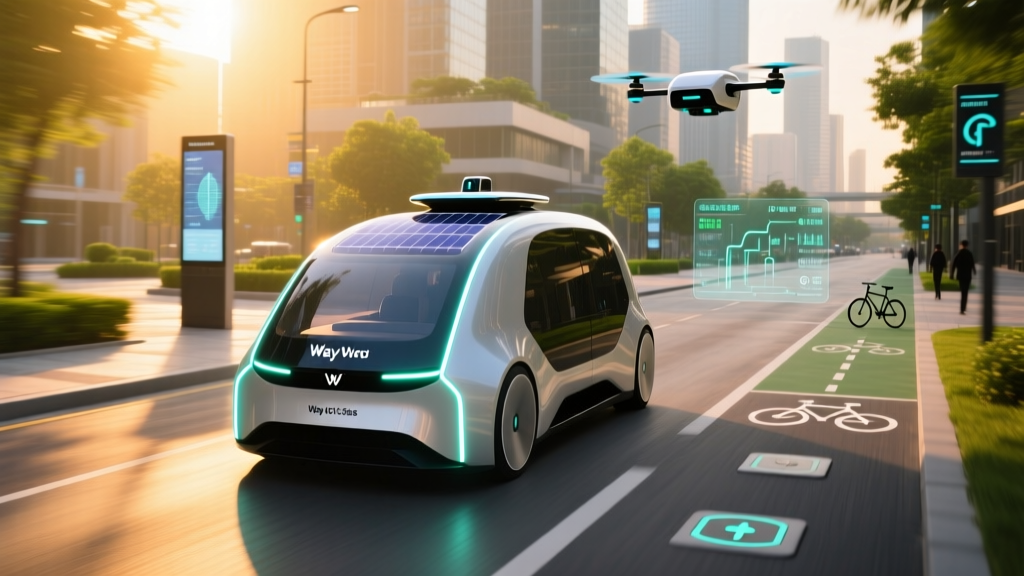
Waymo's current fleet primarily uses the 6th-generation Waymo Driver hardware suite, deployed on the Zeekr RT (a purpose-built electric vehicle) and retrofitted Jaguar I-PACE models. The sensor stack is multi-modal — meaning it does not rely on any single sensor type:
- Lidar: Multiple roof-mounted and body-integrated lidar units provide a 360-degree, high-resolution 3D point cloud of the vehicle's surroundings. Lidar works independently of ambient light, giving Waymo reliable nighttime and low-visibility perception. The 6th-gen system uses a mix of long-range and short-range lidar for both highway-speed detection and close-proximity awareness.
- Cameras: A suite of high-resolution cameras covers 360 degrees, handling lane-line detection, traffic-light state recognition, signage reading, and object classification. Multiple cameras with different focal lengths provide both wide-angle and telephoto views.
- Radar: Imaging radar units supplement lidar and cameras, particularly for detecting object velocity and operating in conditions where lidar performance can degrade (heavy rain, fog).
- Audio sensors: External microphones detect emergency vehicle sirens, enabling the system to pull over or yield appropriately.
- HD Maps: Waymo vehicles rely on pre-built, centimeter-accurate high-definition maps of their service areas. These maps are continuously updated and provide the vehicle with prior knowledge of lane geometry, speed limits, crosswalk locations, and traffic patterns. This is a key difference from camera-only approaches (like Tesla's FSD) that attempt to navigate without pre-mapped data.
The combination of lidar + cameras + radar + HD maps gives Waymo a redundant perception system. If one sensor modality is degraded (e.g., camera glare from direct sun), others compensate. This redundancy is a core requirement for driverless operation — there is no human to fall back on if a sensor fails.
Regulatory Framework: Who Approves Robotaxi Operations
Robotaxi deployment in the U.S. is governed by a patchwork of state and local regulations — there is no single federal license to operate a driverless taxi service nationwide.
- California: The California Public Utilities Commission (CPUC) issues permits for commercial passenger service, while the California DMV issues testing and deployment permits. Waymo holds both a DMV driverless testing permit and a CPUC commercial deployment permit for San Francisco and Los Angeles.
- Arizona: Arizona has taken a permissive regulatory approach since 2015, with executive orders enabling autonomous vehicle testing and commercial operation without the layered permit structure of California. Waymo's Phoenix operations fall under state and local traffic law compliance without a separate state robotaxi permit.
- Texas: Austin's robotaxi operations are governed by state autonomous vehicle legislation and local transportation authority coordination. Texas passed autonomous vehicle framework legislation that allows commercial operation under specific conditions.
- Federal (NHTSA): The National Highway Traffic Safety Administration sets vehicle safety standards and requires crash reporting under the Standing General Order, but does not currently issue operational permits for robotaxi services. Federal rulemaking on ADS-equipped vehicles remains in development.
This state-by-state framework means that Waymo must navigate separate approval processes for each new market, which is a significant factor in the pace of geographic expansion.
Current Limitations: Where Waymo Cannot Operate
Waymo's Level 4 service is powerful within its domain, but that domain has firm boundaries. Current limitations include:
- Geofencing: The vehicle will not operate outside its mapped and approved service area. Trips that cross the boundary are unavailable in the app.
- Weather restrictions: Heavy rain, fog, snow, and ice can degrade sensor performance and road conditions beyond the system's operational design domain. In Phoenix, monsoon-season downpours may temporarily suspend service. Waymo does not currently operate in cities with significant snowfall.
- Highway limitations: While the 6th-gen system supports highway-speed driving on specific mapped routes (e.g., Phoenix freeway segments), highway operation is more limited than surface-street coverage and expands gradually.
- Construction zones: Major, unmapped road construction can confuse the HD map and sensor fusion. Waymo vehicles may reroute or, in some cases, pull over and request remote assistance.
- Airport and venue access: Some airports, stadiums, and private facilities have not yet established pickup/dropoff agreements with Waymo, limiting access to those destinations.
- No intercity trips: Waymo is an urban robotaxi, not a long-distance service. A Phoenix-to-Tucson or San Francisco-to-Sacramento trip is not possible.
- Accessibility: Waymo has introduced wheelchair-accessible vehicles in select markets, but availability is limited compared to standard vehicles. The Zeekr RT and I-PACE fleet vehicles require passengers to enter a conventional vehicle cabin — there is no option for riders who cannot transfer from a wheelchair to a vehicle seat in most markets.
How to Use Waymo One: Practical Steps
- Download the Waymo One app (iOS or Android) and create an account.
- Check availability: Enter your pickup and dropoff addresses. If both are within the service area, the app will show estimated fare and wait time.
- Request your ride: Confirm the pickup spot. The app provides a vehicle description and license plate. You can track the vehicle's approach in real time.
- Board the vehicle: Unlock the doors via the app when the vehicle arrives. There is no driver — the front seats are empty or occupied by equipment. You sit in the rear.
- Start the trip: Confirm you're buckled in via the in-app prompt. The vehicle departs autonomously.
- In-ride experience: A screen in the back seat shows the route, current speed, and the vehicle's perception view (what the sensors see). You can adjust climate controls and add music via the screen. A "pull over" button is available if you need to stop.
- Arrival and payment: The vehicle drops you at your destination. Payment is processed automatically through the app — no tipping interface.
Frequently Asked Questions
Where can I use Waymo robotaxi service right now?
As of early 2026, Waymo One is commercially available in Phoenix (AZ), San Francisco (CA), Los Angeles (CA), and Austin (TX) — all within specific geofenced service areas. Check the Waymo One app for exact pickup and dropoff availability in your location.
How much does a Waymo ride cost compared to Uber or Lyft?
For a typical 3–5 mile urban trip, Waymo One costs roughly $8–$20, generally comparable to or slightly less than UberX/Lyft during standard hours. Waymo's advantage is more pronounced during rideshare surge pricing, and there is no tipping expectation. Prices vary by city, time, and demand.
How safe are Waymo robotaxis?
Waymo reports over 50 million driverless miles and 10 million+ paid trips with zero attributed fatalities and an injury-critical crash rate approximately 85% lower than human benchmarks in comparable environments. Most reported incidents involve other vehicles striking the Waymo. Safety data is reported to NHTSA under the Standing General Order. This record reflects geofenced, fair-weather urban operation.
What are the current limitations of Waymo service?
Key limitations include strict geofencing (no trips outside the service area), weather restrictions (no operation in heavy snow, limited in heavy rain), no intercity trips, limited highway coverage, potential rerouting around construction zones, and limited wheelchair-accessible vehicle availability. Waymo does not operate in cities with significant winter weather.
Is Waymo truly self-driving or is it driver-assist like Tesla FSD?
Waymo is SAE Level 4 — truly driverless, with no human driver present and no expectation of passenger intervention. This is fundamentally different from Tesla FSD (Supervised), GM Super Cruise, and Ford BlueCruise, which are SAE Level 2 driver-assist systems that require an attentive, licensed driver behind the wheel at all times. Level 2 assists a driver; Level 4 replaces the driver within its operational domain.
What vehicle does Waymo use?
Waymo's current fleet includes the Jaguar I-PACE (retrofitted with 6th-gen Waymo Driver hardware) and the Zeekr RT, a purpose-built electric robotaxi designed jointly by Waymo and Geely's Zeekr brand. Both are battery-electric vehicles. The Zeekr RT features a lower floor, wider doors, and a passenger-focused interior with no driver controls.
Can I use Waymo to get to the airport?
Airport access varies by city. Phoenix Sky Harbor (PHX) has established Waymo pickup and dropoff. San Francisco International (SFO) and Los Angeles International (LAX) access depends on current agreements and designated zones — check the app for your specific airport destination.