Is Waymo Coming to Chicago? The Short Answer for 2026
As of mid-2026, Waymo has not launched a commercial robotaxi service in Chicago, and the city does not appear on the company's announced near-term expansion roadmap. Chicago's dense urban grid, harsh winter weather, complex construction zones, and Illinois state regulatory framework all present hurdles that Waymo has not yet publicly addressed with a deployment timeline.
That doesn't mean Chicago is permanently off the table. Waymo has steadily expanded its Waymo One service across major U.S. metros since its Phoenix debut, and the company has hinted at Midwest interest. But if you're a Chicago resident hoping to hail a driverless Jaguar I-PACE today, you'll need to wait — or travel to one of Waymo's live markets.
This guide covers exactly where Waymo operates now, what it would take to reach Chicago, how the technology and pricing stack up against rideshare, and the real safety data behind Level 4 autonomy.
Where Waymo Operates Right Now: Live Service Map
Waymo One — the company's commercial, app-based robotaxi service — is available to the general public in a growing but still limited set of U.S. cities. Below is the current operational status as of 2026.
| City | Status | Service Area Notes | Year Launched |
|---|---|---|---|
| Phoenix, AZ (Metro) | ✅ Fully operational | Chandler, Tempe, Mesa, Scottsdale; 200+ sq mi geofence | 2020 |
| San Francisco, CA | ✅ Fully operational | City-wide including downtown, SOMA, Sunset; highway-capable on select routes | 2022 |
| Los Angeles, CA | ✅ Fully operational | Santa Monica, Hollywood, Beverly Hills, Downtown LA; expanding | 2023 |
| Austin, TX | ✅ Operational (expanding) | Central Austin, South Congress, Downtown; phased rollout | 2024 |
| Chicago, IL | ❌ Not available | No announced timeline; not in public expansion pipeline | — |
| Other Midwest cities | ❌ Not available | No Detroit, Minneapolis, or St. Louis announcements | — |
Waymo has historically prioritized Sun Belt and West Coast cities where weather is mild, road infrastructure is well-mapped, and state regulatory frameworks are favorable. Phoenix's wide boulevards and minimal snow made it an ideal proving ground. San Francisco and Los Angeles, despite their complexity, benefit from California's established CPUC autonomous vehicle permitting process. Texas passed AV-friendly legislation that smoothed Austin's entry.
Illinois, by contrast, has no comprehensive state-level robotaxi regulatory framework comparable to California's or Arizona's. That regulatory gap is one of the most significant barriers to a Chicago launch.
What It Would Take for Waymo to Reach Chicago
Deploying a Level 4 robotaxi fleet in Chicago isn't simply a matter of shipping vehicles and flipping a switch. Several interlocking requirements must be satisfied:
- State legislation: Illinois would need to pass or update autonomous vehicle legislation that permits commercial driverless operations, defines liability, and establishes a permitting authority. As of 2026, Illinois has tested AV pilot programs but has not opened the door to commercial robotaxi services at the scale Waymo requires.
- HD mapping: Waymo's system relies on pre-built, centimeter-accurate high-definition maps of every street in its geofence. Mapping Chicago's 230+ square miles of streets, alleys, and ongoing construction zones is a multi-month effort.
- Winter weather validation: Chicago averages 37 inches of snow per year. Waymo's sensor suite — lidar, radar, and cameras — must be validated in heavy snow, sleet, road salt spray, and sub-zero temperatures. While Waymo has tested in winter conditions in other cities, Chicago's combination of lake-effect snow, wind, and dense urban canyon streets is a unique challenge.
- Fleet infrastructure: Waymo needs local depots for vehicle charging, cleaning, sensor calibration, and maintenance. In Phoenix and SF, these facilities are integrated into the city's commercial real estate footprint.
- First-responder coordination: Waymo works with local police and fire departments to establish protocols for how a driverless vehicle behaves around emergency scenes. This requires formal agreements with the Chicago PD and CFD.
Given these hurdles, a Chicago launch before late 2027 or 2028 appears unlikely unless Illinois fast-tracks AV legislation and Waymo prioritizes the Midwest market.
SAE Automation Levels: Why Waymo Is Level 4, Not Level 2
It's critical to distinguish Waymo's robotaxi from consumer driver-assist systems like Tesla Autopilot, Ford BlueCruise, or GM Super Cruise. These are fundamentally different categories of automation.
Waymo One operates at SAE Level 4 (High Automation) — the vehicle handles all driving tasks within its defined operational design domain (ODD) with no human driver present. There is no steering wheel in use by a passenger, and no expectation that a rider will intervene.
This is fundamentally different from SAE Level 2 (Partial Automation), which includes Tesla Autopilot/FSD (Supervised), BlueCruise, and Super Cruise. In Level 2, a licensed driver must remain attentive, hands on or near the wheel, and ready to take over at any moment. Level 2 is driver-assist, not self-driving.
| Level | Name | Who Drives | Example |
|---|---|---|---|
| 0 | No Automation | Human | Traditional car, no assist |
| 1 | Driver Assistance | Human (system assists one axis) | Adaptive cruise control OR lane-keeping |
| 2 | Partial Automation | Human (system assists both axes) | Tesla Autopilot, BlueCruise, Super Cruise |
| 3 | Conditional Automation | System (human must be ready to take over) | Mercedes Drive Pilot (limited markets, ≤40 mph) |
| 4 | High Automation | System (within geofenced ODD, no human needed) | Waymo One, Zoox |
| 5 | Full Automation | System (all conditions, no geofence) | Does not exist commercially |
Waymo does not sell its vehicles or technology to consumers. You cannot buy a Waymo-equipped car. The system exists exclusively as a ride-hail service within its geofenced service areas.
Waymo's Technology Stack: Lidar, Cameras, and Radar
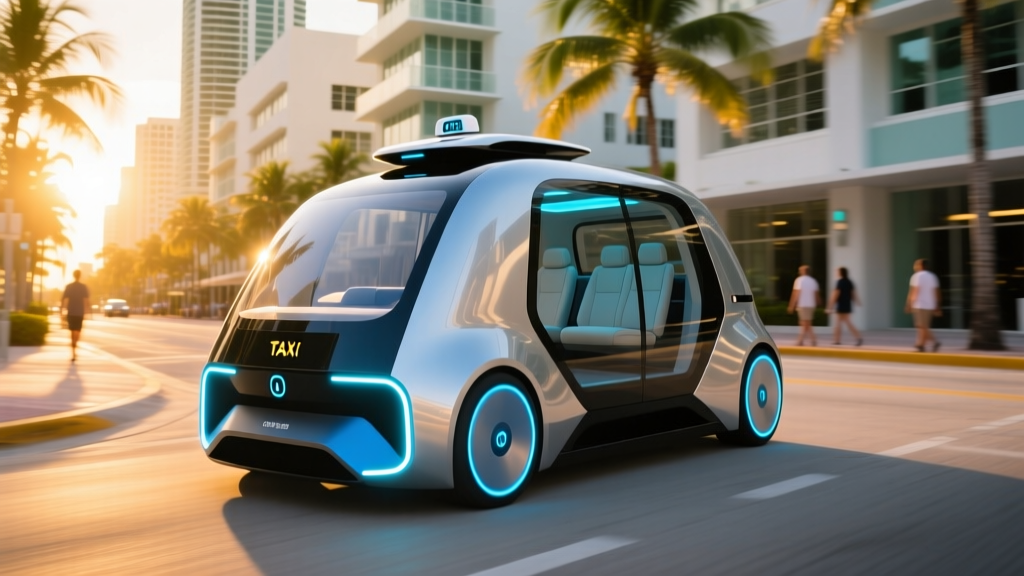
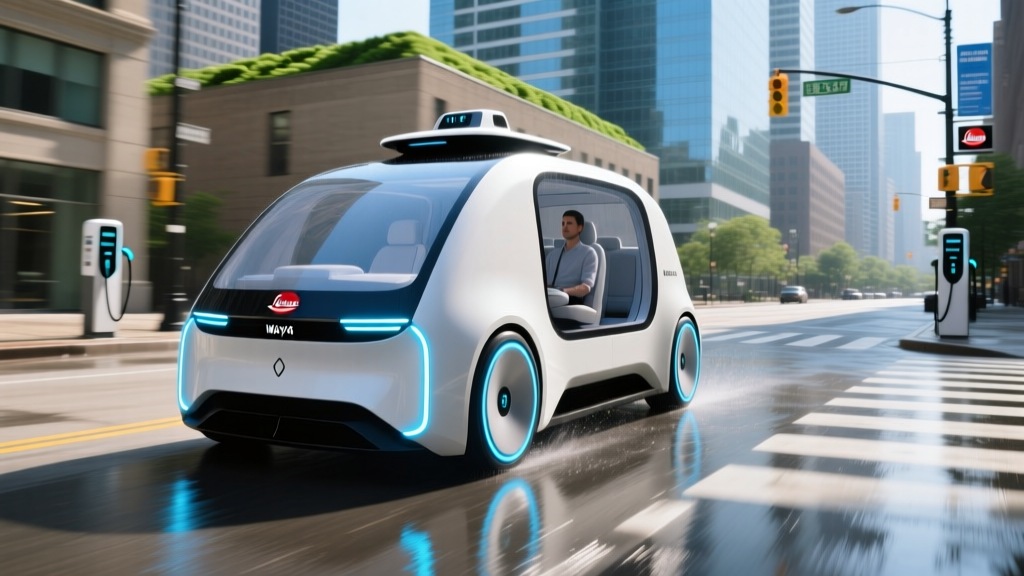
Waymo's sixth-generation autonomous driving system, deployed on the all-electric Jaguar I-PACE and the purpose-built Zeekr RT (in newer markets), uses a multi-sensor fusion approach that differs sharply from Tesla's camera-only strategy.
- Lidar (5+ units): Roof-mounted and corner-positioned lidar arrays generate a real-time 3D point cloud of the vehicle's surroundings up to 500 meters. Lidar works in darkness and is unaffected by glare — a critical advantage over camera-only systems.
- Cameras (8+ units): High-resolution cameras read traffic lights, signs, lane markings, and pedestrian gestures. They provide color and text recognition that lidar cannot.
- Radar (6+ units): Millimeter-wave radar detects object velocity and performs reliably in rain, fog, and snow — conditions where lidar and cameras degrade.
- Audio sensors: External microphones detect sirens from emergency vehicles, even before they're visible.
- HD Maps: Pre-built centimeter-accurate maps provide a baseline layer of static infrastructure (lane geometry, curb positions, speed limits) that the real-time sensors cross-reference.
- Compute: Custom-designed AI inference hardware processes sensor data in real time, running Waymo's perception, prediction, and planning models.
This sensor redundancy is why Waymo can operate without a human driver. If one sensor modality degrades (e.g., camera washout from sun glare), lidar and radar compensate. Tesla's vision-only approach, by contrast, relies entirely on cameras and neural network inference — a strategy that has drawn scrutiny from NHTSA in investigations of Autopilot and FSD crashes.
The trade-off: Waymo's hardware suite costs tens of thousands of dollars per vehicle, which is why the company operates a fleet-service model rather than selling to consumers.
How to Use Waymo One and What It Costs vs. Uber/Lyft
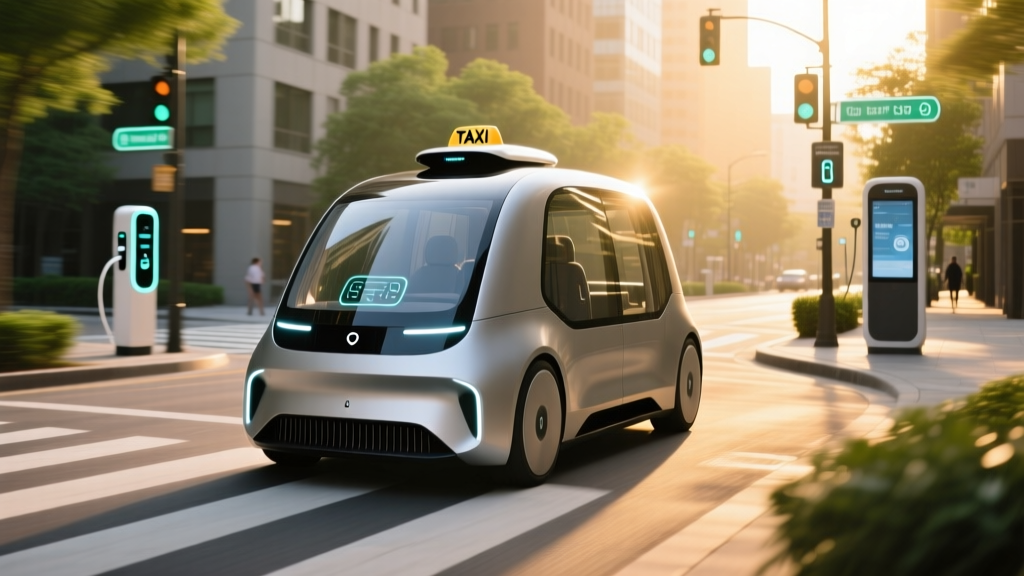
If you're in a Waymo market, the experience is nearly identical to calling an Uber or Lyft — with a few key differences.
- Download the Waymo One app (iOS/Android).
- Create an account with a payment method. No waitlist in most markets as of 2026 (Phoenix and SF are fully open; LA and Austin may have brief queues during peak hours).
- Enter your destination. The app confirms whether both pickup and drop-off are within the geofenced service area.
- Wait for your vehicle. Typical wait times: 3–7 minutes in Phoenix, 4–10 minutes in SF/LA.
- Unlock via app. The car arrives driverless. You unlock it through the app, buckle up, and press "Start Ride" on the rear-seat screen.
- Ride. The vehicle handles all driving. You can adjust cabin temperature and choose a music playlist but cannot override the route or speed.
| Metric | Waymo One | UberX | Lyft Standard |
|---|---|---|---|
| Base fare | $5.00–$6.50 | $3.50–$5.00 | $3.00–$4.50 |
| Per-mile rate | $1.50–$2.00 | $1.25–$1.75 | $1.10–$1.60 |
| Per-minute rate | $0.35–$0.50 | $0.25–$0.40 | $0.20–$0.35 |
| 5-mile, 15-min trip (est.) | $18–$24 | $14–$20 | $12–$18 |
| Surge pricing | No dynamic surge (as of 2026) | Yes (1.2x–3.0x+) | Yes (1.2x–2.5x+) |
| Tipping | Not applicable (no driver) | Expected ($2–$5) | Expected ($2–$5) |
| Total typical cost (5-mi trip) | $18–$24 | $16–$25 (with tip) | $14–$23 (with tip) |
The bottom line: Waymo is generally price-competitive with rideshare when you factor in tipping, and often cheaper during Uber/Lyft surge periods since Waymo does not apply surge multipliers. However, Waymo cannot yet match the cheapest Uber/Lyft fares during off-peak hours in markets where driver supply is high.
For Chicago residents, the practical implication is that even when Waymo eventually arrives, it will likely be a complement to — not a replacement for — Uber and Lyft, particularly for longer trips that extend beyond the geofenced zone.
Waymo's Safety Record: What the Data Actually Shows
Safety is the most scrutinized dimension of robotaxi operations, and Waymo has published more data than any competitor. Here's what the numbers show.
- Cumulative autonomous miles driven: Over 30 million fully driverless miles as of early 2026 (across all markets combined).
- Injury-relevant crash rate: Waymo's published data, analyzed against NHTSA benchmarks, shows approximately 85% fewer injury-causing crashes per million miles compared to the human-driver baseline in comparable urban environments.
- Contact rate: Waymo vehicles make contact with objects (other vehicles, poles, pedestrians) at a rate of roughly 1 per 500,000+ driverless miles — most are low-speed, minor-contact events in parking lots or at intersections.
- Fatalities: As of mid-2026, Waymo has reported zero passenger or pedestrian fatalities during fully driverless commercial operations.
- NHTSA Standing General Order: Waymo reports all crashes involving its ADS-equipped vehicles to NHTSA under the Standing General Order for crash reporting.
For context, the U.S. human-driver fatality rate is approximately 1.35 deaths per 100 million vehicle miles traveled (per NHTSA). Waymo's 30+ million driverless miles without a fatality is a promising but statistically limited sample — it would take hundreds of millions of miles to make a definitive statistical comparison at the fatality level.
Waymo has also published a peer-reviewed study comparing its crash rates to human benchmarks using insurance-claim data, which found significant reductions in both property-damage and injury claims. The study is available through the Insurance Institute for Highway Safety (IIHS) research channels.
However, Waymo vehicles have been involved in notable non-fatal incidents — including a 2024 event in Phoenix where a Waymo vehicle entered an active school zone with a lowered speed-limit sign and was remotely guided to a stop, and several low-speed collisions with commercial trucks in San Francisco that drew public scrutiny. Each incident was reported to NHTSA and investigated.
Current Limitations: Weather, Geofencing, and Edge Cases
Level 4 autonomy is powerful within its operational design domain — but that domain has hard boundaries. Here's what Waymo cannot yet do:
- Heavy snow and ice: Waymo will pause or restrict service during significant snowfall. Lidar performance degrades in heavy precipitation, and lane markings become invisible. Chicago's winter would regularly trigger service suspensions.
- Outside the geofence: You cannot request a ride that starts or ends outside Waymo's mapped service area. There is no "drive anywhere" capability.
- Highway driving (limited): While Waymo has begun testing on select highway segments in Phoenix and SF, most rides are surface-street only. A Chicago-to-Milwaukee trip is not feasible.
- Complex construction zones: Major, unmapped roadwork can confuse the system. Waymo vehicles will pull over and request remote guidance if they cannot confidently navigate a construction zone.
- Unprotected left turns in heavy traffic: Waymo has improved here, but the vehicle can be overly cautious at uncontrolled intersections, sometimes waiting longer than a human driver would.
- Emergency vehicle interaction: While Waymo detects sirens and pulls over, there have been documented instances of the vehicle stopping in travel lanes rather than fully clearing the road.
- Wheelchair and mobility device accommodation: Waymo's current Jaguar I-PACE fleet is not wheelchair-accessible. The company has committed to accessible vehicles in future fleet generations.
These limitations are particularly relevant to Chicago. A city with 37+ inches of annual snowfall, constant construction on I-90/94 and Lake Shore Drive, and dense pedestrian traffic would stress Waymo's ODD in ways that Phoenix and LA do not.
The Regulatory Landscape: Who Approves Robotaxi Operations
Robotaxi deployment in the U.S. is governed by a patchwork of state and local regulations — there is no single federal license to operate.
- California: The California Public Utilities Commission (CPUC) issues permits for commercial robotaxi service. The DMV separately issues testing and deployment permits. Both must approve.
- Arizona: The state has minimal AV regulation, allowing companies to self-certify and operate with a Transportation Department letter of authorization. This permissive environment is why Phoenix was Waymo's first market.
- Texas: State law (HB 2932, passed 2023) allows AV operation without a human driver, with registration through the Texas Department of Motor Vehicles.
- Illinois: As of 2026, Illinois has no equivalent commercial robotaxi permitting framework. The state has authorized AV testing but not commercial driverless ride-hail. The Illinois General Assembly would need to pass enabling legislation before Waymo could operate.
- Federal: NHTSA regulates vehicle safety standards (FMVSS) but does not currently issue operational permits for AV services. The Standing General Order requires crash reporting but does not grant or deny operational authority.
This regulatory fragmentation means Waymo must fight a separate political and legal battle in every new state — a significant brake on expansion speed.
Frequently Asked Questions
Is Waymo coming to Chicago in 2026?
No. As of mid-2026, Waymo has not announced a Chicago launch date, and Illinois lacks the regulatory framework needed for commercial robotaxi operations. A Chicago launch before 2028 appears unlikely.
Where can I ride a Waymo right now?
Waymo One is fully operational in Phoenix (metro area), San Francisco, Los Angeles, and Austin. You can download the Waymo One app and request a ride in any of these cities — no waitlist in most markets.
How much does a Waymo ride cost compared to Uber?
A typical 5-mile Waymo ride costs $18–$24, which is comparable to UberX or Lyft after tipping. Waymo does not apply surge pricing, so it can be cheaper during peak demand periods.
Is Waymo truly self-driving?
Yes — within its geofenced service area, Waymo operates at SAE Level 4, meaning there is no human driver in the vehicle and no expectation of passenger intervention. This is fundamentally different from Level 2 driver-assist systems like Tesla Autopilot or Ford BlueCruise, which require an attentive human driver at all times.
How safe are Waymo robotaxis?
Waymo has logged over 30 million fully driverless miles with zero reported passenger or pedestrian fatalities. Published data shows approximately 85% fewer injury-causing crashes per million miles compared to human drivers in comparable urban settings. However, the sample size is still limited relative to the billions of miles driven by humans annually.
Can Waymo drive in snow?
Waymo restricts or suspends service during significant snow or ice events. The sensor suite performs best in clear to moderate rain conditions. Heavy snow, sleet, and salt spray degrade lidar and camera performance, making Chicago's winters a major operational challenge.
What car does Waymo use?
Waymo's current primary fleet vehicle is the all-electric Jaguar I-PACE, equipped with the sixth-generation Waymo Driver sensor suite. In newer markets, Waymo has begun deploying the Zeekr RT, a purpose-built electric robotaxi designed in partnership with Geely's Zeekr brand.
Will Waymo ever replace Uber and Lyft?
Not in the foreseeable future. Waymo's geofenced, fleet-owned model cannot match the geographic coverage and on-demand flexibility of human-driven rideshare. The more likely outcome is that robotaxis and human-driven rideshare coexist, with Waymo handling predictable urban routes and Uber/Lyft covering suburban, highway, and long-distance trips.