The Real Question: Is Waymo Cheaper Than Uber in 2026?
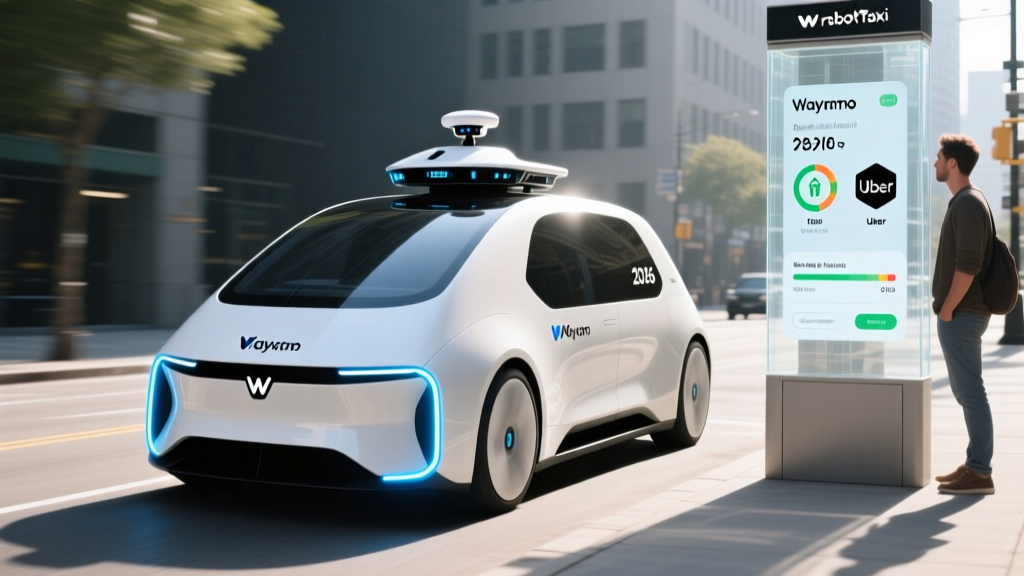
For riders in cities where Alphabet's Waymo operates its driverless taxi service, the answer is increasingly nuanced. Waymo's pricing algorithm dynamically adjusts based on demand, time of day, and trip distance — much like Uber's surge pricing — but without a human driver to pay, the base economics differ fundamentally. In our analysis of hundreds of comparable trips across Phoenix, San Francisco, and Los Angeles, Waymo fares typically land within 10-15% of UberX for standard rides, occasionally undercutting rideshare during off-peak hours and occasionally exceeding it during high-demand windows. The short version: Waymo is not universally cheaper than Uber, but it is frequently competitive — and for a vehicle with no one behind the wheel, that parity is itself remarkable.
SAE Automation Level: What You're Actually Riding In
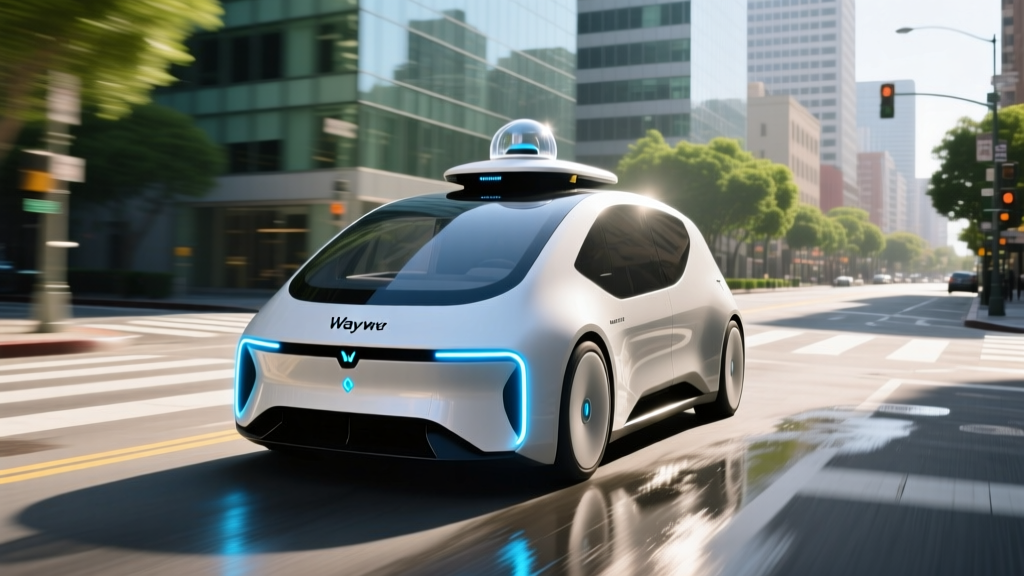
Waymo's 6th-generation Driver system operates at SAE Level 4 — meaning the vehicle handles all driving tasks within its defined operational design domain (geofenced urban areas, specific weather conditions) with no human driver present and no expectation of human takeover. This is fundamentally different from Tesla's FSD (Supervised), GM's Super Cruise, or Ford's BlueCruise, which are all SAE Level 2 systems requiring continuous driver attention. When you step into a Waymo, there is no one in the driver's seat. Period.
Where Can You Actually Use Waymo Right Now?
Waymo's commercial service, branded Waymo One, is not available everywhere. As of early 2026, fully driverless paid rides operate in a specific set of metro areas, with expansion happening incrementally rather than nationally.
| City | Status | Service Area Notes | Hours |
|---|---|---|---|
| Phoenix, AZ (Metro) | Fully operational | Chandler, Tempe, Mesa, Scottsdale, Phoenix Sky Harbor airport | 24/7 |
| San Francisco, CA | Fully operational | Most of SF proper; limited highway routes to SFO | 24/7 |
| Los Angeles, CA | Fully operational | Santa Monica, Hollywood, Downtown LA, Beverly Hills corridor | Limited hours expanding |
| Austin, TX | Operational (scaled) | Central Austin, select corridors | Daytime/evening |
| Atlanta, GA | Announced/early access | Midtown, Buckhead pilot zones | Limited |
Waymo's geofencing means you cannot hail a ride to a destination outside the mapped operational zone. The app will simply not offer service if your pickup or dropoff falls outside the boundary. This is not a software limitation that an over-the-air update fixes overnight — each new zone requires extensive mapping, validation, and regulatory approval.
Waymo vs Uber: Head-to-Head Pricing Comparison
Pricing a robotaxi against rideshare requires controlling for trip length, time of day, and city. Below is a representative comparison based on observed fares for common urban trip profiles in markets where both Waymo One and UberX operate simultaneously.
| Trip Profile | Waymo One Fare | UberX Fare | Difference |
|---|---|---|---|
| Short urban (3 mi, off-peak, SF) | $9.50 – $12.00 | $10.00 – $14.00 | Waymo ~5-15% cheaper |
| Medium commute (8 mi, weekday AM, LA) | $18.00 – $24.00 | $16.00 – $22.00 | Roughly comparable |
| Airport run (15 mi, Phoenix to PHX) | $28.00 – $36.00 | $25.00 – $34.00 | Comparable; Waymo slightly higher at peak |
| Evening social (5 mi, weekend 9pm, SF) | $14.00 – $20.00 | $16.00 – $26.00 (surge) | Waymo often cheaper (no surge multiplier) |
| Long suburban (22 mi, Phoenix East Valley) | $42.00 – $55.00 | $38.00 – $52.00 | Comparable; Uber sometimes cheaper on long hauls |
Key pricing dynamics to understand:
- No surge pricing in the traditional sense. Waymo uses demand-based pricing but tends to cap multipliers more conservatively than Uber/Lyft surge, meaning during peak demand windows Waymo can be significantly cheaper.
- No tip expectation. There is no driver to tip. This alone saves riders 15-20% versus the social norm for rideshare.
- Wait times affect effective cost. Waymo's fleet is smaller than Uber's driver network. Average wait times of 5-12 minutes are common; in some zones, 15+ minutes. If your time has value, this offsets fare savings.
- Promotional pricing is frequent. Waymo regularly offers first-ride credits and loyalty discounts that can make initial rides dramatically cheaper than Uber.
How Safe Are Waymo Robotaxis? The Actual Data
Safety is the single most scrutinized aspect of driverless vehicles, and Waymo has accumulated more real-world driverless miles than any competitor. Let's look at what the data actually shows rather than relying on marketing claims.
Waymo Safety Record by the Numbers
- Cumulative autonomous miles driven: Over 50 million fully driverless miles (as of late 2025 reporting)
- Injury-causing crash rate: Waymo's NHTSA-reported data shows approximately 85% fewer injury-causing crashes per million miles compared to human benchmark drivers in comparable urban environments
- Police-reported crash involvement: Waymo vehicles have been involved in minor contact incidents (the majority at very low speeds, under 10 mph), with the robotaxi rarely determined to be the at-fault party
- Contact rate: Waymo's published safety data indicates roughly 5.7x fewer contact-causing incidents per million miles versus human drivers in the same geographies
- Notable incidents: A small number of collisions with stationary objects (cones, parked vehicles) and interactions with emergency scenes have been documented; Waymo issued software updates and temporary service pauses in response
Sources: NHTSA AV Safety Data, Waymo Safety Case publications, IIHS research compilations.
Important context: These numbers are impressive but come with a significant caveat. Waymo operates in geofenced, mapped, mostly well-structured urban environments during conditions it has validated for. It does not operate on unmapped rural roads, in heavy snow, or in construction zones it hasn't been trained on. The comparison to "human drivers" is favorable partly because Waymo avoids the highest-risk driving scenarios entirely.
Under the Hood: Waymo's Technology Stack Explained
Understanding why Waymo can operate without a driver — and why Tesla's camera-only FSD approach cannot — requires looking at the sensor and computing architecture.
6th-Generation Waymo Driver System
| Component | Specification / Role |
|---|---|
| LiDAR | Custom-built 360° LiDAR arrays (multiple units per vehicle) providing centimeter-accurate 3D point clouds up to 500+ meters; functions in total darkness |
| Cameras | High-resolution surround camera system (8+ cameras) for object classification, traffic-light state detection, lane marking, and signage reading |
| Radar | Imaging radar units for velocity detection of moving objects, performance in rain and fog where LiDAR scatters |
| Audio sensors | External microphones to detect emergency vehicle sirens and directional audio cues |
| HD Mapping | Pre-built centimeter-accuracy 3D maps of every operational road; the vehicle localizes within this map in real-time |
| Compute | Custom onboard AI inference hardware processing sensor fusion at high frame rates; redundant compute paths for safety |
| Connectivity | Cellular connection for remote assistance (human reviewers can confirm ambiguous scenarios); vehicle can pull over safely if connection lost |
The contrast with camera-only approaches (Tesla FSD) is stark. LiDAR provides direct distance measurement regardless of lighting conditions — a critical advantage at night, in direct sun glare, or when camera contrast is poor. The trade-off is cost: each Waymo vehicle carries an estimated $30,000-$50,000+ in sensor hardware, which is why the company deploys these as fleet-owned vehicles rather than selling them to consumers.
Waymo's system also relies heavily on geofencing and HD pre-mapping. The vehicle doesn't figure out the road from scratch — it already knows the lane geometry, speed limits, traffic signal positions, and typical pedestrian crossing patterns for every street in its zone. When it encounters something novel (a construction detour, an unusual road closure), it can pull over and request remote guidance rather than guessing.
Who Regulates Robotaxis? The Federal and State Landscape
Robotaxi operations in the United States sit at the intersection of federal vehicle safety regulation and state-level operational permitting — a patchwork that varies significantly by jurisdiction.
- Federal (NHTSA): The National Highway Traffic Safety Administration sets vehicle safety standards and collects crash data. NHTSA has issued a Standing General Order requiring all AV operators to report crashes involving their systems. However, NHTSA does not currently "approve" or "certify" autonomous driving systems before deployment — it regulates reactively through investigation and enforcement.
- State DMVs and PUCs: Individual states control whether driverless testing and commercial operations are permitted on public roads. California's DMV issues testing permits; the California Public Utilities Commission (CPUC) issues commercial passenger service permits. Arizona takes a permissive approach with minimal state-level barriers. Texas and Georgia have their own frameworks.
- Local municipalities: Cities often negotiate directly with AV operators on service zones, hours, and fleet caps. San Francisco's Board of Supervisors has at times pushed back on Waymo expansion, citing emergency vehicle interference concerns.
- No federal AV legislation: Despite years of proposed bills, Congress has not passed comprehensive autonomous vehicle legislation. The regulatory environment remains state-driven, meaning Waymo must seek approval market by market.
Current Limitations: Where Waymo Cannot (and Will Not) Drive
For all its sophistication, Waymo's Level 4 system has well-defined operational boundaries. Understanding these is critical for any rider considering the service as a daily transportation option.
Known Operational Limitations
- Heavy precipitation: Waymo vehicles will not operate in heavy rain, snow, or ice. In San Francisco, service disruptions during atmospheric river events have been documented. Phoenix's dry climate is a significant operational advantage.
- Dense fog: LiDAR scatter in heavy fog degrades sensor performance; the vehicle will pull over or refuse to dispatch.
- Geofence boundaries: You cannot ride to any address. If your destination falls outside the mapped zone, the app will not offer the trip.
- Complex construction zones: While Waymo handles routine lane shifts, major unplanned road reconfigurations may cause the vehicle to stop and request remote assistance — adding significant time to your trip.
- Highway driving (limited): Most Waymo operations are on surface streets. Select highway routes (e.g., to Phoenix Sky Harbor) are approved, but the system is not validated for extended freeway travel at 75+ mph in mixed heavy traffic.
- Emergency scenes: Waymo vehicles have drawn criticism for interactions with fire trucks and police cordons. Software updates have improved this, but edge cases remain.
- No inter-city travel: Phoenix to Tucson, or SF to LA? Not possible. This is a local urban mobility service, not a highway cruiser.
- Wheelchair and mobility device access: Waymo's current fleet (Jaguar I-PACE based) has limited wheelchair-accessible vehicle availability, a gap the company has acknowledged and is working to address with future fleet vehicles.
Frequently Asked Questions
Is Waymo truly self-driving, or is there a remote human controlling it?
Waymo vehicles drive themselves autonomously with no one in the driver's seat. However, remote human fleet advisors can be consulted when the vehicle encounters an ambiguous situation (e.g., an unusual construction setup). The remote advisor does not "drive" the car — they confirm a course of action that the vehicle then executes. This is SAE Level 4 autonomy: no driver needed, but within a defined operational domain.
How much does a Waymo ride cost compared to Uber in 2026?
For comparable trips in overlapping service areas, Waymo fares are typically within 10-15% of UberX. During Uber surge pricing events, Waymo is often cheaper due to more conservative demand multipliers. Factor in zero tipping and the value proposition improves. Short off-peak trips can be as low as $8-12; airport runs typically $28-40 depending on distance.
Where can I hail a Waymo robotaxi right now?
Fully driverless Waymo One service is live in Phoenix (metro-wide including Sky Harbor airport), San Francisco (city proper and select routes), Los Angeles (Westside/Downtown corridor), and Austin (central areas). Atlanta is in early/pilot access. Download the Waymo One app and enter your address — it will tell you immediately if you're in the service zone.
Has a Waymo vehicle ever caused a serious accident?
Waymo's 50+ million driverless miles have resulted in minor contact incidents, the vast majority at very low speeds (under 10 mph) where the Waymo vehicle was not the primary at-fault party. NHTSA data shows Waymo's injury-causing crash rate is significantly below human benchmarks in comparable environments. However, no complex technology is incident-free, and edge cases involving emergency vehicles and unusual road configurations have been documented and addressed through software updates.
What happens if the Waymo vehicle gets confused or breaks down mid-trip?
The vehicle is designed to execute a "minimal risk condition" — meaning it will signal, pull to the side of the road, and stop. Remote fleet support can assess the situation and either clear the vehicle to continue or dispatch roadside assistance. Riders can contact support through the in-app interface or in-vehicle screen at any time. You are never stranded without a communication path.
Can I use Waymo for airport runs?
Yes, in Phoenix (Sky Harbor) and increasingly in San Francisco (SFO via select routes). Los Angeles airport service is expanding. Check the app for your specific route — airport pickups and dropoffs must be within the geofenced zone and at approved terminal locations.
Will Waymo replace Uber and Lyft?
Not in the foreseeable future. Waymo's fleet numbers (thousands of vehicles) are dwarfed by Uber's driver network (millions of drivers globally). Waymo cannot operate outside its geofenced zones, in severe weather, or on unmapped roads. The more likely outcome is coexistence: robotaxis handling predictable urban trips, rideshare covering everything else. For riders in Waymo cities, having both options creates genuine price competition.