If you've typed "Waymo car Nashville" into your search bar hoping to hail a driverless ride to Broadway, you're not alone — search interest in robotaxi services reaching Music City has surged as Waymo expands its footprint across the United States. But the reality on the ground in 2026 is more nuanced than the headlines suggest. Nashville is not currently a live Waymo market, and understanding where the service actually operates, what it costs, and how safe it is matters far more than speculation about future expansion.
This guide breaks down exactly where you can ride in a Waymo vehicle today, what the technology stack looks like under the hood, the hard safety data behind Level 4 autonomy, and what Tennessee's regulatory environment means for eventual Nashville service.
Is There a Waymo Car in Nashville Right Now?
The short answer: no. As of early 2026, Waymo's commercial robotaxi service — branded Waymo One — does not operate in Nashville or anywhere in Tennessee. The service is geofenced to specific metropolitan areas where Waymo has secured regulatory approval, completed extensive mapping, and validated its system against local road conditions.
Nashville's absence from the Waymo map isn't a reflection of demand. It's a function of three factors: Tennessee's state-level autonomous vehicle regulatory framework (or lack of a comprehensive one), Waymo's phased expansion strategy that prioritizes Sun Belt and West Coast metros with favorable weather and mapping data, and the logistical reality of deploying and maintaining a fleet of sensor-laden vehicles in a new city.
Waymo's robotaxis operate at SAE Level 4 — high automation within a defined operational design domain (ODD). This means the vehicle handles all driving tasks without a human behind the wheel, but only within its geofenced service area under approved conditions. This is fundamentally different from SAE Level 2 systems like Tesla Autopilot, GM Super Cruise, or Ford BlueCruise, which require continuous driver supervision. Level 4 means no driver. Level 2 means you're still the driver, even if the car is doing a lot of the work.
Where Can You Actually Use Waymo One in 2026?
Waymo has methodically expanded its commercial service area since launching in Phoenix in 2020. Here is the current operational footprint:
| City | Status | Service Area Notes |
|---|---|---|
| Phoenix, AZ | Live — Full | Largest coverage area; includes suburbs (Chandler, Tempe, Scottsdale, Mesa). Airport service active. |
| San Francisco, CA | Live — Full | City-wide coverage. High ride density. Occasional pauses due to regulatory review. |
| Los Angeles, CA | Live — Expanding | Coverage across central LA, Hollywood, Santa Monica, LAX. Continued expansion into valley areas. |
| Austin, TX | Live — Limited | Initial commercial service launched; geofenced to core urban zones. Expanding outward. |
| Atlanta, GA | Testing / Early Access | Waymo vehicles mapping and testing with Uber partnership. Not yet open to general public. |
| Nashville, TN | Not Announced | No testing, no partnership, no announced timeline. Not on Waymo's public roadmap. |
Waymo has also announced intentions to expand to additional cities, and its partnership with Uber allows Waymo vehicles to appear within the Uber app in select markets. But announced intent and live service are very different things — a distinction that matters when planning travel or relocation around robotaxi access.
Waymo's Technology Stack: Lidar, Cameras, and Geofencing
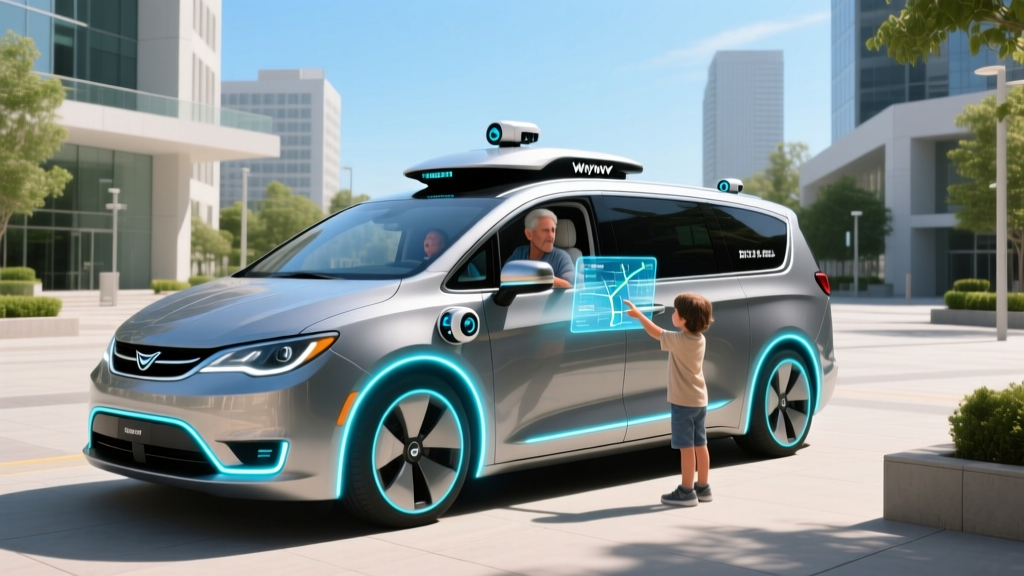
The 6th-generation Waymo Driver — the sensor suite mounted on the Jaguar I-PACE electric SUV that makes up the bulk of Waymo's fleet — represents a significant evolution from earlier hardware. Here's what's actually on the car:
6th-Gen Waymo Driver Hardware
- Lidar: Multiple high-resolution lidar units providing 360° 3D point-cloud mapping. Lidar is the core differentiator vs. camera-only approaches — it provides precise depth perception regardless of lighting conditions.
- Cameras: A surround-camera array with improved dynamic range for reading traffic signals, construction signage, and detecting pedestrian intent at distance.
- Radar: Imaging radar units for velocity detection and performance in rain or fog where lidar and camera effectiveness degrade.
- Compute: Custom-designed onboard computing platform processing sensor fusion in real time, running Waymo's "Driver" software stack.
- HD Mapping: Waymo pre-maps every inch of its service area at centimeter-level precision. The vehicle doesn't figure out the road in real time — it already knows the road, and uses sensors to detect what's changed (construction, stopped vehicles, pedestrians).
- Geofencing: The system will only operate within its validated ODD. If the vehicle approaches the geofence boundary, it executes a safe pullover or reroute.
The Jaguar I-PACE itself provides an 84 kWh usable battery (NMC chemistry), an EPA-estimated 234 miles of range, and DC fast charging at up to 100 kW (10–80% in approximately 45 minutes). Waymo's fleet vehicles charge at dedicated depot chargers between shifts, so passengers never encounter range or charging concerns during a ride.
How Much Does Waymo Cost vs. Uber and Lyft?
One of the most common questions from prospective riders: is a robotaxi actually cheaper than a human-driven rideshare? The answer is that Waymo prices its rides to be competitive with UberX and Lyft standard tiers, not dramatically cheaper — at least not yet.
| Factor | Waymo One | UberX | Lyft Standard |
|---|---|---|---|
| Base fare (typical 5-mi trip) | $10–$16 | $9–$18 | $9–$17 |
| Surge pricing | Less frequent, capped | Common, uncapped | Common, uncapped |
| Tipping | Not expected (no driver) | 15–20% customary | 15–20% customary |
| Wait time charges | Minimal (fleet-managed) | After 2 min free wait | After 2 min free wait |
| Effective cost per ride (avg) | Comparable to UberX | Baseline | Baseline |
The real cost advantage of Waymo emerges when you factor in the absence of tipping (typically $2–$5 per ride) and reduced surge volatility. During peak demand in Phoenix and San Francisco, UberX fares can spike 2x–3x while Waymo's pricing remains more stable, though Waymo does implement demand-based pricing at a more moderate scale.
To use Waymo One, download the Waymo One app (iOS/Android), enter your destination, and the app confirms whether your pickup and dropoff fall within the geofenced service area. In markets with Uber integration, you may also see a "Waymo" vehicle option directly in the Uber app. Payment is handled in-app via credit card, similar to any rideshare platform.
Safety Data: What the Numbers Actually Show
Robotaxi safety is the most scrutinized — and most misunderstood — aspect of the industry. Waymo has published safety data, and third-party analyses from insurance partners and research institutions provide additional context. Here's what the available data indicates:
Waymo Safety Record — Key Data Points
- Total autonomous miles driven: Over 50 million fully driverless miles as of late 2025, across Phoenix, San Francisco, and Los Angeles (Waymo Safety Data).
- Injury-causing crash rate: Waymo's published analysis, reviewed by third-party researchers, indicates a ~85% reduction in injury-causing crash rate compared to human benchmark drivers in the same cities.
- Property-damage-only contacts: Higher than injury crashes but still below human benchmarks. Most involve low-speed contact with stationary objects (parked cars, curbs) during complex urban maneuvers.
- NHTSA Standing General Order: Waymo is required to report all crashes involving its ADS-equipped vehicles. Reports are publicly searchable via NHTSA.
- No fatalities: As of early 2026, Waymo's fully driverless fleet has recorded zero passenger or pedestrian fatalities.
Context matters enormously here. Waymo operates in dense urban environments at relatively low speeds (typically 25–45 mph), which reduces crash severity. The comparison benchmarks use human driver data from the same cities and road types. And every incident — even a minor curb contact — is reported and scrutinized in a way that human driver incidents are not.
That said, the system is not infallible. Waymo vehicles have been documented stalling in intersections during power outages, making unexpected stops that cause rear-end contacts from following human drivers, and occasionally struggling with complex temporary construction zones. These edge cases are precisely why geofencing exists: Waymo restricts its vehicles to areas it has thoroughly validated.
Why Nashville Isn't on Waymo's Map (Yet)
Several converging factors explain why a Waymo car in Nashville remains a future possibility rather than a present reality:
Current Robotaxi Limitations
- Regulatory approval: Tennessee has not enacted a comprehensive autonomous vehicle deployment framework comparable to Arizona, California, or Texas. Without clear state-level rules governing commercial driverless operations, Waymo cannot legally deploy.
- Weather: Nashville's humid subtropical climate includes heavy rain events, occasional ice storms, and fog — conditions that degrade lidar and camera performance. Waymo currently limits or suspends service during severe weather even in live markets.
- HD mapping requirement: Every street in the service area must be pre-mapped at centimeter precision. This is a multi-month process requiring dedicated mapping vehicles before any passenger service can begin.
- Fleet logistics: Waymo needs depot space, charging infrastructure (the I-PACE requires Level 2 or DC fast charging), maintenance facilities, and remote-assistance staffing in every market.
- Geofencing constraints: Even in live cities, Waymo doesn't serve every neighborhood. Highway driving, rural roads, and unpaved surfaces are generally outside the ODD.
- Construction and edge cases: Nashville's ongoing infrastructure projects (I-40/I-65 interchanges, downtown redevelopment) create constantly shifting road conditions that require frequent re-mapping.
The Regulatory Landscape: Who Approves Robotaxis?
Robotaxi deployment in the United States involves a layered regulatory structure that varies significantly by state:
Federal level: The National Highway Traffic Safety Administration (NHTSA) sets vehicle safety standards and requires crash reporting via Standing General Order, but does not currently issue operational permits for robotaxi services. Federal motor vehicle safety standards (FMVSS) were originally written assuming a human driver, and Waymo has received limited exemptions for its driverless vehicle configuration.
State level: This is where the real gatekeeping happens. Arizona's permissive regulatory environment (minimal permitting requirements, no cap on fleet size) made Phoenix the natural first market. California's Public Utilities Commission (CPUC) and DMV jointly regulate testing and commercial deployment — a more restrictive process that has led to service pauses. Texas passed enabling legislation that facilitated Austin's launch.
Tennessee: As of 2026, Tennessee has not passed comprehensive AV deployment legislation that would create a clear pathway for commercial robotaxi operations. Some limited testing provisions exist, but the regulatory infrastructure for a service like Waymo One — carrying paying passengers without a safety driver — is not yet in place. This is the single largest barrier to a Waymo car in Nashville.
What Would It Take for Waymo to Come to Nashville?
Based on Waymo's expansion playbook in other cities, a Nashville launch would require the following sequence, likely spanning 18–30 months from announcement to live service:
- State legislation: Tennessee enacts AV deployment framework with permitting, insurance, and reporting requirements.
- Partnership announcement: Waymo announces Nashville as a target market, potentially in partnership with a local entity or rideshare platform (similar to the Uber partnership in Atlanta).
- Mapping phase: Dedicated mapping vehicles drive every street in the planned service area, building the HD map.
- Testing phase: Waymo vehicles operate with safety drivers, then in "rider-only" mode with invited users, accumulating local validation miles.
- Regulatory approval: State and local authorities review safety data and approve commercial operations.
- Commercial launch: Waymo One opens to the public within the geofenced service area.
This is not a fast process, and Waymo has shown no willingness to shortcut it. The company's post-2023 strategy has been deliberate expansion over rapid scaling — a contrast to competitors like Cruise, whose aggressive rollout in San Francisco led to a high-profile incident and subsequent service suspension.
Frequently Asked Questions
Can I ride in a Waymo car in Nashville today?
No. Waymo One does not operate in Nashville or anywhere in Tennessee as of 2026. The nearest active Waymo market is Atlanta, which is in a testing and early-access phase — not yet open to the general public.
Is Waymo truly self-driving or is there a human driver?
Waymo's commercial robotaxi is SAE Level 4 — fully driverless within its geofenced service area. There is no human behind the wheel and no remote "joystick" operator driving the car in real time. Remote assistance exists for edge-case decision support, but the vehicle drives itself. This is categorically different from Level 2 systems like Tesla FSD (Supervised), which require driver attention at all times.
How much does a Waymo ride cost compared to Uber?
Waymo One pricing is broadly comparable to UberX and Lyft standard fares for equivalent trips, typically $10–$16 for a 5-mile ride. The effective cost is often lower because tipping is not expected and surge pricing is less aggressive. During high-demand periods, Waymo can be meaningfully cheaper than a surged UberX.
What vehicle does Waymo use?
Waymo's primary fleet vehicle is the Jaguar I-PACE, an all-electric SUV with an 84 kWh NMC battery, EPA-estimated 234-mile range, and up to 100 kW DC fast charging. Waymo has also announced partnerships for future vehicle platforms with Zeekr (a Geely brand) for a purpose-built robotaxi, though these are not yet in commercial service.
How safe are Waymo robotaxis?
Waymo's published data, based on over 50 million driverless miles, shows an approximately 85% reduction in injury-causing crash rate compared to human drivers in the same urban environments. There have been zero fatalities in Waymo's fully driverless operations. All crashes are reported to NHTSA under Standing General Order requirements. Independent verification via IIHS and insurance-partner studies generally supports these findings, though the total mileage is still small compared to the billions of miles driven by humans annually.
Will Waymo come to Nashville eventually?
There is no announced timeline for Waymo service in Nashville. The primary barrier is Tennessee's lack of comprehensive AV deployment legislation. If the state enacts a regulatory framework and Waymo identifies Nashville as a strategically valuable market, a launch could follow within 18–30 months. Until then, it remains speculative.
What happens if a Waymo vehicle encounters construction or an unexpected obstacle?
The Waymo Driver is designed to detect obstacles, reroute, or execute a safe stop. In complex scenarios — like an unmapped construction zone — the vehicle may pull over and request remote assistance. A remote support specialist can provide high-level guidance (e.g., "the lane is open, proceed"), but does not steer or control the vehicle directly. If the system cannot resolve the situation, it remains safely stopped until the issue clears.
The bottom line for anyone searching for a Waymo car in Nashville: the technology is real, the safety data is encouraging, and the service works well where it's available. But Nashville isn't on the map yet, and getting there depends more on Tennessee's legislature than on Waymo's engineering team. For now, if you want to experience a Level 4 robotaxi, book a trip to Phoenix, San Francisco, or Los Angeles — and download the Waymo One app before you go.