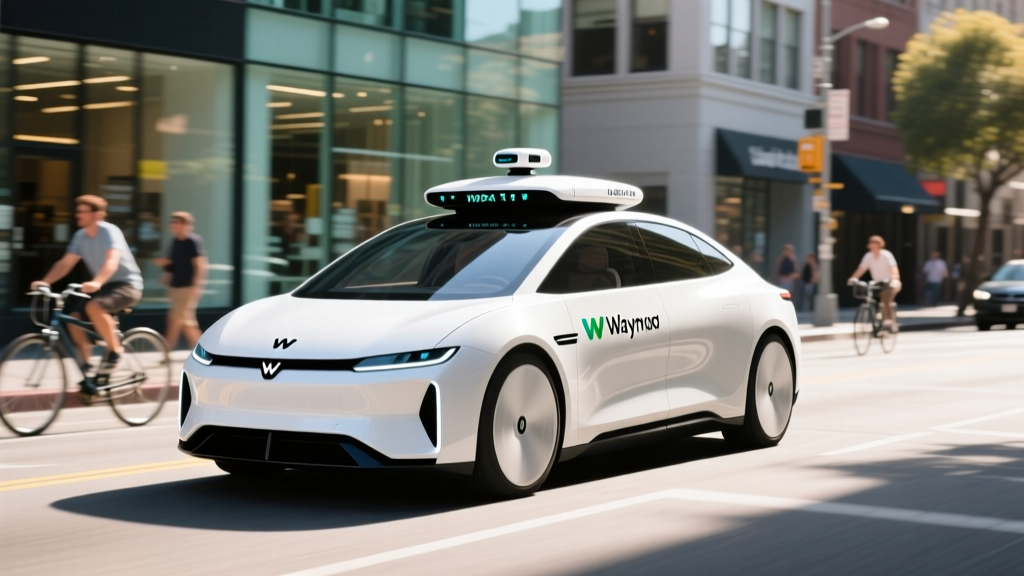
Austin, Texas, has become one of the most closely watched battlegrounds for autonomous mobility. Waymo's driverless taxi service — branded Waymo One — has been expanding its Austin footprint since late 2024, and by early 2026 it covers a substantial portion of the city's core and near-suburbs. If you've been searching for practical details on Waymo Austin TX availability, pricing, safety, and how the service actually works day to day, this guide consolidates everything a rider or EV-curious observer needs to know.
Before we get into the specifics, one critical distinction: Waymo One is a Level 4 driverless robotaxi. There is no human behind the wheel, no steering wheel for a passenger to grab, and no "supervision" requirement. This is fundamentally different from Tesla's FSD (Supervised) or GM's Super Cruise, which are Level 2 systems requiring an attentive driver at all times.
| SAE Level | Who Drives | Example |
|---|---|---|
| Level 2 | Human (system assists steering/speed) | Tesla Autopilot, FSD Supervised, BlueCruise |
| Level 3 | System in limited conditions; human on standby | Mercedes DRIVE PILOT (limited markets) |
| Level 4 | System handles all driving in defined area; no human needed | Waymo One, Zoox (limited zones) |
| Level 5 | System drives everywhere, all conditions | Does not exist commercially |
Waymo operates at Level 4 within its geofenced service area. Outside that zone or in unsupported conditions, the vehicle will pull over safely rather than hand control to a passenger.
Where Can You Use Waymo in Austin Right Now?
As of early 2026, Waymo One's Austin service area spans roughly 90 square miles, covering the downtown core, South Congress, East Austin, the Domain, parts of North Austin near the tech corridor, the University of Texas campus perimeter, and Austin-Bergstrom International Airport (AUS). The geofence has expanded incrementally since the initial limited launch, but it does not yet cover far-flung suburbs like Round Rock, Pflugerville, Cedar Park, or San Marcos.
| Austin Zone | Waymo One Status (2026) | Notes |
|---|---|---|
| Downtown / Capitol Complex | ✅ Live | Full service, high vehicle density |
| South Congress / SoCo | ✅ Live | Popular nightlife corridor |
| East Austin (78702) | ✅ Live | Expanded late 2025 |
| The Domain / NW Austin | ✅ Live | Tech corridor coverage |
| UT Campus Perimeter | ✅ Live | Drop-off at campus edges |
| Austin-Bergstrom Airport | ✅ Live | Designated pickup zones |
| South Lamar / Barton Springs | ✅ Live | Added mid-2025 |
| Round Rock / Pflugerville | ❌ Not available | Outside geofence |
| Cedar Park / Leander | ❌ Not available | Outside geofence |
To check whether a specific address falls within the service area, open the Waymo One app and enter your destination. The app will confirm availability before you request a ride. Rides that start or end outside the geofence cannot be booked — there is no partial-coverage or "drive yourself the rest" option.
How to Ride and What It Costs vs. Uber and Lyft
Using Waymo One in Austin is straightforward: download the Waymo One app (iOS/Android), create an account, enter your pickup and drop-off locations, and request a ride. Wait times in the core service area typically run 3–8 minutes during daytime hours, though late-night and weekend peak periods can stretch to 12–15 minutes depending on fleet density.
The vehicles you'll encounter are primarily Jaguar I-PACE battery-electric SUVs equipped with Waymo's 6th-generation Driver system. The I-PACE carries a 90 kWh battery pack (NMC chemistry), an EPA range of approximately 234 miles, and supports up to 100 kW DC fast charging — though Waymo manages fleet charging at dedicated depots, so riders never interact with charging logistics.
Pricing Breakdown
Waymo One pricing in Austin is designed to compete directly with UberX and Lyft standard rides. Based on sampled fares in early 2026:
| Route (approx.) | Waymo One | UberX | Lyft |
|---|---|---|---|
| Downtown → AUS Airport (~7 mi) | $18–$24 | $17–$26 | $16–$25 |
| SoCo → The Domain (~12 mi) | $26–$34 | $24–$35 | $22–$33 |
| East Austin → Downtown (~3 mi) | $10–$14 | $9–$15 | $9–$14 |
| Downtown → Barton Springs (~5 mi) | $14–$19 | $13–$20 | $12–$19 |
Key pricing observations:
- No surge pricing (as of 2026): Waymo does not currently implement Uber-style surge multipliers, though wait times increase during peak demand rather than prices.
- No tipping: There is no driver to tip. The app does not prompt for gratuities.
- Promo credits: Waymo has been offering first-rider promo credits ($5–$15 off) in newly launched markets, including Austin.
- Comparable to rideshare: On most routes, Waymo fares land within the UberX/Lyft range — sometimes slightly cheaper without surge, sometimes slightly higher during low-demand periods when rideshare discounts apply.
Waymo's Technology Stack: Sensors, Lidar, and the 6th-Gen Driver
Waymo's approach to autonomy is sensor-fusion-heavy — a deliberate contrast to Tesla's camera-only FSD architecture. The 6th-generation Waymo Driver, which equips the Austin I-PACE fleet, integrates:
6th-Gen Waymo Driver — Hardware Overview
- Lidar: Multiple solid-state and spinning lidar units providing 360° 3D point-cloud mapping up to 500+ meters. Lidar gives Waymo precise depth perception independent of lighting conditions — a key advantage at night and in Austin's harsh sun glare.
- Cameras: High-resolution surround-view camera array (8+ cameras) for lane detection, traffic signal recognition, pedestrian classification, and construction-zone interpretation.
- Radar: Imaging radar units for velocity detection of moving objects, particularly useful in rain and fog where camera and lidar performance degrade.
- External audio sensors: Microphones that detect emergency vehicle sirens and triangulate their direction — enabling the vehicle to pull over appropriately.
- Compute: Custom-designed onboard computing platform processing sensor data in real time, with redundant systems for steering, braking, and power.
Source: Waymo Technology Overview
The geofencing model is essential to understanding how Waymo operates. Every inch of the Austin service area has been pre-mapped at centimeter-level resolution using high-definition lidar scans. The vehicle isn't "figuring out" the road in real time the way a human does — it's cross-referencing its live sensor data against a known, validated map. When the vehicle encounters something the map and AI can't confidently resolve (an unusual construction detour, an unflagged road closure, a severe weather event), it defaults to a conservative response: slow down, pull over, or request remote guidance from Waymo's fleet-response team.
This is why Waymo doesn't operate on highways outside its geofence or in unmapped areas. The vehicle's competence is tightly coupled to the quality and recency of its HD map data for that specific roadway.
Safety Record: What the Data Actually Shows
Safety is the most scrutinized aspect of robotaxi operations, and Waymo publishes more data than any other Level 4 operator. As of late 2025, Waymo reported over 40 million fully driverless miles accumulated across all markets (San Francisco, Phoenix, Los Angeles, Austin). Let's look at what the data says.
- Total driverless miles: 40+ million across all US markets
- Injury-relevant crash rate: ~85% lower than human benchmark (per NHTSA-referenced human crash data), based on Waymo's published safety study comparing police-reportable crashes per million miles
- Contactless incidents: Majority of reported incidents involve low-speed, low-severity contacts (e.g., being rear-ended at a stop light by a human driver)
- Fatalities: Zero fatalities attributed to Waymo driverless operations through end of 2025
- Austin-specific: No major publicized incidents in Austin operations as of early 2026; NHTSA standing general order requires reporting of all Level 2–4 incidents
Sources: Waymo Safety Reports, NHTSA AV Safety Data
Context matters. Waymo's favorable crash-rate comparison to human drivers benefits from several structural advantages: the vehicles never drive drunk, drowsy, or distracted; they obey speed limits; and they operate in geofenced, well-mapped urban areas at moderate speeds (typically under 45 mph). The comparison is not apples-to-apples with all human driving, which includes highway travel, rural roads, and adverse conditions that Waymo avoids.
The most common Waymo incident type is being rear-ended or side-swiped by a human driver — essentially, the robotaxi is a victim of other people's bad driving. This pattern is consistent across San Francisco, Phoenix, Los Angeles, and Austin.
Regulatory Landscape: Who Approves Robotaxi Operations in Texas?
Texas is one of the more permissive states for autonomous vehicle deployment, but that doesn't mean it's unregulated. The key regulatory framework for Waymo Austin TX operations involves:
- Texas Department of Motor Vehicles (TxDMV): Autonomous vehicles must be registered, and operators must comply with state-level AV testing and deployment statutes (Texas Transportation Code Ch. 545). Texas law permits fully driverless operation without a safety operator present, provided the vehicle meets federal motor vehicle safety standards (FMVSS).
- NHTSA (Federal): All vehicles on US roads must comply with FMVSS. Waymo's Jaguar I-PACE is a production vehicle that meets these standards. NHTSA also requires Standing General Order 2021-01, which mandates crash reporting for all Level 2–4 automated driving systems within 24 hours of an incident.
- City of Austin: The City of Austin and Capital Area Council of Governments coordinate on local operational matters — designated pickup/dropoff zones (especially at AUS airport), parking interactions, and coordination with Austin Transportation Department on construction zone data sharing.
- No special "robotaxi permit" in Texas: Unlike California (which requires CPUC and DMV permits for commercial driverless service), Texas does not currently require a separate state-level commercial deployment permit for Level 4 robotaxis. This lighter-touch regulatory environment is partly why Waymo prioritized Austin for expansion.
Current Limitations: What Waymo Cannot Do in Austin
For all its sophistication, Waymo One in Austin has real operational limits that riders need to understand before relying on it as a primary transportation option.
⚠️ Current Limitations (Early 2026)
- Geofence boundary: No service to Round Rock, Cedar Park, Pflugerville, San Marcos, Buda, Kyle, or any address outside the ~90 sq mi service zone. If you live in the suburbs, Waymo is not yet an option for your daily commute.
- Heavy rain and flooding: Austin's occasional torrential downpours can cause service suspensions or slowdowns. Lidar and camera performance degrade in heavy precipitation, and the system will default to caution — meaning longer trip times or ride cancellations during storms.
- Construction zones: While Waymo handles routine construction zones, major unannounced road reconfigurations (common on I-35 and Mopac) can cause the vehicle to reroute conservatively or pause. Austin's perpetual construction boom is a genuine edge-case challenge.
- Highway driving: Waymo's Austin fleet primarily operates on surface streets and lower-speed arterials. Extended highway routing on I-35 or US-183 at 70+ mph is limited or avoided — the system favors mapped urban corridors.
- No inter-city trips: You cannot take a Waymo from Austin to San Antonio, Houston, or Waco. The service is strictly intra-city within the Austin geofence.
- Luggage and large items: The I-PACE has a usable cargo area, but riders have reported limited trunk access. For airport runs with multiple large suitcases, a standard rideshare SUV option may be more practical.
- Pets: Service animals are accommodated, but pet policies can vary. Check the app for current guidelines before booking with a non-service animal.
- Accessibility: Waymo has been deploying wheelchair-accessible vehicles in select markets, but Austin's WAV availability remains limited compared to the standard I-PACE fleet. Check the app for WAV options in your area.
- Peak-hour wait times: During SXSW, ACL Festival, UT football weekends, and Friday/Saturday nights, vehicle availability drops and wait times can exceed 20 minutes.
Waymo Austin vs. Other Cities: How It Compares
Waymo One operates commercially in several US markets as of 2026. Austin's deployment shares the same 6th-gen hardware and software as San Francisco and Los Angeles, but the operational characteristics differ:
| Metric | Austin | San Francisco | Phoenix | Los Angeles |
|---|---|---|---|---|
| Service area (sq mi) | ~90 | ~100+ | ~225 | ~80+ |
| Typical wait time | 3–8 min | 3–7 min | 5–12 min | 4–10 min |
| Weather challenges | Heat, flash floods | Fog, hills | Extreme heat | Smog, sprawl |
| Airport service | AUS ✅ | SFO ✅ | PHX ✅ | LAX ✅ |
| Fleet vehicle | Jaguar I-PACE | Jaguar I-PACE | Jaguar I-PACE | Jaguar I-PACE |
Austin's relatively flat terrain and grid-like street layout in the core make it a favorable environment for autonomous navigation compared to San Francisco's steep hills and dense pedestrian traffic. The primary environmental challenge is Austin's summer heat (battery thermal management is handled by the I-PACE's liquid cooling system) and sudden thunderstorm intensity.
What the Future Holds for Waymo in Austin
Waymo has signaled continued geofence expansion in Austin throughout 2026, with likely additions including deeper coverage into South Austin (78745, 78748), potential extension toward Round Rock's tech employers, and expanded highway-capable routing. The company is also expected to begin integrating its next-generation purpose-built vehicle (developed with Geely's Zeekr brand) into the Austin fleet, which features a lower floor, wider doors, and no steering wheel — designed from the ground up as a robotaxi rather than a converted production SUV.
For Austin residents and visitors, the practical takeaway is this: Waymo One is a viable, competitively priced, and statistically safe transportation option within its current service area. It is not yet a replacement for personal vehicle ownership if you live outside the geofence, and it won't get you to Hill Country or another city. But for downtown commutes, airport runs, nights out on South Congress, and daily errands within the core, it works — and it works without a human driver.
Frequently Asked Questions
Is Waymo in Austin truly self-driving, or is there a safety driver?
Waymo One in Austin is fully driverless — SAE Level 4. There is no human safety operator in the vehicle. The car handles all driving tasks within its geofenced service area autonomously. This is fundamentally different from Level 2 systems like Tesla FSD (Supervised), which require a licensed, attentive driver behind the wheel at all times.
How much does a Waymo ride cost in Austin compared to Uber?
Waymo One fares in Austin are generally comparable to UberX and Lyft standard rides, typically ranging from $10–$34 depending on distance. A downtown-to-airport ride runs approximately $18–$24. Waymo does not currently apply surge pricing, which can make it cheaper than Uber during peak demand periods.
Is Waymo safe? What does the crash data show?
Waymo has accumulated over 40 million driverless miles across all markets with zero reported fatalities through late 2025. The company's published safety studies show an approximately 85% lower injury-relevant crash rate compared to the human driving benchmark, though this comparison benefits from Waymo's constrained operating environment (mapped urban streets, moderate speeds, no impaired driving). The most common incidents are low-speed contacts where the Waymo vehicle is struck by a human driver.
Can I take a Waymo from Austin to San Antonio or another city?
No. Waymo One is strictly limited to its Austin geofence (approximately 90 square miles covering downtown, East Austin, South Congress, the Domain, and the airport). Inter-city trips are not possible. For trips to San Antonio, Houston, or beyond, you'll need a personal vehicle, traditional rideshare, or other transportation.
What happens if it rains heavily or there's a storm?
Waymo's sensor suite (lidar, cameras, radar) can handle light to moderate rain, but heavy downpours and flash-flood conditions — which Austin experiences regularly — can trigger service slowdowns or temporary suspensions. The system prioritizes safety and will pull over or reroute if sensor confidence drops below operational thresholds.
What electric vehicle does Waymo use in Austin?
The Austin fleet primarily uses the Jaguar I-PACE, a battery-electric SUV with a 90 kWh NMC battery, approximately 234 miles of EPA range, and up to 100 kW DC fast charging capability. Waymo manages all fleet charging at dedicated depots — riders never need to think about charging.
How do I get started with Waymo One in Austin?
Download the Waymo One app from the iOS App Store or Google Play, create an account with a payment method, and enter your pickup location. If you're within the Austin service area, you'll see available vehicles and estimated wait times. First-time riders may be eligible for promotional ride credits.