Waymo in Austin: What Riders Need to Know in 2026
Austin has emerged as one of Waymo's key expansion markets for its fully driverless ride-hailing service. Unlike Tesla's Full Self-Driving (which remains a SAE Level 2 driver-assist system requiring constant human supervision), Waymo operates a true SAE Level 4 robotaxi — no driver behind the wheel, no steering wheel for passengers to grab, and no expectation that a rider will intervene. For Austin residents and visitors wondering whether they can hail a driverless car today, how much it costs, and whether the safety record holds up to scrutiny, this guide covers the specifics.
Waymo, a subsidiary of Alphabet, has been mapping and testing in Austin since 2019, but the commercial ride-hailing service (bookable through the Waymo One app) has rolled out in phases. Here's exactly where the service stands, what the technology can and cannot do, and how it compares to conventional rideshare on price and safety.
SAE Automation Levels: Why Waymo Is Level 4, Not Level 2
SAE Level 4 — High Automation: The vehicle performs all driving tasks within a defined operational design domain (geofenced area, specific conditions) with no human driver required. Waymo's 6th-generation driver system operates at this level. The rider is a passenger, not a fallback.
| Level | Who Drives | Example | Geofenced? |
|---|---|---|---|
| Level 2 | Human supervises | Tesla FSD (Supervised), GM Super Cruise, Ford BlueCruise | No (but driver must monitor) |
| Level 3 | System drives; human on standby | Mercedes DRIVE PILOT (limited markets) | Yes (specific highways, low speed) |
| Level 4 | System drives; no human needed | Waymo One, Zoox | Yes (defined service area) |
| Level 5 | System drives everywhere, all conditions | None commercially deployed | No |
This distinction matters enormously. When you read about "self-driving" crashes involving Tesla or other consumer vehicles, those are almost always Level 2 incidents where the human driver failed to supervise. Waymo's Level 4 system carries full liability for the driving task within its operational domain — a fundamentally different legal and engineering posture.
Where Can You Use Waymo in Austin Right Now?
Waymo's Austin service area has expanded significantly since initial testing, but it remains geofenced. As of 2026, the service covers a substantial portion of central and south Austin, including:
- Downtown Austin — the central business district, Congress Avenue corridor, and Rainey Street entertainment district
- South Austin — South Lamar (SoLa), Barton Springs, Zilker Park area, and parts of South Congress
- East Austin — extending toward the airport corridor, though Austin-Bergstrom International Airport (AUS) pickup/dropoff availability has been phased in and should be confirmed in-app before booking
- Portions of North Austin — limited coverage extending toward the University of Texas campus area
Key point: The geofence is not the entire city. Suburbs like Round Rock, Cedar Park, Pflugerville, and Leander are outside the current service area. If your origin or destination falls outside the geofence, the Waymo One app will not let you book the ride. The operational area can also shift based on construction, events, or weather.
| City | Status | Approximate Coverage |
|---|---|---|
| Phoenix, AZ (Metro) | Fully commercial since 2020 | ~315 sq mi across Phoenix, Scottsdale, Tempe, Mesa, Chandler |
| San Francisco, CA | Fully commercial | Most of SF proper |
| Los Angeles, CA | Fully commercial | Central LA, Westside, parts of Valley |
| Austin, TX | Commercial (expanding) | Central, South, East Austin; portions of North |
For the latest boundary map, open the Waymo One app and enter your address — the app will confirm whether you're inside the service zone before you commit to a ride.
How to Ride and What It Costs vs. Uber and Lyft
Booking a Waymo in Austin works through the Waymo One app (iOS/Android), not through Uber or Lyft. The process mirrors standard rideshare:
- Download the Waymo One app and create an account
- Enter your pickup and dropoff locations
- Confirm both are within the geofenced service area
- Receive an estimated fare and wait time
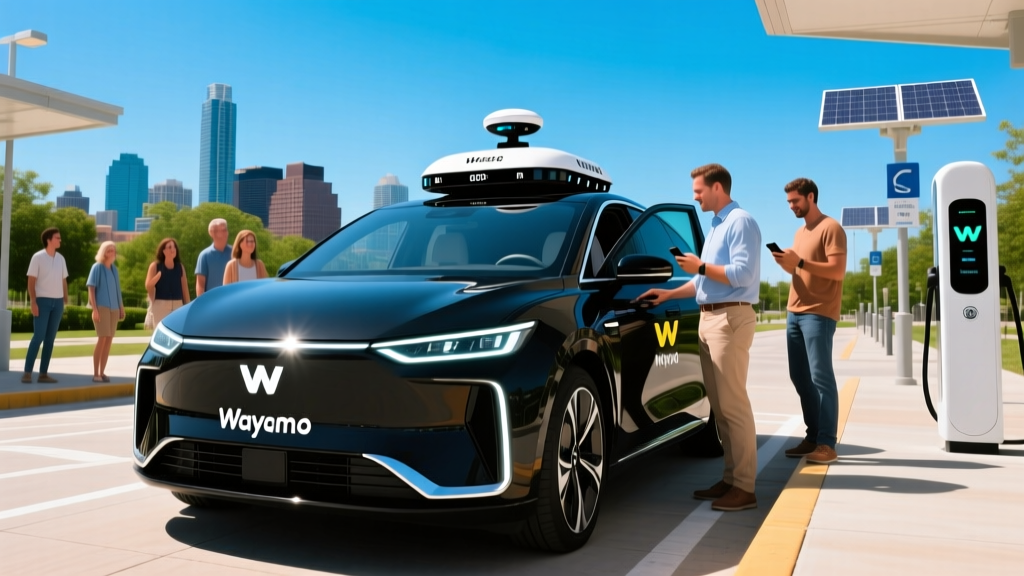
- The vehicle arrives — it's a Jaguar I-PACE (as of the current 6th-gen fleet) with no driver
- Unlock via the app, buckle up, and the ride begins
On pricing, Waymo aims for parity with UberX and Lyft standard rides in Austin, with some important nuances:
| Route (approx.) | Waymo One | UberX | Lyft Standard |
|---|---|---|---|
| Downtown → South Lamar (~4 mi) | $12–$16 | $11–$18 | $10–$17 |
| Downtown → Zilker Park (~3 mi) | $10–$14 | $10–$15 | $9–$14 |
| East Austin → Downtown (~5 mi) | $14–$19 | $13–$20 | $12–$19 |
Surge pricing: Waymo uses dynamic pricing during high-demand periods, similar to Uber/Lyft surge. However, Waymo's fleet size in Austin is still smaller than Uber/Lyft's driver pool, so availability during peak hours (Friday/Saturday nights, SXSW, ACL Festival) may be limited, and wait times can stretch to 10–15 minutes in busy zones.
Tipping: There's no driver to tip. The in-app experience is entirely autonomous.
Safety Record: What the Data Actually Shows
This is the question every potential rider asks, and it deserves a data-driven answer rather than marketing reassurance.
Waymo's published safety data (as of late 2025/early 2026):
- Over 50 million fully driverless miles completed across all markets (Phoenix, SF, LA, Austin) — Waymo Safety Report
- 75% reduction in police-reported crash rates compared to human benchmarks in comparable urban environments (per Waymo's peer-reviewed analysis published with insurance data)
- 85% reduction in crashes involving injuries compared to human drivers in the same operating areas
- The vast majority of incidents that do occur are low-speed contact events (parking-lot-style bumps), not high-speed collisions
For context, the NHTSA requires all automated driving systems to report crashes, and Waymo's incident reports are publicly accessible. The key pattern in the data: Waymo vehicles are involved in fewer at-fault crashes per million miles than human drivers in equivalent urban settings, but they do occasionally get rear-ended by human drivers (a common pattern for any vehicle that stops conservatively at intersections).
What the data does NOT show: Zero incidents. Robotaxis do experience edge-case failures — sensor occlusion in heavy rain, confusion at unmarked construction zones, or rare software-triggered pullovers. The difference from Level 2 systems is that Waymo's vehicle is designed to execute a minimal risk condition (safe pullover) rather than expecting a human to take over.
The Technology Stack: Lidar, Cameras, and the 6th-Gen Driver
Waymo's approach to autonomous driving is sensor-rich, which stands in direct contrast to Tesla's camera-only ("Tesla Vision") approach. Understanding the tech stack explains both the capabilities and the limitations.
Waymo 6th-Generation Driver System (current fleet)
- Lidar: Multiple solid-state and spinning lidar units providing 360° 3D point-cloud mapping up to ~500 meters. Lidar works independently of lighting conditions — critical for night driving and sun-glare scenarios where cameras struggle.
- Cameras: High-resolution surround cameras (improved dynamic range over 5th-gen) for lane markings, traffic light state, pedestrian intent recognition, and signage.
- Radar: Imaging radar for velocity detection of moving objects, particularly useful in rain and fog where lidar and camera performance degrade.
- Audio sensors: External microphones to detect emergency vehicle sirens (ambulance, fire, police) and trigger appropriate yielding behavior.
- Compute: Custom-designed onboard processing running Waymo's perception, prediction, and planning stack in real time.
The vehicle itself is currently the Jaguar I-PACE, a battery-electric SUV with a 90 kWh battery pack (EPA range ~234 miles, though Waymo's fleet vehicles charge more frequently and don't deplete the full pack). Waymo has announced a partnership with Hyundai for future vehicle platforms and with Geely/Zeekr for a purpose-built robotaxi, but the Jaguar I-PACE remains the primary Austin fleet vehicle as of 2026.
Geofencing and HD mapping: Waymo does not drive on unmapped roads. Every street in the Austin service area has been pre-mapped at centimeter-level precision. The vehicle's real-time sensor data is continuously compared against this HD map, providing a redundant positioning layer beyond GPS. This is why Waymo cannot simply "expand" overnight — every new street requires mapping, validation, and regulatory approval.
Regulatory Landscape: Who Approves Robotaxi Operations in Texas?
Autonomous vehicle regulation in the United States is a patchwork of federal and state authority:
- Federal (NHTSA): Sets vehicle safety standards (FMVSS) and investigates crashes. NHTSA has granted limited exemptions to companies like Waymo and Zoox for vehicles without steering wheels or mirrors, though the current Jaguar I-PACE fleet retains conventional controls.
- State of Texas: Texas passed autonomous vehicle legislation (HB 3167 in 2017, subsequent updates) allowing driverless vehicles to operate on public roads provided they comply with traffic laws, carry insurance, and meet registration requirements. Texas does not require a special state permit for testing or deployment in the way California's DMV does — making it a relatively permissive environment for robotaxi expansion.
- City of Austin: The Austin Transportation and Public Works Department coordinates with AV operators on local road issues, construction zone data sharing, and first-responder interaction protocols. Austin's dense urban core, grid-like street patterns in many areas, and tech-friendly population make it a logical robotaxi market.
Unlike California, where the DMV and CPUC jointly regulate testing permits and commercial deployment, Texas relies more on general traffic law compliance and insurance requirements. This lighter regulatory framework has accelerated Waymo's Austin rollout compared to the multi-year permitting processes in some California jurisdictions.
Current Limitations: Where Waymo in Austin Falls Short
Honest assessment requires acknowledging what the system cannot do:
- Heavy rain and flooding: Austin's spring and fall storms can degrade lidar and camera performance. Waymo vehicles may pull over, reroute, or refuse rides during severe downpours. Flash-flooded roads are a hard no-go.
- Construction zones: While Waymo receives construction data feeds from the city, rapidly changing lane closures with temporary barriers can trigger cautious behavior — slow speeds, extended stops, or route recalculation that adds time to your trip.
- Geofence boundaries: You cannot ride from downtown Austin to Round Rock, the Hill Country, or anywhere outside the mapped service area. The app will reject the booking.
- Peak-demand availability: During major events (SXSW in March, ACL Festival in October, UT football weekends), fleet capacity may not meet demand. Expect longer wait times or inability to get a ride in congested zones.
- Multi-stop trips: Waymo One currently supports point-A-to-point-B rides. Adding intermediate stops is limited compared to Uber/Lyft's multi-stop feature.
- No highway driving in all corridors: While Waymo has begun limited highway-capable operations in some markets, Austin's service area primarily covers surface streets. Long highway segments may not be part of the route.
- Accessibility: The Jaguar I-PACE fleet is not wheelchair-accessible. Waymo has committed to accessible vehicles in future fleet plans, but current Austin riders requiring wheelchair-accessible vehicles will need alternative transportation.
- Passenger age: Riders must be 18+ with a Waymo One account. Unaccompanied minors cannot ride.
Frequently Asked Questions About Waymo in Austin
Is Waymo in Austin truly self-driving, or is there a safety driver?
Waymo One rides in Austin are fully driverless — no safety driver is present in the vehicle. This is SAE Level 4 operation. The vehicle handles all driving tasks within its geofenced service area. This is fundamentally different from Tesla FSD (Supervised), which is Level 2 and requires a licensed, attentive driver behind the wheel at all times.
How much does a Waymo ride cost compared to Uber or Lyft in Austin?
Waymo pricing targets parity with UberX and Lyft standard fares — typically $10–$20 for most rides within the Austin service area. Surge pricing applies during high demand. There is no driver to tip. For exact fares, enter your route in the Waymo One app before confirming.
Can I take a Waymo from Austin-Bergstrom International Airport?
Airport service has been phased in, but availability depends on the current geofence and airport pickup agreements. Check the Waymo One app for your specific travel date — enter AUS as your pickup or dropoff to confirm eligibility.
What happens if the Waymo vehicle encounters a situation it can't handle?
The system is designed to enter a minimal risk condition — it will slow down, pull over safely, and stop. A remote support team can assist with rerouting or dispatching a replacement vehicle. The vehicle will not hand control to the passenger.
How long do I typically wait for a Waymo in Austin?
Wait times vary by location and time of day. In the core downtown and South Austin areas during off-peak hours, expect 3–8 minutes. During peak demand (weekends, events, rush hour), waits can extend to 10–15+ minutes due to limited fleet size relative to Uber/Lyft.
What vehicle will pick me up?
The current Waymo fleet in Austin uses the Jaguar I-PACE, a fully electric luxury SUV equipped with the 6th-generation Waymo Driver sensor suite. The interior is standard I-PACE with rear-seat screens showing the route and a start/stop ride interface.
Is Waymo available 24/7 in Austin?
Service hours may not be round-the-clock during the expansion phase. Check the Waymo One app for current operating hours in Austin, as 24/7 service is market-dependent and may expand as fleet size grows.