Can You Actually Hail a Waymo in Austin Right Now?
If you've been searching for how to get a Waymo in Austin, the answer depends on where exactly in the city you are and what time of day you're looking. Waymo — Alphabet's autonomous ride-hailing subsidiary — operates its fully driverless robotaxi service in Austin, but the operational footprint is geofenced to specific corridors rather than covering the entire metro area.
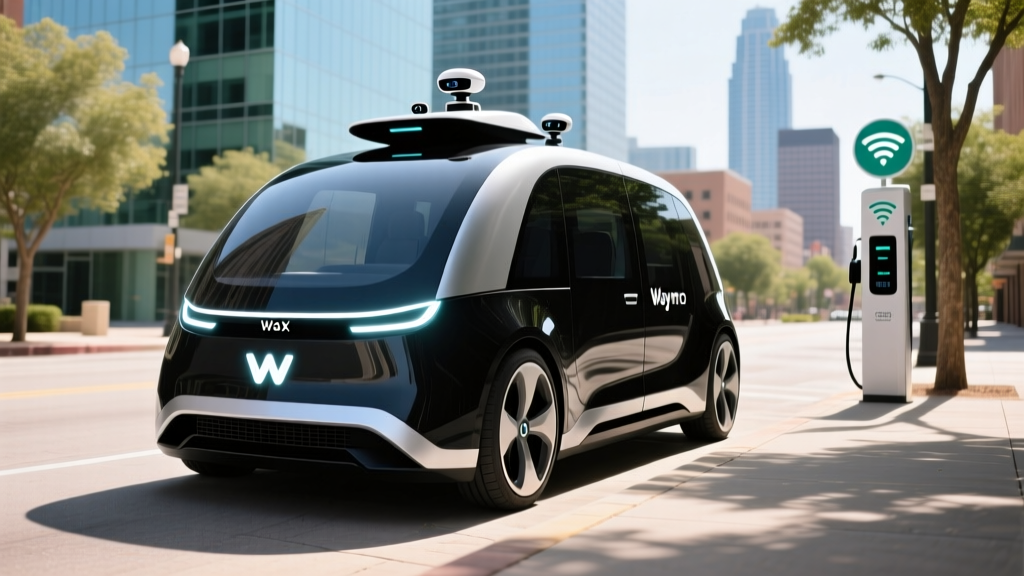
As of early 2026, Waymo's Austin service area spans roughly 45 square miles, encompassing downtown, South Congress, East Austin, the Domain, and parts of the Mueller development. The service runs 24/7, though wait times vary significantly between peak downtown demand and late-night suburban fringes. Riders request trips exclusively through the Waymo One app, which functions similarly to Uber or Lyft but dispatches a Jaguar I-PACE-based 5th-generation Waymo Driver vehicle with no human behind the wheel.
Waymo's robotaxi service operates at SAE Level 4 — meaning the vehicle handles all driving tasks within its defined operational design domain (geofenced area, mapped routes, certain weather conditions) with no human driver present. This is fundamentally different from consumer Level 2 systems like Tesla Autopilot, GM Super Cruise, or Ford BlueCruise, which require an attentive driver ready to intervene at any moment. When you ride in a Waymo, there is no one in the driver's seat.
Where Exactly Can You Use Waymo in Austin?
Waymo's Austin geofence has expanded incrementally since the service launched in the city. The current coverage prioritizes high-density corridors with well-mapped infrastructure:
| Zone | Coverage Status | Typical Wait Time |
|---|---|---|
| Downtown / Capitol Complex | Active | 3–7 min |
| South Congress (SoCo) / Bouldin Creek | Active | 4–9 min |
| East Austin (east of I-35) | Active | 5–12 min |
| Mueller / North Campus | Active | 6–14 min |
| The Domain / NW Austin | Active | 7–15 min |
| South Austin (78745 / 78748) | Limited / Expanding | 12–20 min |
| Round Rock / Cedar Park | Not Available | N/A |
| Austin-Bergstrom Airport (AUS) | Active (pickup zones) | 5–10 min |
Both your pickup and drop-off must fall within the geofenced zone. If you try to request a ride from outside the service area, the app will simply not allow you to confirm the trip. Waymo publishes a live service-area map within the Waymo One app, and it's worth checking before you plan a trip — the boundary has shifted multiple times as the company validated new routes.
Step-by-Step: How to Request a Waymo Ride in Austin
The process is straightforward once you understand the constraints of a geofenced Level 4 service:
- Download the Waymo One app (iOS or Android). Waymo no longer operates an invite-only waitlist in Austin — the service is open to the general public.
- Enter your destination. The app will confirm whether both endpoints fall within the Austin service area.
- Review the upfront price. Waymo displays a fixed fare before you confirm, similar to Uber's upfront pricing model.
- Walk to your pickup point. Waymo vehicles pull to the curb at designated pickup locations. The app shows the vehicle's approach in real time and identifies it by its distinctive roof-mounted lidar array and Waymo branding.
- Unlock via the app. Tap "Start Ride" when the vehicle arrives. The rear doors unlock automatically. There is no driver to greet you.
- Monitor the trip on the in-car screen. Each Waymo I-PACE has a rear-seat display showing the route, current speed, and what the vehicle's sensors are detecting in real time.
How Much Does a Waymo Ride Cost vs. Uber and Lyft?
Waymo positions its pricing to be competitive with UberX and Lyft standard rides, though it does not consistently undercut them. Based on typical Austin trips in early 2026:
| Route | Distance | Waymo One | UberX | Lyft |
|---|---|---|---|---|
| Downtown → South Congress | 2.1 mi | $9–$13 | $8–$14 | $8–$13 |
| Downtown → The Domain | 11 mi | $24–$32 | $22–$35 | $21–$33 |
| Downtown → AUS Airport | 8 mi | $20–$28 | $18–$30 | $18–$28 |
| East Austin → Mueller | 3.5 mi | $12–$17 | $11–$18 | $10–$17 |
Key pricing dynamics to understand:
- No surge pricing in the traditional sense. Waymo uses demand-based pricing but tends to cap multipliers more conservatively than Uber/Lyft during peak events like SXSW or ACL Festival.
- No tipping. There is no driver to tip, which effectively reduces the total trip cost by 15–20% compared to a tipped rideshare ride.
- Wait times affect effective cost. If a Waymo takes 15 minutes to arrive versus an Uber in 4 minutes, the time cost matters even if the dollar fare is comparable.
- Promotional credits are periodically offered to new riders in Austin, typically $10–$20 in ride credit for first-time users.
How Safe Are Waymo Robotaxis? The Real Data
- 30+ million fully autonomous (no driver) miles completed across all US markets as of late 2025 (source: NHTSA AV reporting).
- ~85% fewer police-reported injury crashes per million miles compared to human benchmarks in Waymo's operating cities, according to peer-reviewed analysis published by Waymo and insurance industry researchers.
- Contact rate: Property-damage-only contact events occur at roughly 0.4 per million autonomous miles — significantly below the human baseline for urban driving.
- No fatalities attributed to the Waymo Driver operating in fully autonomous mode through the end of 2025.
It's important to contextualize these numbers. Waymo operates in geofenced, well-mapped urban environments at moderate speeds — typically under 45 mph. This is a fundamentally different operational profile than highway driving in rural areas. The safety advantage comes from 360-degree sensor coverage, no distraction, no impairment, and sub-100-millisecond reaction times. However, robotaxis are not immune to edge cases.
Documented incidents in the broader robotaxi industry (including competitors like Cruise, whose Austin operations were suspended in late 2023 after a pedestrian-dragging incident in San Francisco) have shown that Level 4 systems can struggle with:
- Construction zones with non-standard lane markings
- First-responder vehicles with unexpected light/siren patterns
- Dense pedestrian crowds at events
- Temporary road closures not reflected in map data
Waymo vehicles are equipped to handle most of these scenarios through remote assistance — a human specialist can guide the vehicle through a complex situation from a command center, though they do not directly steer or brake the car.
Inside the Waymo 5th-Generation Driver: Sensor Suite and Technology
The vehicle you'll ride in is a Jaguar I-PACE electric SUV retrofitted with Waymo's 5th-generation "Waymo Driver" hardware suite. This is not a camera-only system like Tesla's FSD approach — Waymo relies on a redundant, multi-modal sensor stack:
| Sensor Type | Count | Function |
|---|---|---|
| LiDAR (custom-built) | 5 units | 360° 3D point cloud, object detection to ~500m |
| Cameras (high-res) | 29 units | Traffic light state, signage, lane markings, pedestrian intent |
| Radar | 6 units | Velocity detection, adverse weather penetration |
| Audio detection | External mics | Siren classification, emergency vehicle approach direction |
| IMU + GPS + HD Maps | Integrated | Centimeter-level localization, pre-mapped route planning |
The HD map dependency is both Waymo's greatest strength and its fundamental constraint. Every road in the Austin service area has been pre-mapped at centimeter precision, giving the system a detailed prior understanding of lane geometry, curb heights, and intersection layouts. This is why the service can operate with no human driver. But it's also why Waymo cannot simply "turn on" service in a new neighborhood — the mapping and validation process takes weeks to months per zone.
The Jaguar I-PACE platform itself provides a 90 kWh battery pack (NMC chemistry), 394 horsepower, and a 0-60 mph time of 4.5 seconds — though the Waymo-configured vehicles drive conservatively, rarely exceeding the posted speed limit and always coming to a full stop at stop signs.
Current Limitations: What Waymo Cannot Do in Austin
- Heavy rain and flooding: While light rain does not disrupt service, severe thunderstorms or flash-flood conditions can cause Waymo to pause operations in affected zones. LiDAR performance degrades in heavy precipitation.
- Outside the geofence: No trips to Round Rock, Pflugerville, Lakeway, or most of South Austin below Oltorf St. If your destination is outside the zone, the app will not complete the booking.
- Multi-stop trips: Waymo currently supports single-destination trips only. You cannot add a stop along the way.
- Car seats and accessibility: Waymo vehicles do not provide child safety seats. Wheelchair-accessible vehicles are available in limited numbers — check the app for WAV availability.
- Pets: Service animals are permitted; pets are not.
- No highway driving above 65 mph: The Austin service area is designed around surface streets and lower-speed corridors. You won't take a Waymo on I-35 to San Antonio.
Austin's Regulatory Framework for Robotaxis
Texas is one of the more permissive states for autonomous vehicle deployment. Under Texas Transportation Code § 545.451, fully autonomous vehicles may operate on public roads without a human driver, provided the vehicle is properly registered, insured, and compliant with all standard traffic laws. There is no state-level permit cap on robotaxi fleet size.
At the local level, the City of Austin Transportation Department coordinates with Waymo on pickup/drop-off zone designations, particularly in high-traffic areas like downtown and the airport. Unlike San Francisco, where the California Public Utilities Commission (CPUC) and the DMV jointly regulate robotaxi operations with specific permit tiers, Austin's regulatory environment has been comparatively streamlined — though the city council has debated additional data-sharing and equity requirements for AV operators.
At the federal level, NHTSA requires all Level 4 operators to submit Standing General Orders reporting any crashes involving their autonomous systems. This data is publicly accessible and provides one of the most transparent safety-reporting frameworks in the AV industry.
Frequently Asked Questions
Is Waymo truly self-driving, or is there a hidden human driver?
There is no human driver. Waymo's Austin service is SAE Level 4 — the driver's seat is empty. The vehicle handles all acceleration, braking, steering, and navigation within its geofenced service area. A remote-assistance team can provide guidance in unusual situations, but they do not directly control the vehicle's movement in real time.
Can I use Waymo to get to Austin-Bergstrom International Airport?
Yes. Waymo has designated pickup and drop-off zones at AUS. Fares from downtown typically run $20–$28, and the trip takes roughly 15–20 minutes depending on traffic. The vehicle navigates the airport roadway system using its HD map data.
What happens if the Waymo vehicle encounters a situation it can't handle?
The vehicle will pull over safely and contact Waymo's remote-assistance team. A specialist reviews the situation via the vehicle's cameras and sensors and can authorize a path or reroute. The vehicle does not proceed until the situation is resolved. In rare cases, a remote-assisted vehicle may be dispatched to complete the trip.
How does Waymo compare to Cruise in Austin?
GM's Cruise suspended all operations in late 2023 following a serious incident in San Francisco and subsequently restructured its approach to robotaxi deployment. As of 2026, Cruise has not resumed Austin service. Waymo is currently the only Level 4 robotaxi service available to the public in Austin. Zoox (Amazon's AV subsidiary) has been testing in the area but has not launched a public ride-hailing service in the city.
Do I need to create an account in advance?
You need the Waymo One app and a valid payment method (credit/debit card). Account creation takes about two minutes. There is no longer a waitlist or invitation requirement for Austin — the service is open to all riders within the geofenced zone.
What's the vehicle like inside?
The Jaguar I-PACE is a premium electric SUV with leather seating, climate control, and a rear-seat touchscreen that displays your route, current speed, and a visualization of what the vehicle's sensors see — including other cars, pedestrians, and cyclists rendered in real time. The ride quality is smooth, quiet (as expected from a battery-electric platform), and notably calm compared to aggressive human drivers.