The Robotaxi Question: Waymo and Uber in 2026
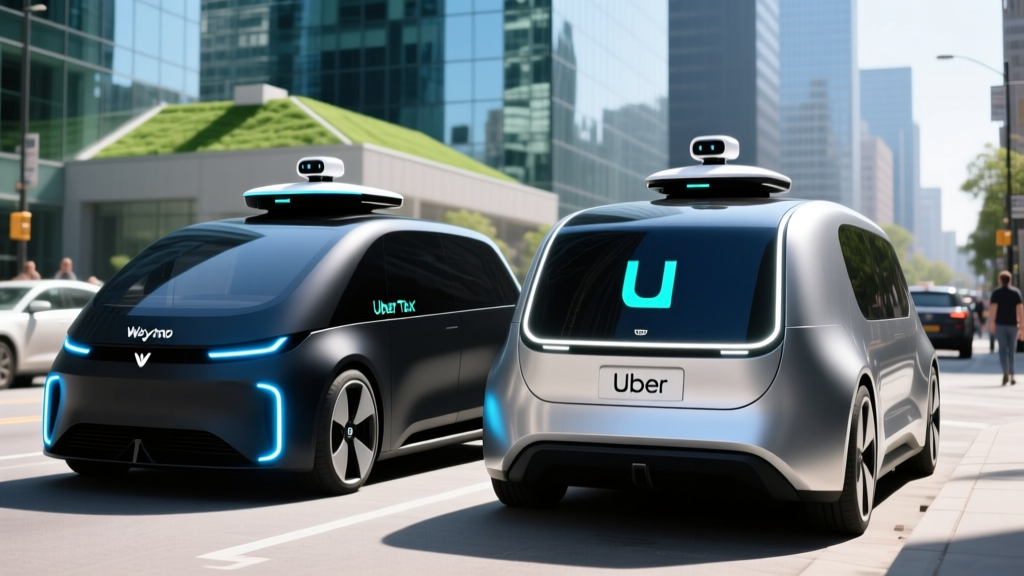
If you've opened a rideshare app in Phoenix, San Francisco, or Los Angeles recently, you've likely seen two very different options side by side: a human-driven Uber and a driverless Waymo One vehicle. The convergence of Waymo and Uber on the same streets — and even within the same app ecosystem — marks a pivotal moment for urban transportation. But how do these services actually compare on price, safety, availability, and reliability?
This guide cuts through the hype with concrete data: real operational cities, verified safety figures, pricing breakdowns, and the hard limitations that neither company's marketing department wants to emphasize. Whether you're a daily commuter evaluating your options or an EV enthusiast tracking autonomous vehicle progress, here's what you need to know about the Waymo and Uber landscape right now.
Understanding the Automation Gap: Level 4 vs. Level 2
Before comparing services, the single most important distinction to internalize is the SAE automation level. This is not a minor technicality — it defines what the vehicle can and cannot do, who is liable in a crash, and whether a human needs to pay attention at all.
SAE Automation Levels: What Matters Here
| Level | Name | Who Drives | Example |
|---|---|---|---|
| Level 2 | Driver Assistance | Human (always) | Tesla Autopilot, FSD Supervised, GM Super Cruise, Ford BlueCruise |
| Level 3 | Conditional Automation | System in narrow conditions; human on standby | Mercedes DRIVE PILOT (limited markets, low speed) |
| Level 4 | High Automation | System (no human needed) within geofenced ODD | Waymo One, Zoox |
| Level 5 | Full Automation | System everywhere, all conditions | Does not exist commercially |
Key takeaway: Waymo operates at SAE Level 4 — the vehicle handles all driving tasks within its approved operational design domain (ODD) with no human driver present. Uber's standard service relies on human drivers. Tesla FSD, despite its name, remains a Level 2 system requiring continuous driver supervision. Never conflate the two.
Waymo's Level 4 designation means the company accepts full liability for the driving task within its service area. There is no steering wheel in the front seat of Waymo's purpose-built vehicles that a passenger could grab, and no expectation that you monitor the road. This is fundamentally different from any consumer vehicle you can purchase today.
Where Can You Actually Use Waymo Right Now?
Waymo's service footprint has expanded steadily but deliberately. Unlike Uber, which operates in virtually every major US city, Waymo's robotaxi service is geofenced to specific approved zones within select metros. Here is the current operational landscape as of early 2026:
| City | Service Status | Coverage Notes |
|---|---|---|
| Phoenix, AZ | Fully operational (since 2020) | Largest service area; covers most of the metro including suburbs like Chandler, Tempe, Mesa, and Scottsdale. Airport service available at Phoenix Sky Harbor (PHX). |
| San Francisco, CA | Fully operational | City-wide coverage including downtown, SoMa, Mission, Sunset, Richmond. SFO airport service approved and active. |
| Los Angeles, CA | Fully operational | Covers central LA, Hollywood, Santa Monica, Westside, downtown. Expansion ongoing into Valley areas. |
| Austin, TX | Operational (expanding) | Initial downtown and central Austin coverage; Uber integration announced for broader access. |
| Atlanta, GA | Announced / early deployment | Partnership with Uber for initial rollout; commercial service in early phases. |
Critical context: Waymo's geofence is not the entire city boundary. Even within "operational" metros, there are zones the vehicles will not enter — typically unpaved roads, certain highway segments, or areas not yet mapped and approved by regulators. If your pickup or drop-off falls outside the geofence, the app will not let you book the ride.
Uber, by contrast, operates wherever a human driver is available — effectively every incorporated US city and most suburban and rural areas within range of a metro. The availability gap between Waymo and Uber remains enormous in geographic terms.
Pricing: Waymo vs. Uber Cost Breakdown
One of the most common questions about robotaxis is whether removing the human driver makes rides cheaper. The answer in 2026 is nuanced: Waymo pricing is competitive with UberX on standard trips but does not consistently undercut it. Waymo has moved away from the heavily subsidized introductory pricing of its early Phoenix years.
| Factor | Waymo One | UberX | Uber Comfort / Premium |
|---|---|---|---|
| Base fare (typical) | $3.00–$4.50 | $2.50–$3.50 | $4.00–$6.00 |
| Per-mile rate | $1.25–$1.80 | $1.00–$1.50 | $1.50–$2.25 |
| Per-minute rate | $0.25–$0.40 | $0.20–$0.35 | $0.35–$0.55 |
| Surge pricing | Rare; algorithm-managed | Frequent during peak demand | Frequent during peak demand |
| Tip expected? | No (no driver) | Yes (15–20% typical) | Yes (15–20% typical) |
| Estimated 5-mile / 15-min trip | $14–$19 | $13–$20 (pre-tip) | $20–$30 (pre-tip) |
The real cost comparison: On a typical 5-mile urban trip, Waymo and UberX land in a similar range before tip. Once you factor in the 15–20% tip customary for Uber drivers, Waymo often comes out slightly cheaper on a per-ride basis. However, Uber's surge pricing is more predictable than Waymo's wait times — during peak demand, you might wait 15–25 minutes for a Waymo vehicle versus 3–5 minutes for an Uber, since Waymo's fleet size is still far smaller than Uber's human driver pool.
Waymo is also bookable through the Uber app in select cities (Phoenix, Austin, Atlanta), where Waymo vehicles appear as a ride option alongside UberX and Comfort. This integration means you can compare pricing and ETA in a single interface.
Safety Data: What the Numbers Actually Show
Safety is the most contested topic in the robotaxi space. Both proponents and critics cherry-pick data. Here is what the verified numbers show, sourced from NHTSA reports, Waymo's published safety data, and state regulatory filings.
Waymo Safety Record: Key Data Points
- Total autonomous miles driven: Over 50 million fully driverless miles as of late 2025 (source: NHTSA Standing General Order data).
- Injury-relevant crash rate: Waymo's published analysis claims a 85% reduction in injury-causing crashes per million miles compared to human benchmarks in comparable urban environments.
- Contact rate: Property-damage-only incidents occur but are overwhelmingly low-speed (under 15 mph) — typically rear-end events where the Waymo vehicle was stationary and struck by a human driver.
- NHTSA Standing General Order: All Level 4 operators must report crashes within 24 hours. Waymo's reportable incident rate per million miles is lower than the national human average, though direct comparison is complicated by differing road environments.
Important context on safety comparisons: Waymo operates primarily in dense urban environments at moderate speeds (under 45 mph in most geofenced zones). Human crash benchmarks include highway driving at 70+ mph, rural roads, and impaired driving — conditions Waymo does not encounter. A more apples-to-apples comparison would look at urban, sub-45-mph human driving, where the safety gap narrows but Waymo still shows an advantage in injury-relevant metrics.
Notable incidents have occurred. In early 2024, a Waymo vehicle in San Francisco struck a pedestrian who stepped into traffic from behind a parked truck — the pedestrian sustained minor injuries. NHTSA investigated and closed the inquiry with findings that the vehicle's braking response was within expected parameters for the scenario but that detection timing could be improved. Waymo issued a software update to address similar edge cases.
Uber's safety record, for comparison, reflects human driver performance: approximately 1.35 fatalities per 100 million vehicle miles nationally (NHTSA FARS data). Uber rideshare trips track close to this baseline, with some variance by city and time of day.
How the Technology Works: Waymo's Sensor Stack
Understanding why Waymo can operate without a human driver — while consumer vehicles like Teslas with FSD cannot — requires examining the technology stack. Waymo takes a fundamentally different approach than camera-only systems.
Waymo's 6th-Generation Driver System
| Sensor Type | Quantity (6th Gen) | Role |
|---|---|---|
| LiDAR (custom) | 6+ units | 3D point-cloud mapping of surroundings up to 500m; works in darkness, rain, and fog. Primary distance and shape sensor. |
| Cameras (high-res) | 12+ units | Traffic light state detection, sign reading, lane marking, color recognition, pedestrian intent classification. |
| Radar | 6+ units | Velocity detection of moving objects; redundancy in heavy precipitation where LiDAR scatter increases. |
| Audio detection | External mics | Emergency vehicle siren detection and directional classification. |
The key differentiator from Tesla's camera-only FSD approach is LiDAR redundancy. Waymo's LiDAR creates an independent 3D model of the world that doesn't rely on visible light or learned visual patterns. If a camera misclassifies an object, LiDAR still knows its precise dimensions and distance. This sensor fusion approach is why Waymo has achieved Level 4 certification while camera-only systems remain at Level 2.
Waymo's vehicles also rely on HD pre-mapped routes. Before a Waymo vehicle operates autonomously in a new area, the company's mapping fleet drives every street to create centimeter-accurate 3D maps including lane geometry, curb positions, traffic signal locations, and speed limits. The vehicle then localizes against this map in real time. This is why Waymo cannot simply "expand to any city" — each new zone requires extensive mapping and regulatory approval before commercial service begins.
The compute platform runs on custom silicon processing over 200 million data points per second from the combined sensor suite. Thermal management for this compute stack — along with the vehicle's electric powertrain — requires active liquid cooling, which is why Waymo's Jaguar I-PACE vehicles (and the newer purpose-built Zeekr and Hyundai platforms) have substantial cooling infrastructure beyond a standard consumer EV.
The Regulatory Landscape: Who Approves Robotaxi Operations?
Robotaxi operations in the US are governed by a patchwork of state and local regulations. There is no single federal "robotaxi license." Instead, operators must clear multiple regulatory hurdles:
- State-level approval: Each state sets its own rules for autonomous vehicle testing and commercial deployment. California's DMV and Public Utilities Commission (CPUC) jointly regulate Waymo's SF and LA operations. Arizona takes a permissive approach with minimal state oversight, which is why Phoenix was Waymo's first commercial market. Texas passed legislation in 2023 enabling commercial AV operations under specific conditions.
- NHTSA federal oversight: The National Highway Traffic Safety Administration (nhtsa.gov) requires all Level 4 operators to file crash reports under the Standing General Order and maintains authority to investigate safety defects and issue recalls.
- Local permits: City-level permits govern curbside pickup/drop-off, airport access, and operating hours. San Francisco's initial restrictions on Waymo (limiting daytime hours and fleet size) were gradually lifted as the service demonstrated safety performance.
- Insurance and liability: Waymo carries commercial liability insurance covering all autonomous operations. In a crash, Waymo (not the passenger) is the liable party — a fundamentally different legal framework than Uber, where the human driver's personal insurance is primary and Uber's commercial policy provides secondary coverage.
The regulatory environment continues to evolve. Several states — including Nevada, Colorado, and Georgia — have passed or are considering legislation to create clearer frameworks for commercial robotaxi deployment, which may accelerate Waymo's expansion timeline beyond its current five-city footprint.
Current Limitations: What Waymo Cannot Do
Waymo's Level 4 system is genuinely driverless within its operational design domain — but that domain has real boundaries. These limitations are not theoretical edge cases; they affect daily usability:
Operational Limitations in Practice
- Geofence boundaries: You cannot book a ride to or from any address outside the mapped and approved zone. Suburban and rural areas are largely excluded. Trips that cross from an approved zone into an unapproved zone are not possible.
- Weather constraints: Heavy rain, dense fog, and snow degrade LiDAR and camera performance. Waymo reduces operations or pauses service during severe weather events. Phoenix's dry climate is ideal; San Francisco's fog and LA's occasional heavy rain can trigger service interruptions.
- Highway driving: Most Waymo geofenced areas exclude limited-access highways. The vehicles operate on surface streets and arterials, typically at speeds under 45 mph. A trip that would take 10 minutes on the freeway might take 25 minutes on surface streets in a Waymo.
- Construction zones: Major road construction with shifted lanes, temporary barriers, or flaggers can confuse the system. Waymo vehicles may pull over and request remote assistance or reroute, adding significant time to a trip.
- Unusual cargo and accessibility: Waymo vehicles (Jaguar I-PACE and newer platforms) have standard trunk space. Oversized items, pet carriers beyond a certain size, and some wheelchair configurations may not be accommodated. Uber's range of vehicle options (XL, SUV, WAV) provides more flexibility.
- Wait times: With a fleet of roughly 1,000–2,000 vehicles per major city (versus tens of thousands of Uber drivers), peak-hour wait times of 15–25 minutes are common. Waymo cannot dynamically surge its fleet size the way Uber can incentivize more drivers to log on.
- Stops and multi-destination trips: Waymo does not currently support adding intermediate stops (e.g., picking up a friend, stopping at a store). Uber's multi-stop feature offers flexibility that Waymo's point-to-point model does not.
How to Book and What to Expect on Your First Ride
Using Waymo One is straightforward but different from a typical rideshare experience:
- Download the Waymo One app (or use the Uber app in cities where Waymo is integrated as a ride option).
- Enter your pickup and drop-off addresses. The app will confirm both are within the service area. If not, the ride cannot be booked.
- Confirm pricing and wait time. The quoted price is fixed — no surge surprises mid-ride, and no tip is expected or solicited.
- Meet the vehicle. The app provides a photo and license plate of the arriving vehicle. When it pulls up, you unlock it by tapping "Unlock" in the app or by pressing a button on the rear door handle (the app will guide you).
- Start the ride. Once you buckle up and confirm on the rear-seat screen, the vehicle begins the trip. There is no one in the front seat. The screen displays the route, ETA, and a real-time visualization of what the vehicle's sensors are detecting.
- Support is available 24/7 via an in-app button that connects you to a remote Waymo fleet responder who can see the vehicle's cameras and sensors and intervene if needed.
The experience is remarkably calm. The vehicles drive conservatively — they always come to complete stops at stop signs, yield generously to pedestrians, and maintain following distances larger than most human drivers. For passengers accustomed to aggressive urban driving, Waymo can feel almost excessively cautious, which translates to slightly longer trip times but a notably smooth ride.
The Bottom Line: When to Choose Waymo vs. Uber
Choose Waymo If:
- You're within a Waymo service zone and your trip doesn't require highway driving
- You prefer a consistent, no-tip, no-surge pricing model
- You value a calm, conservative driving style and don't mind slightly longer trip times
- You want to experience Level 4 autonomous driving firsthand
- You're traveling alone or with one other person (standard sedan capacity)
Choose Uber If:
- You need to go somewhere outside Waymo's geofence (most suburbs, highways, other cities)
- You need a larger vehicle (XL, SUV), wheelchair accessibility, or extra cargo space
- You need multi-stop trips or the ability to add stops mid-ride
- Wait time matters — Uber's driver pool means faster pickups in most areas
- You're traveling in weather conditions that ground Waymo operations
The honest assessment in 2026: Waymo and Uber are not yet direct competitors across the board. Waymo is a compelling, genuinely driverless option within a limited set of urban corridors, offering a glimpse of what autonomous transportation looks like at scale. Uber remains the default for geographic coverage, vehicle variety, and on-demand flexibility. The integration of Waymo as a ride option within the Uber app in select cities suggests the long-term future is complementary, not zero-sum.
Frequently Asked Questions
Is Waymo truly self-driving, or is there a remote human controlling it?
Waymo vehicles are genuinely autonomous — no human is driving remotely in real time. The vehicle's onboard AI handles all steering, braking, and navigation decisions. Remote fleet responders can assist if the vehicle encounters an unfamiliar scenario (e.g., a complex construction zone), but they do not "drive" the car. They provide high-level guidance (e.g., "proceed around the obstacle on the left") and the vehicle executes the maneuver itself.
How much does a Waymo ride cost compared to Uber?
On comparable urban trips within Waymo's service area, pricing is similar to UberX before tip — typically $14–$19 for a 5-mile, 15-minute trip. Since no tip is expected with Waymo, the all-in cost is often $2–$5 less than an equivalent UberX ride with a standard tip. However, Waymo does not offer budget tiers like Uber Share, and surge pricing on Uber during extreme demand can sometimes make Waymo the cheaper option.
Can I use Waymo at the airport?
Yes, at select airports. Waymo offers service to and from Phoenix Sky Harbor (PHX), San Francisco International (SFO), and is expanding airport access in other markets. Check the Waymo One app for your specific airport — service zones at airports are precisely defined and may require pickup at a designated ride-app area rather than the standard curbside.
What happens if a Waymo vehicle gets into an accident?
Waymo carries commercial liability insurance for all autonomous operations. If a crash occurs, the vehicle's systems automatically notify Waymo's response team and emergency services if needed. As the passenger, you are not liable — Waymo accepts responsibility for the driving task. This is a fundamental difference from Uber, where the human driver's insurance is primary.
Why can't Waymo operate in every city?
Three constraints limit expansion: (1) HD mapping — every street must be pre-mapped at centimeter accuracy before autonomous operations begin; (2) regulatory approval — each state and city has its own permitting process; (3) fleet logistics — Waymo must deploy, maintain, and charge vehicles locally. This is why expansion is measured in years, not months.
Is Waymo's technology safer than a human Uber driver?
On the metrics that matter most — injury-causing crashes per million miles — Waymo's published data shows a significant advantage over human benchmarks in comparable urban driving environments. However, Waymo operates in a narrower, simpler driving domain (surface streets, moderate speeds, good weather) than the full spectrum of conditions human drivers navigate. The comparison is valid within Waymo's ODD but should not be extrapolated to all driving scenarios.
Can I use Waymo and Uber in the same app?
Yes, in select cities. Uber has integrated Waymo as a ride option in Phoenix, Austin, and Atlanta. When you request a ride in these cities, you may see a Waymo option alongside UberX, Comfort, and other tiers. In other Waymo cities like San Francisco and Los Angeles, you use the standalone Waymo One app.