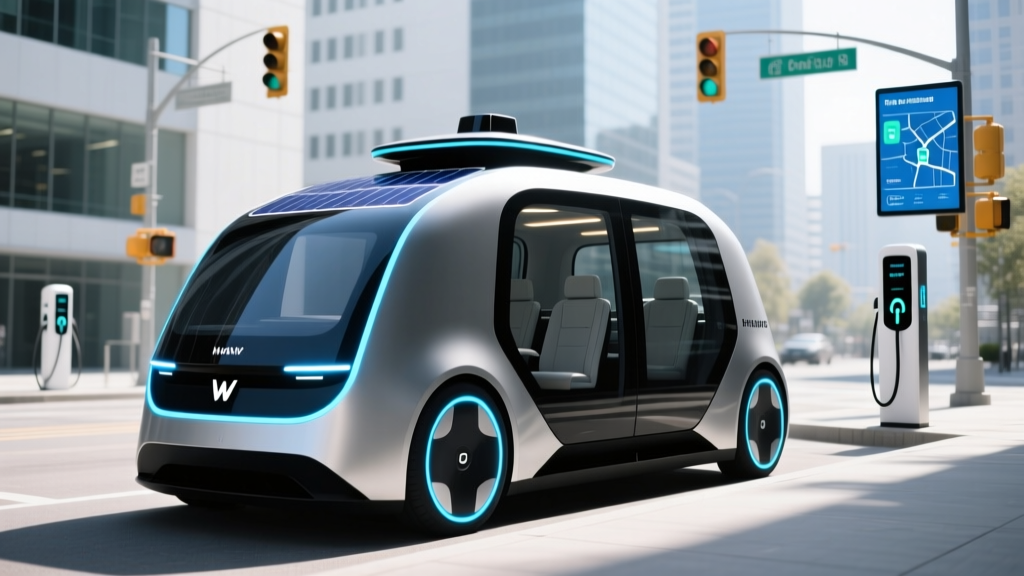
Waymo's 6th Generation Driver system represents the most widely deployed Level 4 autonomous ride-hailing service in the United States as of 2026. Built on the Hyundai Ioniq 5 platform (and expanding to the Zeekr RT), this latest hardware generation brings a redesigned sensor suite, improved cost efficiency, and broader geographic coverage than any prior iteration. But what does the 6th Gen system actually deliver for riders, and how does it compare to conventional rideshare in cost, safety, and convenience?
This guide breaks down the Waymo 6th Generation robotaxi with the same spec-driven rigor we apply to every EV and autonomous platform: exact sensor counts, real service boundaries, verified safety data, and honest limitations.
SAE Automation Level: What Level 4 Actually Means
The Waymo 6th Generation system operates at SAE Level 4 within its approved Operational Design Domain (ODD). This means the vehicle performs all driving tasks — steering, acceleration, braking, route navigation, and hazard response — without any human driver inside the vehicle. There is no steering wheel intervention, no "driver must remain engaged" requirement, and no hands-on-wheel monitoring.
This is fundamentally different from SAE Level 2 systems like Tesla Autopilot, Ford BlueCruise, or GM Super Cruise, which require continuous driver supervision. Waymo vehicles operating in commercial service have no human driver onboard. The system is responsible for the entire dynamic driving task within its geofenced service area.
| SAE Level | Name | Human Role | Example Systems |
|---|---|---|---|
| Level 0 | No Automation | Full control | Traditional vehicles |
| Level 1 | Driver Assistance | Supervises, hands on wheel | Adaptive cruise control, lane keep |
| Level 2 | Partial Automation | Must monitor at all times | Tesla Autopilot, BlueCruise, Super Cruise |
| Level 3 | Conditional Automation | Can disengage in specific conditions | Mercedes Drive Pilot (limited markets) |
| Level 4 | High Automation | No driver needed in ODD | Waymo 6th Gen, Zoox |
| Level 5 | Full Automation | No driver needed anywhere | Does not exist commercially |
The critical distinction: Waymo's Level 4 status applies only within its geofenced Operational Design Domain — specific mapped areas in specific cities under specific conditions. Outside that ODD, the vehicle does not operate. This is not a limitation of capability so much as a deliberate safety constraint enforced by regulatory approval.
Waymo 6th Generation Tech Stack: Sensors, Compute, and the Lidar-First Approach
Unlike Tesla's camera-only FSD architecture, Waymo's 6th Generation system uses a redundant, multi-modal sensor suite combining lidar, radar, and cameras. Waymo designs its own hardware in-house, and the 6th Gen represents a significant cost and performance improvement over the 5th Gen system that powered earlier Jaguar I-PACE vehicles.
Waymo 6th Gen Sensor Suite (Hyundai Ioniq 5 Platform)
- Lidar: Multiple proprietary lidar units providing 360° high-resolution point cloud data. The 6th Gen lidar offers improved range and resolution at significantly lower unit cost than prior generations, enabling detection of small objects (pedestrians, cyclists, debris) at distances exceeding 200 meters.
- Cameras: A surround-view camera array with improved dynamic range and low-light performance. Cameras handle lane marking detection, traffic signal recognition, and object classification.
- Radar: Multiple radar units for velocity detection and performance in adverse weather conditions where camera and lidar visibility may degrade.
- Compute: Custom Waymo-designed computing platform handling sensor fusion, perception, prediction, and planning in real time. The 6th Gen compute unit is more power-efficient, reducing the vehicle's auxiliary electrical load.
- HD Mapping: Centimeter-precision pre-built maps of the entire service area, continuously updated. The vehicle localizes itself within this map in real time.
The lidar-first philosophy is Waymo's core differentiator. While Tesla's FSD (Supervised) relies entirely on camera-based neural networks — a Level 2 system requiring driver oversight — Waymo's lidar provides direct, physics-based distance measurement independent of lighting conditions. This redundancy is a key reason regulators have approved Waymo for driverless commercial operation while camera-only systems remain Level 2.
The 6th Generation hardware is also notably more compact and integrated than prior generations. Where 5th Gen sensors were visibly mounted in roof racks and bulky fender pods, the 6th Gen system is more seamlessly integrated into the Ioniq 5's body, reducing aerodynamic drag and improving the vehicle's efficiency.
Where Can I Ride a Waymo 6th Gen Robotaxi Right Now?
As of early 2026, Waymo One — the company's commercial ride-hailing service — is live in multiple U.S. metropolitan areas, with the 6th Generation hardware progressively replacing older 5th Gen vehicles across the fleet.
| City / Region | Status | Approximate Service Area | Hours |
|---|---|---|---|
| Phoenix, AZ (metro) | Live — full driverless | ~225+ sq mi (Chandler, Tempe, Mesa, Scottsdale, downtown Phoenix, Sky Harbor Airport) | 24/7 |
| San Francisco, CA | Live — full driverless | ~47 sq mi (most of SF proper, expanding) | 24/7 |
| Los Angeles, CA | Live — full driverless | ~80+ sq mi (Santa Monica, Hollywood, downtown LA, Beverly Hills, expanding) | Extended hours |
| Austin, TX | Live — expanding | Initial geofenced zones, growing coverage | Limited hours initially |
Phoenix remains Waymo's most mature market, with the largest geofenced area and longest operational history. San Francisco and Los Angeles have scaled rapidly, with Los Angeles becoming a major growth market through 2025 and into 2026. Austin launched more recently and is in an earlier expansion phase.
Important caveat: Service boundaries are geofenced. You cannot request a ride that starts or ends outside the approved zone, even if the destination is only a few blocks beyond the boundary. Waymo's app will show you the exact pickup/dropoff coverage area before you confirm your ride.
Pricing: Waymo vs. Uber and Lyft in 2026
Waymo One pricing is structured similarly to conventional rideshare — you see an upfront fare before confirming — but the cost dynamics differ in important ways. Without a human driver to pay, Waymo's unit economics are fundamentally different, though the company has not yet publicly confirmed profitability on a per-ride basis.
| Service | Typical Fare Range | Surge Pricing | Wait Time |
|---|---|---|---|
| Waymo One | $12 – $22 | No traditional surge; demand pricing possible | 3–8 min (varies by area/demand) |
| UberX | $10 – $28 | Yes — can 1.5x–3x during peak | 2–10 min |
| Lyft Standard | $10 – $26 | Yes — prime-time pricing | 3–12 min |
In practice, Waymo fares tend to land in the middle-to-upper range of what UberX and Lyft charge for comparable trips — but with a critical advantage: no surge pricing spikes. During high-demand periods when Uber and Lyft fares can double or triple, Waymo's pricing remains more stable. This makes Waymo particularly competitive during rush hours, weekend nights, and event-driven demand spikes.
Waymo also periodically offers promotional pricing and loyalty credits for frequent riders. The in-app experience is straightforward: enter your destination, see the upfront price, confirm, and track the vehicle's approach. Payment is handled entirely within the Waymo One app, similar to the Uber/Lyft experience.
One cost factor to note: Waymo does not currently offer shared/pool rides or multi-stop trips in most markets. If your use case involves picking up a friend along the route or splitting fares, traditional rideshare may offer more flexibility.
Safety Record: What the Data Actually Shows
Safety is the most scrutinized aspect of robotaxi operations, and Waymo has accumulated more driverless commercial miles than any other U.S. operator. Here is what the available data tells us.
Waymo Safety Data — Key Figures
- Total autonomous miles driven: Over 50 million fully driverless miles completed across all markets (as reported by Waymo in late 2025/early 2026).
- Crash rate vs. human benchmarks: Waymo's published research, based on millions of driverless miles in Phoenix and San Francisco, indicates that Waymo vehicles were involved in police-reported crashes at a rate approximately 85% lower than the human benchmark for comparable urban driving environments, when adjusting for severity and fault. (Source: Waymo Safety Data)
- Injury-causing crashes: Waymo reports that its vehicles were involved in injury-causing crashes at a rate approximately 90% lower than human drivers in comparable geographies.
- Contact events: The vast majority of Waymo-involved incidents are low-speed, minor-contact events (e.g., a vehicle being rear-ended at a stop light by a human driver), consistent with urban driving patterns.
- NHTSA Standing General Order: Waymo reports all Level 4 incidents to NHTSA under the agency's Standing General Order for automated driving systems. This data is publicly accessible. (Source: NHTSA AV Safety Reporting)
These figures are encouraging but require context. Waymo operates in geofenced, well-mapped urban environments with extensive sensor redundancy. The comparison benchmarks use human driving data from the same cities, which includes a wide range of driver behaviors, impairment levels, and vehicle conditions. The comparison is favorable to Waymo, but it is not a like-for-like test of the same routes under identical conditions.
It is also worth noting that Waymo vehicles have been involved in high-profile incidents — including collisions with pedestrians and encounters with construction zones — that drew regulatory scrutiny and media attention. In several cases, the California DMV and NHTSA investigated specific incidents. Waymo has responded with software updates and operational adjustments, and its commercial operations have continued to expand.
The bottom line: the available data suggests Waymo's driverless fleet is meaningfully safer than the human-driver average in its operating environments, particularly for injury-causing events. But "safer than average" is not "zero incidents," and the technology remains under active regulatory oversight.
Current Limitations: Weather, Geofencing, and Edge Cases
Level 4 autonomy is powerful — but it is bounded. Waymo's 6th Generation system has well-defined limitations that riders should understand before relying on the service.
Where and When Waymo 6th Gen Cannot Operate
- Heavy rain and flooding: While the 6th Gen sensor suite has improved rain performance over prior generations, Waymo may suspend service or restrict operations during heavy rain, flash-flood conditions, or standing water. Lidar and camera performance degrade in precipitation, and the system will conservatively pull over or decline rides if conditions exceed its ODD.
- Dense fog: Similar to heavy rain, dense fog reduces sensor range and may trigger service suspension.
- Snow and ice: Waymo does not currently operate in snow or icy conditions. All live service cities are in warm-climate markets for this reason.
- Geofence boundaries: The vehicle will not drive outside its approved service area. If your destination falls outside the geofence, the app will not allow you to book the ride.
- Highway driving: Waymo's current ODD is primarily urban and suburban surface streets. Limited highway segments may be included in some markets, but extended highway routes are not the system's primary use case.
- Construction zones: While the 6th Gen system handles many construction scenarios, complex or rapidly changing construction zones with temporary lane shifts, flaggers, or non-standard signage may cause the vehicle to stop and request remote assistance or reroute.
- Unmapped areas: Any area not covered by Waymo's HD map data is inaccessible. The map must be current and validated before the system will operate in a zone.
- Emergency vehicles: Waymo vehicles are programmed to yield to emergency vehicles, but there have been documented instances of vehicles stopping in ways that complicated emergency response. Waymo has worked with local fire and police departments to improve these interactions.
For riders, the practical implication is that Waymo is an excellent option for routine urban trips within the service zone during normal weather — but it is not a replacement for all driving scenarios. If you need to travel outside the geofence, drive in adverse weather, or take a long highway trip, you will need an alternative.
Regulatory Landscape: Who Approves Robotaxi Operations?
Robotaxi operations in the United States are governed by a patchwork of state and local regulations, with federal oversight focused on vehicle safety standards and crash reporting.
State-level approval: Each state where Waymo operates has its own regulatory framework. In California, the California Public Utilities Commission (CPUC) and the California DMV jointly regulate autonomous vehicle testing and commercial deployment. Waymo holds a Driverless Testing Permit and a Commercial Deployment Permit from the DMV, and CPUC authorization to charge fares. In Arizona, regulation is lighter — the state has taken a permissive approach to autonomous vehicles, which is why Phoenix was Waymo's first commercial market.
Federal oversight: The National Highway Traffic Safety Administration (NHTSA) requires all Level 4 operators to report crashes under the Standing General Order. NHTSA also has authority to investigate safety defects and issue recalls, including for automated driving software. In 2024–2025, NHTSA opened and closed several investigations into Waymo incidents, and the agency continues to monitor all ADS operators.
Local coordination: Cities where Waymo operates typically require coordination with local transportation departments, police, and fire agencies. Waymo has established relationships with first responders in each market to ensure that emergency personnel know how to interact with driverless vehicles.
The regulatory environment remains dynamic. California's DMV suspended Cruise's commercial permit in late 2023 following a serious pedestrian incident, demonstrating that regulators can and will revoke operating authority. Waymo has not faced a similar suspension, but the precedent shows that continued operation depends on maintaining regulatory confidence.
Waymo 6th Gen vs. Competing Robotaxi Platforms
Waymo is not the only Level 4 robotaxi operator in the U.S., but it is the most commercially mature. Here is how the competitive landscape looks in 2026:
| Operator | SAE Level | Vehicle Platform | Live Markets | Sensor Approach |
|---|---|---|---|---|
| Waymo (6th Gen) | Level 4 | Hyundai Ioniq 5, Zeekr RT | Phoenix, SF, LA, Austin | Lidar + camera + radar |
| Zoox | Level 4 | Purpose-built Zoox vehicle | Limited (Las Vegas, Foster City pilot) | Lidar + camera + radar |
| Cruise | Level 4 | Chevrolet Bolt EV / Origin (paused/restructuring) | Limited/paused post-2023 incident | Lidar + camera + radar |
| Tesla (FSD Supervised) | Level 2 | Model 3/Y/S/X | N/A (driver required) | Camera-only |
The critical takeaway: Tesla's FSD, despite its "Full Self-Driving" branding, remains a Level 2 driver-assist system that requires an attentive human driver at all times. It is not a robotaxi and cannot operate without a person in the driver's seat. Waymo, Zoox, and (previously) Cruise are the only U.S. operators that have achieved true driverless commercial deployment at Level 4.
Frequently Asked Questions
Is Waymo truly self-driving, or is there a human driver?
Waymo's commercial Waymo One service operates at SAE Level 4, meaning there is no human driver in the vehicle. The car handles all driving tasks within its geofenced service area. This is fundamentally different from Level 2 systems like Tesla Autopilot or Ford BlueCruise, which require a human driver to remain engaged and supervise at all times.
How do I request a Waymo ride?
Download the Waymo One app (available on iOS and Android), create an account, and enter your pickup and drop-off locations. If both points are within the active service area, you will see an upfront fare and estimated wait time. Confirm the ride, and the vehicle will drive to your pickup point. You unlock the doors through the app when the vehicle arrives.
How much does a Waymo ride cost compared to Uber or Lyft?
Waymo fares for a typical 5-mile urban trip range from roughly $12 to $22, which is comparable to UberX and Lyft Standard fares for the same distance. The key difference is that Waymo does not apply surge pricing multipliers during peak demand, making it more predictable during rush hours and busy weekends. See the pricing comparison table above for detailed estimates.
How safe are Waymo robotaxis?
Based on over 50 million driverless miles, Waymo's published data indicates crash rates approximately 85% lower and injury-causing crash rates approximately 90% lower than human drivers in comparable urban environments. All incidents are reported to NHTSA under the Standing General Order. The data is encouraging but should be understood in context: Waymo operates in geofenced, mapped areas with favorable weather, which is a more constrained environment than general human driving.
Can I use Waymo in rain or bad weather?
The 6th Generation system has improved performance in light rain compared to prior hardware. However, Waymo may suspend or restrict service during heavy rain, flooding, dense fog, or any conditions that exceed the system's Operational Design Domain. Snow and ice are not supported — all current service cities are in warm-climate markets.
What happens if the Waymo vehicle encounters a situation it cannot handle?
The vehicle is designed to execute a "minimal risk condition" — typically pulling over safely to the side of the road and stopping. Waymo also employs remote assistance operators who can provide guidance to the vehicle in complex scenarios (e.g., an unusual construction zone). The remote operator does not "drive" the car in real time but can help the system resolve ambiguity and proceed safely.
Will Waymo expand to my city?
Waymo has announced plans to expand to additional U.S. markets beyond Phoenix, San Francisco, Los Angeles, and Austin. However, expansion depends on regulatory approval, HD mapping, and fleet deployment in each new city. Check the Waymo One app or Waymo's official site for the latest service area updates. Do not assume announced expansion cities are live until confirmed in the app.