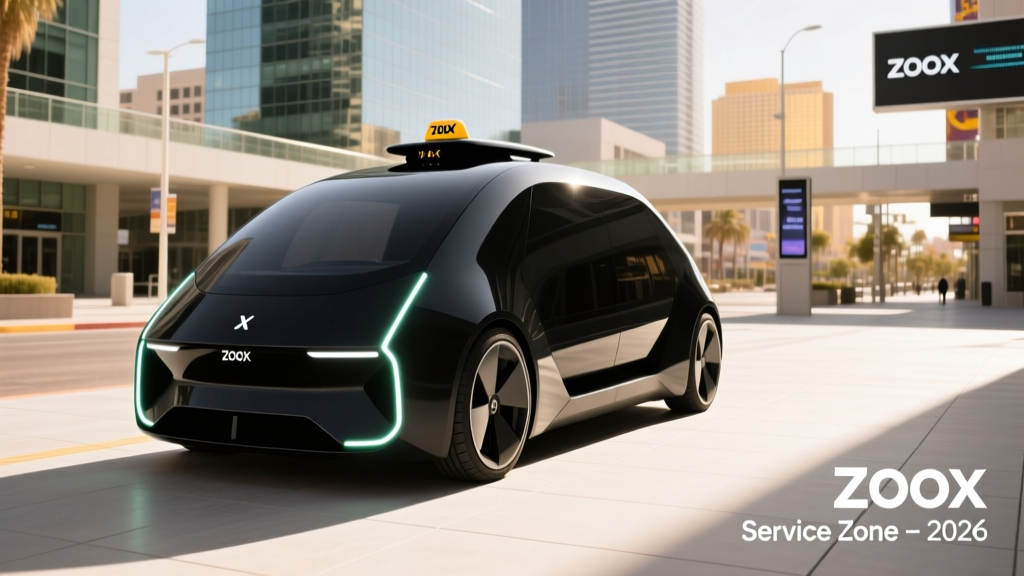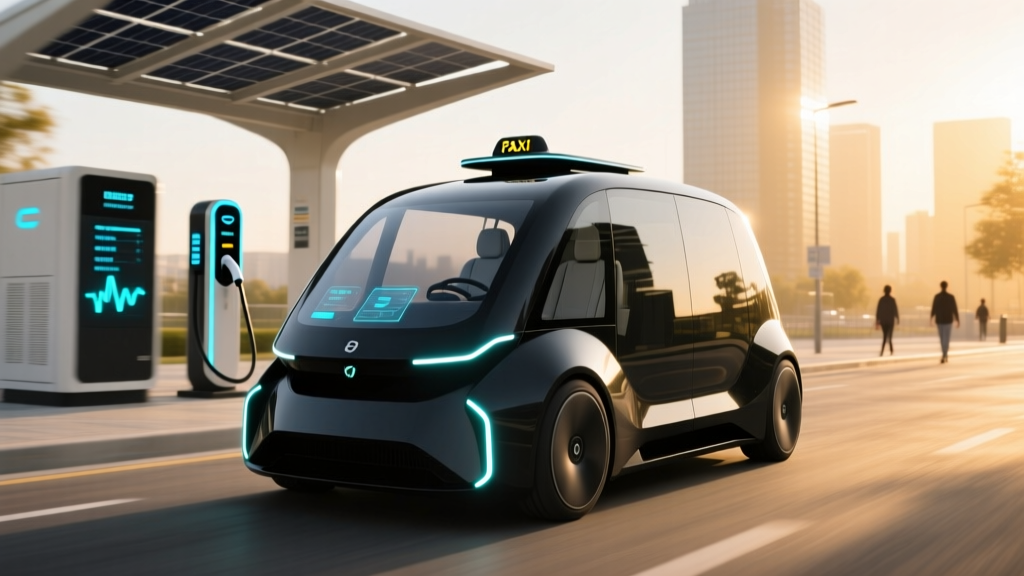
Las Vegas has long been a proving ground for autonomous vehicles, with companies like Cruise, Motional, and Zoox testing on the Strip and surrounding corridors. But for riders searching for a Vegas Waymo ride in 2026, the reality is more nuanced than a simple yes-or-no answer. Waymo, the Alphabet-backed robotaxi leader, has been methodically expanding its commercial service footprint — but Las Vegas represents a unique regulatory and operational challenge compared to its live markets.
This guide cuts through the hype to give you exact facts: where Waymo actually operates today, how Las Vegas fits into the expansion roadmap, what the safety record shows, and how robotaxi pricing stacks up against Uber and Lyft. No speculation, no marketing spin — just the data you need.
Is Waymo Actually Available in Las Vegas Right Now?
As of early 2026, Waymo One — the company's commercial, fully driverless ride-hailing service — is not yet open to the general public in Las Vegas. Waymo has conducted mapping and testing operations in the Las Vegas area, but the city is not among the markets where you can currently hail a driverless Waymo vehicle through the app.
| City | Status | Service Area Notes |
|---|---|---|
| Phoenix, AZ | ✅ Live — Open to public | Greater Phoenix metro including Chandler, Tempe, Mesa, Scottsdale; ~225 sq mi geofence |
| San Francisco, CA | ✅ Live — Open to public | City-wide coverage, expanding to Daly City and parts of the Peninsula |
| Los Angeles, CA | ✅ Live — Open to public | Santa Monica, Hollywood, Downtown LA, Beverly Hills; ~80+ sq mi |
| Austin, TX | ✅ Live — Open to public | Central Austin, Downtown, South Austin corridors |
| Las Vegas, NV | ⚠️ Testing / Not yet commercial | Mapping and limited testing; no public Waymo One service available |
Waymo has historically signaled interest in Las Vegas as a future market, and the company has performed road testing in the area. However, moving from testing to paid commercial service requires regulatory approval from the National Highway Traffic Safety Administration (NHTSA), the Nevada Department of Motor Vehicles' Autonomous Vehicle Division, and local jurisdiction agreements. These processes involve safety case submissions, insurance verification, and first-responder coordination protocols.
Understanding the Autonomy Level: Level 4 vs. Level 2
Before discussing any robotaxi service, it's essential to distinguish between the levels of driving automation. Marketing language often blurs these lines, but the SAE International J3016 framework is precise:
| Level | Name | Who Drives? | Example |
|---|---|---|---|
| Level 0 | No Automation | Human does everything | Standard car, no assist features |
| Level 1 | Driver Assistance | Human drives; system assists steering OR speed | Adaptive cruise control, lane-keeping |
| Level 2 | Partial Automation | Human drives and supervises; system assists steering AND speed simultaneously | Tesla Autopilot/FSD Supervised, GM Super Cruise, Ford BlueCruise |
| Level 3 | Conditional Automation | System drives in specific conditions; human must take over when requested | Mercedes Drive Pilot (limited markets/conditions) |
| Level 4 | High Automation | System drives fully within its operational design domain (ODD); no human driver needed | Waymo One, Zoox |
| Level 5 | Full Automation | System drives everywhere, all conditions | Does not exist commercially |
Waymo One operates at SAE Level 4. This means the vehicle drives itself without any human driver present — no one in the front seat, no steering wheel intervention. However, Level 4 is bounded by an Operational Design Domain (ODD): the vehicle operates only within a defined geofence, under certain weather conditions, and on mapped roads. If the system encounters a scenario outside its ODD, it will execute a minimal risk maneuver (pull over safely) rather than hand control to a passenger.
This is fundamentally different from Tesla's FSD (Supervised) or GM's Super Cruise, which are Level 2 systems that require an attentive human driver at all times. A Level 2 system is driver-assist; a Level 4 robotaxi is driverless. The distinction matters enormously for safety, liability, and rider experience.
How Waymo's Technology Stack Works
Waymo's sixth-generation Driver system (deployed on the Zeekr RT robotaxi and retrofitted Jaguar I-PACE fleet) relies on a multi-sensor fusion approach — a deliberate contrast to Tesla's camera-only strategy.
Waymo Driver Sensor Suite (6th Generation)
- LiDAR: Custom-built 360° LiDAR units providing high-resolution point clouds up to 500+ meters; capable of detecting object shape, distance, and velocity in complete darkness
- Cameras: 29+ cameras across the vehicle providing 360° visual coverage; improved dynamic range for sun glare and nighttime operation compared to 5th-gen
- Radar: Imaging radar units for velocity detection and performance in rain, fog, and dust — conditions where LiDAR and cameras can degrade
- External audio receivers: Microphones that detect emergency vehicle sirens and trigger appropriate yielding behavior
- HD Maps: Centimeter-precision pre-mapped routes that provide lane geometry, traffic signal positions, speed limits, and curb data — the vehicle localizes against this map in real time
The sensor redundancy is a core safety philosophy: if one modality is degraded (heavy rain affecting LiDAR return quality, for example), the other sensors compensate. This multi-modal approach is standard across the robotaxi industry (Cruise, Zoox, Aurora all use similar fusion stacks) and stands in contrast to Tesla's vision-only approach on consumer vehicles.
Geofencing is equally important. Waymo vehicles only operate within pre-mapped zones where every intersection, crosswalk, lane marking, and signal has been cataloged. Expanding to a new neighborhood requires physical mapping runs and validation — it's not as simple as flipping a software switch.
Safety Record: What the Data Actually Shows
Robotaxi safety is the most scrutinized aspect of the industry, and Waymo publishes more operational data than most competitors. Here's what the numbers tell us:
Waymo Safety Data Points
| Cumulative autonomous miles driven | 50+ million fully driverless miles (as of late 2025, per Waymo's safety reports) |
| Crash rate vs. human baseline | Waymo's published research (peer-reviewed with IIHS collaboration) showed an 85% reduction in injury-causing crash rates compared to human drivers in comparable geographies |
| Contactless crash rate | 57% lower than human benchmarks for any police-reportable crash |
| Most common incident type | Low-speed contact with stationary objects (parked cars, curbs, construction barriers) — overwhelmingly minor property damage, no injuries |
| Notable incidents | Waymo vehicles have been involved in a small number of publicized incidents, including a 2024 Austin event involving a towed truck and a Phoenix school bus contact; NHTSA investigated and Waymo issued software updates in response |
Context matters: Waymo vehicles are involved in fewer severe crashes per million miles than human drivers in the same cities, but they do occasionally make contact with objects in complex scenarios — particularly construction zones, illegally parked vehicles, and unpredictable pedestrian behavior. The difference is severity: human-caused crashes in urban settings frequently involve speeding, impairment, or distraction, leading to higher-energy impacts. Robotaxi incidents tend to be low-speed and low-severity.
Waymo submits Standing General Orders to NHTSA for every reportable crash involving its ADS (Automated Driving System), providing transparency that traditional crash statistics don't offer. For comparison, there is no equivalent mandatory real-time reporting for human driver crashes.
Pricing: Waymo vs. Uber and Lyft
Where Waymo One is live, pricing is designed to be competitive with — though not always cheaper than — conventional rideshare. Expect dynamic pricing that fluctuates with demand, time of day, and distance.
| Metric | Waymo One | UberX | Lyft Standard |
|---|---|---|---|
| Base fare | ~$5.00–$6.50 | ~$3.50–$5.00 | ~$3.50–$5.00 |
| Per-mile rate | ~$1.50–$2.00 | ~$1.20–$1.80 | ~$1.20–$1.75 |
| Per-minute rate | ~$0.30–$0.45 | ~$0.20–$0.35 | ~$0.20–$0.35 |
| 5-mile city ride (typical) | $14–$22 | $12–$20 | $11–$19 |
| Airport run (15 mi) | $35–$55 | $30–$50 | $28–$48 |
| Surge pricing | Moderate demand multipliers (1.2x–1.5x typical) | Aggressive surge (1.5x–3x+ common) | |
| Tipping | In-app tip optional; not expected | Expected ($2–$5 typical) |
Key takeaway: Waymo rides are generally in the same ballpark as UberX and Lyft, sometimes slightly higher on base rates but often more predictable during peak demand because surge multipliers tend to be less aggressive. When you factor in that no tip is expected, the total cost frequently lands within $1–$3 of a conventional rideshare trip. Waymo also periodically offers promotional credits for new riders in newly launched markets.
For Las Vegas specifically, pricing has not been published since commercial service isn't live. However, based on Waymo's pricing patterns in Phoenix and LA, expect Strip-area rides to carry a premium due to congestion and demand density — similar to how Uber/Lyft already surge in the tourist corridor.
Regulatory Landscape: Who Approves Robotaxi Operations?
Deploying a driverless taxi service in the United States requires navigating a layered regulatory framework. There is no single federal "robotaxi license" — instead, authority is split:
- Federal (NHTSA): Sets vehicle safety standards (FMVSS) and investigates crashes. NHTSA has granted limited exemptions to companies like Waymo and Zoox for vehicles without steering wheels or mirrors. NHTSA also mandates Standing General Orders for ADS-involved crashes.
- State level: Each state sets its own rules for testing and commercial deployment. California's DMV and CPUC regulate Waymo's home market. Arizona has taken a permissive approach, enabling Phoenix to become the first live market. Nevada's DMV has an autonomous vehicle testing program, and the state passed legislation (NRS 482A) enabling AV operation, but commercial robotaxi deployment requires additional approvals and insurance certification.
- Local/municipal: Cities often negotiate operating agreements covering pickup/dropoff zones, emergency responder protocols, accessibility requirements, and data sharing.
For Las Vegas, the regulatory pathway exists in statute, but the practical approval process for a high-volume commercial robotaxi service on or near the Strip involves coordination with Clark County, the Las Vegas Metropolitan Police Department, the Regional Transportation Commission, and major resort operators. The Strip itself — Las Vegas Boulevard — is one of the most complex pedestrian environments in the country, with jaywalking, dense foot traffic, construction, parade routes, and event-driven surges. This complexity likely contributes to the deliberate pace of any commercial launch.
Current Limitations of Robotaxi Services
Even in live markets, Level 4 robotaxis operate with meaningful constraints. Understanding these limitations is critical for setting expectations — whether you're planning a future ride in Vegas or using Waymo today in Phoenix or LA:
What Waymo Robotaxis Cannot Do (Yet)
- Heavy rain and flooding: While 6th-gen sensors handle moderate rain, severe monsoon conditions (common in Phoenix summer and potentially relevant to Vegas flash floods) can trigger the vehicle to pull over and wait. The system will not drive through standing water of unknown depth.
- Unmapped roads: If a road isn't in Waymo's HD map database, the vehicle won't drive on it. Detours around construction may require remote guidance or route recalculation within the geofence.
- Highway driving (limited): Waymo has been expanding freeway-capable routes (e.g., Phoenix airport runs on the I-10 and Loop freeways), but not all geofenced areas include highway segments. Speeds are generally limited to roads with posted limits up to 65 mph.
- Pets and unaccompanied minors: Waymo One requires riders to be 18+. Pets are generally not permitted unless in a carrier, and policies vary by market.
- Door-to-door in all scenarios: The vehicle pulls to a safe, legal stopping point — it won't double-park, block a fire lane, or enter a private driveway. You may need to walk a short distance to or from the vehicle.
- Accessibility: Waymo has been deploying wheelchair-accessible vehicles (WAVs) in select markets, but availability is limited and wait times are longer. Full ADA-compliant fleet coverage remains a work in progress across the industry.
- Complex construction zones: While Waymo handles standard construction reroutes, highly dynamic zones with manual flaggers, temporary lane shifts, and conflicting signage can cause the vehicle to stop and request remote assistance.
For Las Vegas specifically, the Strip environment adds unique edge cases: dense pedestrian jaywalking (an estimated 60%+ of pedestrians cross outside crosswalks on Las Vegas Boulevard), frequent road closures for events and filming, parade routes, and the constant churn of hotel construction. These factors make Las Vegas one of the more challenging urban environments for autonomous vehicle deployment in the United States.
What a Vegas Waymo Launch Would Look Like
Based on Waymo's expansion playbook in LA, Austin, and Phoenix, a Las Vegas commercial launch would likely follow this pattern:
- Limited early rider program: Invite-only service in a small geofenced zone — likely starting away from the Strip, perhaps in Summerlin, Henderson, or the Arts District, where traffic complexity is lower.
- Gradual geofence expansion: Expanding coverage area as miles accumulate and the safety case strengthens, eventually approaching the resort corridor.
- Partnerships: Waymo has partnered with Uber in some markets (Waymo vehicles bookable through the Uber app). A Vegas launch could involve integration with Uber, hotel concierge services, or McCarran International Airport (Harry Reid) pickup agreements.
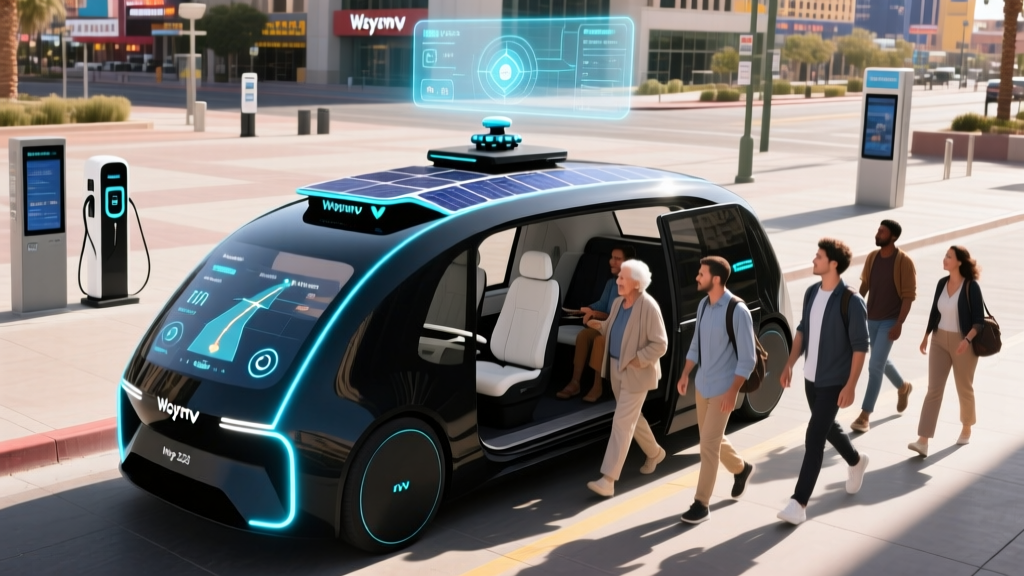
- Fleet composition: Expect the Zeekr RT (Waymo's purpose-built 6th-gen robotaxi) and possibly the Jaguar I-PACE to form the initial fleet. The Zeekr RT features power sliding doors, a spacious rear cabin with no front seats, and integrated rider screens.
Until a formal launch announcement, riders in Las Vegas should not expect to hail a Waymo. Companies like Motional (the Hyundai/Aptiv joint venture) have conducted testing in Las Vegas with Ioniq 5-based robotaxis, and other operators may enter the market — but as of 2026, no fully driverless commercial robotaxi service is publicly available on or near the Las Vegas Strip.
Frequently Asked Questions
Can I ride in a Waymo in Las Vegas right now?
No. As of 2026, Waymo One is not commercially available in Las Vegas. Waymo has tested in the area, but public ride-hailing service has not launched. Live markets include Phoenix, San Francisco, Los Angeles, and Austin.
How much would a Waymo ride cost compared to Uber or Lyft?
In live markets, Waymo pricing is comparable to UberX and Lyft — typically within $1–$3 of a standard rideshare for the same route. Waymo surge pricing tends to be less aggressive, and tipping is not expected. A typical 5-mile urban ride costs $14–$22 on Waymo.
Are Waymo robotaxis safe? What does the data say?
Waymo's published safety research, conducted in collaboration with the IIHS, shows an 85% reduction in injury-causing crash rates and a 57% reduction in all police-reportable crashes compared to human drivers in the same cities, across 50+ million driverless miles. Most incidents that do occur are low-speed contacts with stationary objects. Full crash data is reported to NHTSA under Standing General Orders.
Is Waymo truly self-driving, or is there a human driver?
Waymo One is SAE Level 4 — fully driverless within its geofenced service area. There is no human driver in the vehicle, no steering wheel in the 6th-gen Zeekr RT, and no remote joystick control. A remote assistance team can provide guidance in edge cases, but they do not "drive" the vehicle in real time. This is fundamentally different from Level 2 systems like Tesla Autopilot, which require an attentive human driver.
What are the biggest limitations of robotaxi services?
Key limitations include: geofencing (service only in mapped areas), weather restrictions (heavy rain/flooding can halt operations), inability to handle unmapped detours, limited accessibility options, no unaccompanied minors, and challenges in complex construction zones. These constraints are inherent to Level 4 autonomy and will narrow over time but will not disappear in the near term.
Will Waymo come to Las Vegas eventually?
Waymo has indicated Las Vegas is a market of interest and has conducted testing there, but no official commercial launch date has been announced. The regulatory pathway exists under Nevada law, but the Strip's unique pedestrian density and event-driven road closures make it a challenging environment. Watch for an early rider program announcement as the first signal of an imminent launch.
What other robotaxi services operate or test in Las Vegas?
Motional (Hyundai/Aptiv) has conducted autonomous testing in Las Vegas using modified Ioniq 5 vehicles. Zoox (Amazon) has also tested in the area. However, as of 2026, no fully driverless commercial robotaxi service is open to the public in Las Vegas.