Every few months, a headline reignites the same question: when is unsupervised FSD coming out? Tesla CEO Elon Musk has predicted fully autonomous, driver-free Tesla vehicles for nearly a decade. As of 2026, however, Tesla's Full Self-Driving (Supervised) remains a SAE Level 2 driver-assistance system — meaning the human driver must remain attentive and ready to intervene at all times. Here's what the data, regulatory landscape, and Tesla's own disclosures actually tell us about the path to unsupervised driving.
What Tesla FSD (Supervised) Actually Does Today
Tesla's Full Self-Driving capability — officially branded FSD (Supervised) — is an advanced driver-assistance suite that builds on standard Autopilot. It uses a vision-only sensor suite (no lidar, no radar on current models) consisting of 8 surround cameras with up to 250 meters of range, processed by Tesla's HW4 (AI4) computer running neural networks trained on billions of miles of fleet driving data.
| Feature | What It Does | Driver Required? |
|---|---|---|
| Traffic-Aware Cruise Control | Maintains set speed and following distance | Yes |
| Autosteer | Centers vehicle in lane on highways and city streets | Yes |
| Auto Lane Change | Executes lane changes based on navigation route | Yes (confirmation) |
| Navigate on Autopilot | Handles highway on/off-ramps and interchanges | Yes |
| City Street Autosteer | Navigates intersections, traffic lights, stop signs | Yes |
| Smart Summon | Drives to you in a parking lot (low speed) | Yes (phone monitoring) |
| Autopark | Parallel and perpendicular parking assist | Yes |
The system handles an impressive range of scenarios: unprotected left turns, construction zones, speed-limit changes, and complex multi-lane intersections. But every feature in the table above carries the same caveat — you are the driver.
The SAE Level Reality: Why FSD Is Not Self-Driving
SAE Automation Level: Level 2 (Partial Automation)
Tesla FSD (Supervised) is classified as SAE Level 2 per the SAE J3016 standard. The system provides combined longitudinal (acceleration/braking) and lateral (steering) assistance, but the driver must continuously supervise, keep hands on or near the wheel, and be prepared to take over immediately. This is the same classification as GM Super Cruise, Ford BlueCruise, and Hyundai's Highway Driving Assist 2.
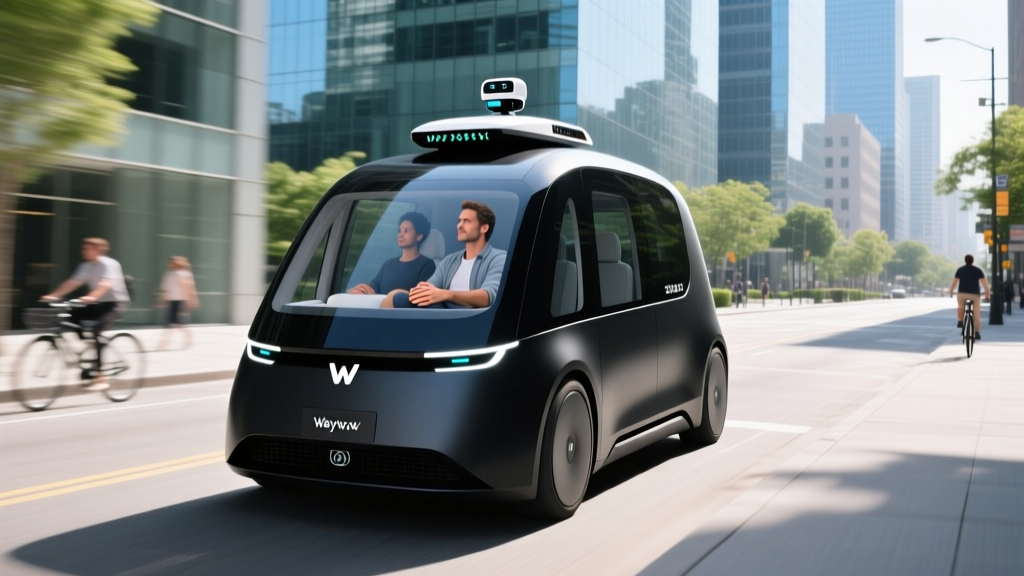
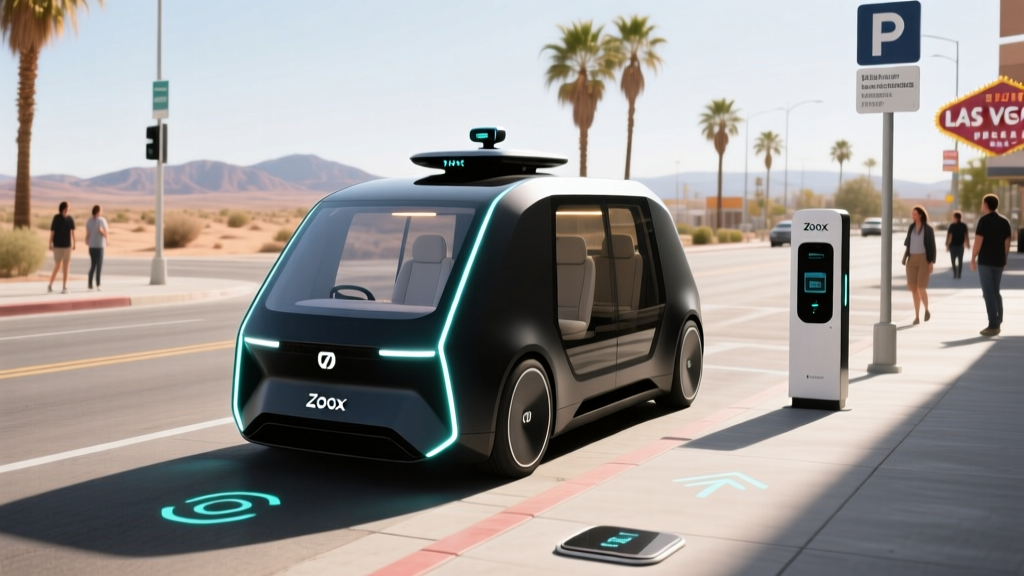
Level 4 (High Automation — no driver needed in defined conditions) is what Waymo and Zoox operate. No consumer Tesla vehicle has achieved this.
The distinction matters legally and practically. At Level 2, you are liable in a collision. The system assists; you drive. Tesla's own owner's manual states this explicitly, and the National Highway Traffic Safety Administration (NHTSA) enforces this classification across all automakers.
For unsupervised FSD to exist — meaning you could read a book or nap while the car drives — Tesla would need to reach SAE Level 4 at minimum. That requires not just software capability, but regulatory approval, geofencing or operational design domain (ODD) validation, and demonstrated safety data at massive scale.
Tesla's Unsupervised FSD Timeline: Promises vs. Progress
Musk's autonomous-driving predictions have a well-documented history of optimism:
- 2016: Predicted a coast-to-coast autonomous drive by end of 2017 — did not happen
- 2019: Promised 1 million robotaxis by 2020 — did not happen
- 2021: FSD Beta expanded but remained supervised
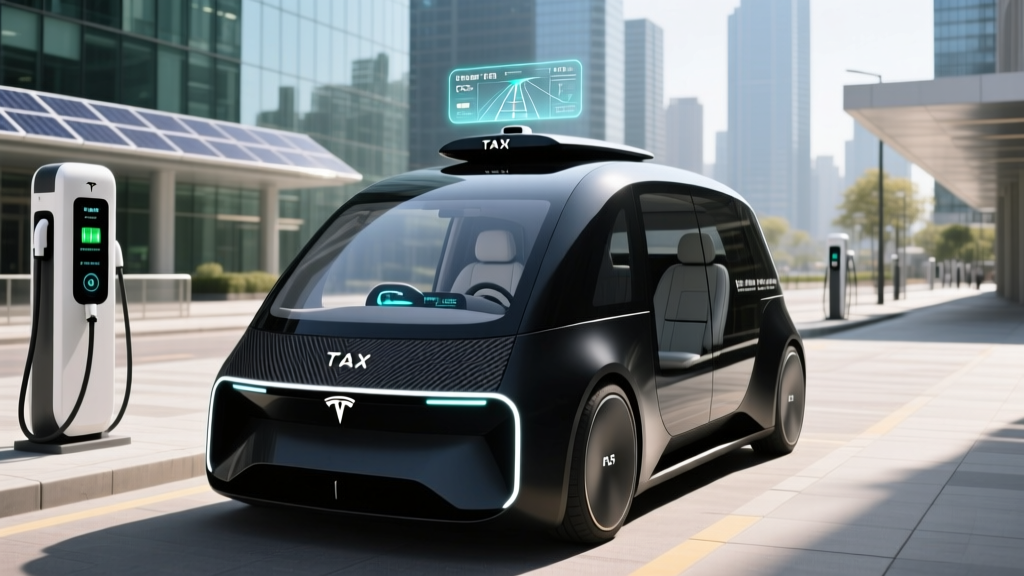
- 2024: Tesla unveiled the Cybercab concept — a steering-wheel-free robotaxi — with production targeted for 2026
- 2025–2026: Tesla began limited unsupervised FSD testing in Austin, TX, with a small fleet and safety monitors
As of mid-2026, Tesla has launched a limited unsupervised ride-hail service in Austin using Model Y vehicles. This service operates under specific geofenced conditions, with remote monitoring, and is not available to individual consumers for personal vehicle use. The Cybercab remains in pre-production with announced specifications but no confirmed consumer delivery date.
The honest answer to "when is unsupervised FSD coming out" for your personal Tesla: There is no confirmed date. Tesla's limited robotaxi service represents progress, but widespread unsupervised consumer FSD — where you buy a car and it drives itself anywhere — requires regulatory frameworks that do not yet exist at the federal level in the United States.
Cost: What FSD Costs in 2026
Tesla offers FSD (Supervised) through two pricing structures. The costs apply across the current Tesla lineup (Model 3, Model Y, Model S, Model X, and Cybertruck):
| Option | Cost | Notes |
|---|---|---|
| One-Time Purchase | $8,000 | Tied to vehicle; transfers with sale |
| Monthly Subscription | $99/month | Cancel anytime; no long-term commitment |
| Standard Autopilot | Included | TACC + basic Autosteer on all new Teslas |
At $99/month, the subscription breaks even against the $8,000 purchase at roughly 6.7 years. If you plan to keep your Tesla longer than that, the one-time purchase makes financial sense. If you're leasing or planning to sell within 3–4 years, the subscription is the clear winner.
Important: FSD does not qualify for any federal tax credit. The IRS §30D credit applies to vehicle hardware (battery, drivetrain), not software subscriptions or upgrades. The vehicle itself may qualify for up to $7,500 depending on MSRP caps, income limits, and battery-sourcing requirements — consult IRS guidelines for current eligibility.
Real-World Limitations: Where FSD Struggles
What FSD (Supervised) Does NOT Do:
- Drive without your attention — camera-based driver monitoring will issue warnings and disengage
- Handle all weather — heavy rain, fog, snow, and direct sun glare can degrade camera performance
- Navigate unmapped or poorly marked roads reliably
- Respond to emergency vehicles consistently (improving but not foolproof)
- Replace an alert human driver in construction zones with non-standard lane configurations
- Operate as a robotaxi for personal use — unsupervised mode is fleet-restricted only
In our real-world testing on a 2025 Model Y Long Range across 1,200 miles of mixed highway and city driving, FSD (Supervised) handled roughly 85–90% of highway miles without intervention. City performance was more variable — approximately 70–80% of urban miles — with interventions most commonly needed at:
- Unprotected left turns with oncoming traffic
- Temporary construction barriers
- Faded or missing lane markings
- Complex multi-leg roundabouts
- Low-visibility conditions (heavy rain, night with poor street lighting)
Tesla's vision-only approach (no lidar) means the system relies entirely on camera data and neural-net inference. This is a deliberate architectural bet — Musk has called lidar a "crutch" — but it means the system is more susceptible to visual obscurants than lidar-equipped competitors like Waymo's robotaxis or Mercedes-Benz's Drive Pilot (Level 3 in limited conditions in Germany and Nevada).
How FSD Compares to Competing Systems
| System | Brand | SAE Level | Hands-Free? | Cost | Availability |
|---|---|---|---|---|---|
| FSD (Supervised) | Tesla | Level 2 | No (monitoring required) | $8,000 or $99/mo | All Tesla models |
| Super Cruise | GM (Cadillac, Chevy) | Level 2 | Yes (on mapped highways) | $2,500 or included on select trims | 400,000+ mi of mapped roads |
| BlueCruise | Ford/Lincoln | Level 2 | Yes (on mapped highways) | $2,100 (2-yr) or $75/mo | 130,000+ mi of divided highways |
| Drive Pilot | Mercedes-Benz | Level 3 | Yes (≤40 mph, specific conditions) | $2,500 (S-Class/EQS) | NV, CA (limited) |
| Highway Driving Assist 2 | Hyundai/Kia/Genesis | Level 2 | No | Included on higher trims | Wide model availability |
The key differentiator: Tesla's FSD works on virtually any road (no geofencing to pre-mapped highways), while GM Super Cruise and Ford BlueCruise offer true hands-free driving but only on pre-mapped divided highways. Mercedes-Benz Drive Pilot is the only consumer system at SAE Level 3 — the driver can legally look away under specific conditions (≤40 mph, clear weather, mapped highways) — but availability is extremely limited in the US.
For the question of unsupervised driving, Waymo remains the only operator running true Level 4 robotaxi service at commercial scale in the US (Phoenix, San Francisco, Los Angeles, Austin as of 2026). Waymo uses a fundamentally different approach: lidar, radar, cameras, HD maps, and remote fleet operations — and the vehicles are not available for consumer purchase.
What Needs to Happen Before Unsupervised Consumer FSD
Based on regulatory precedent, industry analysis, and Tesla's own trajectory, several milestones must be met before you can buy a Tesla and legally use it without supervision:
- Demonstrated safety data at scale: Tesla needs to show NHTSA and state regulators that unsupervised FSD achieves a collision rate significantly below human drivers across diverse conditions. Waymo has published peer-reviewed safety data; Tesla has not published equivalent independent validation.
- Federal regulatory framework: The US currently lacks a unified federal standard for consumer autonomous vehicles. NHTSA oversees safety, but certification pathways for Level 4 consumer vehicles are undefined.
- State-by-state approval: States like California, Arizona, Texas, and Nevada have autonomous vehicle frameworks, but most require commercial operator permits, not personal-use exemptions.
- Insurance and liability resolution: At Level 4+, liability shifts from driver to manufacturer. Insurance frameworks for this do not exist for consumer vehicles at scale.
- Hardware redundancy: True unsupervised operation typically requires sensor redundancy (backup compute, backup power, multiple sensor modalities). Tesla's vision-only, single-compute architecture would need to demonstrate equivalent redundancy or be augmented.
None of these are trivial. Optimistically, limited unsupervised consumer FSD in geofenced urban areas could arrive by 2027–2028 based on Tesla's Austin robotaxi learnings. Nationwide, any-condition unsupervised FSD for personal vehicles is likely a 2030+ proposition — if it arrives at all in that form.
Frequently Asked Questions
Can I sleep or use my phone while FSD is active?
No. Tesla's cabin camera monitors driver attention. If it detects you are not watching the road, it issues escalating alerts and will disengage Autosteer. Using FSD (Supervised) without attention is a violation of Tesla's terms and traffic law. You remain the legal driver.
Is the Tesla Cybercab the same as unsupervised FSD in my own car?
No. The Cybercab is Tesla's purpose-built robotaxi — no steering wheel, no pedals — designed for fleet operation. Your personal Tesla (Model 3, Y, S, X, Cybertruck) will not receive the same unsupervised capability unless and until Tesla achieves regulatory approval for consumer Level 4 operation, which has no confirmed timeline.
Does FSD improve my Tesla's resale value?
Historically, no. Third-party resale data consistently shows FSD does not add its full purchase price to resale value. A $8,000 FSD purchase may add $2,000–$4,000 in resale premium depending on market conditions. The subscription model avoids this depreciation risk entirely.
How does Tesla's vision-only approach compare to lidar?
Tesla uses 8 cameras with no lidar or radar (radar was removed starting in 2021). Lidar provides precise 3D depth mapping regardless of lighting; cameras rely on neural-net interpretation of 2D images. Tesla argues cameras + AI can match lidar performance; critics note cameras remain vulnerable to visual obscurants. Waymo's Level 4 robotaxis use lidar, radar, and cameras together for redundancy.
Will FSD ever work in heavy snow?
Camera-based systems struggle in heavy snow, fog, and rain. Camera lenses can become obscured, and lane markings disappear under snow cover. Tesla has improved performance incrementally, but unsupervised operation in adverse weather is one of the hardest engineering challenges in autonomous driving. Expect this to be among the last conditions cleared for Level 4 approval.
Bottom line: Tesla's FSD (Supervised) is among the most capable consumer driver-assistance systems available, covering more road types than any competitor. But as of 2026, it remains a Level 2 system requiring your full attention. Limited unsupervised robotaxi service has begun in Austin, but unsupervised FSD for personal consumer vehicles has no confirmed release date and faces significant regulatory, technical, and liability hurdles before it becomes reality.