Uber Waymo Robotaxis in Atlanta: What You Need to Know
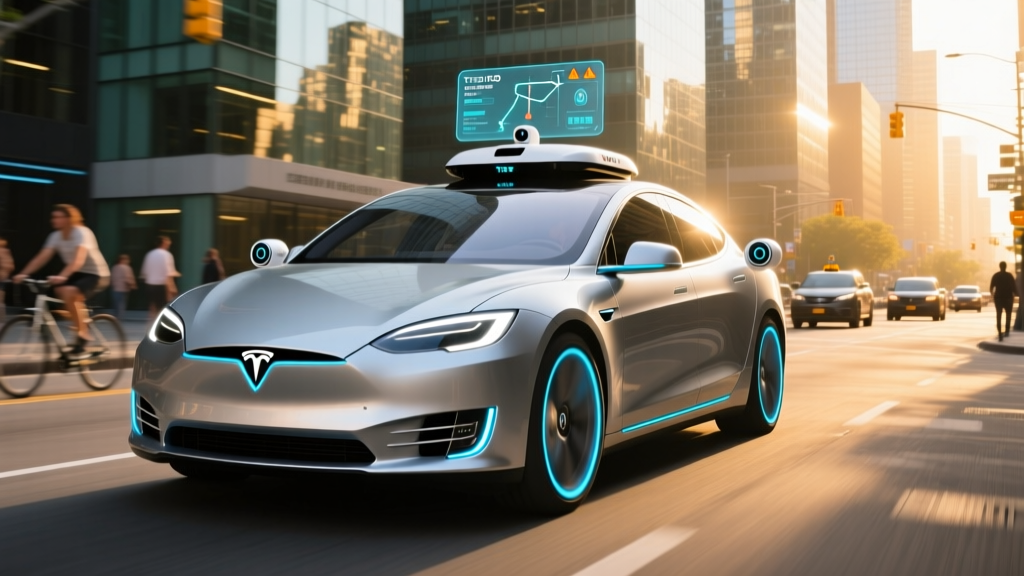
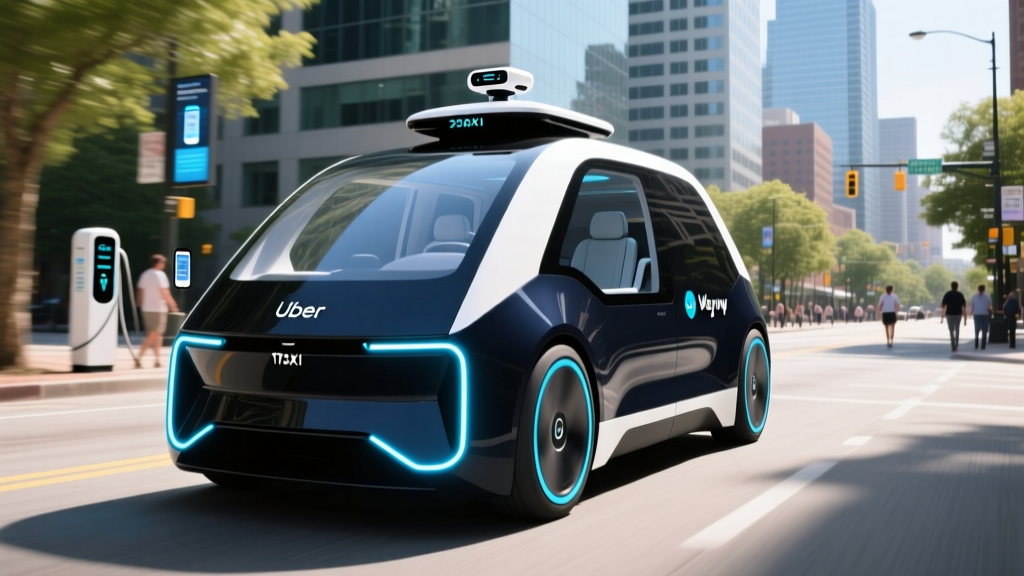
The search for Uber Waymo robotaxis in Atlanta has surged as Waymo expands its driverless ride-hailing footprint beyond its initial launch cities. Atlanta — one of the Southeast's most ride-hail-dependent metros — represents a logical next target for Waymo's commercial robotaxi service, especially given the partnership between Waymo and Uber that now allows Waymo vehicles to fulfill Uber rides in select markets. But where does Atlanta actually stand in the rollout, and what can riders expect when the service goes live?
This guide breaks down the current state of Waymo's expansion, how the Uber integration works, real safety data from existing markets, the technology that makes Level 4 autonomy possible, and the limitations that still constrain where and when you can summon a driverless car.
SAE Automation Levels: Why Waymo Is Level 4, Not Level 2
Before discussing availability, it's critical to distinguish what a Waymo robotaxi actually is — and what it isn't. Consumer driver-assist systems like Tesla Autopilot, Ford BlueCruise, and GM Super Cruise are all SAE Level 2: the human driver must remain engaged, hands on or near the wheel, eyes on the road. These are not self-driving.
Waymo's robotaxi fleet operates at SAE Level 4 — high automation within a defined operational design domain (ODD). There is no human driver in the vehicle. The system handles all driving tasks within its geofenced service area, and if it encounters a scenario it cannot handle, it executes a minimal-risk maneuver (pulling over safely) rather than handing control to a passenger.
| Feature | Level 2 (Autopilot, FSD Supervised, BlueCruise) | Level 4 (Waymo, Zoox) |
|---|---|---|
| Human driver required | Yes — must supervise at all times | No — fully driverless in ODD |
| Operational domain | Broad (highways, some city streets) | Geofenced service area only |
| Failure mode | Alerts driver to take over | System performs safe stop |
| Available to consumers | Yes — in new vehicles | Ride-hail only (no personal purchase) |
Where Can You Use Waymo Robotaxis Right Now?
As of early 2026, Waymo's commercial Waymo One service is live in the following metro areas, with ongoing expansion of geofenced zones within each:
| Metro | Coverage Area | Status |
|---|---|---|
| Phoenix, AZ | ~315 sq mi (Tempe, Scottsdale, Chandler, Mesa, parts of Phoenix proper) | Fully operational, largest coverage area |
| San Francisco, CA | Full city limits (~47 sq mi), plus Daly City and select South Bay corridors | Fully operational |
| Los Angeles, CA | Santa Monica, Hollywood, Downtown LA, Beverly Hills, expanding east | Operational, expanding |
| Austin, TX | Downtown, South Austin, airport corridor | Operational (launched 2025) |
Atlanta: Where Does It Stand?
Atlanta has been on Waymo's radar as a high-potential expansion market. Waymo has conducted mapping and limited testing on Atlanta streets, and the city's relatively grid-like street network in key corridors (Midtown, Buckhead, the Perimeter) is favorable for autonomous operations. However, as of early 2026, Waymo One is not yet commercially available to the public in Atlanta. Georgia's regulatory framework for autonomous vehicle operations has been progressing through the state legislature, and the Georgia Department of Public Safety oversees AV testing permits.
The Uber-Waymo integration — where Waymo vehicles fulfill Uber ride requests — is currently active in Phoenix and San Francisco. When Atlanta does launch, riders requesting an Uber in the geofenced zone may be matched with a Waymo vehicle as an option, similar to UberX or Comfort tiers.
How the Uber-Waymo Integration Works (and Pricing)
In markets where the integration is live, the experience works like this:
- Request a ride in the Uber app as normal within the Waymo service zone.
- Waymo option appears alongside UberX, Comfort, etc., if a Waymo vehicle is available nearby.
- Select Waymo — the app shows the vehicle type (Jaguar I-PACE EV), ETA, and upfront price.
- Ride driverlessly — the vehicle arrives with no one in the driver's seat. You unlock via the app, and the ride proceeds autonomously.
- Rate and pay through Uber as usual.
Pricing: Waymo vs. UberX vs. Lyft
Based on observed pricing in Phoenix and San Francisco (the two markets with longest Uber-Waymo integration), here's how Waymo fares compare:
| Ride Scenario | UberX | Lyft Standard | Waymo (via Uber) |
|---|---|---|---|
| Short trip (~3 mi, off-peak) | $9–$13 | $8–$12 | $10–$15 |
| Medium trip (~8 mi, off-peak) | $16–$22 | $15–$20 | $18–$26 |
| Airport run (~15 mi) | $28–$38 | $26–$35 | $32–$44 |
| Surge pricing (2x peak) | $30–$50+ | $28–$48+ | Less surge-volatile* |
*Waymo pricing tends to be more stable during peak demand because fleet supply is algorithmically managed rather than dependent on human driver availability. However, Waymo rides may simply be unavailable during extreme demand spikes rather than surging in price.
The bottom line: Waymo rides currently carry a modest premium over standard UberX — typically 10–25% higher — reflecting the cost of the sensor suite and remote fleet operations. As fleet scale increases and vehicle costs decline, Waymo has signaled the goal of reaching UberX price parity.
Safety Record: What the Data Actually Shows
Safety is the most scrutinized aspect of robotaxi operations, and Waymo has published more transparent data than most competitors. Here's what we know from NHTSA reports and Waymo's own safety publications:
- Cumulative autonomous miles driven: Over 10 million fully driverless miles across all markets
- Injury-relevant crash rate: Waymo reported an 85% reduction in injury-causing crashes compared to human benchmarks in Phoenix (per Waymo's 2024 safety study, peer-reviewed methodology)
- Contact rate: The vast majority of reported incidents involve low-speed contact with other road users who violated traffic rules (e.g., a vehicle rear-ending a stopped Waymo at a red light)
- NHTSA Standing General Order: Waymo files crash reports for any incident involving its ADS; these are publicly queryable through NHTSA's database
For context, human drivers in the US experience approximately 1.35 fatalities per 100 million vehicle miles (NHTSA 2023 data). Waymo has not reported a passenger fatality in its commercial service. However, the total mileage — while impressive — is still a fraction of the billions of miles driven by humans annually, making direct statistical comparison challenging. The data is promising but not yet conclusive at population scale.
Notable incidents have occurred: in San Francisco, Waymo vehicles were involved in collisions with pedestrian-adjacent scenarios and a school bus encounter in 2024 that prompted operational adjustments. Each incident led to a software update and, in some cases, temporary service-area contraction while the issue was resolved. This iterative approach — pull back, fix, redeploy — is characteristic of Level 4 operations and distinct from how Level 2 systems are managed.
Technology Stack: How Waymo Sees the Road
Waymo's 6th-generation driver system (deployed on the Jaguar I-PACE EV platform and the upcoming Zeekr robotaxi) uses a sensor-fusion approach that differs fundamentally from camera-only systems like Tesla's:
| Sensor Type | Function | Key Specs |
|---|---|---|
| LiDAR (multiple units) | 3D point cloud mapping, object detection, distance measurement | 360° coverage, range >200m, improved resolution vs. 5th gen |
| Cameras (high-res, multiple) | Traffic light/sign reading, lane detection, classification | 20+ cameras, improved low-light and high-dynamic-range |
| Radar (external) | Velocity detection of moving objects, all-weather redundancy | 4D imaging radar, effective in rain/fog |
| Audio sensors | Emergency vehicle siren detection | Directional microphone arrays |
| IMU + GPS + HD maps | Localization within centimeters | Pre-mapped routes, real-time localization |
The reliance on HD pre-mapping is a key differentiator — and a key limitation. Waymo vehicles can only operate in areas that have been precisely mapped to centimeter-level accuracy. When roads change (construction zones, new lane configurations), the map must be updated before the vehicle can safely navigate the area. This is why geofencing is non-negotiable for Level 4 operations today.
The Jaguar I-PACE used in Waymo's current fleet has a 90 kWh battery (NMC chemistry), providing an EPA-estimated 234 miles of range. In practice, the constant draw of the sensor and compute suite reduces usable range, and vehicles typically return to charging depots every 100–140 miles of operation. Waymo uses DC fast charging at its fleet depots to minimize downtime.
Regulatory Landscape: Who Approves Robotaxi Operations?
Robotaxi deployment in the US involves a patchwork of state and local approvals:
- Federal (NHTSA): Sets vehicle safety standards (FMVSS). NHTSA has granted limited exemptions for vehicles without steering wheels/pedals (like the Zoox vehicle) and requires crash reporting under Standing General Order for all ADS-equipped vehicles.
- State level: Each state determines whether driverless testing and commercial operations are permitted. California's CPUC and DMV jointly regulate — the DMV issues testing permits, while the CPUC authorizes commercial passenger service. Arizona takes a lighter-touch approach (executive order permitting). Texas passed enabling legislation in 2023.
- Georgia: As of early 2026, Georgia has authorized AV testing with a safety driver. Full driverless commercial operations require further regulatory action. Atlanta's potential launch depends on both state-level authorization and local coordination with the city and GDOT.
- Local/municipal: Cities often negotiate operating agreements covering curb access, parking for fleet operations, data sharing, and equity requirements for underserved neighborhoods.
Current Limitations: Where Robotaxis Can't Go (Yet)
Despite rapid progress, Level 4 robotaxis face real constraints that riders should understand:
- Heavy rain and fog: While improved radar helps, heavy precipitation can degrade LiDAR and camera performance. Waymo may pause service or restrict operations during severe weather events.
- Unmapped areas: The vehicle cannot drive outside its HD-mapped geofence. If your destination falls outside the zone, the ride simply won't be offered.
- Construction zones: Major roadwork that changes lane configurations may not be reflected in maps. Waymo vehicles will route around or pull over if they cannot safely navigate.
- Highway speeds: Most current Waymo operations focus on surface streets at speeds up to ~45 mph. Limited highway operation exists in Phoenix (freeway segments between service zones) but is not the primary use case.
- Complex pickup/dropoff: Gated communities, parking garages, drive-throughs, and private property are generally not accessible. Pickups happen at public curbside locations.
- No human assistance: If you feel ill, need help loading heavy items, or want to change your mid-route destination to an unmapped location, there's no driver to accommodate. Remote support is available via in-app communication.
For Atlanta specifically, the hilly terrain in northern suburbs, frequent construction on I-75/I-85 corridor interchanges, and the region's occasional ice storms would all present operational challenges requiring extensive testing before commercial launch.
What This Means for Atlanta Riders
If you're an Atlanta-based Uber rider anticipating Waymo robotaxis, here's the realistic outlook:
Near-term (2026): Continued mapping, testing with safety drivers, and regulatory progress. No commercial rides available to the public.
Medium-term (2027–2028): Possible launch of a limited Waymo One service in a defined geofence — likely covering Midtown, Downtown, Buckhead, and the airport connector corridor. Initial availability may be limited to a waitlist or Uber One members.
Long-term: As the Zeekr purpose-built robotaxi (no steering wheel, lower per-vehicle cost) enters the fleet and geofence expands, Atlanta could see broader coverage including suburban corridors. Pricing should trend toward UberX parity as fleet costs decline.
For now, Atlanta riders interested in experiencing a Waymo robotaxi can do so by visiting Phoenix, San Francisco, Los Angeles, or Austin and requesting a ride through the Uber app in those cities' service zones.
Frequently Asked Questions
Can I hail a Waymo robotaxi in Atlanta right now?
No. As of early 2026, Waymo One is not commercially available in Atlanta. Waymo has conducted testing in the city, but driverless rides require state regulatory approval and a defined geofenced service area that has not yet been established for public use.
How much would a Waymo ride cost compared to UberX?
In markets where Waymo operates through Uber, fares are typically 10–25% higher than UberX for the same route. A medium-length trip (~8 miles) might cost $18–$26 via Waymo versus $16–$22 for UberX. Surge pricing is less volatile with Waymo but availability may be limited during peak demand.
Are Waymo robotaxis actually safer than human drivers?
Waymo's published data shows an 85% reduction in injury-causing crash rates compared to human benchmarks in Phoenix, based on over 10 million driverless miles. However, total mileage is still small relative to the US driving population, and the controlled geofenced environment means the vehicles avoid many high-risk scenarios (unmapped rural roads, extreme weather). The data is encouraging but not yet definitive at national scale. Check NHTSA's AV crash database for the latest incident reports.
Is Waymo truly self-driving, or is there a remote human controlling the car?
Waymo vehicles are genuinely driverless — there is no human in the car and no remote joystick control. The AI system makes all real-time driving decisions. A remote fleet response team can provide high-level guidance in ambiguous situations (e.g., confirming it's safe to proceed past an unusual obstacle), but they do not steer or control the vehicle in real time. This is SAE Level 4 autonomy.
What vehicle does Waymo use, and is it electric?
Waymo's current fleet primarily uses the Jaguar I-PACE, a battery-electric SUV with a 90 kWh NMC battery and an EPA-estimated 234-mile range. Waymo has also announced the Zeekr RT, a purpose-built robotaxi with no steering wheel or pedals, designed to lower per-ride costs. Both are fully electric.
Will Waymo come to other Southeast cities besides Atlanta?
Waymo has not announced specific Southeast expansion beyond Atlanta testing. Miami and Charlotte are plausible future targets given population density and ride-hail demand, but regulatory frameworks and mapping requirements mean each city launch takes 12–24 months of preparation after announcement.