Uber once tried to build its own self-driving car. The effort cost the company billions, produced a fatal crash in Tempe, Arizona, and ultimately led Uber to sell its Advanced Technologies Group (ATG) to Aurora Innovation in late 2020. Since then, the strategy has inverted entirely: rather than developing autonomous hardware and software in-house, Uber has pivoted to becoming the demand layer — the app you already open — that connects riders to robotaxi fleets built by specialists. Reports and financial disclosures over the past several years indicate that Uber committed over $10 billion to autonomous vehicles when you combine the ATG era spend, the Aurora deal, subsequent partnership investments, and integration costs with operators like Waymo and Motional. That staggering figure raises a practical question for riders in 2026: what can you actually hail, where, and how does it compare to a standard Uber ride?
The SAE Autonomy Levels: What Uber's Robotaxis Actually Are
Before mapping service areas and pricing, it is essential to separate consumer driver-assist systems from the vehicles Uber is integrating into its platform. Tesla's Full Self-Driving (Supervised), GM's Super Cruise, and Ford's BlueCruise are all SAE Level 2 systems. The driver must remain engaged, hands on or near the wheel, eyes on the road. These are not robotaxis.
The vehicles Uber partners with for driverless rides operate at SAE Level 4 — meaning they handle all driving tasks within a defined Operational Design Domain (ODD) without any human intervention. There is no steering wheel occupied by a safety driver in current commercial Waymo service. The distinction is not semantic; it defines who is liable in a crash and whether you, the rider, can take a nap.
| Level | Name | Who Drives | Example | Available via Uber? |
|---|---|---|---|---|
| Level 2 | Partial Automation | Human (supervising) | Tesla FSD (Supervised), BlueCruise | No — personal vehicle feature |
| Level 3 | Conditional Automation | System (in narrow conditions), human on standby | Mercedes DRIVE PILOT (limited markets) | No — personal vehicle feature |
| Level 4 | High Automation | System (within geofenced ODD) | Waymo One, Zoox | Yes — via Uber partnership in select cities |
| Level 5 | Full Automation | System (everywhere, all conditions) | Does not exist commercially | N/A |
Where Can I Use Uber's Robotaxi Service Right Now?
As of early 2026, Uber's most significant live robotaxi integration is with Waymo, Alphabet's autonomous driving subsidiary. Uber and Waymo announced a multi-year partnership that allows riders in select cities to request a Waymo vehicle directly through the Uber app. Availability is geofenced — you can only request a robotaxi when both your pickup and dropoff fall within Waymo's approved service territory.
| City | Status | Service Area Notes |
|---|---|---|
| Phoenix, AZ | Live — full driverless | Largest continuous geofence; covers most of metro Phoenix including suburbs, airport, and downtown |
| San Francisco, CA | Live — full driverless | Most of SF proper; restrictions on certain highways and bridges |
| Los Angeles, CA | Live — full driverless | Expanding footprint across LA basin; coverage is patchy outside core zones |
| Austin, TX | Live / expanding | Initial geofence covers downtown, South Austin, and airport corridor |
| Mountain View, CA | Live — limited | Waymo's home turf; smaller zone around campus and residential areas |
Uber has also announced partnerships or integration plans with Motional (the Hyundai/Aptiv joint venture) and has expressed ongoing interest in onboarding additional operators. However, as of this writing, Waymo remains the primary robotaxi you can actually hail through the Uber app. Motional's commercial launch timeline has shifted multiple times; Uber riders should treat any non-Waymo robotaxi availability as announced, not live.
How to Hail a Robotaxi on Uber (and What It Costs)
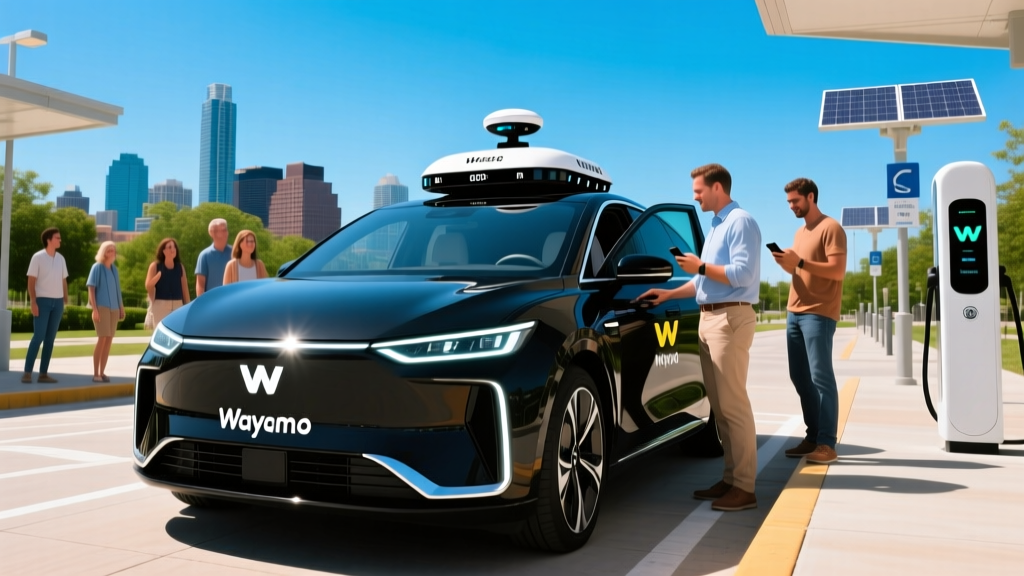
The booking flow is nearly identical to a standard Uber ride. Open the app, enter your destination, and if you are within a Waymo service zone, you will see a "Waymo" option alongside UberX, Comfort, and other ride types. Tap it, confirm pickup, and a driverless vehicle — currently a Jaguar I-PACE equipped with Waymo's 5th-generation hardware, or the newer Zeekr RT in select markets — will be dispatched.
Inside the vehicle, a screen greets you by name, displays your route, and lets you control climate and music. There is no driver to rate in the traditional sense, though you can rate the ride experience. Doors unlock automatically at your destination.
| Ride Type | Avg. Cost (5-mile trip) | Surge Pricing? | Tip Expected? |
|---|---|---|---|
| Uber Waymo (robotaxi) | $14–$22 | Rarely — fleet supply is managed | No (no driver) |
| UberX (human driver) | $12–$20 | Yes — can spike 1.5x–3x | Yes — 15–20% typical |
| Waymo One (direct app) | $13–$21 | Rarely | No |
| Lyft (human driver) | $11–$19 | Yes | Yes |
The pricing gap between a Waymo robotaxi and a standard UberX is narrow — sometimes the robotaxi is slightly more expensive, sometimes comparable. The value proposition is not primarily cost savings; it is consistency. Robotaxis do not surge during rain or rush hour the way human-driven rideshares do, and there is no driver interaction variable. For riders who value predictability and privacy, the premium (when there is one) is modest.
How Safe Are Robotaxis? The Real Data
Safety is the single most scrutinized dimension of robotaxi operations, and for good reason. The 2018 Uber ATG fatality in Tempe — where an Uber test vehicle struck and killed a pedestrian — remains a defining event in autonomous vehicle history. That crash, attributed to software failures in object classification and the safety driver's inattention, directly contributed to Uber's decision to abandon in-house development.
Today's commercial robotaxi operators publish safety data, though methodologies vary. Here is what is publicly available:
Waymo Safety Data (as reported to NHTSA and in public disclosures)
- Miles driven fully autonomous: Over 30 million driverless miles as of late 2025, with continued accumulation in 2026.
- Fatalities in driverless commercial service: Zero as of early 2026.
- NHTSA Standing General Order incidents: Waymo files reports for all crashes involving its ADS. The majority are low-speed contacts, often with the robotaxi being rear-ended by human-driven vehicles at stoplights or in congestion.
- Disengagement rate: Waymo no longer reports disengagements in the traditional sense for its commercial service, as Level 4 vehicles operate without a safety driver. Instead, the company tracks "exception events" — situations where the vehicle pulls over and requests remote assistance. Public data suggests these occur roughly once every 10,000–15,000 miles in complex urban environments.
For context, the National Highway Traffic Safety Administration (NHTSA) reports that human drivers in the U.S. experience approximately 1.35 fatalities per 100 million vehicle miles traveled. Robotaxi services have not yet accumulated enough miles to make a statistically rigorous apples-to-apples comparison at the fatality level, but the absence of fatalities across tens of millions of driverless miles is a meaningful signal — not proof of perfection, but evidence that the technology is not catastrophically unsafe in its current ODD.
It is worth noting that Cruise (GM's robotaxi subsidiary) was forced to suspend operations in late 2023 after a serious incident in San Francisco where a pedestrian was dragged. Cruise has since been slowly returning to service under modified permits. This underscores that the robotaxi industry is still maturing, and regulatory oversight is real and consequential.
The Technology Stack: Lidar, Cameras, and Geofencing
Uber's robotaxi partners do not share a single technology philosophy. The two dominant approaches in the industry are:
Sensor-Fusion Approach (Waymo, Motional, Zoox)
These operators rely on a combination of lidar (light detection and ranging — laser-based 3D mapping), cameras, and radar. Waymo's 5th-generation hardware suite includes custom-built lidar units that generate high-resolution 3D point clouds, enabling the vehicle to detect objects at range even in darkness or glare. The redundancy across sensor types is a deliberate safety choice: if one modality fails or is confused, others can compensate.
Camera-Heavy / Vision-Only Approach (Tesla)
Tesla's FSD system uses cameras exclusively, relying on neural networks to interpret visual data. This approach is lower-cost but more dependent on software sophistication. Tesla's FSD remains a Level 2 driver-assist system and is not integrated into Uber's robotaxi network. No Uber rider will be picked up by a driverless Tesla through the Uber app as of 2026.
A critical, often-overlooked element of the technology stack is HD mapping and geofencing. Level 4 robotaxis do not drive just anywhere. They operate within meticulously mapped zones where every lane, crosswalk, signal, and construction zone is cataloged. When you request a Waymo through Uber, the app checks whether your trip falls entirely within this mapped territory. If it doesn't, the option simply won't appear. This is why robotaxi service can exist in Phoenix but not in, say, Albuquerque — the mapping, testing, and regulatory approval are city-specific undertakings that take months or years.
The Regulatory Landscape: Who Approves Robotaxi Operations?
Robotaxi deployment in the United States is governed by a patchwork of state and local regulations, not a single federal framework. Key regulatory bodies include:
- California Public Utilities Commission (CPUC): Issues permits for commercial robotaxi service in California. Operators must demonstrate safety performance, insurance coverage, and accessibility plans. The CPUC can (and has) suspended permits — as it did with Cruise in 2023.
- Arizona Department of Transportation: Arizona has maintained a permissive regulatory environment since 2015, which is why Phoenix became the first city with a commercial driverless service. Operators must register and carry insurance but face fewer operational restrictions than in California.
- Texas (TxDOT and city authorities): Texas passed AV-enabling legislation, and Austin has become a key expansion market. Regulation is generally favorable but evolving.
- NHTSA (federal): Oversees vehicle safety standards and crash reporting via the Standing General Order. NHTSA does not "approve" robotaxi services but can investigate and compel recalls of autonomous driving software — as it has done with both Cruise and Waymo for specific software behaviors.
For Uber, this regulatory fragmentation means that each new city launch requires not just a partnership agreement but navigation of local permitting, insurance requirements, and community engagement. This is a primary reason robotaxi expansion is measured in years, not months.
Current Limitations: Where Robotaxis Still Fall Short
What Uber's Robotaxi Partners Cannot Do (2026)
- Severe weather: Heavy rain, snow, fog, and ice degrade lidar and camera performance. Waymo vehicles will pull over or refuse service in conditions that exceed their ODD. If it's snowing in Phoenix (rare, but it happens), expect your robotaxi option to disappear.
- Highway driving outside geofence: While Waymo vehicles can handle highway speeds in mapped corridors, they will not take you on an unmapped interstate. A trip from San Francisco to Sacramento is not possible.
- Construction zones: Rapidly changing road configurations can confuse HD maps. Operators update maps frequently, but active construction may cause rerouting or trip refusal.
- Edge cases with human interaction: Robotaxis cannot make eye contact with a crossing guard, interpret a police officer's hand signals at a crash scene, or negotiate a four-way stop with an aggressive human driver as fluidly as a human can. In these scenarios, the vehicle may stop and request remote guidance, adding minutes to your trip.
- Accessibility: Current Waymo vehicles (Jaguar I-PACE) require riders to enter and exit independently. Wheelchair-accessible robotaxis remain in development, and operators face pressure from disability advocates and regulators to address this gap.
- No-go areas: Military bases, private roads, certain airport terminals, and any area outside the mapped geofence are simply inaccessible. The app will not let you set a pickup or dropoff outside the zone.
The $10 Billion Question: Is Uber's Autonomous Strategy Working?
Uber's decision to divest its in-house AV program and instead aggregate third-party robotaxi fleets was controversial when it happened. Critics argued Uber was ceding the most valuable technology in mobility to competitors. The counterargument — and the one that has largely been vindicated — is that building Level 4 autonomy is so capital-intensive and technically demanding that only a handful of well-funded entities (Waymo/Alphabet, Tesla, Mobileye, and a few Chinese operators like Baidu Apollo and Pony.ai) could sustain the effort. Uber's core competency is demand aggregation, routing, and payments — not lidar engineering.
By integrating Waymo into the Uber app, the company ensures that when robotaxis scale, Uber remains the default interface for millions of riders. The rider does not need to download a separate Waymo app; the robotaxi is simply another ride type in the app they already use. This is strategically powerful: it makes Uber the "operating system" for urban mobility, regardless of whether a human or a machine is behind the wheel.
The financial commitment — over $10 billion across the ATG era, Aurora transaction, and ongoing integration — is sunk cost. The return on that investment depends entirely on how quickly and broadly Waymo (and future partners) can expand their geofenced service areas. Every new city that goes live increases the utilization of Uber's platform and the stickiness of its ecosystem.
Frequently Asked Questions
Is Uber's robotaxi truly self-driving, or is there a safety driver?
In Waymo's commercial service available through Uber, the vehicle is fully driverless — SAE Level 4. There is no human behind the wheel. A remote support team monitors the fleet and can provide guidance if the vehicle encounters an unusual situation, but no one is physically in the car to take over.
Can I request a robotaxi for a trip outside the city?
Generally no. Robotaxi service is geofenced to specific mapped zones. If your trip crosses outside the approved area — for example, from San Francisco to Napa — the robotaxi option will not appear in the Uber app. You would need to book a standard UberX with a human driver.
What happens if the robotaxi gets confused or breaks down mid-trip?
The vehicle is designed to pull over safely and contact a remote assistance team. You will not be stranded without communication — the in-vehicle screen allows you to speak with support. In most cases, the vehicle either resolves the situation and continues or a human-driven vehicle is dispatched to complete your trip.
Are robotaxis available 24/7?
In Phoenix and San Francisco, Waymo service through Uber operates nearly around the clock, though availability may be reduced during late-night hours or maintenance windows. Always check the app for real-time availability.
Does Uber's robotaxi service accept car seats or accommodate children?
Current Waymo vehicles do not provide car seats, and riders are responsible for ensuring children are properly restrained per state law. This is a practical limitation for families with young children and an area where the service is not yet fully mature.
How does Uber's robotaxi investment compare to its competitors?
Lyft has also partnered with Motional and Waymo for limited robotaxi pilots, but Uber's scale — over 150 million monthly active platform users globally — gives it a distribution advantage. Uber's total autonomous-related spend (over $10 billion including ATG) far exceeds Lyft's AV investments. Meanwhile, Tesla continues to pursue its own robotaxi ambitions independently, without integrating into third-party ride-hailing platforms as of 2026.
For riders, the bottom line is this: Uber's massive autonomous vehicle investment has produced a tangible, usable service today — but only if you live in or visit a handful of cities with favorable geography, weather, and regulation. The technology works. The geofence is real. And the expansion timeline is measured in years, not press-release quarters.