Toyota's Self-Driving Reality: Two Very Different Programs
Search for "Toyota self-driving car" and you'll find a tangle of press releases, concept demos, and confusing branding. Let's cut through it: as of 2026, Toyota does not operate a commercial robotaxi service you can hail today. What Toyota does have are two distinct autonomous-driving tracks — one shipping in production cars right now, and one still in limited testing — and understanding the difference between them is critical before you believe any headline about a driverless Toyota pulling up to your curb.
The first track is Toyota Teammate (formerly Toyota Guardian/Chauffeur), a Level 2 advanced driver-assistance system available on select 2025–2026 models. The second is Woven by Toyota (the rebranded Woven Planet), which is developing Level 4 autonomous technology primarily tested on Toyota Sienna-based prototypes in controlled environments. Neither makes a Toyota vehicle "self-driving" in the way a Waymo robotaxi operates in Phoenix or San Francisco.
| Level | Name | Driver Role | Toyota Example |
|---|---|---|---|
| 0–1 | No automation / Assist | Full control | Base TSS (cruise + lane keep) |
| 2 | Partial automation | Must supervise at all times | Teammate (Advanced Drive) on Lexus LS/LX, select Toyota |
| 3 | Conditional automation | Can disengage in limited ODD | Not commercially offered by Toyota |
| 4 | High automation (geofenced) | No driver needed in zone | Woven by Toyota — testing only, no public service |
| 5 | Full automation (anywhere) | No driver needed ever | Does not exist commercially anywhere |
Source: SAE International J3016
Toyota Teammate: The Level 2 System You Can Actually Buy
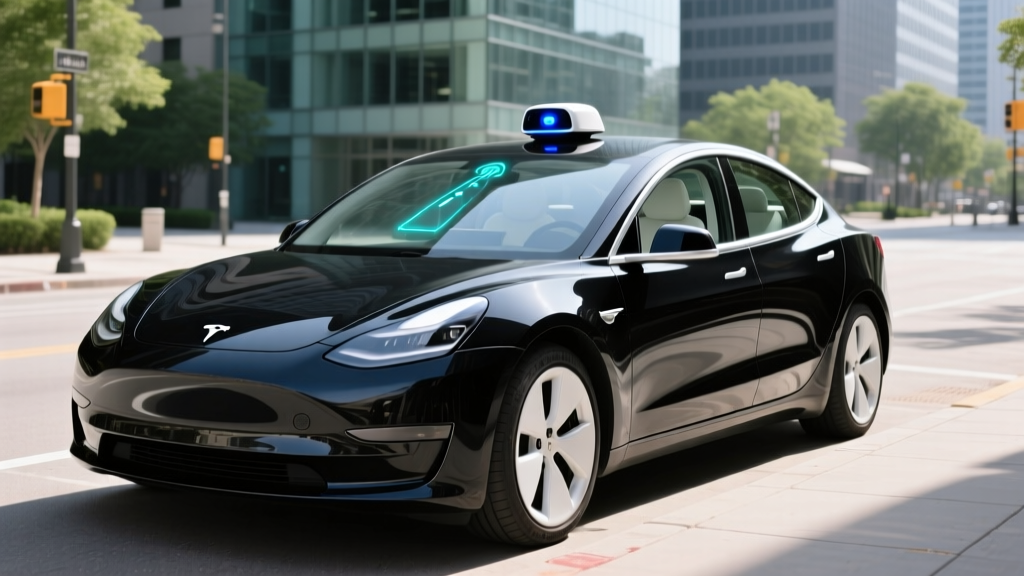
Toyota Teammate — marketed as Teammate Advanced Drive on Lexus and as an enhanced Toyota Safety Sense (TSS) suite on Toyota models — is the autonomous-adjacent technology currently in customer hands. It is firmly SAE Level 2: the system can manage steering, acceleration, and braking on divided highways, but the driver must remain attentive, keep hands available, and take over at any moment.
On the 2025–2026 Lexus LS and LX, Teammate Advanced Drive adds a driver-monitoring camera, lane-change assistance, and hands-off capability at low speeds in heavy traffic (under ~25 mph on mapped divided highways). On mainstream Toyota models like the 2026 Camry and RAV4, the latest TSS 3.0 provides adaptive cruise control with stop-and-go, lane-tracing assist, and proactive driving assist — but this is conventional Level 2, requiring hands on the wheel.
What it costs: Teammate Advanced Drive is included on the 2026 Lexus LS 500h (starting at ~$84,000 MSRP) and available as part of the Advanced Technology Package on the LX 600 (~$92,000+). On mainstream Toyotas, TSS 3.0 is standard equipment at no extra cost.
Toyota Teammate is a Level 2 driver-assist system. You are the driver. You are legally responsible for the vehicle at all times. Do not sleep, read, or look at your phone. If you are not prepared to take over within seconds, this system is not for you. Toyota has explicitly stated it will not market Level 2 as "self-driving" following industry-wide scrutiny of misleading ADAS branding.
Woven by Toyota: The Level 4 Robotaxi Program (Testing Only)
The more futuristic "Toyota self-driving car" stories you've seen likely refer to Woven by Toyota, the autonomous-driving subsidiary Toyota established (originally as Woven Planet Holdings in 2021, rebranded in 2023). Woven is developing Level 4 autonomy — meaning the vehicle handles all driving tasks without a human driver, but only within a predefined operational design domain (geofenced area, specific conditions).
Technology Stack
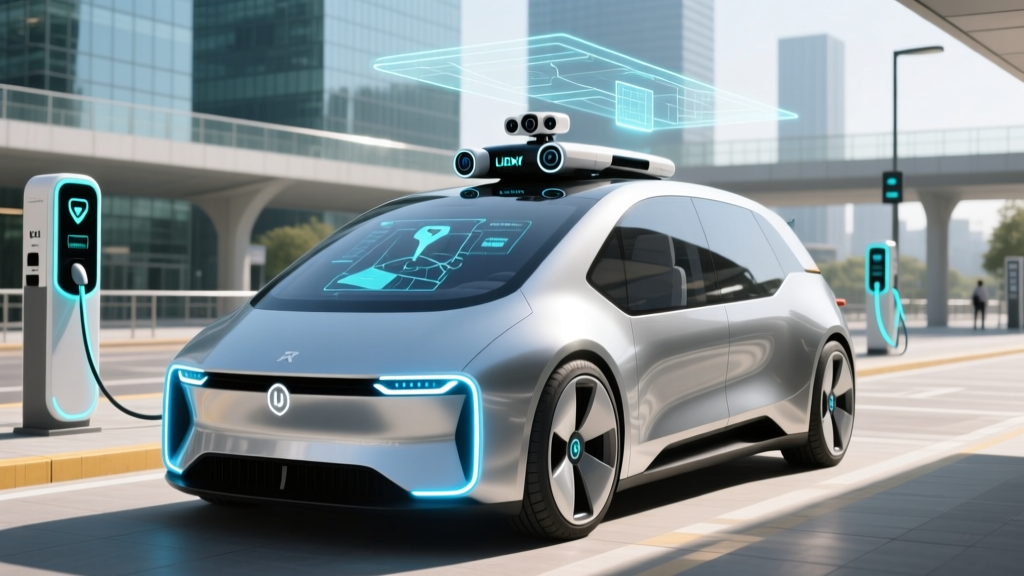
Sensors: Woven's test vehicles (modified Toyota Sienna minivans) use a multi-sensor fusion approach combining:
- Multiple high-resolution cameras (360° coverage)
- Automotive-grade lidar units (for precise 3D depth mapping)
- Millimeter-wave radar (for all-weather object detection)
- HD maps with centimeter-level localization
- Redundant compute platforms for fail-safe operation
This sensor-heavy approach differs from Tesla's camera-only FSD architecture and aligns more closely with Waymo's lidar-centric stack. The trade-off: higher per-vehicle hardware cost, but better performance in challenging lighting and weather.
Where Is Woven Testing?
As of early 2026, Woven by Toyota's testing footprint remains limited:
| Location | Status | Type | Public Access |
|---|---|---|---|
| Woven City (Susono, Japan) | Active testing | Private proving ground / living lab | No — employees & invited residents only |
| Tokyo (Odaiba / waterfront) | Limited road testing | Mapped urban corridors | No — safety driver present, no public rides |
| U.S. (various) | R&D / simulation | Software development, closed-course | No |
| Commercial robotaxi service | Not launched | — | No public robotaxi service exists |
Woven City — Toyota's purpose-built "living laboratory" near Mt. Fuji — serves as the primary integration testing environment. It's a roughly 175-acre development with dedicated autonomous-vehicle lanes, sensor-equipped infrastructure, and a resident population of Toyota employees and partners. Real-world validation on public roads in Tokyo has occurred in limited, geofenced corridors with safety drivers behind the wheel.
How Toyota's Approach Compares to Active Robotaxi Services
To put Toyota's position in context, here's how it stacks up against the robotaxi services you can actually use today:
| Service | SAE Level | U.S. Cities (2026) | Public Access | Avg. Cost vs. Uber |
|---|---|---|---|---|
| Waymo | Level 4 | Phoenix, SF, LA, Austin | Yes — open to public via app | Comparable to UberX (±15%) |
| Zoox (Amazon) | Level 4 | Las Vegas, Foster City, SF (limited) | Yes — invite/early access | Often free / promotional |
| Cruise (GM) | Level 4 | Phased return (Phoenix, Dallas) | Limited — phased restart | Below UberX in some markets |
| Woven by Toyota | Level 4 (dev) | None in U.S. | No — testing only | N/A |
| Toyota Teammate | Level 2 | N/A (owner-driven) | Buy the car | Included on vehicle |
Toyota has taken a notably cautious path compared to Waymo's aggressive commercial rollout. Toyota executives have repeatedly emphasized a "mobility for all" philosophy that prioritizes safety validation over speed-to-market, partly informed by the company's massive scale — a software defect in millions of vehicles carries far greater liability than a defect in a few thousand robotaxis.
Safety Data: What We Know (and Don't Know)
- Toyota Teammate (Level 2): No publicly aggregated disengagement or incident data specific to Teammate. Toyota reports to NHTSA's Standing General Order for ADAS-equipped vehicles, but granular per-system data is not published.
- Woven by Toyota (Level 4 testing): Testing conducted with safety drivers present. No public robotaxi operations means no public collision or disengagement reports. California DMV disengagement reports require testing permits in California; Woven's U.S. testing footprint has been primarily simulation and closed-course.
- For comparison — Waymo (2024–2025 data): Over 10 million paid driverless trips completed. Waymo's published safety analysis claims a 85% reduction in injury-causing crash rates vs. human benchmarks in their operating areas. (Source: Waymo Safety Report)
The honest answer on Toyota robotaxi safety: there isn't enough public real-world data to evaluate, because there isn't enough public real-world operation. This isn't necessarily a negative — Toyota's caution may ultimately produce a more robust system — but it means buyers and prospective users should be skeptical of any "Toyota is about to launch a self-driving car" headline.
Current Limitations of Toyota's Autonomous Technology
- Requires driver attention and readiness to take over at all times
- Hands-off operation (on Lexus LS/LX) limited to low-speed, mapped divided highways in heavy traffic
- Does not handle construction zones, unmapped roads, or complex urban intersections autonomously
- Performance degrades in heavy rain, snow, or when lane markings are obscured
- No automatic lane changes without driver confirmation on most models
Woven (Level 4 Testing) Limitations:
- Not available to the public — no ride-hailing, no purchase option
- Geofenced to pre-mapped corridors; cannot operate outside defined zones
- Heavy rain, snow, and fog still challenge lidar-camera fusion systems
- Edge cases (emergency vehicles, unusual road configurations, jaywalkers) require extensive validation
- HD map dependency means road changes or new construction can disable the system until maps update
- No announced timeline for U.S. commercial robotaxi service as of early 2026
Regulatory Landscape: Who Approves Robotaxis?
In the United States, autonomous vehicle deployment is governed by a patchwork of state and federal regulations:
- Federal (NHTSA): Sets vehicle safety standards (FMVSS) but has not issued comprehensive Level 4 robotaxi regulations. NHTSA's Standing General Order requires crash reporting for vehicles with Level 2+ and Level 3–5 systems.
- State level: California (DMV + CPUC), Arizona, Texas, and Nevada have been most permissive for commercial robotaxi operations. Each state sets its own permitting, insurance, and reporting requirements.
- Japan (for Woven's home market): Japan amended its Road Traffic Act to allow Level 4 operation under specific conditions (limited areas, remote monitoring). Woven's testing in Tokyo operates under these provisions.
For Toyota to launch a commercial robotaxi in the U.S., it would need state-by-state permits, proof of safety validation, insurance coverage, and likely CPUC approval in states like California. None of this has been announced.
The Bottom Line: Should You Wait for a Toyota Robotaxi?
- You want advanced highway driving assist in a vehicle you own
- You're buying a 2025–2026 Lexus LS, LX, or a Toyota with TSS 3.0
- You understand you are still the driver and accept that responsibility
Look elsewhere for robotaxi rides if:
- You want a driverless ride today — use Waymo in Phoenix, San Francisco, Los Angeles, or Austin
- You're in a city without any robotaxi service — conventional rideshare (Uber/Lyft) remains your option
- You're hoping to buy a fully autonomous Toyota — no such vehicle is for sale, and no timeline has been announced
Toyota's autonomous-driving investment is substantial — Woven by Toyota has received billions in funding and employs thousands of engineers — but the company's deliberate, safety-first approach means a commercially available Toyota robotaxi is likely still years away, not months. For now, the "Toyota self-driving car" is either a Level 2 assist system you drive yourself, or a Level 4 prototype you can't ride in. Understanding that distinction saves you from both unrealistic expectations and missed opportunities with the Teammate system that's genuinely useful today.
Frequently Asked Questions
Does Toyota have a self-driving car I can buy in 2026?
No. Toyota sells vehicles with Teammate Advanced Drive (Level 2 driver-assist) on select Lexus models and Toyota Safety Sense 3.0 on mainstream Toyotas. These systems assist with steering and speed but require the driver to remain fully engaged. No Toyota vehicle is commercially available with Level 4 self-driving capability.
Where can I ride in a Woven by Toyota robotaxi?
You can't — at least not as a member of the public. Woven's testing is conducted in Woven City (Susono, Japan), limited Tokyo corridors, and closed-course/simulation environments in the U.S. All test vehicles have safety drivers, and no commercial ride service has been announced.
How does Toyota's autonomous tech compare to Tesla FSD?
Tesla's Full Self-Driving (Supervised) is also Level 2 — despite its name, it requires driver supervision and is not autonomous. Toyota Teammate uses a more conservative operational envelope with stricter geofencing (on Lexus models), while Tesla FSD attempts broader geographic coverage. Neither is "self-driving." Toyota's Woven program, targeting true Level 4, uses lidar and HD maps — hardware Tesla explicitly avoids in favor of a camera-only approach.
When will Toyota launch a commercial robotaxi?
Toyota has not announced a timeline for a commercial robotaxi service. Given the company's cautious validation approach and the regulatory complexity of deploying Level 4 vehicles at scale, industry analysts generally do not expect a Toyota robotaxi launch before the late 2020s at the earliest. Any specific date you see in headlines should be treated as speculative.
Is Toyota Teammate safe?
Teammate is a Level 2 system operating within a defined envelope (divided highways, specific speed ranges). Toyota reports crash data to NHTSA under the Standing General Order. As with all Level 2 systems, safety depends heavily on driver attentiveness — the system is an assist, not a replacement for an engaged driver.