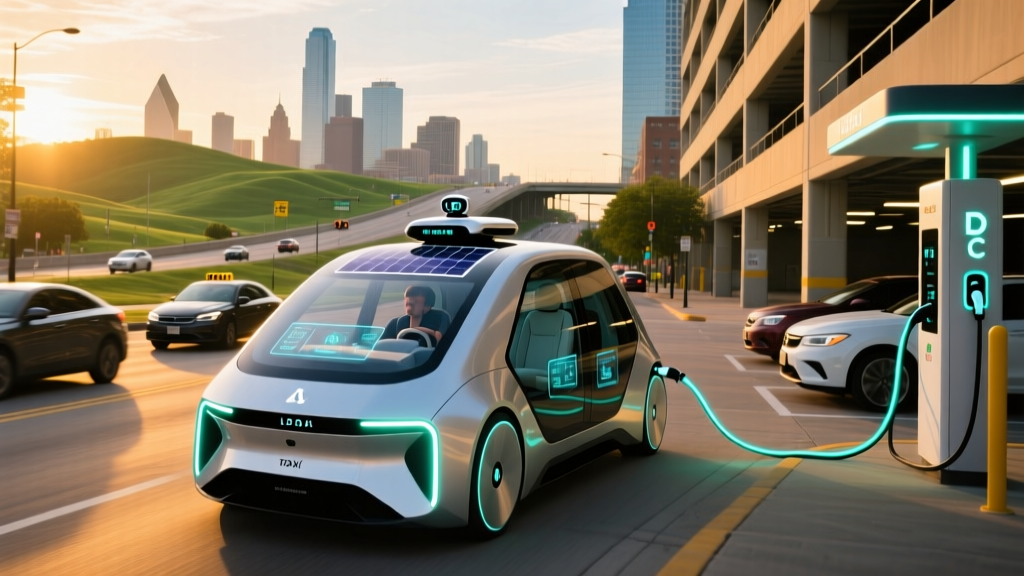
If you live in or are visiting Texas, you may have seen a Waymo vehicle navigating downtown Austin or a Cruise-branded car sitting idle after a corporate reset. The Lone Star State has become a proving ground for Level 4 autonomous ride-hailing, but access is defined by a patchwork of state statutes, municipal agreements, and geofenced service boundaries that most riders never see. Understanding the Texas self-driving car permit law framework is essential before you summon your first driverless ride — or assume the technology is farther along than it actually is.
What the Texas Self-Driving Car Permit Law Actually Says
Texas codified autonomous vehicle (AV) operations under Transportation Code Chapter 547, which establishes that a fully self-driving vehicle may operate on public roads without a human behind the wheel, provided the vehicle is equipped with an autonomous driving system (ADS) that can perform all driving tasks and comply with all traffic laws. Unlike California, which requires a detailed permit application through the DMV and publishes disengagement reports, Texas takes a more permissive stance: there is no state-level permit application process or pre-approval requirement for testing or commercial deployment.
Key provisions of the Texas regulatory framework include:
- No human operator required — a vehicle with a functional ADS does not need a licensed driver present (Level 4 and 5 only).
- Insurance requirement — AV operators must maintain liability coverage meeting Texas minimums ($30,000/$60,000/$25,000).
- Local authority — municipalities retain the right to impose operational restrictions, geofencing agreements, and data-sharing requirements through local ordinances or memoranda of understanding (MOUs).
- No state-level disengagement reporting mandate — unlike California's DMV disengagement reports, Texas does not require public disclosure of intervention data.
This hands-off state approach means that the practical reality of robotaxi access in Texas is determined less by Austin lawmakers and more by which companies choose to deploy there and what agreements they negotiate with individual cities. The Texas Department of Transportation (TxDOT) provides guidance but does not issue operational permits.
SAE Automation Levels: Why This Distinction Matters
SAE Level 4 (High Automation) — Robotaxi services like Waymo One. The vehicle performs all driving tasks within a defined operational design domain (ODD) with no human intervention required. If the system encounters a scenario it cannot handle, it executes a minimal-risk maneuver (pulling over safely) rather than handing control to a passenger.
SAE Level 2 (Partial Automation) — Consumer features like Tesla Autopilot, FSD (Supervised), GM Super Cruise, Ford BlueCruise. The system assists with steering and speed but the driver must remain fully engaged, eyes on the road, hands available. This is not self-driving. The driver is legally responsible at all times.
| Level | Name | Driver Required? | Example |
|---|---|---|---|
| 0 | No Automation | Yes — full control | Standard vehicle |
| 1 | Driver Assistance | Yes | Adaptive cruise control |
| 2 | Partial Automation | Yes — eyes on, hands available | Autopilot, BlueCruise, Super Cruise |
| 3 | Conditional Automation | Sometimes — must take over on request | Mercedes DRIVE PILOT (limited markets) |
| 4 | High Automation | No (within geofenced ODD) | Waymo One, Zoox |
| 5 | Full Automation | No — anywhere, any condition | Does not exist commercially |
Every robotaxi service operating in Texas today is Level 4 — meaning driverless within a specific, mapped service area. Level 5, the "go anywhere in any condition" fantasy, does not exist in any production vehicle anywhere in the world as of 2026.
Where Can I Use a Robotaxi in Texas Right Now?
Service availability is the most common question, and the answer is narrower than most headlines suggest. Here is the current operational reality:
| City | Operator | Service Name | Status | Approximate Coverage Area |
|---|---|---|---|---|
| Austin | Waymo (Alphabet) | Waymo One | Commercial — driverless rides available | Downtown, South Austin, East Austin, airport corridor (~80+ sq mi) |
| Austin | VW/Mobileye | MOIA (pilot) | Limited pilot — invited users | Select downtown routes |
| Dallas–Fort Worth | Waymo | Waymo One | Announced expansion — limited early rider program | Select zones (not fully commercial as of early 2026) |
| Houston | None (commercial) | — | No active Level 4 robotaxi service | — |
| San Antonio | None | — | No active Level 4 robotaxi service | — |
Austin is the only Texas city with a fully commercial, anyone-can-request driverless robotaxi service as of early 2026. Waymo One launched there following a phased rollout that began with a trusted tester program. The service area has expanded incrementally but remains geofenced — you cannot request a ride outside the mapped operational design domain. Dallas–Fort Worth is in early-rider stages, meaning availability is limited to approved participants, not the general public.
How to Use Waymo One in Austin (and What It Costs)
Using a robotaxi in Texas is functionally identical to calling an Uber or Lyft, with one major difference: no human is behind the wheel.
- Download the Waymo One app (iOS/Android) and create an account.
- Enter your pickup and drop-off — the app will confirm whether both locations fall within the service area.
- Wait for the vehicle — typically a Jaguar I-PACE EV equipped with Waymo's 5th-generation sensor suite. Wait times in Austin average 3–8 minutes during peak hours.
- Unlock via the app — tap "Start Ride" when the vehicle arrives and the app confirms it's your car.
- Ride — the vehicle handles all driving. A screen shows the route and detected objects in real time. An in-car support button connects you to a remote agent if needed.
| Metric | Waymo One | UberX | Lyft Standard |
|---|---|---|---|
| Base fare | ~$3.50 | ~$2.50 | ~$2.50 |
| Per-mile rate | ~$1.25 | ~$1.10 | ~$1.05 |
| Per-minute rate | ~$0.30 | ~$0.25 | ~$0.24 |
| Typical 5-mile ride (downtown) | $14–$18 | $12–$16 | $11–$15 |
| Surge pricing | No surge multiplier (as of 2026) | 1.2x–3.0x during peaks | 1.3x–2.5x during peaks |
| Tipping | Not applicable (no driver) | Expected ($2–$5) | Expected ($2–$5) |
The bottom line: Waymo One pricing is comparable to UberX or Lyft, often slightly higher per mile but without surge multipliers or tipping. For a 5-mile downtown Austin trip, expect to pay within a few dollars of a standard rideshare. The absence of surge pricing during high-demand periods (SXSW, ACL Festival, rush hour) can make Waymo the cheaper option at those times.
Robotaxi Safety Record: What the Data Actually Shows
Waymo's published safety data (through 2025):
- Over 40 million miles driven fully autonomously (no human behind the wheel) across all US markets combined.
- Waymo's NHTSA-reported crash involvement rate shows the vehicles were the struck party in the majority of incidents — typically rear-ended at low speed while stopped or maneuvering cautiously.
- Compared to human benchmark data, Waymo reported a ~85% reduction in injury-causing crash rates per million miles in its operational domains, based on a study published in partnership with insurance and safety researchers.
- Serious or fatal crashes involving a driverless Waymo vehicle in commercial service: zero as of early 2026.
Context matters enormously here. Robotaxis operate in geofenced, predominantly urban environments at moderate speeds (rarely above 45 mph). They are not navigating rural highways in ice storms. The comparison to "human drivers" is most valid when looking at urban, low-speed driving — precisely the scenario where distraction, impairment, and fatigue cause the most crashes.
Texas does not mandate public disengagement reporting the way California's DMV does. This means we have less granular data on how often remote assistance is invoked per thousand miles in Texas specifically. Waymo voluntarily publishes aggregate national data, but city-level breakdowns are not required.
The Technology Stack: How These Vehicles Actually See the Road
Understanding the sensor suite helps explain both the capabilities and the limitations of current robotaxi technology.
Waymo 5th-Generation / 6th-Generation System
- LiDAR: Multiple roof- and bumper-mounted units providing 360° 3D point clouds out to ~500 meters. LiDAR is the core perception layer — it works in darkness and is largely unaffected by glare.
- Cameras: High-resolution vision array (8+ cameras) for traffic-light state detection, signage reading, lane-marking identification, and object classification.
- Radar: Short- and long-range units for velocity detection of moving objects, redundancy in heavy rain where LiDAR scatter increases.
- HD Maps: Centimeter-precision pre-mapped routes. The vehicle does not "explore" — it operates within a known environment and uses live sensors to detect changes and dynamic objects.
- Compute: Custom-designed AV compute platform (multiple redundant processors) running perception, prediction, and planning models simultaneously.
This multi-sensor fusion approach contrasts with Tesla's camera-only FSD (Supervised) system. The robotaxi consensus in 2026 is that LiDAR remains essential for Level 4 redundancy — camera-only systems have not yet demonstrated the reliability needed for driverless commercial service. The cost of these sensor suites (estimated $100,000–$150,000+ per vehicle in early generations, declining with the 6th-gen hardware) is why robotaxi economics require high utilization rates to be viable.
Current Limitations: Where Robotaxis Cannot Go
Level 4 autonomy is not Level 5. The limitations are significant and shape where and when these services can realistically expand:
- Geofencing: The vehicle will not operate outside its pre-mapped service area. Request a ride from downtown Austin to Fredericksburg (80 miles) and the app will decline.
- Weather: Heavy rain, fog, and any ice/snow conditions cause the system to either reduce speed significantly or suspend service. Austin's occasional ice storms shut down operations entirely. LiDAR scatter in heavy rain degrades perception range.
- Construction zones: Major, unmapped road changes can confuse the system. Temporary lane shifts, new barriers, or long-term construction may cause the vehicle to pull over and wait for remote assistance.
- Unprotected left turns in heavy traffic: While the system handles these, it can be overly conservative — sometimes waiting through multiple signal cycles before committing, which frustrates human drivers behind it.
- No highway driving (in most markets): Waymo's Austin service area includes some limited-access roads but is primarily surface-street focused. Interstate highway operation at 70+ mph is a different engineering challenge that is still in testing.
- Pickup/drop-off precision: The vehicle may stop a block away from your requested pin if the exact location is in a restricted zone (fire lane, bus stop, narrow alley).
- Accessibility: Current Waymo vehicles (Jaguar I-PACE) are not wheelchair-accessible. This is a known gap the industry is working to address with next-generation platforms like the Zeekr RT and the purpose-built Zoox vehicle.
The Regulatory Landscape: Who Approves What
The Texas model is one of the most permissive in the country, but it is not unregulated. Here is how authority breaks down:
- State level (Texas Legislature / TxDOT): Sets the baseline — AVs are legal without a human operator, must follow traffic laws, and must carry insurance. No state permit or pre-approval is required for testing or deployment.
- Municipal level (City of Austin, City of Dallas, etc.): Cities negotiate directly with AV companies on operational details — designated pickup zones, data-sharing agreements, equity commitments, and first-responder interaction protocols. Austin's Transportation Department has been the most active in formalizing these agreements.
- Federal level (NHTSA): Sets vehicle safety standards (FMVSS). Currently, NHTSA does not "approve" AV systems but does require crash reporting for vehicles with ADS and has authority to issue recalls. The NHTSA ADS page tracks standing orders and enforcement actions.
- No federal AV operating license exists — unlike aviation (FAA) or trucking (FMCSA), there is no federal body that certifies a robotaxi system as "safe enough" for deployment. This regulatory gap is one of the most debated issues in autonomous vehicle policy.
The practical effect: a company like Waymo can deploy in Austin without waiting for a state permit, but it still needs to work with the city on operational details, secure commercial insurance, and ensure its vehicles meet all applicable FMVSS. This lighter-touch approach has attracted AV companies to Texas but also means less public transparency compared to California's reporting-heavy model.
What This Means for Texas EV Owners and Prospective Robotaxi Riders
If you are considering using a robotaxi in Texas, the decision framework is straightforward:
Use a robotaxi (Waymo One) if:
- You are in Austin and your trip origin and destination fall within the service area.
- You want a consistent, predictable price without surge multipliers.
- You prefer not to interact with a driver (privacy, late-night rides).
- You are comfortable with the technology's current limitations (conservative driving, possible weather cancellations).
Stick with Uber/Lyft if:
- You need to travel outside the geofenced zone (suburbs, other cities, airports outside the service boundary).
- Weather is severe — rideshare drivers operate in conditions that shut down robotaxis.
- You need wheelchair accessibility or car-seat installation.
- You are in Houston, San Antonio, or any Texas city without an active Level 4 service.
For Texas residents watching the autonomous vehicle space, the key takeaway from the state's regulatory approach is this: expansion will be driven by company decisions and city-level negotiations, not by a state permitting timeline. Dallas–Fort Worth is the next likely commercial market, with Houston a longer-term prospect. The technology is real, the safety data is encouraging for urban use cases, but the "robotaxi everywhere" future remains geographically and meteorologically constrained.
Frequently Asked Questions
Is a Tesla on FSD (Supervised) considered a self-driving car under Texas law?
No. Tesla's Full Self-Driving (Supervised) is an SAE Level 2 driver-assistance system. The driver must remain fully engaged — eyes on the road, hands available to take over at any moment. Texas law's provisions for driverless operation apply only to vehicles with an ADS capable of performing all driving tasks without human intervention (Level 4 and above). You are legally the driver of a Tesla on FSD and bear full responsibility for the vehicle's operation.
Do I need a special license or account to ride in a Waymo in Austin?
No special license is needed — you are a passenger, not a driver. You do need the Waymo One app and a valid payment method. The service is open to the public in Austin; there is no longer a waitlist as there was during the early trusted-tester phase.
Has a Waymo vehicle ever been in a serious crash in Texas?
As of early 2026, there have been no reported fatal or serious-injury crashes involving a driverless Waymo vehicle in commercial service in Texas or any other state. Minor incidents (typically low-speed contacts where the Waymo vehicle was stationary or yielding) have been reported to NHTSA as required. The NHTSA crash reporting portal tracks these publicly.
Why isn't Houston or San Antonio served by robotaxis yet?
Robotaxi expansion requires extensive HD mapping of the service area, city-government agreements, local fleet operations (charging, maintenance, remote-assistance staffing), and validation testing in that specific environment. Houston's sprawling geography, extensive highway network, and frequent flooding create a more complex operational design domain. Companies are prioritizing markets where they can achieve high ride density and utilization — Austin's compact urban core makes it a more efficient first market.
How does Texas compare to California for robotaxi regulation?
California requires AV companies to obtain testing and deployment permits from the DMV, submit annual disengagement reports, and receive approval from the California Public Utilities Commission (CPUC) for commercial passenger service. Texas requires none of these state-level approvals. This makes Texas faster to deploy in but provides less public data on system performance. Both states allow fully driverless commercial operation, but California's transparency requirements give researchers and the public more insight into how often the systems need help.
Can a robotaxi drive me from Austin to Dallas?
No. Current Level 4 services operate within geofenced urban zones. An Austin-to-Dallas trip (~200 miles, mostly on I-35 at 70+ mph) falls entirely outside the operational design domain of any current robotaxi service. Interstate, high-speed, long-distance autonomous driving remains in the testing phase and is not available to consumers in any market as of 2026.