The Austin Robotaxi Landscape in 2026: Two Very Different Approaches
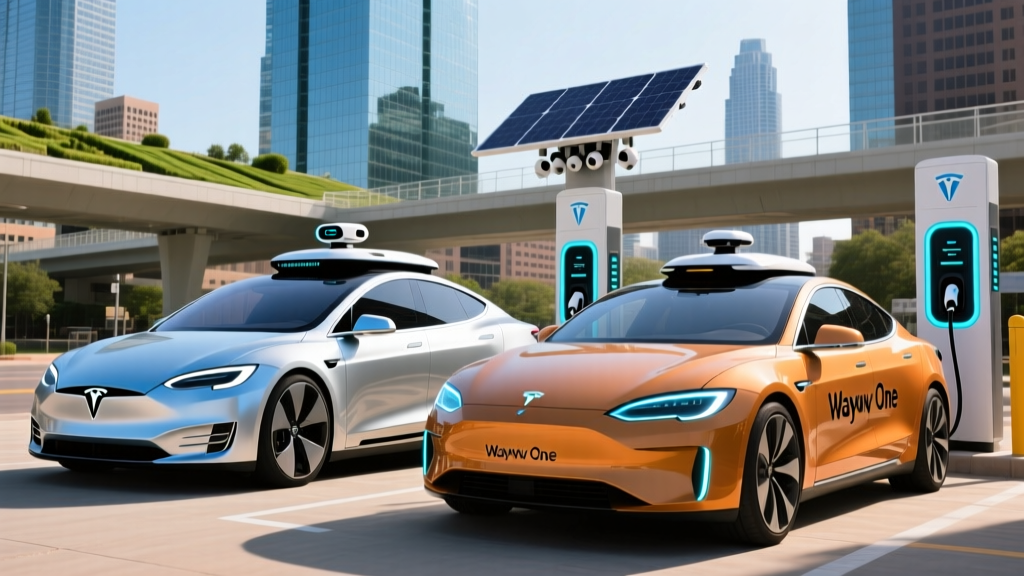
Austin, Texas has become one of the most closely watched battlegrounds for autonomous ride-hailing. Waymo, the Alphabet subsidiary, has been steadily expanding its driverless service across the city, while Tesla has positioned Austin as the proving ground for its own robotaxi ambitions. But the Tesla Waymo Austin robotaxi expansion story is not a single narrative — it is two fundamentally different technological and regulatory paths converging on the same metro area.
For Austin residents and EV-curious riders trying to figure out what is actually available to them right now, the distinction matters enormously. One service you can hail today. The other remains in a more limited, evolving state. Here is what the data actually shows.
- Level 2 (Driver Assist): The system steers and accelerates, but the driver must remain fully engaged and supervise at all times. Examples: Tesla Autopilot, Tesla FSD (Supervised), GM Super Cruise, Ford BlueCruise.
- Level 4 (Driverless in Defined ODD): The vehicle handles all driving tasks within a specific operational design domain (geofenced area, certain weather conditions) with no human driver required. Examples: Waymo One, Zoox.
- Level 5 (Full Autonomy Everywhere): No production system currently operates at this level. No geofencing or condition limitations. This does not yet exist commercially.
Tesla's FSD (Supervised) sold to consumers is a Level 2 system. Waymo's robotaxi fleet operating in Austin is Level 4. Conflating the two is the single most common error in autonomous vehicle coverage.
Where Can You Actually Use Robotaxi Services in Austin Right Now?
Waymo One, the company's commercial ride-hailing service, has been operating in Austin since its initial launch and has progressively widened its service area throughout 2025 and into 2026. The service covers a substantial portion of the city, including downtown, South Austin, the Domain area, Austin-Bergstrom International Airport, and expanding suburban corridors.
Tesla's robotaxi situation in Austin is more nuanced. Tesla has been conducting supervised autonomous ride-hailing pilots with its Model Y fleet in the city, operating under a more limited framework. These are not yet open to the general public in the same way Waymo One is — they have been available to select users and employees as Tesla works through regulatory and operational requirements.
| Attribute | Waymo One | Tesla Robotaxi |
|---|---|---|
| Public Availability | Open to general public via Waymo app | Limited pilot; not broadly available to public |
| SAE Level | Level 4 (driverless) | Level 2 (supervised) transitioning toward Level 4 |
| Service Area | ~80+ sq mi across central/south Austin, airport | Limited geofenced zones (pilot scope) |
| Hours of Operation | 24/7 in most zones | Limited hours during pilot phase |
| Vehicle Platform | Jaguar I-PACE EV, Hyundai Ioniq 5 (incoming 6th-gen) | Model Y (current); Cybercab (announced) |
| Human Safety Operator | None (fully driverless) | Present during pilot operations |
For consumers, the practical answer is straightforward: if you want to hail a driverless ride in Austin today, Waymo One is the operational service. Tesla's robotaxi offering, while generating significant attention, remains in a pre-commercial pilot phase as of early 2026.
Tech Stack Showdown: Lidar vs. Camera-Only Autonomy
The most consequential difference between Waymo and Tesla is not branding — it is sensor architecture. This engineering choice dictates what each system can perceive, where it can operate, and how it handles edge cases.
- Multiple lidar units providing 360° high-resolution 3D point clouds (range: ~500m)
- Camera array for color/semantic understanding (traffic lights, signs, signals)
- Radar units for velocity detection in adverse conditions
- External audio sensors to detect emergency vehicle sirens
- HD pre-mapped routes with centimeter-level localization
Tesla Sensor Suite (FSD Hardware 4 / AI5)
- Camera-only approach: 8+ cameras providing surround vision
- No lidar, no radar (Tesla removed radar from vehicles produced after mid-2021)
- Neural network-based perception — vision-only "occupancy network"
- Relies on real-time mapping rather than HD pre-maps
- End-to-end neural net architecture for planning and control
Waymo's lidar-first approach provides redundant depth perception that works in low light, rain, and scenarios where cameras struggle (e.g., a pedestrian partially occluded behind a parked truck at dusk). The trade-off is cost: each Waymo vehicle carries tens of thousands of dollars in sensor hardware, though the 6th-generation suite has reduced this significantly.
Tesla's camera-only philosophy argues that human-level vision is sufficient for driving, and that scaling neural network training on billions of real-world miles of fleet data can achieve equivalent or better perception without lidar. The cost advantage is enormous — Tesla vehicles are already mass-produced at consumer prices. The trade-off is that camera-only systems face inherent physics limitations in heavy rain, fog, direct sun glare, and low-contrast scenarios.
For robotaxi operations, this matters because Austin weather includes intense summer sun glare, occasional heavy rain, and fog events near the Colorado River corridor. Waymo's sensor redundancy gives it a measurable advantage in these conditions today.
Pricing: Robotaxi vs. Uber and Lyft in Austin
One of the most common questions from prospective riders is cost. Waymo One pricing in Austin is designed to be competitive with traditional rideshare, and in many cases it undercuts surge-priced Uber and Lyft rides.
| Route | Waymo One | UberX | Lyft Standard |
|---|---|---|---|
| Downtown → Airport (~8 mi) | $18–$26 | $22–$38 | $20–$35 |
| South Congress → The Domain (~14 mi) | $24–$34 | $28–$48 | $26–$44 |
| Zilker Park → Downtown (~3 mi) | $10–$15 | $12–$22 | $11–$20 |
Prices are estimates based on typical non-surge conditions. Uber and Lyft surge pricing during peak hours (Friday evenings, ACL Festival, F1 weekend) can push fares 1.5–3x higher, while Waymo pricing has been more stable. Waymo frequently offers promotional credits for new riders.
The cost advantage of Waymo becomes most apparent during high-demand events. Austin's festival calendar — SXSW, ACL, Formula 1 at COTA — creates extreme surge pricing on Uber and Lyft. Waymo's algorithmic pricing has remained comparatively flat during these windows, making it a practical alternative for event-goers within its service area.
Tesla's eventual robotaxi pricing remains unannounced for commercial service. Elon Musk has previously suggested that Tesla robotaxi rides could cost significantly less than rideshare, but no published rate card exists for a service that is not yet open to the public.
Safety Data: What the Numbers Actually Show
Safety is the most scrutinized — and most politicized — aspect of robotaxi operations. Both Waymo and Tesla publish safety-adjacent data, but the comparison is complicated by fundamentally different operating conditions.
- Total driverless miles: Over 10 million fully autonomous (no human in driver's seat) miles across Phoenix, San Francisco, Los Angeles, and Austin combined
- Injury-critical collision rate: Waymo reported an 85% reduction in injury-causing crashes compared to human benchmarks in its operating areas, based on NHTSA-comparable crash rate analysis
- Contactless at-fault incidents: Extremely low rate of at-fault collisions involving pedestrians or cyclists
- Regulatory incidents: A small number of vehicles were temporarily involved in recall-related software updates; the NHTSA Standing General Order requires reporting of all Level 2+ crashes
Tesla FSD Safety Context
- Supervised miles: Tesla reports billions of FSD (Supervised) miles, but these are driven with a human driver present and actively supervising — a fundamentally different safety proposition
- NHTSA data: Under the Standing General Order, Tesla has reported the highest raw number of ADAS-involved crashes among all manufacturers, reflecting both fleet size and reporting methodology
- Robotaxi pilot data: Tesla has not publicly released comprehensive safety metrics specific to its Austin robotaxi pilot operations
The critical distinction: Waymo's safety data reflects driverless operations (Level 4, no human fallback). Tesla's FSD safety data reflects supervised operations (Level 2, human driver present). Comparing the two directly is methodologically unsound — they answer different questions. Waymo's data tells you how a driverless system performs. Tesla's data tells you how a driver-assist system performs with human oversight.
For Austin riders, the practical takeaway is that Waymo's driverless fleet has accumulated meaningful real-world miles in the city with a safety record that, by available metrics, compares favorably to human drivers in the same corridors. Tesla's pilot operations have human safety operators as a backstop, which is appropriate for a system still working toward full autonomy.
The Regulatory Framework: Who Approves Robotaxi Operations in Texas?
Texas has taken a comparatively permissive approach to autonomous vehicle regulation, which is part of why Austin has attracted both Waymo and Tesla.
At the state level, Texas law (Transportation Code Chapter 545) permits the operation of autonomous vehicles without a human driver, provided the vehicle meets specific equipment and insurance requirements. There is no state-level permit or cap on the number of driverless vehicles, unlike California's DMV permit system. This regulatory openness is a significant factor in the Tesla Waymo Austin robotaxi expansion narrative.
At the municipal level, the City of Austin has engaged with both companies through its Transportation and Public Works Department, coordinating on issues like curb management, pickup/dropoff zones, and integration with the city's Vision Zero safety initiative. Austin does not issue its own operating permits for robotaxis but coordinates on operational parameters.
At the federal level, NHTSA maintains authority over vehicle safety standards and requires all manufacturers of vehicles with Level 2 and above automation to report crashes under the Standing General Order. NHTSA has opened investigations into both Tesla's Autopilot/FSD and Waymo's driverless systems at various points, which is standard regulatory oversight for emerging technology.
The key regulatory gap: there is currently no unified federal framework for certifying Level 4 robotaxi operations. States set their own rules, creating a patchwork. What works in Austin may not be permissible in New York or Boston without separate approvals.
Current Limitations: Where Robotaxis Cannot Go
Despite impressive capabilities, both systems have significant operational constraints that riders and prospective users should understand.
- Geofence boundaries: Service is limited to a mapped operational area. Rides that begin or end outside this zone cannot be requested. The geofence does not yet cover all Austin suburbs (e.g., Round Rock, Pflugerville, Cedar Park are partially or fully excluded)
- Weather constraints: During severe thunderstorms or flash-flood conditions, Waymo may suspend service in affected zones. The system handles light rain but pulls back in heavy precipitation that degrades sensor performance
- Construction zones: Major road construction with lane shifts or temporary barriers can cause route cancellations or extended detours. Austin's I-35 cap-and-stitch project creates dynamic challenges
- Multi-stop and special requests: No multi-stop rides, no scheduled rides far in advance, limited ability to request specific vehicle types
- Accessibility: Waymo's current fleet (Jaguar I-PACE) is not wheelchair-accessible; WAV (wheelchair-accessible vehicle) options are limited
Tesla Robotaxi Pilot — Current Limitations
- Not publicly available: The service is not bookable by the general public through any consumer app
- Safety operator present: Current pilot operations include a human safety operator, meaning the system is not yet operating in a true driverless mode
- Limited operational domain: Pilot routes are restricted to specific corridors and conditions
- Camera-only weather sensitivity: Without lidar or radar, heavy rain, fog, and sun glare present greater perception challenges for the Tesla vision system
- Cybercab timeline: Tesla's purpose-built "Cybercab" robotaxi (no steering wheel, no pedals) has been announced but is not yet in production or operational service
For Austin riders, the most practical limitation is geofencing. Even with Waymo's expanded coverage, many common trips — a commute from Round Rock to downtown, a ride to Hill Country wineries, a trip to COTA for a race — fall outside or at the edge of the service area. Robotaxis in 2026 are a supplement to, not a replacement for, traditional rideshare or personal vehicle ownership in the Austin metro.
What This Means for Austin Riders and EV Buyers
The Tesla Waymo Austin robotaxi expansion represents two competing visions of autonomous mobility. Waymo has chosen the sensor-rich, geofenced, Level 4 path — expensive per vehicle but provably driverless today. Tesla has chosen the camera-only, neural-network-scaling path — cheap per vehicle but still working toward unsupervised Level 4 operation.
For Austin residents, the practical guidance is:
- Need a ride today? Download the Waymo app and check if your origin and destination fall within the service area. Expect pricing competitive with Uber/Lyft and a genuinely driverless experience.
- Considering a Tesla with FSD? Understand that FSD (Supervised) is a Level 2 driver-assist system. You remain the driver. It does not make your Tesla a robotaxi, and Tesla's commercial robotaxi service is not yet publicly available.
- Planning for the future? Both companies are expanding. Waymo's geofence will continue to grow across Austin. Tesla's pilot will evolve. But timelines for ubiquitous, everywhere robotaxis remain uncertain — treat any specific year promises with skepticism.
Frequently Asked Questions
Where can I use a robotaxi service in Austin right now?
Waymo One is available to the public across a large portion of central and south Austin, including downtown, the airport, South Congress, the Domain, and surrounding neighborhoods. Check the Waymo app for the exact current service boundary. Tesla's robotaxi pilot is not open to the general public.
How much does a Waymo ride cost compared to Uber or Lyft?
Waymo pricing in Austin is generally comparable to or slightly less than Uber/Lyft in non-surge conditions, typically $10–$34 depending on distance. The advantage widens during surge pricing events (festivals, weekends) when Uber and Lyft can charge 1.5–3x normal rates.
Are Waymo robotaxis safe? What does the data show?
Waymo has accumulated over 10 million driverless miles across its operating cities. Published safety analyses show a significant reduction in injury-causing crashes compared to human driver benchmarks in comparable areas. Like any system, it is not perfect — incidents have occurred — but available data indicates a strong safety record for Level 4 operations.
Is Tesla FSD the same as a robotaxi?
No. Tesla FSD (Supervised) is an SAE Level 2 driver-assist system. The driver must remain fully engaged, hands available, and eyes on the road at all times. A robotaxi (Level 4) operates without any human driver. Tesla's Austin robotaxi pilot is a separate effort from the FSD software sold to consumers.
What happens if a Waymo vehicle encounters a situation it cannot handle?
Waymo vehicles are designed to execute a "minimal risk condition" — they will safely pull over to the side of the road, activate hazard lights, and contact remote assistance if needed. Remote operators can provide guidance but do not directly steer the vehicle in real-time (the latency of remote control makes direct teleoperation unsafe at speed).
When will Tesla's robotaxi be available to the public in Austin?
Tesla has not announced a specific date for broad public availability of its robotaxi service in Austin. The company is conducting pilot operations with safety operators. The purpose-built Cybercab vehicle has been announced but is not yet in production. Treat any projected timeline as preliminary until Tesla opens a public booking system.
Can robotaxis operate in Austin's heavy rain?
Waymo can operate in light to moderate rain but may suspend service in severe thunderstorms or flash-flood conditions. Tesla's camera-only system faces greater challenges in heavy precipitation. Neither system is designed for flooded roads or severe weather events.
Sources: NHTSA Automated Vehicles Safety, Waymo Safety Report, Texas Transportation Code Chapter 545. Pricing estimates based on publicly available fare data and may vary. Regulatory and operational details are subject to change.