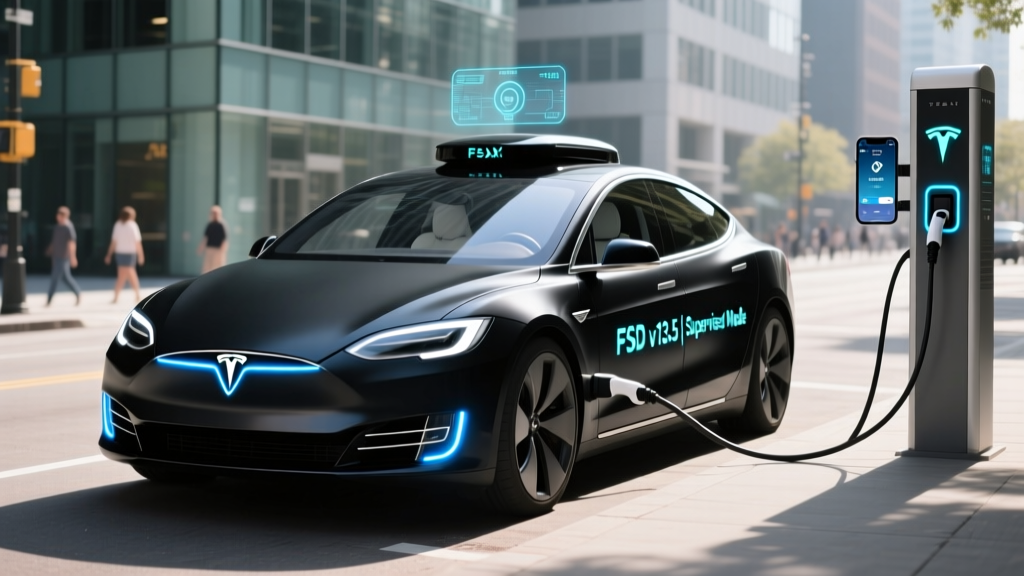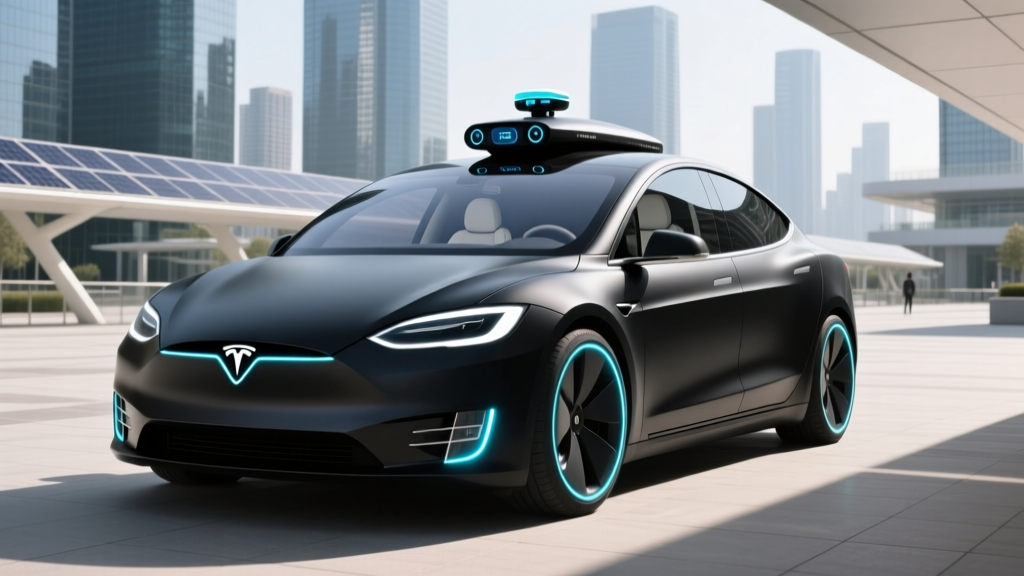
Tesla's Full Self-Driving (Supervised) software has been on a long, iterative march toward broader capability, and the V14 branch represents the most significant architectural shift since the move to the end-to-end neural-network approach in V12. For current Tesla owners and prospective buyers weighing whether to pay for the FSD package in 2026, the core question remains unchanged: what does it actually do, what does it cost, and how much of the driving can you realistically hand off?
The short answer: Tesla V14 FSD is still a Level 2 driver-assistance system. It requires your full attention, your hands on or near the wheel, and your readiness to intervene at any moment. What V14 changes is the fluidity, confidence, and edge-case handling of the system — not its fundamental legal or safety classification. Below, we break down exactly what that means for real-world driving.
What Tesla V14 FSD Actually Does
FSD (Supervised) builds on Tesla's standard Autopilot — which handles lane centering and adaptive cruise on highways — and extends assisted driving to city streets, residential neighborhoods, and complex intersections. In V14, the system continues to use Tesla's vision-only architecture, relying on a suite of exterior cameras (typically eight on current Model 3, Model Y, Model S, and Model X vehicles) with no radar or lidar. The neural network processes camera feeds in real time to identify lane lines, traffic signals, pedestrians, cyclists, construction zones, and other road users.
Core capabilities in V14 include:
- Navigate on Autopilot: Highway on-ramp to off-ramp assistance, including lane changes, interchange navigation, and toll-booth routing.
- City Streets: Assisted driving through intersections, stop signs, traffic lights, and unprotected turns.
- Smart Summon: Low-speed parking-lot navigation to retrieve the vehicle (within line of sight).
- Autopark: Parallel and perpendicular parking assistance.
- Traffic Light and Stop Sign Control: Automatic detection and response to signals and signs.
- Auto Lane Change: Initiated or driver-confirmed lane changes based on navigation route and surrounding traffic.
V14's end-to-end neural network — trained on billions of miles of fleet data — replaces much of the older rule-based (C++) code with learned behavior, which Tesla says produces smoother steering, more natural gap acceptance at intersections, and fewer phantom-braking events. Early V14 builds have shown measurable improvements in miles-between-intervention according to Tesla's internal safety data, though independent third-party testing figures for V14 specifically remain limited as of mid-2026.
Tesla FSD (Supervised), including V14, is classified as SAE Level 2 automation. This means the system can simultaneously control steering and acceleration/braking under certain conditions, but the driver must remain fully engaged — eyes on the road, hands available to take over, and prepared to intervene instantly. It is not Level 4 or Level 5 autonomy. Only systems like Waymo's driverless robotaxi service operate at Level 4 in geofenced areas. Confusing Level 2 with "self-driving" is dangerous and, in some jurisdictions, illegal.
How V14 Compares: Tesla FSD vs. BlueCruise vs. Super Cruise
Tesla's FSD isn't the only advanced Level 2 system on the market. Ford's BlueCruise and GM's Super Cruise are the two most directly comparable competitors, though their operational design domains (ODDs) differ substantially. Here's how they stack up in 2026:
| Feature | Tesla FSD (Supervised) V14 | GM Super Cruise | Ford BlueCruise 1.4 |
|---|---|---|---|
| SAE Level | Level 2 | Level 2 | Level 2 |
| Road Coverage | Most roads (city + highway) | 750,000+ mi pre-mapped highways (US/Canada) | 130,000+ mi pre-mapped divided highways |
| Hands-Free Allowed? | No (hands-on-wheel torque required) | Yes, on approved roads (eyes monitored via IR camera) | Yes, on approved roads (eyes monitored via camera) |
| Sensors | Cameras only (vision) | Cameras, radar, lidar, HD maps | Cameras, radar |
| City Street Assist | Yes | Limited (expanding) | No (highway only) |
| Cost (2026) | $8,000 one-time or $99/mo | Included on select trims; $25/mo after trial | $2,100 one-time or included on select trims |
The trade-off is clear: Tesla offers the widest road coverage (virtually any road), while GM and Ford offer true hands-free operation on pre-mapped highways. If your commute is mostly highway, Super Cruise or BlueCruise may feel more relaxing despite narrower coverage. If you want assistance on surface streets and in neighborhoods, FSD is currently the only consumer option that attempts it at scale.
Pricing and Subscription Details for FSD in 2026
Tesla has adjusted FSD pricing several times over the past few years. As of 2026, the options for US customers are:
| Option | Cost | Notes |
|---|---|---|
| FSD (Supervised) — One-Time Purchase | $8,000 | Tied to vehicle; transfers if you sell the car. Non-refundable. |
| FSD (Supervised) — Monthly Subscription | $99/month | Cancel anytime. Best for testing or short-term ownership. |
| Basic Autopilot | Included (standard) | Lane centering + adaptive cruise on highways. No city streets. |
| Enhanced Autopilot | $6,000 (if available) | Adds Navigate on Autopilot, Auto Lane Change, Autopark, Summon. No city streets. |
Break-even analysis: At $99/month, the subscription equals the $8,000 purchase price in roughly 81 months (6.75 years). If you plan to keep your Tesla for more than five years and use FSD regularly, the one-time purchase makes financial sense. If you're uncertain about the technology or plan to trade in within three years, the monthly subscription is the lower-risk option.
Note: FSD is available on all current-production Tesla models — Model 3, Model Y, Model S, and Model X — running Hardware 4.0 (AI4) or newer. Vehicles with older Hardware 3.0 (AI3) may have limited access to V14 features. Tesla has offered hardware upgrades in the past, but availability and cost vary. Check your vehicle's software menu or contact Tesla support to confirm your hardware revision.
Real-World Capabilities and Where V14 Shines
Based on fleet data, owner reports, and independent reviews of V14 builds through mid-2026, the system demonstrates notable strengths:
- Smoother steering inputs: The end-to-end neural net produces more human-like steering, reducing the "ping-pong" effect between lane lines that earlier versions exhibited.
- Better unprotected left turns: V14 handles gap acceptance at uncontrolled intersections with fewer hesitations and unnecessary stops.
- Improved construction-zone navigation: Cone detection and temporary lane re-routing have improved, though complex multi-stage construction zones still require frequent driver takeover.
- Reduced phantom braking: While not eliminated, unwarranted hard-braking events on highways have decreased in frequency compared to V12 and V13 builds.
- Natural speed management: Speed adjustments around curves, school zones, and in dense traffic feel more intuitive.
For daily commuting on well-marked suburban and urban roads, V14 FSD can significantly reduce driver workload — handling stop-and-go traffic, navigating multi-lane roads with turning lanes, and managing routine intersections with minimal intervention.
Limitations Every FSD User Must Understand
- You are the driver. NHTSA and Tesla both state clearly: you must supervise the system at all times. Inattention can lead to crashes, injuries, or fatalities.
- Weather degrades performance. Heavy rain, fog, snow, and direct sun glare can impair camera vision. The system may disengage or behave unpredictably in these conditions.
- Faded or missing lane markings confuse the system. Rural roads, older neighborhoods, and construction zones with conflicting lane markings are high-risk areas for incorrect steering.
- The system does not know your destination intent beyond navigation. If you need to make an unplanned stop or detour, you must take over.
- Night driving on unlit roads is a known weak point. Camera-only systems have less range than lidar-equipped competitors in low-light conditions.
- Emergency vehicles are not always detected promptly. You must remain alert for sirens and flashing lights and be ready to pull over manually.
Tesla's cabin camera monitors driver attention and will issue escalating warnings — visual, audible, and eventually a forced pullover — if it detects inattention. However, this monitoring has documented blind spots, and relying on it as a substitute for genuine engagement is irresponsible.
For a comprehensive look at Tesla's safety record and open investigations, check the NHTSA Automated Vehicle Safety page and Tesla's own Vehicle Safety Report, published quarterly.
Which Tesla Models and Trims Include FSD?
FSD (Supervised) is not trim-specific — it's a software package available on any current Tesla with compatible hardware. Here's the breakdown for 2026 model-year vehicles:
| Model | Starting MSRP (2026) | Hardware | FSD Eligible? |
|---|---|---|---|
| Model 3 (Rear-Wheel Drive) | ~$38,990 | AI4 (HW 4.0) | Yes |
| Model 3 Long Range AWD | ~$44,990 | AI4 (HW 4.0) | Yes |
| Model Y Long Range AWD | ~$44,990 | AI4 (HW 4.0) | Yes |
| Model S Long Range | ~$74,990 | AI4 (HW 4.0) | Yes |
| Model X Long Range | ~$79,990 | AI4 (HW 4.0) | Yes |
| Cybertruck AWD | ~$79,990 | AI4 (HW 4.0) | Yes |
All prices are approximate base MSRPs and subject to change. FSD is an add-on purchase or subscription — it is not included in the base vehicle price on any trim. Tesla occasionally runs promotional FSD trials (typically 30 days) for new deliveries, but these are time-limited and not guaranteed.
Is FSD V14 Worth Paying For?
The answer depends on your driving profile and risk tolerance:
- You drive frequently in stop-and-go urban or suburban traffic
- You want to evaluate the system before committing $8,000
- You plan to keep your Tesla less than 5 years
- You value reduced driving fatigue on commutes over 30 minutes
- Your driving is primarily highway (basic Autopilot handles lane centering and cruise well)
- You live in an area with poorly marked roads or frequent severe weather
- You're uncomfortable with the supervision burden of Level 2 systems
- You'd rather spend $8,000 on home charging infrastructure or other upgrades
For buyers considering FSD as a factor in their Tesla purchase, the $99/month subscription is the pragmatic choice. It lets you test V14's capabilities on your specific routes, in your specific weather and traffic conditions, with zero long-term commitment. If, after three to six months, you find the system meaningfully reduces your driving stress, the monthly cost is easily justified. If not, cancel and you've only spent a few hundred dollars on a thorough evaluation.
Frequently Asked Questions
Is Tesla V14 FSD truly self-driving?
No. Tesla FSD (Supervised), including V14, is an SAE Level 2 driver-assistance system. The driver must remain fully engaged — eyes on the road, hands available, and ready to take over at any moment. It cannot drive you to a destination while you sleep, read, or look at your phone. Only Level 4 systems like Waymo's robotaxi service operate without a human driver, and those are limited to specific geofenced cities.
Can FSD transfer to a new Tesla if I trade in?
Tesla has occasionally offered limited-time FSD transfer promotions (allowing you to move a purchased FSD license from an old vehicle to a new Tesla order), but this is not standard policy. Typically, FSD purchased as a one-time buy is tied to the VIN of the original vehicle and transfers with the car to a new owner if you sell it. Subscription-based FSD does not transfer — you simply subscribe on your new vehicle. Always check Tesla's current terms at the time of purchase.
Does FSD work in bad weather?
FSD's camera-only system is more susceptible to weather degradation than radar- or lidar-equipped competitors. Heavy rain, snow accumulation on cameras, dense fog, and direct sun glare can cause the system to reduce capability or disengage entirely. Tesla recommends — and the system itself will prompt — manual driving in these conditions. Keep all exterior cameras clean and free of ice or debris.
How does FSD V14 handle highway driving compared to basic Autopilot?
On highways, FSD adds Navigate on Autopilot (automatic on-ramp to off-ramp routing, lane changes based on your navigation destination) and more proactive lane management. Basic Autopilot provides lane centering and adaptive cruise control, which is sufficient for many highway drivers. If you rarely drive in cities, the incremental value of FSD on highways alone may not justify the cost.
What happens if I get into a crash while using FSD?
You are the responsible driver. Tesla's terms of service, NHTSA guidance, and traffic law all place liability on the human operator of a Level 2 system. FSD data is logged and can be subpoenaed in accident investigations, but the system's involvement does not absolve the driver of responsibility. Maintain appropriate insurance coverage and never treat FSD as a substitute for attentive driving.
Does Tesla FSD qualify for any tax credits or incentives?
No. The federal §30D Clean Vehicle Credit applies to the purchase of qualifying new electric vehicles, not to software add-ons. FSD is classified as a software feature and is not eligible for any federal or state EV incentive. For current §30D eligibility rules — including MSRP caps, buyer income limits, and battery sourcing requirements — consult the IRS Clean Vehicle Credits page.
Tesla V14 FSD represents meaningful progress in vision-based driver assistance, particularly for surface-street and urban driving where no other consumer system currently operates at the same breadth. But progress is not autonomy. The system remains a tool that can reduce workload — not replace the driver. Approach it with realistic expectations, use the subscription to evaluate it on your own roads, and never let marketing language override your responsibility behind the wheel.