Elon Musk has been promising fully autonomous, unsupervised Tesla driving "next year" since roughly 2016. Yet in 2026, every Tesla sold still requires the driver to remain attentive, hands on the wheel (or eyes on the road, depending on the monitoring system), and ready to take over at any moment. So when will Tesla release unsupervised FSD — and more importantly, what does the current system actually deliver for the money today?
This guide cuts through the marketing, the hype, and the speculation to give you the facts: what Tesla's Full Self-Driving (Supervised) can do right now, what SAE automation level it occupies, how much it costs, where it falls short, and what a realistic timeline for unsupervised operation might look like based on regulatory, technical, and legal realities.
What Tesla FSD (Supervised) Actually Does in 2026
Tesla's Full Self-Driving capability — currently branded FSD (Supervised) — is the company's highest-tier driver-assistance package. It builds on the standard Autopilot features (Traffic-Aware Cruise Control and Autosteer) with additional functionality:
| Feature | What It Does | Included In |
|---|---|---|
| Traffic-Aware Cruise Control | Maintains set speed and adjusts for vehicles ahead | Basic Autopilot (standard) |
| Autosteer | Provides steering assistance on clearly marked roads | Basic Autopilot (standard) |
| Navigate on Autopilot | Active guidance on highway on/off-ramps and interchanges | FSD (Supervised) |
| Auto Lane Change | Initiates lane changes to pass slower vehicles or follow navigation | FSD (Supervised) |
| Autopark | Detects parking spaces and steers into parallel or perpendicular spots | FSD (Supervised) |
| Summon / Smart Summon | Moves the car short distances in parking lots without the driver inside | FSD (Supervised) |
| Traffic Light & Stop Sign Control | Detects and responds to traffic signals and stop signs | FSD (Supervised) |
| City Street Autosteer | Navigates urban intersections, turns, and complex road scenarios | FSD (Supervised) |
Technically, FSD (Supervised) relies entirely on a vision-only architecture. Tesla removed ultrasonic sensors and radar from its vehicles starting in 2022, relying solely on a suite of external cameras (typically 8 cameras providing 360-degree coverage) processed through the onboard Hardware 4 (HW4) computer. Tesla's neural network approach processes camera imagery to build a real-time 3D understanding of the environment — a fundamentally different strategy than the lidar-and-radar fusion used by Waymo, Cruise, and most other autonomous-vehicle developers.
The SAE Level Reality: FSD Is Level 2, Not Level 4
Under the SAE J3016 standard, Tesla FSD (Supervised) is classified as Level 2. This means the system can simultaneously control steering and acceleration/braking under certain conditions, but the driver must continuously supervise the system and intervene immediately when it encounters scenarios it cannot handle.
Level 4 (High Automation) — the kind of unsupervised driving Waymo operates in geofenced areas — means the vehicle handles all driving tasks without human intervention within its operational domain. Tesla has not achieved this classification in any production vehicle.
This distinction is not a technicality — it's the single most important fact about Tesla's current driver-assistance systems. When you activate FSD (Supervised), you are the driver. You are legally responsible for the vehicle's actions. If the system fails to recognize a stopped fire truck, a construction zone with shifted lanes, or a pedestrian stepping off a curb, the liability rests with you, not Tesla.
Tesla's own owner's manual states this explicitly: the driver must remain attentive, keep hands on the steering wheel (or respond to camera-based attention prompts in newer software versions), and be prepared to take over at all times.
When Will Tesla Release Unsupervised FSD? The Timeline Question
Tesla has not announced a firm, regulatory-approved date for the release of truly unsupervised Full Self-Driving. Here's what we know as of 2026:
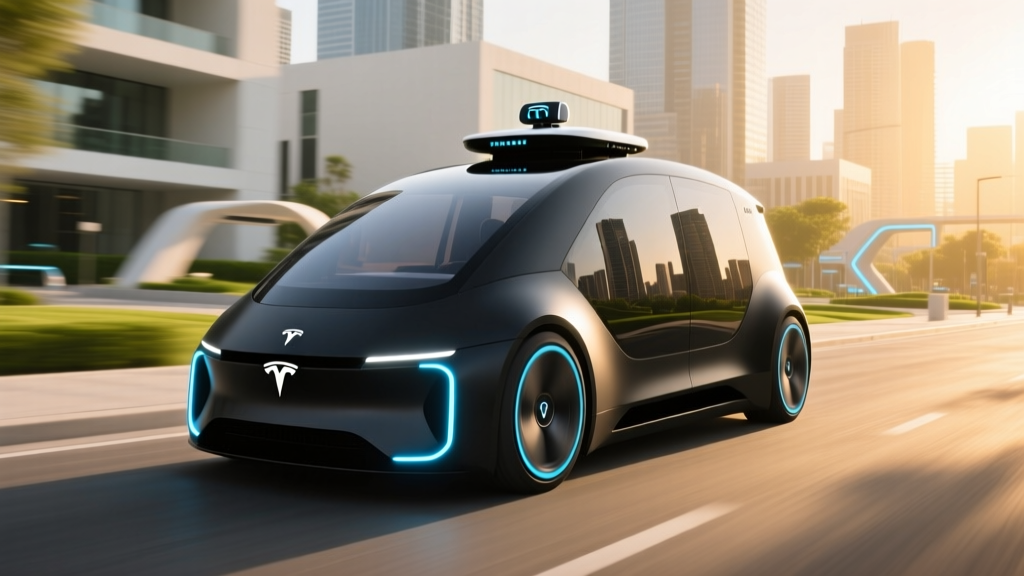
- Robotaxi concept: Tesla unveiled its dedicated "Cybercab" robotaxi concept in late 2024, designed without a steering wheel or pedals — a Level 4/5 vehicle. However, concept unveiling is not production, and regulatory approval for a steering-wheel-free vehicle on public roads remains a significant hurdle.
- Elon Musk's projections: Musk has repeatedly predicted unsupervised FSD would arrive within 1-2 years, a pattern dating back to 2016. These projections have consistently not materialized on the stated timelines.
- Regulatory approval: Even if Tesla achieves the technical capability, unsupervised operation requires approval from NHTSA at the federal level and individual state regulators (California's DMV, Arizona, Nevada, etc.). This is a multi-year process that Waymo has been navigating since 2018.
- Technical gap: Vision-only systems face inherent challenges in low-visibility conditions (heavy rain, fog, direct sun glare, nighttime with poor lighting) that lidar-equipped competitors partially mitigate through sensor redundancy.
Based on the pace of regulatory approvals and the technical challenges remaining, a realistic estimate for any form of Tesla unsupervised driving in a limited, geofenced capacity (similar to Waymo's current operations) would be 2027 at the earliest, and more likely 2028-2029 for broader availability. Truly ubiquitous, anywhere-you-want unsupervised FSD (Level 5) remains a distant prospect that no manufacturer has achieved.
How Much Does Tesla FSD Cost in 2026?
Tesla offers FSD (Supervised) through two pricing models. Costs have fluctuated over the years, but as of 2026:
| Option | Cost | Details |
|---|---|---|
| One-Time Purchase | $8,000 | Permanent license tied to the vehicle; transfers if you sell the car. Previously priced at $15,000 before Tesla reduced the cost in 2024. |
| Monthly Subscription | $99/month | Cancel anytime. Previously $199/month before the 2024 price reduction. Tied to your Tesla account, not the vehicle. |
| Basic Autopilot | Included (free) | Standard on all new Teslas. Includes Traffic-Aware Cruise Control and Autosteer. |
Is the purchase worth it? At $8,000, the one-time cost is equivalent to roughly 80 months of the subscription — nearly 7 years. If you plan to keep your Tesla for 3-4 years and value the convenience features, the $99/month subscription is the financially conservative choice. If you intend to own the vehicle for 7+ years and the features improve significantly over time (which is Tesla's promise), the purchase could make sense — but you're betting on future capability that isn't guaranteed.
Important: FSD is not eligible for the §30D federal EV tax credit as a standalone purchase. The credit applies to the vehicle itself, subject to IRS §30D rules including MSRP caps ($55,000 for sedans, $80,000 for SUVs/trucks), buyer income limits, and battery sourcing requirements.
Which Tesla Models Include FSD (Supervised)?
FSD (Supervised) is available as an add-on purchase or subscription across Tesla's entire 2026 lineup:
| Model | Base MSRP (2026) | Autopilot | FSD (Supervised) | Hardware |
|---|---|---|---|---|
| Model 3 (RWD) | $38,990 | Standard | $8,000 add-on or $99/mo | HW4 |
| Model 3 (Long Range AWD) | $44,990 | Standard | $8,000 add-on or $99/mo | HW4 |
| Model Y (Long Range AWD) | $44,990 | Standard | $8,000 add-on or $99/mo | HW4 |
| Model S (Long Range) | $74,990 | Standard | $8,000 add-on or $99/mo | HW4 |
| Model X (Long Range) | $79,990 | Standard | $8,000 add-on or $99/mo | HW4 |
| Cybertruck (AWD) | $60,990 | Standard | $8,000 add-on or $99/mo | HW4 |
No Tesla model includes FSD (Supervised) as standard equipment — it is always an optional upgrade. Basic Autopilot is included on every vehicle at no additional cost.
Real-World Limitations: Where FSD (Supervised) Falls Short
- Construction zones: FSD frequently struggles with shifted lanes, temporary barriers, and cone-marked detours. The system may attempt to follow old lane markings or fail to recognize lane closures.
- Adverse weather: Heavy rain, fog, snow, and direct sun glare can degrade camera performance. The system may issue a "camera visibility reduced" warning and disengage — often at the worst possible moment.
- Unprotected left turns: City street driving still presents challenges with unprotected left turns across oncoming traffic, particularly at complex multi-lane intersections.
- Faded or missing lane markings: Rural roads, older infrastructure, and roads under repair may cause the system to wander or disengage.
- Emergency vehicles: While improved, the system has a documented history (per NHTSA investigations) of failing to detect stopped emergency vehicles with flashing lights.
- Phantom braking: The system occasionally applies brakes unexpectedly on clear roads — a phenomenon that remains a concern at highway speeds.
- Roads without clear boundaries: Dirt roads, unmarked parking areas, and private roads may not be navigable by FSD.
In practical terms, FSD (Supervised) excels on well-marked, divided highways with clear lane lines and moderate traffic. City street driving has improved significantly through iterative software updates, but it remains a system that requires constant vigilance. Many experienced Tesla owners report that supervising FSD in complex urban environments is more fatiguing than simply driving manually — because you're watching a system that occasionally makes unexpected decisions, and you have to react faster than if you'd been driving yourself.
Tesla FSD vs. Competing Systems: How Does It Compare?
| System | Manufacturer | SAE Level | Hands-Off? | Cost | Key Differentiator |
|---|---|---|---|---|---|
| FSD (Supervised) | Tesla | Level 2 | No (hands-on or eyes-on) | $8,000 or $99/mo | City street coverage (nationwide); vision-only |
| Super Cruise | GM (Cadillac, Chevy, GMC) | Level 2 | Yes (eyes-on) on mapped roads | ~$2,200 or $25/mo | True hands-free on 750,000+ mi of mapped highways; lidar-mapped |
| BlueCruise | Ford / Lincoln | Level 2 | Yes (eyes-on) on mapped roads | $2,100 or $75/mo | Hands-free on 130,000+ mi of divided highways; driver monitoring camera |
| ProPILOT Assist 2.0 | Nissan | Level 2 | Yes (eyes-on) on mapped roads | Included on select trims | Hands-off highway driving; navigation-linked |
| Waymo One | Waymo (Alphabet) | Level 4 | N/A (no driver) | Per-ride fare (ride-hail) | True driverless in geofenced cities (Phoenix, SF, LA); not for sale |
The comparison reveals a key trade-off: Tesla FSD offers the broadest geographic coverage (it works on virtually any road, nationwide), but it does not allow hands-free operation. GM's Super Cruise and Ford's BlueCruise offer genuine hands-free driving on pre-mapped highways, but their coverage is limited to those mapped routes and they do not handle city streets.
Waymo's Level 4 robotaxi service is the only truly unsupervised system available to consumers today — but it's a ride-hailing service, not a vehicle you can buy. This is the benchmark Tesla is aiming to reach, and the gap between Level 2 (supervised) and Level 4 (unsupervised) is not incremental — it's a fundamentally different engineering, regulatory, and liability challenge.
The Bottom Line: Should You Pay for FSD Today?
If you're buying a Tesla in 2026 and wondering whether to invest in FSD (Supervised), here's a practical decision framework:
- You want to test FSD for a few months before committing
- You plan to keep the vehicle fewer than 7 years
- You primarily drive on highways where basic Autopilot already performs well
- You value Smart Summon and Autopark features for your daily routine
- You expect unsupervised, "self-driving" capability — it does not exist and has no confirmed release date
- You want hands-free highway driving — Super Cruise or BlueCruise vehicles offer this today on mapped routes
- You're budget-conscious and primarily commute on well-marked roads — basic Autopilot (free) handles this competently
As for when Tesla will release unsupervised FSD: there is no confirmed date. The Cybercab robotaxi represents Tesla's long-term vision, but moving from a concept to a regulatory-approved, commercially available driverless vehicle requires solving challenges that have taken Waymo over a decade and billions of dollars to partially address. Expect incremental improvements to FSD (Supervised) through over-the-air updates, but do not purchase the system expecting imminent unsupervised capability.
Frequently Asked Questions
Is Tesla FSD really self-driving?
No. Tesla FSD (Supervised) is an SAE Level 2 driver-assistance system. The driver must remain attentive, monitor the road, and be prepared to take over at any moment. Tesla's own branding now includes "(Supervised)" to make this distinction clear. Only Level 4 systems like Waymo's robotaxi service operate without a human driver.
Can Tesla FSD handle city streets?
Yes, FSD (Supervised) includes city street autosteer capability that can navigate intersections, make turns, and respond to traffic signals. However, performance varies significantly by location and conditions, and the driver must remain fully engaged. Complex scenarios like unprotected left turns, construction zones, and poorly marked roads remain challenging.
How much does Tesla FSD cost in 2026?
Tesla FSD (Supervised) costs $8,000 as a one-time purchase or $99 per month as a subscription. Basic Autopilot (cruise control + autosteer) is included free on all new Teslas. The $8,000 purchase is tied to the vehicle; the $99/month subscription is tied to your Tesla account.
Will FSD get better over time?
Tesla regularly pushes over-the-air software updates that improve FSD performance. The company's neural-network-based approach means improvements come from training on fleet data rather than traditional rule-based programming. However, the pace and magnitude of improvements are unpredictable, and Tesla does not guarantee specific future capabilities.
What happens if I get into an accident while using FSD?
You are legally responsible. Because FSD (Supervised) is a Level 2 system, the driver — not Tesla — bears liability for any accidents or traffic violations that occur while the system is engaged. Tesla's terms of service and owner's manual make this explicitly clear. Insurance companies treat FSD-related incidents the same as any other at-fault accident.
Does the Cybercab robotaxi mean unsupervised FSD is coming soon?
The Cybercab is Tesla's purpose-built robotaxi concept, designed without a steering wheel or pedals. However, concept vehicles are not production vehicles, and Tesla must obtain regulatory approval from NHTSA and state authorities before deploying driverless vehicles commercially. Waymo took approximately 10 years from its founding to launch a commercial driverless service. A realistic timeline for Tesla robotaxi deployment is 2027-2029 in limited geofenced areas, assuming regulatory approval is granted.