If you've searched for a Tesla self-driving car for sale, you're not alone — it's one of the most common queries from EV shoppers who've seen headlines about Tesla's Autopilot and Full Self-Driving (FSD) capabilities. But before you sign a purchase agreement expecting a car that drives itself while you nap, you need to understand exactly what Tesla sells today, how it compares to true driverless robotaxis, and what the real-world data says about safety and limitations.
This guide cuts through the marketing to give you the engineering reality, the regulatory facts, and the ownership practicalities of buying a Tesla with FSD in 2026 — alongside a clear-eyed comparison with actual Level 4 robotaxi services like Waymo and Cruise that operate without a human driver.
What You're Actually Buying: Tesla FSD Supervised Explained
Every Tesla vehicle sold new in 2026 — Model 3, Model Y, Model S, Model X, and the Cybertruck — comes standard with Basic Autopilot, a Level 2 driver-assistance system that handles adaptive cruise control and lane centering on highways. The upgraded package, branded Full Self-Driving (Supervised), adds features like automatic lane changes, navigation-guided on-ramp-to-off-ramp driving, traffic light and stop sign recognition, and a low-speed "Autosteer on city streets" capability.
As of early 2026, FSD Supervised costs $8,000 as a one-time purchase or $99/month as a subscription. It is available on all Tesla models with Hardware 4.0 (HW4) — essentially every vehicle built from approximately March 2023 onward. Older HW3 vehicles received limited FSD updates but Tesla has indicated HW4 is required for the latest neural-network stack.
Tesla FSD Supervised is an SAE Level 2 driver-assistance system. This means the human driver must remain fully engaged — eyes on the road, hands available to take over — at all times. Tesla's own owner's manual states: "You must remain alert and be prepared to take immediate action."
This is fundamentally different from SAE Level 4 robotaxi services (Waymo, Zoox), which operate with no driver present and assume full liability. The word "Supervised" in Tesla's branding exists for a legal reason — the car is not driving itself.
| Level | Name | Who Drives? | Example Systems |
|---|---|---|---|
| Level 0 | No Automation | Human | Basic cruise control, warnings only |
| Level 1 | Driver Assistance | Human | Adaptive cruise OR lane centering (not both) |
| Level 2 | Partial Automation | Human (supervising) | Tesla FSD Supervised, GM Super Cruise, Ford BlueCruise |
| Level 3 | Conditional Automation | System (in narrow conditions) | Mercedes Drive Pilot (limited markets/speeds) |
| Level 4 | High Automation | System (geofenced areas) | Waymo One, Zoox, Cruise (paused in some cities) |
| Level 5 | Full Automation | System (all conditions) | Does not exist commercially as of 2026 |
Tesla FSD vs. True Robotaxis: The Technology Stack
Understanding why a Tesla you buy at a dealership is not a robotaxi requires looking at the sensor hardware and software approach each system uses.
Tesla: Camera-Only (Tesla Vision)
Tesla removed radar from its vehicles starting in 2021 and ultrasonic sensors starting in 2022. As of 2026, every Tesla relies exclusively on a suite of 8 cameras (front, side-repeaters, rear) feeding into the HW4 computer running neural networks trained on billions of miles of fleet driving data. There is no lidar. There is no radar redundancy. Tesla's approach bets that camera-only perception, powered by advanced AI, can match or exceed human vision in all conditions.
Waymo / Zoox: Multi-Sensor Fusion
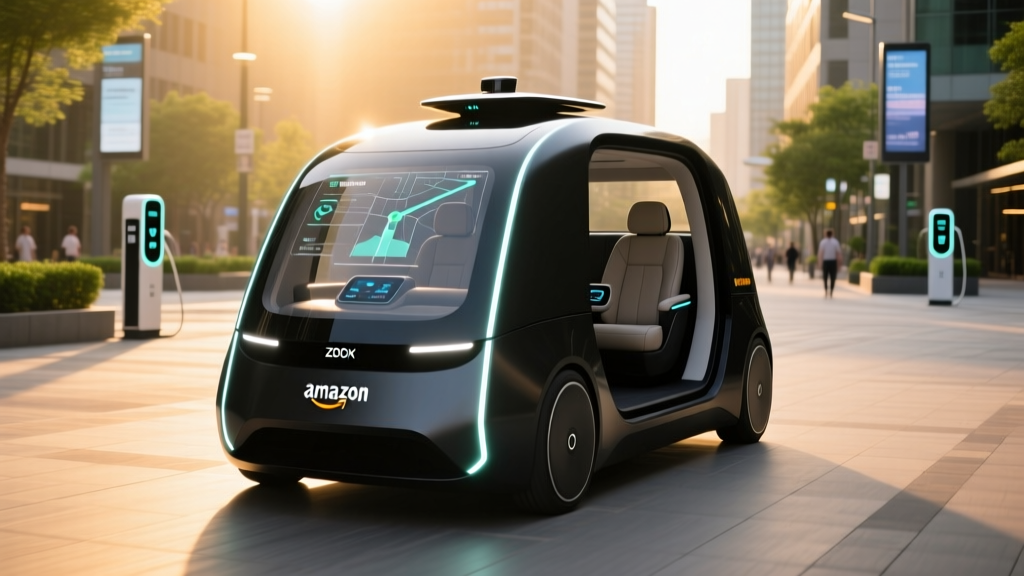
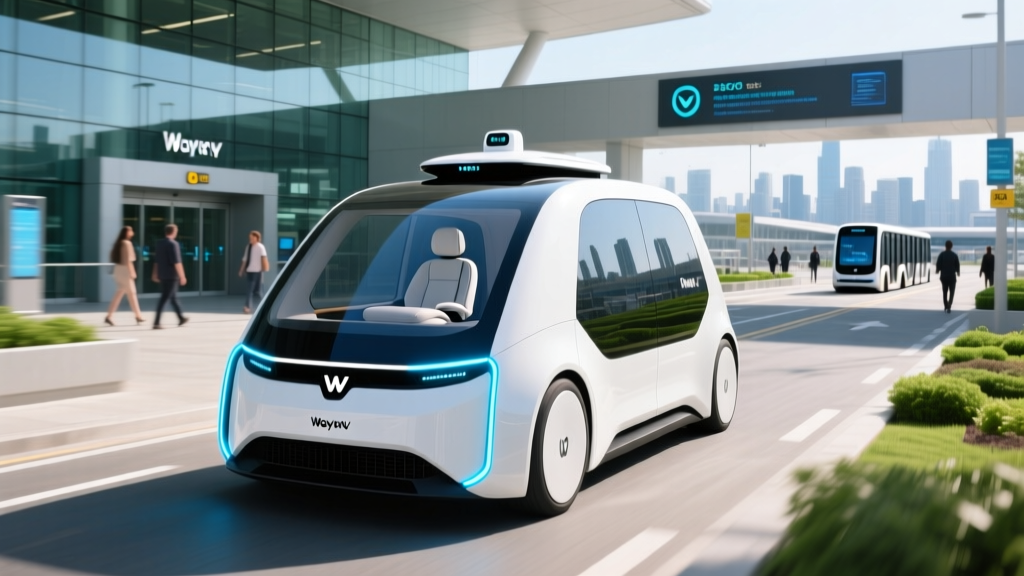
Level 4 robotaxis use a redundant sensor stack: lidar arrays (providing precise 3D distance mapping), multiple radars (for speed and distance in poor visibility), and cameras (for object classification and sign reading). Waymo's 6th-generation hardware, deployed in 2025–2026, includes improved lidar with 500m+ range and better rain performance. This redundancy is a key reason regulators have approved driverless operations in specific geofenced areas.
The practical implication: Tesla's camera-only system can struggle in conditions where camera visibility degrades — heavy rain, fog, direct sun glare into the lens, and poorly marked roads. Lidar-equipped robotaxis have a physical sensor that "sees" obstacles regardless of lighting, though they too have weather limitations.
Where Can You Actually Use Driverless Robotaxis Right Now?
If you're looking for a vehicle that truly drives itself — no human behind the wheel — you cannot buy one. But you can ride in one, if you live in or visit the right city. Here's where Level 4 robotaxi services are operational as of early 2026:
| Service | Operational Cities | Hours | Status |
|---|---|---|---|
| Waymo One | Phoenix (metro-wide), San Francisco, Los Angeles, Austin (expanding) | 24/7 in most areas | Fully driverless, open to public via app |
| Cruise | Phoenix (limited), Dallas (pilot) | Daytime / limited hours | Gradual relaunch post-2023 SF suspension; safety driver present in some markets |
| Zoox | Las Vegas (strip area), Foster City, CA (limited) | Select hours | Driverless purpose-built vehicle; invite-only / employee-focused in some zones |
| Tesla Robotaxi (announced) | Austin, TX (limited pilot expected 2026) | TBD | Announced / preliminary — not yet a public ride-hail service as of this writing |
Key takeaway: Waymo One is the only Level 4 robotaxi service widely available to the general public across multiple major US cities in 2026. Tesla's much-discussed "Robotaxi" (the dedicated vehicle unveiled in late 2024) remains in pre-commercial stages. Elon Musk has stated Tesla aims to launch an unsupervised FSD ride-hail service, but regulatory approval and real-world validation are still in progress. No Tesla vehicle sold to consumers today can operate without a supervising driver.
Robotaxi Pricing: How Does It Compare to Uber and Lyft?
For riders in cities where Waymo One operates, the pricing is competitive with — and sometimes cheaper than — traditional rideshare:
| Service | Typical Fare | Surge Pricing? | Tipping |
|---|---|---|---|
| Waymo One | $9–$14 | Yes, but generally less aggressive than Uber/Lyft surge | In-app tipping available (goes to cleaning/support staff) |
| UberX | $10–$16 | Yes, can 2x–3x during peak | Expected (15–20%) |
| Lyft Standard | $10–$15 | Yes (Prime Time) | Expected (15–20%) |
Waymo's pricing advantage widens during surge periods because its dynamic pricing tends to be less extreme. However, Waymo's availability is limited to its geofenced service area, and wait times can be longer outside core zones. In Phoenix and San Francisco, typical wait times range from 3 to 8 minutes in the service core.
Safety Data: What the Numbers Actually Show
Safety is the most important — and most debated — topic in autonomous driving. Here's what we know from reported data:
Waymo Safety Record (through late 2025)
- Cumulative fully driverless miles: Over 10 million miles across Phoenix, San Francisco, and Los Angeles (Waymo Safety Data)
- Crash rate vs. human benchmark: Waymo's published analysis (peer-reviewed methodology) claims a 85% reduction in injury-causing crash rates compared to human drivers in comparable urban environments
- Contact incidents: The majority of Waymo vehicle contacts involve low-speed scenarios (under 10 mph), often with other human-driven vehicles rear-ending or sideswiping the stopped robotaxi
- NHTSA Standing General Order data: Waymo files incident reports as required; the data shows incidents are overwhelmingly minor in severity
Tesla FSD Supervised Safety Context
- Tesla publishes quarterly vehicle safety reports showing crash rates per million miles with Autopilot engaged vs. not engaged. Tesla claims approximately 1 crash per 4–5 million miles with Autopilot active vs. the US average of ~1 per 670,000 miles.
- Important caveats: Tesla's data does not isolate FSD Supervised from basic Autopilot. It does not account for road type (highway vs. urban), and it relies on self-reporting. The NHTSA has opened multiple investigations into Tesla Autopilot/FSD incidents, particularly involving stationary emergency vehicles.
- The driver remains liable for all incidents while using FSD Supervised.
For context, the IIHS and NHTSA both emphasize that Level 2 systems can reduce certain crash types (rear-end, lane-departure) but may introduce new risks from driver inattention and over-reliance on automation. The driver is always the responsible party in a Tesla with FSD.
Current Limitations: What Tesla FSD and Robotaxis Cannot Do
Whether you're buying a Tesla with FSD or riding in a Waymo, these are the hard boundaries of today's technology:
Tesla FSD Supervised Limitations
- Driver must remain engaged at all times. The cabin camera monitors eye gaze; repeated warnings lead to Autopilot lockout for the remainder of the drive.
- Weather sensitivity: Heavy rain, snow, fog, and direct sun glare can degrade camera performance, causing the system to disengage or reduce speed significantly.
- Construction zones: FSD can struggle with temporary lane markings, cones, and flaggers. Manual takeover is common.
- Unmapped or poorly marked roads: Rural roads without clear lane lines or signage can confuse the system.
- No point-to-point unsupervised trips: You cannot send the car to pick someone up, park itself in a garage and walk away, or operate without a licensed driver in the seat.
- Edge cases: Unusual obstacles (fallen trees, animals, debris), complex multi-point turns, and non-standard intersections still require human judgment.
Level 4 Robotaxi Limitations (Waymo, Zoox)
- Geofenced: Only operates within approved service boundaries. You cannot take a Waymo from Phoenix to Tucson.
- Weather restrictions: Heavy rain, flooding, and dense fog can cause the service to suspend operations in affected zones.
- No highway driving (most services): Waymo primarily operates on surface streets; freeway-capable robotaxi routes are extremely limited.
- Remote assistance: When a robotaxi encounters an ambiguous situation, it may stop and request remote human guidance, leading to delays.
- Limited cargo/pets: Service animals are generally permitted, but policies on pets, large items, and unaccompanied minors vary.
The Regulatory Landscape: Who Approves What?
Autonomous vehicle regulation in the US operates at both federal and state levels, and understanding it is essential if you're evaluating what's legally possible with a Tesla purchase:
- Federal (NHTSA): Sets vehicle safety standards (FMVSS). NHTSA does not currently "approve" Level 2 systems before sale — they are self-certified by manufacturers. NHTSA investigates post-market safety issues and can order recalls. Tesla has issued multiple over-the-air recalls related to Autopilot/FSD behavior, including a major recall in late 2023 addressing driver engagement monitoring.
- State level: States control where driverless (Level 4) testing and commercial operations are permitted. Arizona has been the most permissive, allowing Waymo to operate without special permits beyond standard business licensing. California's DMV and CPUC both regulate robotaxi operations — Cruise's 2023 suspension in San Francisco came from the DMV. Texas has allowed limited autonomous vehicle testing, which is where Tesla's announced Austin pilot would operate.
- Consumer Tesla vehicles: You can use FSD Supervised on any public road in all 50 states because it is classified as a Level 2 driver-assist system, not an autonomous vehicle. The driver is always legally responsible.
Should You Buy a Tesla With FSD in 2026?
If you're shopping for a Tesla and considering adding FSD, here's a practical decision framework based on real ownership considerations:
Add FSD ($8,000 or $99/mo) if:
- You do a lot of highway commuting and want the most advanced lane-change and navigation-assist features available
- You enjoy engaging with cutting-edge driver-assist tech and understand you must stay alert
- You plan to keep the car 4+ years and believe Tesla's neural network will improve meaningfully over that time
- You view the $8,000 as paying for convenience features (like premium audio or a panoramic roof), not as an investment in future autonomy
Skip FSD and stick with Basic Autopilot if:
- You expect the car to drive itself — it won't, and no timeline guarantees it will
- You primarily drive in dense urban environments with complex, unpredictable traffic
- You're concerned about the $8,000 cost relative to uncertain resale value benefit (FSD transferability to a new owner has been inconsistent)
- You'd rather subscribe at $99/month on an as-needed basis for road trips
Frequently Asked Questions
Can I buy a Tesla that drives itself completely without my input?
No. As of 2026, no Tesla vehicle sold to consumers can operate without a licensed, attentive driver in the seat. Tesla FSD Supervised is an SAE Level 2 system. Tesla's announced "Robotaxi" service is in pre-commercial pilot stages and is not a vehicle you can purchase for personal unsupervised use.
Where can I use a true self-driving robotaxi right now?
Waymo One is the most widely available Level 4 robotaxi, operating in Phoenix, San Francisco, Los Angeles, and Austin (expanding). You access it via the Waymo app, similar to Uber or Lyft. Cruise operates in limited capacity in select cities following its 2023 suspension. Zoox has limited operations in Las Vegas and Foster City, CA.
How much does a Waymo ride cost compared to Uber?
For a typical 5-mile urban trip, Waymo fares range from $9–$14, comparable to UberX ($10–$16) and Lyft ($10–$15). Waymo's dynamic pricing is generally less aggressive than Uber/Lyft surge, making it more cost-effective during peak demand. Tipping is optional but available in-app.
Is Tesla FSD safer than a human driver?
Tesla's self-reported data shows lower crash rates per million miles with Autopilot engaged, but this data has significant caveats: it mixes basic Autopilot (highway-only) with FSD, doesn't control for road type, and relies on self-reporting. NHTSA has opened investigations into Autopilot/FSD incidents. Independent third-party verification is limited. The driver remains legally liable for all incidents.
Will Tesla FSD eventually become fully self-driving?
Tesla has predicted full autonomy "next year" since approximately 2016. While the neural network capabilities have improved substantially, achieving SAE Level 4 or 5 requires not only technical capability but regulatory approval, insurance frameworks, and demonstrated safety at scale — none of which have timelines. Buy FSD for what it does today, not for what it might do in the future.
Does FSD add resale value to a used Tesla?
Historically, FSD has not transferred consistently to second owners, and used-Tesla buyers have been reluctant to pay a premium for it. Tesla occasionally offers FSD transfer promotions. As of 2026, expect FSD to add minimal resale premium — treat the $8,000 as a sunk cost for your own use, not an investment.
Sources: NHTSA Automated Vehicle Safety, Tesla Autopilot/FSD Overview, Waymo Safety Data, IIHS ADAS Research.