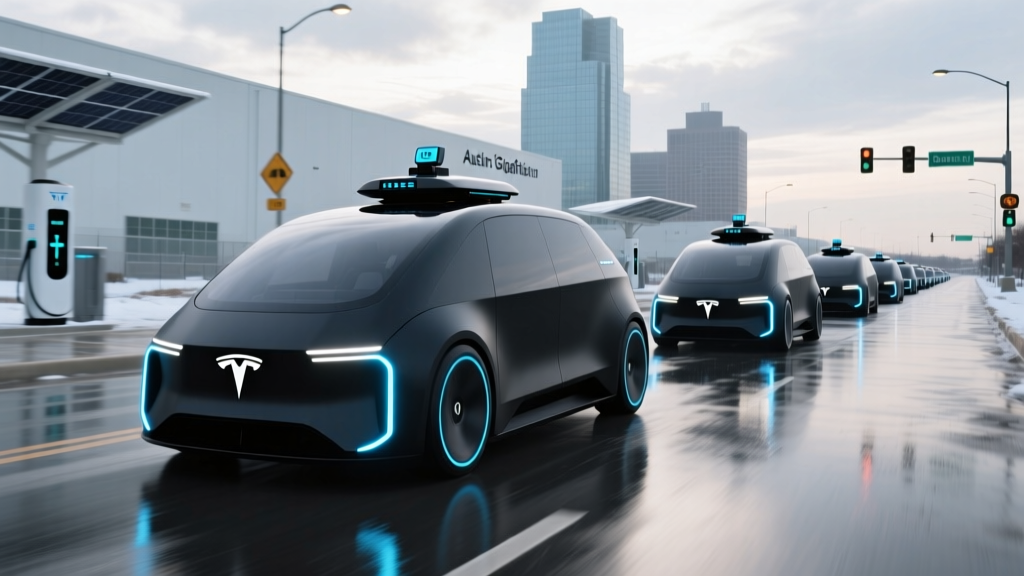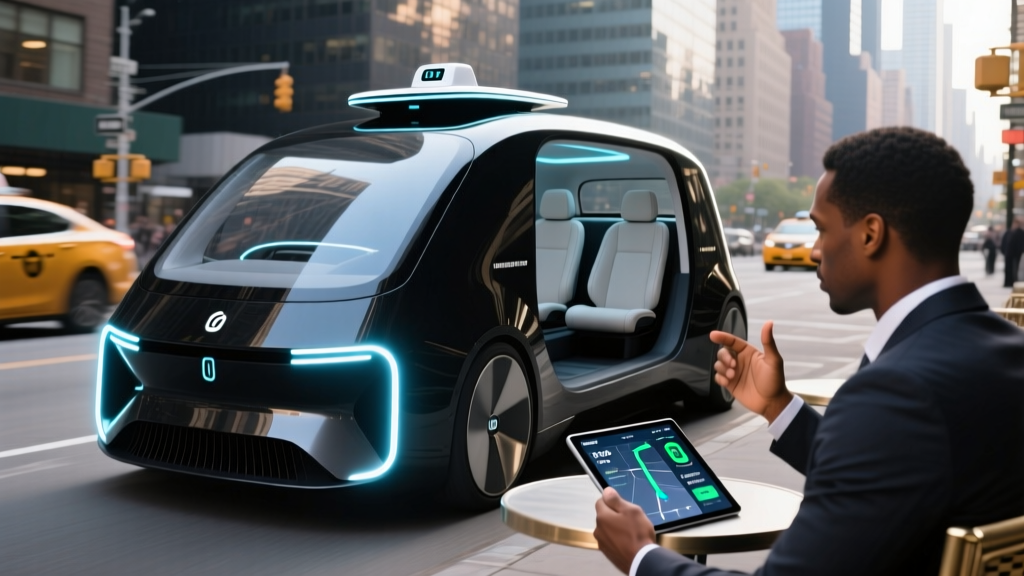
If you've seen spy photos of camera-laden Tesla Model Ys navigating Manhattan traffic and wondered what's really going on with Tesla robotaxi test drivers in NYC, you're not alone. The promise of a driverless Tesla fleet has been one of the most anticipated — and most delayed — stories in autonomous vehicles. As of early 2026, here's what's actually happening on the ground, what Tesla's autonomy level really means, and how it stacks up against robotaxi services you can hail today.
Where Tesla Robotaxi Testing Is Happening in 2026
Tesla's robotaxi ambitions were formally outlined at the October 2024 "We, Robot" event, where the company unveiled the Cybercab concept — a two-seat, steering-wheel-free vehicle designed for autonomous ride-hailing. However, concept reveals and production reality are very different things. Here's where Tesla's autonomous testing and deployment actually stand:
| City / Region | Tesla Status | Waymo Status | Public Access? |
|---|---|---|---|
| San Francisco / Bay Area | Limited testing with safety operators | Fully driverless, commercial service | Waymo: Yes / Tesla: No |
| Phoenix, AZ | No confirmed public testing | Fully driverless since 2020 | Waymo: Yes / Tesla: No |
| Los Angeles | Testing with safety drivers | Commercial driverless service | Waymo: Yes / Tesla: No |
| Austin, TX | Announced future testing hub | Expanding service area | Waymo: Yes / Tesla: No |
| New York City | No confirmed robotaxi testing — regulatory barriers | Not yet operational | Neither: No |
The hard truth for those searching for Tesla robotaxi test drivers in NYC: New York City remains one of the most restrictive jurisdictions in the country for autonomous vehicle testing. New York State law (Vehicle and Traffic Law § 1225-a) has historically required a licensed driver behind the wheel with one hand on the steering wheel at all times — a requirement that effectively precluded driverless testing for years. While some legislative movement has occurred to allow limited AV testing programs, NYC's dense, chaotic traffic environment, complex regulatory overlay (TLC, DOT, state legislature), and political sensitivity around pedestrian safety have kept robotaxi deployment off the table as of early 2026.
Any Tesla vehicles you spot with heavy sensor rigs in Manhattan are far more likely to be FSD (Supervised) data-collection vehicles or Tesla's internal mapping fleet — not driverless robotaxi prototypes.
Is Tesla's Robotaxi Truly Self-Driving or Driver-Assist?
This is the single most important distinction for anyone following this space, and it's where confusion runs deepest.
| Level | Name | Who Drives? | Examples |
|---|---|---|---|
| Level 0 | No Automation | Human | Basic cruise control |
| Level 1 | Driver Assistance | Human (system assists one function) | Adaptive cruise OR lane-keep |
| Level 2 | Partial Automation | Human (must supervise constantly) | Tesla Autopilot, FSD (Supervised), GM Super Cruise, Ford BlueCruise |
| Level 3 | Conditional Automation | System drives; human takes over on request | Mercedes Drive Pilot (limited conditions, ~40 mph) |
| Level 4 | High Automation | System drives fully within geofenced area; no human needed | Waymo One, Zoox (limited commercial areas) |
| Level 5 | Full Automation | System drives everywhere, all conditions | Does not exist commercially |
Tesla's consumer FSD (Supervised) — which you can buy today for $8,000 or $99/month on a Model 3, Model Y, Model S, or Model X — is firmly Level 2. The "Supervised" in the name is a legal necessity: you, the driver, are responsible for every moment the car is in motion. Tesla has acknowledged this in NHTSA filings and in its own owner's manuals.
For Tesla's robotaxi ambitions to materialize as a Waymo-style service, the company needs to achieve and certify Level 4 operation — meaning the vehicle handles all driving tasks within a defined operational design domain (ODD) without any human intervention. The Cybercab concept was designed for this, but production vehicles and regulatory approvals remain pending as of 2026.
Tesla's Technology Stack: Camera-Only vs. Lidar
Tesla's approach to autonomy is philosophically and technically distinct from every other major robotaxi player. This matters enormously when evaluating real-world capability and timeline risk.
Tesla's Vision-Only Stack (2026)
- 8 cameras (HW4/AI5 hardware): front narrow/wide, left/right repeaters, left/right pillar, rear — providing 360° visual coverage
- No lidar, no radar (radar was removed starting in 2021; ultrasonic sensors removed in 2022–2023)
- Neural network–based perception: Tesla's FSD software uses end-to-end neural networks trained on billions of miles of real-world driving video to interpret the environment, replacing earlier rule-based code
- Custom silicon: Tesla's HW4 (and upcoming AI5) inference chips process camera data in real-time at the vehicle level
- No HD maps or geofencing (in consumer FSD): Tesla's approach is designed to work anywhere, without pre-mapped routes — a fundamental difference from Waymo's geofenced approach
Waymo's Multi-Sensor Stack (for comparison)
- Custom lidar array (5th-gen): precise 3D depth sensing at 200+ meter range
- High-resolution cameras for color/texture/sign recognition
- Radar units for velocity detection and adverse weather
- External audio sensors for emergency vehicle detection
- HD pre-mapped routes within tightly geofenced service areas
The camera-only approach gives Tesla a massive data advantage — every Tesla on the road is potentially a training data source — but it also carries real limitations. Depth perception from cameras alone is inherently less precise than lidar, particularly in low-light conditions, heavy rain, fog, or scenarios with rapid distance changes (e.g., a pedestrian stepping off a curb at night). Tesla's end-to-end neural network approach has shown significant improvement in handling complex urban intersections, but edge cases — construction zones with temporary lane markings, unusual road geometries, adverse weather — remain the hardest problems in autonomy.
Waymo's sensor-fusion approach is more expensive per vehicle (estimated $100,000+ in sensor hardware vs. Tesla's ~$2,000 camera suite) but provides hardware-level redundancy that regulators view favorably for driverless operation.
Safety Data: What the Numbers Actually Show
Safety is where robotaxi claims must be grounded in hard data, not marketing. Here's what we know from authoritative sources:
- Waymo: Over 30 million fully driverless miles completed as of late 2025 across Phoenix, San Francisco, Los Angeles, and Austin. Waymo published peer-reviewed data (NHTSA-referenced) showing a ~85% reduction in injury-causing crash rates compared to human benchmarks in its operational domains. Source: Waymo Safety Report.
- Tesla FSD (Supervised, Level 2): Tesla's quarterly safety reports cite approximately 1 crash per ~4-5 million miles with FSD engaged, vs. the U.S. average of ~1 per 670,000 miles. However, these figures include engaged-but-supervised driving (not driverless) and have been criticized by NHTSA and independent analysts for lacking standardized methodology. NHTSA's Standing General Order (SGO) data provides more granular incident reporting for all Level 2+ systems.
- Cruise (GM, suspended 2023–2024): Cruise's California DMV permit was suspended in October 2023 after a pedestrian-dragging incident in San Francisco. Operations resumed on a limited basis in 2024–2025 with safety operators before gradually returning to driverless testing. This case illustrates the regulatory consequences of safety failures in robotaxi operations.
For Tesla specifically, NHTSA has opened and maintained multiple investigations into Autopilot and FSD incidents, including a broad probe into crashes involving stationary emergency vehicles. The National Transportation Safety Board (NTSB) has also issued recommendations calling for stricter driver-monitoring requirements on Level 2 systems. These are not endorsements or condemnations — they're the regulatory reality that any Tesla robotaxi deployment must navigate.
The critical distinction: Waymo's safety data reflects Level 4 driverless operations. Tesla's published safety data reflects Level 2 supervised driving. These are not directly comparable. A true Tesla robotaxi safety record at Level 4 does not yet exist at commercial scale.
Pricing: Robotaxi vs. Uber and Lyft in 2026
Where robotaxi services are live, pricing has become surprisingly competitive — and Tesla has promised aggressive undercutting. Here's the current landscape:
| Service | Estimated Fare | Per-Mile Cost | Availability |
|---|---|---|---|
| Waymo One (driverless) | $12–$18 | ~$2.40–$3.60/mi | SF, Phoenix, LA, Austin |
| UberX | $14–$22 | ~$2.80–$4.40/mi | Nationwide |
| Lyft Standard | $13–$20 | ~$2.60–$4.00/mi | Nationwide |
| Tesla Robotaxi (announced target) | $6–$12 (projected) | ~$1.20–$2.40/mi (projected) | Not yet available |
Tesla CEO Elon Musk has stated that the Cybercab robotaxi would target a per-mile cost of approximately $0.20 for Tesla (operating cost) and a consumer fare significantly below Uber/Lyft. The economic thesis is compelling: remove the driver (who typically earns 60–75% of a rideshare fare), and the margin structure changes entirely. However, this projection assumes:
- Mass production of the Cybercab at scale (announced for 2026–2027 production start)
- Regulatory approval for driverless operation in target cities
- Insurance and liability frameworks resolved at the fleet level
- Charging infrastructure and fleet management logistics operationalized
None of these are trivial. Waymo, backed by Alphabet, has spent over a decade and an estimated $30+ billion reaching its current operational scale with a few thousand vehicles. Tesla's timeline for matching that footprint remains aggressive by any industry standard.
Regulatory Landscape: Who Approves Robotaxi Operations?
Autonomous vehicle deployment in the United States is governed by a patchwork of federal, state, and local authorities. Understanding this is essential for anyone tracking Tesla's robotaxi timeline, especially in restrictive markets like New York.
Federal Level
The National Highway Traffic Safety Administration (NHTSA) sets Federal Motor Vehicle Safety Standards (FMVSS) — the rules governing vehicle design, including requirements for steering wheels, mirrors, and pedals. Tesla's Cybercab concept, with no steering wheel or pedals, requires an FMVSS exemption or regulatory update to be street-legal for consumer or commercial use. As of 2026, NHTSA has been reviewing these standards but has not issued a blanket exemption for steering-wheel-free production vehicles.
State Level
AV testing and deployment permits are issued at the state level, and the variation is enormous:
- California (DMV + CPUC): Most mature AV regulatory framework. Requires testing permits, driverless deployment permits, and passenger service permits. Waymo, Zoox, and others operate under these. Tesla holds a DMV testing permit with safety drivers.
- Arizona: Minimal regulation; permitted Waymo's early commercial launch in Phoenix.
- Texas: AV-friendly legislation passed in 2017; Austin is a growing testing hub.
- New York: Among the most restrictive. The state's AV testing program (signed into law in 2022, extended since) allows testing with a safety operator under strict conditions, but NYC adds its own layer of complexity through the Taxi and Limousine Commission (TLC) and City Council oversight. No driverless commercial robotaxi service operates in NYC as of 2026.
For Tesla to run robotaxi test drivers in NYC — let alone a commercial service — it would need to navigate New York State's AV testing program, secure NYC-specific approvals, satisfy TLC requirements for for-hire vehicles, and likely overcome community-board and public-safety objections. This is a multi-year process at minimum, even under optimistic assumptions.
Current Limitations of Tesla's Autonomous Driving
What Tesla FSD (Supervised) and Robotaxi Prototypes Cannot Yet Reliably Do:
- Heavy precipitation: Camera-only systems degrade in heavy rain, snow, and fog. Without lidar or radar for depth redundancy, visibility loss directly impacts perception capability. Tesla's own FSD manual warns drivers to disengage in adverse weather.
- Construction zones: Temporary lane markings, cones, barriers, and flaggers create novel scenarios that challenge neural network inference. These remain a leading edge-case category for all AV systems.
- Unprotected left turns in dense traffic: One of the most complex driving maneuvers — judging gaps in oncoming traffic while managing pedestrians and cyclists — remains a high-intervention scenario for FSD.
- Night driving on unlit roads: Camera dynamic range in extreme low-light conditions (no streetlights, oncoming headlight glare) is a known limitation vs. lidar's active illumination.
- Novel road geometries: Unmapped or recently modified intersections, roundabouts with unusual configurations, and private-property driveways can confuse path-planning algorithms.
- Emergency vehicle interaction: NHTSA investigations have specifically focused on Level 2 systems' failures to detect and respond to stationary emergency vehicles with flashing lights — a scenario that triggered multiple Tesla recalls and software updates.
- No geofencing (consumer FSD): Unlike Waymo's tightly bounded service areas, Tesla's FSD is designed to work anywhere. This is simultaneously its greatest ambition and its greatest risk — Waymo's geofencing allows exhaustive testing of every road in its ODD; Tesla must handle every road in the country.
How to Actually Use a Robotaxi Today (Hint: It's Not Tesla)
If you want to hail a driverless robotaxi right now, Waymo One is the only commercially available, fully driverless Level 4 service operating at meaningful scale in the United States. Here's how it works:
- Download the Waymo One app (iOS/Android)
- Check service availability — enter your pickup location within an active service area (San Francisco, Phoenix metro, Los Angeles, Austin)
- Request a ride — pricing is displayed upfront, comparable to UberX
- The vehicle arrives driverless — verify the license plate, unlock via the app, and the ride begins
- In-ride experience — screens show the vehicle's perception of the environment; a support button connects you to a remote agent if needed
Zoox (Amazon-backed) operates a purpose-built, bidirectional robotaxi vehicle in limited areas of Las Vegas and Foster City, CA, but availability is restricted and not yet open to general public hailing at scale.
Tesla's consumer FSD (Supervised) is available today on any Tesla vehicle equipped with HW3 or HW4 hardware, purchased as a one-time $8,000 add-on or $99/month subscription. But this is a driver-assist feature for your personal car — not a robotaxi service you can hail.
Frequently Asked Questions
Can I hail a Tesla robotaxi in New York City right now?
No. As of early 2026, there is no Tesla robotaxi service — driverless or otherwise — available to the public in NYC or anywhere else. Tesla is conducting autonomous testing with safety operators in select cities (primarily in the Bay Area and Austin), but NYC's regulatory environment has not approved driverless commercial robotaxi operations from any provider.
How much would a Tesla robotaxi ride cost compared to Uber?
Tesla has projected per-mile costs as low as $0.20 (operating cost) with consumer fares significantly below Uber/Lyft. However, these are projections for a service that does not yet exist. For reference, Waymo One currently charges roughly $2.40–$3.60 per mile in its active markets, which is competitive with UberX. Actual Tesla robotaxi pricing will depend on production costs, insurance, and regulatory fees that have not yet been established.
Is Tesla FSD (Supervised) the same as a robotaxi?
No. Tesla FSD (Supervised) is an SAE Level 2 driver-assist system. You must remain fully engaged, hands near the wheel, and eyes on the road at all times. You are legally and practically the driver. A robotaxi is an SAE Level 4 system that operates without any human driver in the vehicle. These are fundamentally different categories of automation.
When will Tesla's Cybercab robotaxi actually launch?
Tesla has targeted initial Cybercab production for 2026–2027, with a robotaxi network launching in select cities thereafter. However, Tesla has a well-documented history of timeline delays on autonomous features (the original "cross-country autonomous drive" was promised for 2017). Regulatory approval for a steering-wheel-free, pedal-free vehicle adds additional uncertainty. Industry analysts broadly expect limited commercial robotaxi service no earlier than late 2027, and likely later for most markets.
Are robotaxis safer than human drivers?
Waymo's published data — over 30 million driverless miles — shows an approximately 85% reduction in injury-causing crash rates compared to human benchmarks in its operational domains. This is significant but reflects tightly geofenced, well-mapped urban areas with favorable weather. There is not yet equivalent Level 4 data for Tesla's robotaxi program. For context, the U.S. traffic fatality rate is approximately 1.35 per 100 million vehicle miles (NHTSA data).
Why can't robotaxis operate in NYC?
New York City combines several barriers: restrictive state AV testing laws (safety-operator requirements), dense and unpredictable traffic with high pedestrian and cyclist volumes, complex multi-agency regulatory oversight (state DMV, NYC TLC, City Council), significant political and community opposition to driverless vehicles, and infrastructure challenges (tunnels, bridges, construction density). No robotaxi service — Tesla, Waymo, or otherwise — has received approval for commercial driverless operations in NYC as of 2026.
Sources: National Highway Traffic Safety Administration (NHTSA), Waymo Safety Reports, IRS.gov for vehicle credit eligibility on consumer Tesla purchases, Tesla investor relations and FSD documentation. Regulatory status and pricing reflect conditions as of early 2026 and are subject to change.