Tesla's long-promised entry into the driverless ride-hailing market has moved from PowerPoint to pavement — but the reality of Tesla robotaxi state expansion looks very different from the headlines. The Cybercab, unveiled in late 2024 and entering limited commercial service in 2025, now operates in a handful of tightly geofenced zones under specific state regulatory approvals. If you're tracking where you can actually hail a driverless Tesla, how it compares to Waymo on price and safety, and what's blocking wider rollout, this guide cuts through the hype with concrete data.
SAE Automation Level: Where Tesla's Robotaxi Sits
The Tesla Cybercab operating in commercial robotaxi service is classified as SAE Level 4 — meaning it operates without a human driver, but only within a defined Operational Design Domain (ODD): specific geofenced areas, under certain weather and speed conditions. This is fundamentally different from Tesla's consumer vehicles equipped with FSD (Supervised), which remain SAE Level 2 driver-assist systems requiring continuous human engagement. Do not conflate the two.
Where Can You Use the Tesla Robotaxi Right Now?
As of early 2026, Tesla's driverless Cybercab service is live in limited zones within two states, with a third in active testing under a provisional permit:
| State | City / Zone | Status | Operating Hours | Geofence Size |
|---|---|---|---|---|
| Texas | Austin (Downtown + South Congress corridor) | Commercial service | 6 AM – 12 AM, daily | ~12 sq mi |
| Arizona | Phoenix (Tempe + Scottsdale core) | Commercial service | 24/7 | ~28 sq mi |
| California | San Francisco (SoMa + Mission pilot zone) | Limited pilot (no paid rides yet) | Testing only | ~8 sq mi |
| Nevada | Las Vegas (Strip corridor) | Permit application pending | N/A | N/A |
Tesla's state expansion strategy has prioritized jurisdictions with favorable autonomous vehicle legislation. Texas does not require a human safety operator in driverless vehicles, and Arizona has maintained one of the most permissive AV regulatory environments since 2018. California, by contrast, requires both a DMV testing permit and a CPUC (California Public Utilities Commission) deployment permit before commercial robotaxi rides can be sold — a two-step process that has slowed Tesla's entry compared to Waymo, which secured full CPUC approval in 2024.
How to Hail a Tesla Cybercab and What It Costs
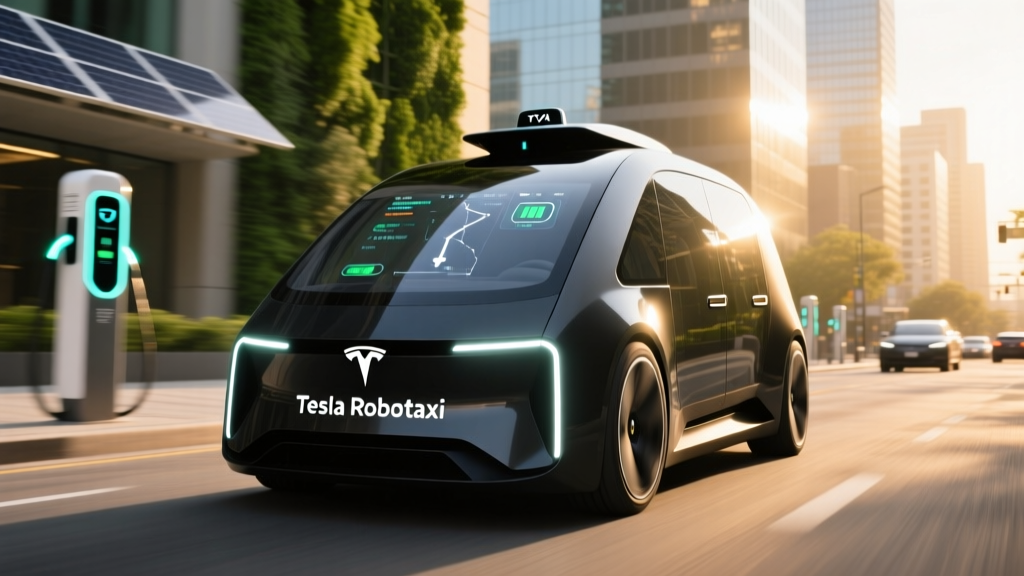
In Austin and Phoenix, riders access Tesla's robotaxi through the Tesla app (the same app used for vehicle owners, now with a "Ride" tab). The experience mirrors Uber or Lyft: set a pickup pin within the geofence, confirm your destination, and a Cybercab is dispatched. There is no steering wheel or pedals inside the production Cybercab — this is a purpose-built, two-seat vehicle designed exclusively for ride-hailing.
| Service | Base Fare | Per-Mile Rate | Per-Minute Rate | Est. 5-Mile Ride |
|---|---|---|---|---|
| Tesla Cybercab (robotaxi) | $1.50 | $0.85 | $0.25 | ~$7.00 |
| Waymo One | $2.00 | $1.10 | $0.30 | ~$9.00 |
| UberX (human driver, same markets) | $2.50 | $1.35 | $0.35 | ~$11.50 |
| Lyft Standard | $2.50 | $1.30 | $0.33 | ~$11.00 |
Tesla's pricing undercuts both Waymo and human-driven rideshare by a meaningful margin. The economics rely on Tesla's stated target of $0.20/mile operating cost for the Cybercab (electricity, depreciation, cleaning, remote fleet management), though independent verification of this figure is not yet available. For comparison, a human-driven UberX driver typically needs $0.55–$0.70/mile to cover their own vehicle costs and earn income, which is why robotaxi pricing has structural room to undercut traditional rideshare.
Safety Record: What the Data Actually Shows
This is where honest analysis requires separating marketing claims from verified incident data. Tesla has reported that its Cybercab fleet has accumulated over 1.2 million driverless miles across Austin and Phoenix as of Q1 2026. Here is what is publicly documented:
Tesla Cybercab Robotaxi Safety Data (through Q1 2026)
- Total driverless miles: ~1.2 million (combined Austin + Phoenix)
- Reported at-fault collisions: 3 minor incidents (low-speed, property damage only, no injuries)
- Disengagement rate (remote assistance interventions): ~1 per 4,200 miles
- Comparison baseline: Waymo reported 1 disengagement per ~13,000 miles in its 5th-generation fleet; human drivers average 1 police-reported crash per ~500,000 miles (NHTSA data), though most minor crashes go unreported
Sources: Tesla Q4 2025 Impact Report; NHTSA AV Safety Data; Waymo safety reports.
The disengagement rate — where the vehicle's AI encounters a scenario it cannot resolve and escalates to a remote human operator — is the more telling metric than collision count at this early stage. Tesla's 1-per-4,200-miles figure suggests the system still encounters edge cases roughly 3x more often than Waymo's more mature fleet. This is expected: Tesla's robotaxi service is younger, operates in different environments, and uses a fundamentally different sensor approach (discussed below).
For context on regulatory reporting, both Texas and Arizona require autonomous vehicle operators to report collisions to state authorities. California's DMV mandates public disengagement reports, which is one reason Tesla's California pilot data (once commercial service launches there) will likely be more transparent.
Tech Stack: Vision-Only vs. Lidar — What Tesla Is Betting On
The Cybercab robotaxi uses the same sensor philosophy as Tesla's consumer FSD system: camera-only perception, with no lidar or radar. This is the single most significant technical divergence between Tesla and every other commercial robotaxi operator (Waymo, Zoox, Cruise/GM, Baidu Apollo all use lidar as a core sensor).
Tesla Cybercab Sensor & Compute Stack
- Cameras: 8 exterior cameras (updated HW5 architecture with higher resolution and low-light performance vs. HW4)
- Compute: Tesla AI5 chip, estimated ~2,500 TOPS (trillion operations per second)
- Neural network: End-to-end vision transformer model trained on Tesla's fleet driving data (billions of miles from consumer FSD vehicles)
- Positioning: High-precision GPS + visual odometry (no HD lidar maps)
- Connectivity: Dual-band 5G for real-time remote assistance and fleet coordination
By contrast, Waymo's 6th-generation vehicle uses 5 lidars, 6 cameras, and external audio sensors, with HD pre-mapped routes. See Waymo's safety documentation for their approach.
The practical implication: Tesla's vision-only system has lower hardware cost per vehicle (no $1,000+ lidar units), which supports aggressive pricing. But it sacrifices the depth-perception redundancy that lidar provides in low-visibility conditions — rain, fog, direct sun glare, and nighttime scenarios with poor street lighting. This is not theoretical; Tesla's remote-assistance disengagement data shows elevated intervention rates during dawn/dusk glare and moderate rain events in Austin.
Regulatory Landscape: Who Approves Robotaxi Expansion State by State?
Tesla robotaxi state expansion is not a single federal decision — it's a patchwork of state-level approvals, and this is the primary bottleneck for geographic growth. Here's how the regulatory framework breaks down:
- Federal (NHTSA): Sets vehicle safety standards (FMVSS). The Cybercab, with no steering wheel or pedals, required an FMVSS exemption petition — Tesla filed and received approval in 2025, similar to GM Cruise's earlier exemption for the Origin. NHTSA does not approve where robotaxis can operate.
- State DMVs / DOTs: Most states require testing permits before commercial deployment. Texas, Arizona, and Florida have streamlined or eliminated this requirement for driverless vehicles. California, New York, and Massachusetts maintain more rigorous multi-step approval processes.
- Public Utilities Commissions (PUCs): In states like California, the CPUC must separately approve any commercial ride-hailing service — including robotaxis. This is where Waymo spent years in proceedings before receiving full deployment authority.
- Local / City governments: Even with state approval, cities can impose operational restrictions (speed limits within geofences, school zone exclusions, construction zone routing). Austin and Phoenix have been cooperative; San Francisco's Board of Supervisors has been more cautious following Cruise's 2023 incident.
Tesla's expansion roadmap for 2026–2027 reportedly targets Nevada, Florida, and Texas (expanded Austin zone + Houston) as next-phase markets, all of which have favorable regulatory environments. States like New York, Massachusetts, and Illinois remain longer-term targets due to more complex approval processes and denser, more chaotic urban environments.
Current Limitations: What the Tesla Robotaxi Cannot Do
If you're considering using the service or evaluating Tesla's robotaxi ambitions, these are the real-world constraints as of early 2026:
- Geofence boundaries: The Cybercab will refuse rides that start or end outside its approved zone. In Austin, this means no rides to/from the airport (AUS) — the geofence stops roughly 3 miles short. In Phoenix, the Sky Harbor airport is included, but suburban sprawl beyond Scottsdale is not.
- Weather restrictions: Service suspends during moderate-to-heavy rain, fog with visibility under 0.25 miles, and any snow/ice conditions. In Phoenix this rarely matters; in Austin, roughly 8–12 days per year see service interruptions due to rain.
- Speed limits: The Cybercab currently operates on roads with posted speed limits up to 45 mph. Highway/freeway travel is not permitted, which limits practical trip distances and rules out inter-city rides.
- Passenger constraints: Two seats only — no group rides. No car seats or booster seats available, meaning the service cannot legally transport children under the age/height requiring restraints in most states.
- Accessibility: The Cybercab's low-slung sports-coupe form factor is not wheelchair accessible. Tesla has not announced an accessible variant. This is a regulatory vulnerability in states that require ADA-compliant ride-hailing options.
- Construction zones: The system struggles with temporary lane shifts and missing lane markings. Remote assistance interventions spike in active construction corridors, sometimes resulting in extended wait times or ride cancellations.
- No trunk cargo: The Cybercab's rear cargo area is minimal — designed for a couple of backpacks or grocery bags, not airport luggage for two passengers on a multi-day trip.
Tesla vs. Waymo: The Robotaxi Landscape in 2026
Any discussion of Tesla robotaxi state expansion requires context on its primary competitor. Waymo (owned by Alphabet) remains the market leader by almost every measurable metric:
| Metric | Tesla Cybercab | Waymo One |
|---|---|---|
| Commercial service cities | 2 (Austin, Phoenix) | 4 (Phoenix, San Francisco, Los Angeles, Austin) |
| Total driverless miles (cumulative) | ~1.2 million | ~30+ million |
| Sensor approach | Camera-only | Lidar + camera + audio |
| Average wait time | 6–12 min | 3–7 min |
| Vehicle capacity | 2 passengers | 3–4 passengers |
| Highway-capable | No | Limited (some freeway segments in Phoenix) |
| Average ride cost (5 mi) | ~$7.00 | ~$9.00 |
| Wheelchair accessible | No | Yes (WAV option in select markets) |
Waymo's advantage in maturity is substantial — over 25x the driverless miles, broader geographic coverage, and a more diverse sensor suite that handles edge cases with fewer remote interventions. Tesla's advantage is cost structure: a cheaper vehicle with no lidar, lower per-ride pricing, and access to Tesla's massive fleet data for training its neural networks. Whether Tesla's vision-only approach can close the safety gap as it scales remains the central open question in the robotaxi industry.
Frequently Asked Questions
Is the Tesla robotaxi truly self-driving, or is someone watching?
The Cybercab in commercial service is SAE Level 4 — there is no human driver in the vehicle. However, remote human operators monitor the fleet and can intervene (via teleoperation) when the AI encounters an unresolvable scenario. This is standard practice for all Level 4 robotaxis, including Waymo. "Self-driving" in this context means no onboard human, not that the system operates without any human oversight.
Can I use the Tesla robotaxi if I don't own a Tesla?
Yes. The Cybercab ride-hailing service is open to anyone with the Tesla app — you do not need to own a Tesla vehicle. The app's "Ride" tab is available to all registered users in service areas.
How does Tesla's FSD (Supervised) in my Model Y relate to the robotaxi?
They share underlying neural network architecture and training data, but they are fundamentally different products. FSD (Supervised) in consumer Tesla vehicles is SAE Level 2 — you are the driver, legally responsible for the vehicle at all times. The Cybercab robotaxi is SAE Level 4 — no human driver is present. Tesla leverages billions of miles of FSD fleet data to train the robotaxi's AI, but the deployment, vehicle design, and regulatory approvals are entirely separate.
When will Tesla's robotaxi expand to more states?
Tesla has signaled Nevada, Florida, and expanded Texas operations as 2026–2027 targets. However, timelines depend on state regulatory approvals, which Tesla cannot unilaterally control. California commercial service (beyond the current pilot) is likely 12–18 months away given CPUC proceedings. Northeast states are likely 2028 or later. For the most current status, check your state's DMV or DOT autonomous vehicle permit database.
What happens if the Cybercab gets into an accident?
Tesla carries commercial liability insurance for its robotaxi fleet, as required by state regulations in Texas and Arizona. In the event of a collision, the vehicle is designed to pull over safely, contact emergency services if needed, and notify Tesla's fleet operations center. Passengers are covered under Tesla's commercial policy — similar to how you're covered in an Uber or Waymo. Specific insurance details and coverage limits are disclosed in the Tesla app's terms of service before you request a ride.
For authoritative information on autonomous vehicle regulations and safety reporting, see NHTSA's AV Safety resources and the IIHS overview of driver-assistance and automation. State-specific permit databases are maintained by individual DMVs — search "[your state] autonomous vehicle permits" for current filings.