Tesla Robotaxi Sightings in Austin: What's Actually Happening
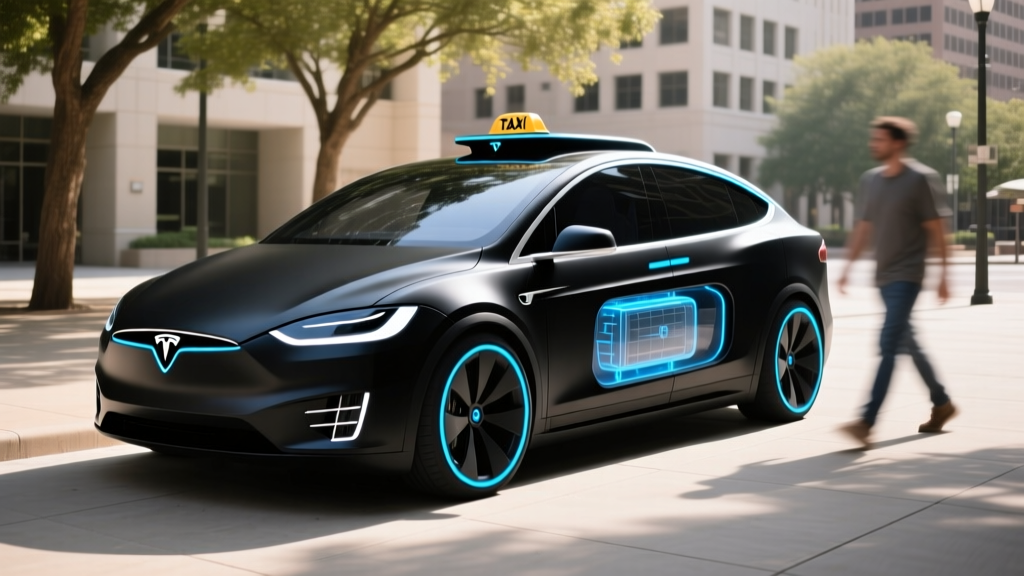
Reports of a Tesla robotaxi spotted in Austin have circulated across EV forums and social media throughout early 2026, fueling speculation that Tesla's long-promised driverless ride-hailing service is imminent. The sightings typically involve unmarked Tesla Model Y vehicles equipped with additional sensor hardware and roof-mounted camera arrays navigating South Austin corridors near the Gigafactory.
But what do these sightings actually signify? Are these vehicles operating as Level 4 robotaxis — fully driverless, no human behind the wheel — or are they something else entirely? The answer requires separating Tesla's marketing language from the engineering and regulatory reality on the ground.
Tesla's consumer vehicles with FSD (Supervised) operate at SAE Level 2 — the driver must remain engaged and is legally responsible at all times. A true robotaxi requires SAE Level 4 — no driver needed within a defined operational design domain (ODD). As of mid-2026, Tesla has not received regulatory approval to operate a Level 4 commercial passenger service in any U.S. jurisdiction. Vehicles spotted testing in Austin are most likely engineering mules or supervised mapping vehicles, not revenue-generating robotaxis.
What the Austin Sightings Actually Show
Tesla has maintained a significant engineering presence in Austin since relocating its headquarters and opening Giga Texas. The company has been conducting extensive real-world data collection using its vision-only perception stack across the city's varied road network — from the dense urban grid of downtown to the highway interchanges along I-35 and MoPac.
The vehicles spotted by residents and enthusiasts typically share these characteristics:
- Model Y platform with additional roof-mounted camera housings beyond the standard production configuration
- Human safety operator visible in the driver's seat (confirmed by multiple sighting reports)
- No commercial branding or ride-hailing signage — distinguishing them from Waymo's clearly marked Jaguar I-PACE fleet
- Repeated route patterns suggesting data collection loops rather than passenger pickups
This is consistent with Tesla's stated approach of building its neural network training dataset through supervised fleet miles before attempting driverless operations. It is not, however, evidence of an operational robotaxi service.
Where Robotaxi Services Actually Operate in 2026
For buyers and riders evaluating the autonomous vehicle landscape, it's essential to distinguish between testing programs and commercial services you can actually use today. Here's the current state of Level 4 robotaxi availability in the United States:
| Service | City | Status (2026) | SAE Level |
|---|---|---|---|
| Waymo One | Phoenix, San Francisco, Los Angeles, Austin (limited) | Commercial — open to public | Level 4 |
| Zoox | Las Vegas, Foster City (CA) | Limited commercial pilot | Level 4 |
| Cruise (GM) | Phoenix (relaunch), Dallas (limited) | Phased restart post-2024 suspension | Level 4 |
| Tesla Robotaxi | No commercial service area | Testing/data collection only | Level 2 (FSD Supervised) |
Waymo remains the only service offering fully driverless, paid rides to the general public across multiple U.S. cities at scale. If you want to hail a true robotaxi in Austin today, Waymo One is your option — not Tesla. For details on Waymo's Austin expansion, check their official service page.
Tesla's Camera-Only Tech Stack vs. Lidar-Based Competitors
The Austin sightings also reignite the core technical debate in autonomous driving: Tesla's camera-only ("Tesla Vision") approach versus the lidar-fusion stacks used by Waymo, Zoox, and Cruise.
Camera-Only (Tesla Vision)
- Sensors: 8 cameras (production) + additional roof cameras on test vehicles, no lidar, no radar (removed since 2022)
- Perception: End-to-end neural network trained on billions of fleet-driven miles
- Advantage: Lower hardware cost, scalable to consumer vehicles, benefits from massive real-world data
- Challenge: Depth estimation relies on learned inference rather than direct measurement; performance in heavy rain, fog, and direct sun glare remains an open engineering question for Level 4 validation
Lidar-Fusion (Waymo, Zoox, Cruise)
- Sensors: Roof-mounted lidar arrays (typically 360° coverage), multiple cameras, radar units
- Perception: Sensor fusion combining direct distance measurement with camera classification
- Advantage: Precise 3D mapping regardless of lighting; proven in commercial Level 4 operations
- Challenge: Higher per-vehicle cost ($50,000+ sensor suite historically, though costs declining); not scalable to consumer pricing
Tesla's bet is that neural network training at scale — powered by millions of customer vehicles running FSD Supervised — will eventually match or exceed the performance of lidar-based systems at a fraction of the cost. The Austin test vehicles are part of that data-collection pipeline. But matching Level 4 reliability without direct distance sensing remains unproven at commercial scale.
Safety Data: What We Know (and Don't Know)
Any discussion of Tesla robotaxi ambitions must address safety with concrete data, not aspirational claims.
- Waymo: Over 50 million fully driverless miles completed. Per NHTSA standing general order reports, Waymo's driverless crash rate involving injuries is significantly below the human-driver baseline for urban environments. Published peer-reviewed analysis shows a ~85% reduction in police-reported crash rates vs. human benchmarks in comparable geofenced areas.
- Cruise: Suspended operations in California in October 2023 after a pedestrian-dragging incident in San Francisco. Restarted limited testing in Phoenix in 2025 with additional safety protocols.
- Tesla FSD (Supervised): Operates under Level 2 with driver monitoring. NHTSA has opened multiple investigations into FSD-involved crashes, particularly at emergency vehicle scenes. Tesla's quarterly safety reports show ~1 crash per 4-5 million FSD miles, but these are supervised miles with a human ready to intervene — not directly comparable to driverless Level 4 operations.
The critical distinction: Tesla has not published independent, peer-reviewed safety data for unsupervised operation because it does not yet operate unsupervised. The Austin test vehicles have safety drivers. Until Tesla can demonstrate Level 4 reliability to regulators — through millions of driverless miles with documented intervention rates — safety comparisons to Waymo's commercial record are premature.
Pricing: Robotaxi vs. Rideshare — What Riders Actually Pay
One of the most common questions about robotaxi services is cost. For any future Tesla robotaxi service, pricing would need to undercut or match existing rideshare and robotaxi options to gain adoption. Here's the current landscape in markets where Level 4 services operate:
| Service | Typical 5-Mile Trip | Per-Mile Rate | Surge Pricing? |
|---|---|---|---|
| Waymo One (Phoenix/SF) | $12–$18 | ~$1.50–$2.50/mi | Limited; more stable than Uber |
| UberX (Austin) | $14–$22 | ~$1.80–$3.00/mi | Yes — frequent during peak |
| Lyft (Austin) | $13–$20 | ~$1.70–$2.80/mi | Yes — Prime Time pricing |
| Tesla Robotaxi (projected) | Not yet priced | Elon Musk has suggested ~$0.20/mi operating cost | Unknown |
Tesla's stated long-term vision is a per-mile cost dramatically below rideshare — enabled by eliminating the driver's earnings share (typically 60-75% of fare revenue). However, this projection does not account for vehicle depreciation, insurance, remote fleet operations staff, cleaning, and regulatory compliance costs that Waymo has absorbed at significant scale. Realistic robotaxi pricing is likely closer to Uber/Lyft parity in the near term, with potential for lower rates only after achieving massive fleet density.
Regulatory Landscape: Who Approves Robotaxi Operations
Operating a Level 4 robotaxi commercially in the United States requires navigating a patchwork of state and federal regulations. No single federal license exists for autonomous vehicle operations; instead, approval flows through state-level agencies.
In Texas — where the Austin sightings occurred — autonomous vehicle testing is permitted under the 2017 Texas Autonomous Vehicle Act (SB 2205). Key provisions:
- AVs may operate on public roads if equipped with a safety operator (testing phase)
- Fully driverless operation requires compliance with TxDOT registration and insurance requirements ($5M minimum liability)
- Local municipalities (including Austin) can impose additional operational restrictions and geofencing requirements
- No state-level ban on driverless commercial operations, but no expedited approval pathway either
At the federal level, NHTSA retains authority over vehicle safety standards (FMVSS), which currently require steering wheels and pedals for passenger vehicles — a requirement Tesla's production vehicles meet but purpose-built robotaxis like Zoox's bidirectional vehicle have needed exemptions for. The IIHS has also called for standardized AV performance testing protocols that do not yet exist.
For Tesla to launch a commercial robotaxi in Austin, the company would need to: (1) demonstrate Level 4 capability through extensive supervised testing, (2) file for driverless deployment permits with Texas authorities, (3) secure commercial insurance at the required thresholds, and (4) likely negotiate operational boundaries with the City of Austin. None of these steps have been publicly completed as of 2026.
Current Limitations of Tesla's Autonomous Ambitions
Even if Tesla achieves regulatory approval, significant technical and operational limitations constrain any near-term robotaxi deployment:
Key Limitations to Understand
- Weather dependency: Camera-only perception degrades in heavy rain, fog, snow, and direct sun glare. Austin's occasional but intense thunderstorms could force service suspensions.
- Geofencing requirement: Even Level 4 robotaxis operate within mapped operational design domains (ODDs). Expect any Tesla robotaxi to be limited to pre-mapped Austin corridors initially — not citywide coverage.
- Edge cases: Construction zones, temporary road closures, unusual road configurations, and emergency vehicle interactions remain challenging for all AV systems. Tesla's neural network approach requires exposure to these scenarios in training data before handling them reliably.
- Remote operations: Level 4 robotaxis require remote human oversight for edge cases (Waymo employs remote fleet assistants). Tesla would need to build this infrastructure from scratch.
- Vehicle maintenance: Camera lens cleanliness, sensor calibration, and tire/windshield condition directly impact perception. A consumer-grade vehicle used in commercial fleet service faces accelerated maintenance demands.
- Insurance and liability: In a driverless crash with no human operator, Tesla assumes full liability. The insurance economics of this model at scale remain unproven for Tesla specifically.
What This Means for EV Buyers and Owners
If you're considering a Tesla purchase in 2026 partly based on the promise of future robotaxi revenue (the "buy a Tesla, it earns money while you sleep" narrative), exercise caution. The timeline from supervised testing vehicles spotted in Austin to a commercially available, revenue-generating robotaxi fleet involves multiple unsolved regulatory, technical, and business-model hurdles.
Tesla's FSD (Supervised) remains a capable Level 2 driver-assistance system — useful for highway commuting and reducing driver fatigue — but it is not a robotaxi, and the vehicles spotted in Austin are not evidence that one is around the corner. Buyers should evaluate Tesla vehicles on their merits as EVs — range, charging speed, build quality, and total cost of ownership — rather than as speculative autonomous-revenue assets.
Frequently Asked Questions
Where can I use a Tesla robotaxi right now?
You cannot. As of 2026, Tesla does not operate a commercial robotaxi service in any city. Vehicles spotted testing in Austin have human safety operators and are not picking up passengers. The only Level 4 robotaxi available to the public in Austin is Waymo One, which operates in a limited geofenced area.
How much would a Tesla robotaxi cost vs. Uber or Lyft?
Tesla has not announced pricing. Elon Musk has cited theoretical operating costs as low as $0.20 per mile, but this excludes insurance, fleet maintenance, remote operations, and regulatory compliance. Based on Waymo's current pricing, expect initial robotaxi fares to be roughly comparable to Uber/Lyft ($1.50–$2.50 per mile) until fleet scale drives costs down.
How safe are robotaxis compared to human drivers?
Waymo — the only operator with tens of millions of driverless miles — has published data showing crash rates approximately 85% below human benchmarks in comparable urban environments, per peer-reviewed studies. Tesla's FSD (Supervised) reports roughly 1 crash per 4–5 million miles, but these are supervised miles with a human ready to intervene, which is not directly comparable. No independent safety data exists for Tesla operating without a driver.
What are the current limitations of Tesla's autonomous driving tech?
Tesla FSD (Supervised) is SAE Level 2 and requires full driver attention. It struggles with construction zones, unmapped road changes, heavy rain, and emergency vehicle scenarios. A camera-only system also faces inherent challenges with depth perception in low-visibility conditions that lidar-based competitors handle through direct measurement.
Is Tesla FSD truly self-driving?
No. Tesla Full Self-Driving (Supervised) is an SAE Level 2 driver-assistance system. The driver must keep hands on or near the wheel, monitor the road, and be prepared to take over instantly. Tesla's own owner's manual and the system's startup screen state this explicitly. Only Level 4 services like Waymo operate without a human driver in defined areas.
When will Tesla launch a real robotaxi service?
Tesla has projected various timelines over the years, none of which have been met. As of 2026, the company has not received Level 4 commercial operating permits in any jurisdiction. Based on the regulatory and technical milestones still required, industry analysts project a limited pilot (if approved) no earlier than late 2026 or 2027, with broad commercial availability significantly later. Treat all announced timelines as preliminary.