Tesla's promise of a driverless robotaxi fleet has been one of the most anticipated — and most delayed — narratives in the autonomous vehicle industry. As of early 2026, the Tesla Cybercab remains in limited pilot testing, while competitors like Waymo operate commercial driverless services across multiple U.S. cities. Understanding the Tesla robotaxi setbacks requires separating marketing timelines from engineering and regulatory reality.
This analysis breaks down where Tesla's autonomous ambitions stand today, what technical and regulatory obstacles remain, and how the Cybercab vision compares to Level 4 robotaxi services that are actually carrying paying passengers right now.
Where Tesla's Autonomy Actually Sits: SAE Levels Explained
The single most important distinction in the autonomous vehicle conversation is the gap between Level 2 driver-assistance and Level 4 driverless operation. Tesla's current Full Self-Driving (Supervised) software — even in its latest 2026 builds — operates at SAE Level 2. The driver must remain engaged, hands on or near the wheel, and ready to intervene at any moment.
SAE Automation Levels — What They Actually Mean
| Level | Name | Driver Role | Current Examples |
|---|---|---|---|
| Level 0 | No Automation | Full control | Basic cruise control |
| Level 1 | Driver Assistance | Hands on wheel, full attention | Adaptive cruise, lane-keeping |
| Level 2 | Partial Automation | Must supervise, ready to take over | Tesla FSD (Supervised), GM Super Cruise, Ford BlueCruise |
| Level 3 | Conditional Automation | Can disengage in specific conditions | Mercedes DRIVE PILOT (limited markets, low speed) |
| Level 4 | High Automation | No driver needed in geofenced area | Waymo One, Zoox (pilot areas) |
| Level 5 | Full Automation | No driver needed anywhere | Does not exist commercially |
Source: SAE International J3016
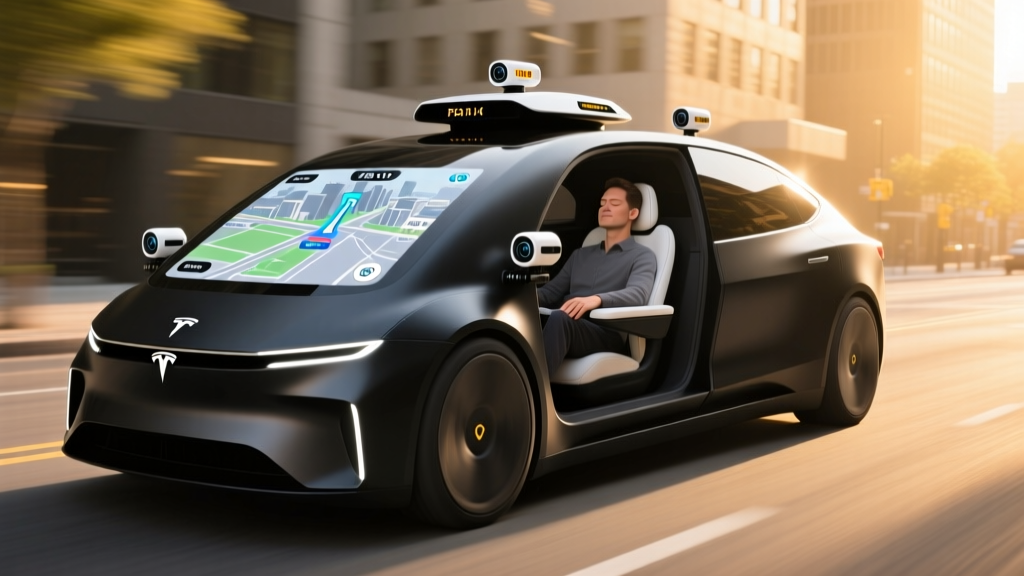
A true Tesla robotaxi — the Cybercab concept unveiled in October 2024 — would need to operate at Level 4, meaning no driver, no steering wheel, and no pedals. Tesla has not yet demonstrated Level 4 capability in any production or pilot vehicle operating on public roads without a safety operator. This gap between Level 2 and Level 4 is the core of the Tesla robotaxi setbacks story.
The Cybercab Timeline: Promises vs. Reality
Tesla CEO Elon Musk originally projected that unsupervised FSD would launch in Texas and California by late 2025, with the Cybercab entering production in 2026. As of Q1 2026, here is where things actually stand:
- Cybercab production: Tesla has confirmed pilot builds at Giga Texas, but no mass production timeline has been locked. Industry analysts at Morgan Stanley and Wedbush have pushed expectations to late 2026 or 2027 for meaningful volume.
- Unsupervised FSD: Tesla has not received regulatory approval to operate FSD without a supervising driver on public roads in any U.S. state. California's DMV and the CPUC have not granted Tesla a driverless testing or deployment permit.
- Rideshare network: Tesla has referenced an "Uber-like" app for summoning robotaxis, but no public beta of this platform exists.
- Safety validation: Tesla has not published third-party-verified disengagement or collision data for FSD in a format comparable to what NHTSA or state regulators require for driverless deployment.
These delays are not merely scheduling slips — they reflect fundamental challenges in technology approach, regulatory approval, and validation methodology.
Technology Stack: Camera-Only vs. Lidar — The Core Debate
The most consequential technical decision behind Tesla's robotaxi setbacks is its commitment to a camera-only (Tesla Vision) perception stack. In 2021, Tesla removed radar from its vehicles; in 2023, it removed ultrasonic sensors. Every production Tesla since relies exclusively on cameras and neural-network processing for environmental perception.
Tesla Vision vs. Waymo's Sensor Suite
| Capability | Tesla (Camera-Only) | Waymo (Multi-Sensor) |
|---|---|---|
| Primary sensors | 8 cameras (surround-view) | LiDAR, radar, cameras |
| Depth perception | Neural-net estimated from 2D images | Direct LiDAR point-cloud measurement |
| Low-light / night | Camera-limited; relies on ambient + headlight illumination | LiDAR active illumination, independent of light |
| Heavy rain / fog | Degraded — cameras obstructed by water, condensation | LiDAR partially degraded; radar penetrates precipitation |
| Redundancy | Single modality (vision) | Triple redundancy (LiDAR + radar + camera) |
| Cost per vehicle (est.) | ~$2,000–$3,000 sensor cost | ~$50,000–$100,000+ sensor suite |
Tesla's argument is economic: a camera-only system is cheap enough to scale across millions of consumer vehicles, collecting vast training data. Waymo's counterargument is safety: redundant sensor modalities catch edge cases that any single sensor type will miss.
The real-world consequence is that Tesla's camera-only stack has struggled with specific edge cases that are critical for driverless operation: phantom braking on shadowed highways, misidentification of stationary emergency vehicles, and depth-estimation failures in low-contrast conditions. These are precisely the scenarios where a Level 4 system — with no human to intervene — cannot afford errors.
Where Can You Actually Ride a Robotaxi Today?
While Tesla's robotaxi remains in development, Level 4 robotaxi services are operational now. Here is the current landscape:
| Service | Operator | SAE Level | Live Cities (2026) | Availability |
|---|---|---|---|---|
| Waymo One | Waymo (Alphabet) | Level 4 | Phoenix, San Francisco, Los Angeles, Austin | Open to public; 24/7 in most zones |
| Zoox | Zoox (Amazon) | Level 4 | Las Vegas (limited corridor), Foster City, CA (testing) | Limited pilot; invite-only in some areas |
| Cruise | Cruise (GM) | Level 4 | Phoenix (limited relaunch post-2023 incident) | Phased re-entry; safety operator present in some vehicles |
| Tesla Cybercab | Tesla | Level 2 (currently) | None — pilot testing only | Not available to public |
Where can I use a robotaxi service right now? Waymo One is the only fully driverless, publicly available robotaxi service operating at scale in the U.S. as of 2026. You can download the Waymo app and request rides in Phoenix, San Francisco, Los Angeles, and Austin within defined geofenced zones. Tesla's Cybercab is not available to the public in any city.
How Much Does a Robotaxi Ride Cost vs. Uber and Lyft?
Pricing is a key part of Tesla's robotaxi pitch — Musk has suggested rides could cost less than a bus ticket. But actual robotaxi pricing today tells a more grounded story:
| Service | Avg. Cost per Mile | Avg. Cost for 5-Mile Ride | Surge Pricing? | Notes |
|---|---|---|---|---|
| Waymo One | $1.50–$2.50 | $8–$14 | Limited surge in peak demand | Comparable to UberX; occasional promos lower cost |
| UberX (human driver) | $1.20–$2.00 | $7–$12 | Yes, frequent | Varies heavily by city and time |
| Lyft (human driver) | $1.10–$1.90 | $6–$11 | Yes | Similar to UberX |
| Tesla Cybercab (projected) | ~$0.20–$0.50 (Tesla claim) | $1–$3 (Tesla claim) | TBD | Unverified; no live service to measure |
How much does it cost vs. Uber/Lyft? Today, Waymo One rides are priced comparably to UberX and Lyft — sometimes slightly higher, sometimes lower depending on promotions. The theoretical cost advantage of a robotaxi (no driver pay) is offset by expensive sensor suites, remote operations staff, and the need for high utilization to amortize vehicle costs. Tesla's projected sub-$1/mile pricing would require extraordinary utilization rates and minimal per-vehicle hardware costs that remain unproven at scale.
Safety Data: What the Numbers Actually Show
Safety is the most scrutinized dimension of any robotaxi operation, and it is central to understanding Tesla robotaxi setbacks. Regulators, insurers, and the public demand evidence — not projections.
Robotaxi Safety Data Snapshot (2024–2025 Reporting Periods)
- Waymo: Over 10 million fully driverless miles completed across Phoenix, SF, LA, and Austin as of late 2025. Waymo's published safety report claims a 76% reduction in police-reported crash rates compared to human benchmarks in comparable urban environments. Contact-rate (any physical contact, including minor) reported at roughly 1 per 100,000+ driverless miles.
- Cruise: Suffered a high-profile pedestrian-dragging incident in San Francisco in October 2023, leading to statewide permit suspension by the California DMV. Cruise has since restructured operations and relaunched limited services with safety operators. The incident underscored the catastrophic reputational and regulatory cost of a single severe failure.
- Tesla FSD (Supervised): Tesla reports aggregate miles driven on FSD but does not publish standardized disengagement rates or crash-per-mile data in the format that California's DMV requires of licensed AV testers (Tesla is not licensed as a driverless tester in CA). NHTSA has opened multiple investigations into Tesla Autopilot/FSD-involved crashes, particularly involving stationary emergency vehicles.
How safe are robotaxis (real data)? Waymo's published data suggests its driverless vehicles are involved in fewer police-reported crashes per mile than human drivers in comparable urban settings. However, robotaxis operate in geofenced, mapped areas with favorable conditions — they avoid construction zones, extreme weather, and unmapped roads. Tesla FSD, operating at Level 2 with a supervising driver, has been involved in a documented series of crashes that NHTSA has investigated, particularly in scenarios involving stationary objects and low-visibility conditions. No direct apples-to-apples comparison is possible because Tesla does not publish equivalent disengagement or crash-rate metrics, and FSD is not operating driverless.
Regulatory Landscape: Who Approves Robotaxi Operations?
Deploying a robotaxi in the United States is not a single federal approval — it is a patchwork of state and local regulatory processes. This fragmentation is a major factor in Tesla robotaxi setbacks.
- Federal (NHTSA): The National Highway Traffic Safety Administration sets vehicle safety standards (FMVSS) but does not currently "approve" autonomous driving software. However, NHTSA investigates crashes and can issue recalls. Tesla's FSD has been subject to multiple NHTSA investigations and a recall campaign related to rolling-stop behavior and intersection handling.
- State DMVs: California, Arizona, Texas, and Nevada have distinct AV testing and deployment permit frameworks. California's DMV requires annual disengagement reports from all licensed AV testers. Tesla is not currently licensed for driverless testing in California.
- State Public Utility Commissions (PUCs): In California, the CPUC must approve any commercial robotaxi fare service. Waymo holds a CPUC permit; Tesla does not.
- Local municipalities: Cities often negotiate operational agreements covering geofencing, parking, curb access, and emergency response protocols.
For Tesla to launch a commercial Cybercab service, it would need state-level driverless testing permits, PUC approval for fare-charging operations, and — critically — a vehicle that either meets or receives exemptions from FMVSS standards (the Cybercab concept has no steering wheel or mirrors, which current FMVSS requires for road-legal vehicles).
Current Limitations: What Robotaxis Cannot Do
What are the current limitations? Every robotaxi service operating today — including Waymo — has significant operational boundaries. Tesla's camera-only approach adds additional constraints:
Limitations of Current Robotaxi and FSD Systems
- Geofencing: Waymo operates only within pre-mapped zones. Drive outside the zone, and the service is unavailable. Tesla's proposed robotaxi network would theoretically work anywhere, but validating safety on unmapped, rural, or poorly marked roads without a human driver is an unsolved problem.
- Weather: Heavy rain, snow, fog, and ice degrade sensor performance. Camera-only systems (Tesla) are particularly vulnerable — water on lenses, low-contrast whiteout conditions, and obscured lane markings reduce perception reliability. Waymo limits operations in severe weather; Tesla would face the same or greater constraints.
- Construction zones: Temporary lane shifts, cones, and flaggers present dynamic scenarios that challenge even advanced perception systems. Most robotaxi services route around known construction or require remote human assistance.
- Edge cases: Unusual objects (overturned trucks, animals, debris), erratic human behavior (jaywalkers, impaired drivers), and novel intersections remain challenging. Level 4 systems handle these by pulling over safely or requesting remote guidance — not by "figuring it out" like a human.
- No-go scenarios for Tesla FSD specifically: Unmarked rural roads, extreme glare conditions, tunnels without GPS, and scenarios requiring eye contact/negotiation with other road users (four-way stops in dense urban areas, school zones with crossing guards).
Is Tesla's Robotaxi Truly Self-Driving or Driver-Assist?
Is this truly self-driving or driver-assist? As of 2026, every Tesla vehicle on the road — including those running the latest FSD (Supervised) software — is a Level 2 driver-assist system. The driver is legally and operationally responsible for the vehicle at all times. The "Supervised" label in Tesla's FSD branding is not optional marketing — it is a regulatory and legal requirement.
The Cybercab, as conceptually designed, would be a Level 4 vehicle with no driver controls. But moving from a Level 2 consumer system to a Level 4 driverless platform requires not just software improvements but a fundamentally different validation and safety-case methodology. Waymo spent over a decade and billions of dollars building this validation framework. Tesla's approach of iterating FSD via over-the-air updates on consumer vehicles is a different paradigm — one that has not yet been accepted by regulators as sufficient for driverless deployment.
What Would a Successful Tesla Robotaxi Launch Require?
Based on the regulatory, technical, and operational precedents set by Waymo and other AV operators, Tesla would need to demonstrate the following before a commercial Cybercab launch:
- State driverless testing permits — beginning in permissive states like Arizona or Texas, with documented safety cases.
- Published disengagement and collision data — in a standardized format comparable to California DMV AV tester reports, even if initially tested outside California.
- FMVSS compliance or exemption — for a vehicle without a steering wheel, pedals, or mirrors.
- Insurance and liability framework — clear assignment of liability when no human driver is present.
- Remote operations infrastructure — staffed fleet operations centers for vehicle monitoring, remote assistance, and incident response.
- Demonstrated edge-case handling — validated performance in construction zones, adverse weather, and unmapped areas within the geofence.
None of these are trivially achievable, and collectively they explain why the Tesla robotaxi setbacks have persisted despite repeated timeline announcements.
Frequently Asked Questions
When will Tesla's Cybercab actually be available to the public?
Tesla has targeted 2026 for initial Cybercab production, but a publicly available robotaxi ride-hailing service requires regulatory approvals that Tesla has not yet secured. A realistic timeline for limited commercial service in a permissive state like Texas or Arizona is late 2026 at the earliest, with broader availability likely in 2027 or beyond — contingent on regulatory progress and demonstrated safety data.
Can I use FSD (Supervised) as a robotaxi today?
No. FSD (Supervised) is a Level 2 driver-assist system. You must remain in the driver's seat, attentive, and ready to take over. Using FSD to carry paying passengers without appropriate licensing and insurance would be illegal and dangerous.
Why hasn't Tesla used LiDAR like Waymo?
Tesla's strategic bet is that camera-only perception, powered by large-scale neural network training on billions of miles of fleet data, can match or exceed multi-sensor systems at a fraction of the hardware cost. This approach is economically compelling if it works — but it has not yet been validated to the standard regulators require for driverless deployment. The cost of a Waymo-class LiDAR suite (historically $50,000–$100,000+, though costs are declining) would fundamentally change Tesla's vehicle pricing.
How does Tesla's FSD safety record compare to Waymo's?
A direct comparison is not possible with currently available data. Waymo publishes crash rates and contact rates for its driverless operations. Tesla reports aggregate FSD miles but does not publish standardized crash-per-mile or disengagement data. NHTSA has investigated multiple FSD-involved crashes. The operating contexts also differ: Waymo operates in geofenced urban zones; FSD operates everywhere Tesla owners drive it, including scenarios far more challenging than Waymo's service area.
Will Tesla's robotaxi be cheaper than Uber?
Tesla has claimed per-mile costs as low as $0.20, which would make rides dramatically cheaper than Uber or Lyft. However, this projection assumes very high vehicle utilization, minimal maintenance costs, low insurance premiums, and no remote-operations overhead — all of which are unproven at scale. Waymo's current pricing is comparable to UberX, suggesting the cost advantage of removing the driver is partially offset by AV operations costs.
The Tesla robotaxi story in 2026 is one of ambitious vision meeting the hard realities of sensor physics, regulatory process, and safety validation. Tesla's camera-only approach and OTA-driven iteration model represent a genuinely different path to autonomy — but the gap between Level 2 and Level 4 is not a software update away. For buyers and enthusiasts watching this space, the actionable takeaway is clear: Tesla's FSD remains a sophisticated driver-assist tool, not a self-driving system, and a commercial Tesla robotaxi service remains a future prospect rather than a present option.