Understanding Tesla's Autonomy Level: SAE Definitions Matter
Before discussing Tesla's robotaxi ambitions, we need to establish a critical distinction: Tesla's Full Self-Driving (FSD) Supervised system is SAE Level 2 driver-assist, not Level 4 robotaxi service. This isn't semantics—it's the difference between a system that requires your constant attention and one that operates without any human oversight.
| Level | Name | Driver Role | Examples |
|---|---|---|---|
| Level 0 | No Automation | Full control | Traditional vehicles |
| Level 1 | Driver Assistance | Hands on wheel OR feet on pedals | Adaptive cruise control |
| Level 2 | Partial Automation | Must monitor system constantly | Tesla Autopilot, FSD Supervised, GM Super Cruise, Ford BlueCruise |
| Level 3 | Conditional Automation | Can disengage in limited conditions | Mercedes Drive Pilot (60 km/h traffic jams) |
| Level 4 | High Automation | No driver needed in operational domain | Waymo One, Cruise (limited areas) |
| Level 5 | Full Automation | No driver needed anywhere | Not yet commercially available |
Tesla's current FSD Supervised system falls squarely in Level 2. The driver must remain alert, hands ready to take over, and eyes on the road. Tesla's cabin camera actively monitors driver attention, and the system will issue warnings and eventually disengage if it detects inattention. This is fundamentally different from Waymo's Level 4 robotaxi service, where no human driver is present or required.
Where Can You Use Tesla's Robotaxi Service Right Now?
As of 2026, Tesla does not operate a commercial robotaxi service anywhere in the United States. The company has announced plans for a "Cybercab" robotaxi and teased pilot programs, but no paying customers can currently hail a driverless Tesla through an app.
| Service | Operational Cities | Service Type | Driver Present? |
|---|---|---|---|
| Waymo One | Phoenix, San Francisco, Los Angeles, Austin (limited) | Commercial rideshare | No (Level 4) |
| Cruise | Limited restart in Phoenix after 2023 safety incident | Testing/restricted commercial | No (Level 4) |
| Tesla FSD Supervised | Available nationwide (personal vehicles only) | Driver-assist feature | Yes (Level 2) |
| Zoox | Las Vegas, Foster City (testing) | Limited pilot | No (Level 4) |
Tesla owners with FSD Supervised can use the feature on their personal vehicles across most U.S. roads, but this is not a robotaxi service. You cannot summon a Tesla to pick up a stranger and drive them somewhere without a licensed, attentive driver in the vehicle.
The Safety Monitor Requirement: Why the Driver's Seat Isn't Optional
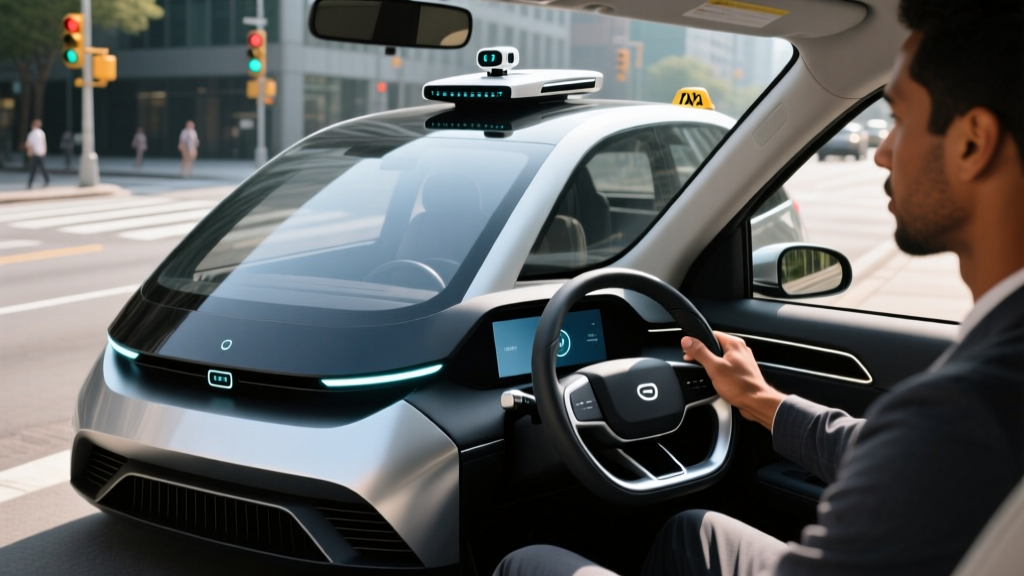
Tesla's FSD Supervised system requires a licensed driver in the driver's seat who remains fully attentive. This isn't a suggestion—it's a legal and technical requirement. The system uses an interior camera to track eye gaze and head position, issuing escalating alerts if the driver appears distracted:
- First warning: Visual and audio alert to pay attention
- Second warning: More urgent alerts, system begins to slow
- Disengagement: FSD deactivates, requires driver to take full control
- Lockout: Repeated inattention can result in temporary FSD suspension
This monitoring system exists because FSD Supervised cannot handle all driving scenarios. Edge cases—construction zones with unusual signage, emergency vehicles stopped in travel lanes, complex multi-point turns, severe weather—still require human judgment and intervention. According to Tesla's Q3 2025 Vehicle Safety Report, drivers using Autopilot technology still need to intervene approximately once every 3-4 million miles, though this metric includes all Autopilot usage, not just FSD Supervised specifically.
Real Safety Data: Tesla FSD vs. Level 4 Robotaxis
Tesla FSD Supervised Safety Record
Tesla reports that vehicles with Autopilot engaged average one crash per 4-5 million miles, compared to the U.S. average of approximately one crash per 670,000 miles (NHTSA data). However, these statistics require important context:
- Most Autopilot miles are highway driving, which is inherently safer than urban driving
- Autopilot users may be more safety-conscious drivers overall
- FSD Supervised-specific crash data is not separately reported by Tesla
- The system still requires human supervision and intervention
For comparison, Waymo's Level 4 robotaxis have logged over 20 million autonomous miles across Phoenix, San Francisco, and Los Angeles. Waymo publishes quarterly safety reports showing intervention rates (when a remote operator must assist the vehicle) and crash data. In their 2024 report covering 7.1 million driverless miles in San Francisco, Waymo reported a 57% reduction in police-reported crashes compared to human drivers in the same area.
The key distinction: Waymo vehicles operate without any human in the driver's seat, while Tesla FSD requires constant human supervision. Comparing their safety records directly is misleading because they're solving different problems with different operational constraints.
Pricing: Tesla FSD vs. Actual Robotaxi Services
| Service | Cost Structure | Per-Mile Cost (Estimated) | Availability |
|---|---|---|---|
| Tesla FSD Supervised | $8,000 one-time purchase or $99/month subscription | $0.15-$0.25 (electricity + depreciation) | Nationwide (personal use only) |
| Waymo One | Per-ride pricing, similar to Uber/Lyft | $1.50-$3.00 per mile | Phoenix, SF, LA, Austin (limited) |
| Uber/Lyft | Per-ride pricing with surge | $1.50-$4.00 per mile | Nationwide |
Tesla's FSD is a driver-assist feature you purchase for your own vehicle, not a ride-hailing service. If Tesla ever launches a commercial robotaxi network, the company has suggested pricing could undercut Uber and Lyft by 30-50%, but this remains speculative. Without a live service, we cannot compare actual Tesla robotaxi pricing to competitors.
Technology Stack: Camera-Only vs. Lidar-Based Systems
Tesla's Vision-Only Approach
Tesla relies exclusively on cameras and neural networks for FSD Supervised, having removed radar and ultrasonic sensors from newer vehicles. The current hardware suite includes:
- 8 cameras providing 360-degree visibility
- NVIDIA-based HW4 computer with redundant processing
- End-to-end neural network trained on billions of miles of real-world driving data
- No lidar, no radar, no ultrasonic sensors
Tesla's bet: human-level vision intelligence can be achieved through cameras and AI alone, making expensive lidar unnecessary. Critics argue this approach struggles with depth perception in edge cases.
Waymo's Level 4 system takes a different approach, combining:
- Lidar sensors for precise 3D mapping and object detection
- Multiple cameras for color/texture recognition
- Radar for velocity detection and adverse weather performance
- Ultrasonic sensors for close-range obstacle detection
- HD maps pre-loaded for each operational area
Waymo's sensor fusion approach provides redundancy—if one sensor type fails or is degraded (cameras in fog, lidar in heavy rain), others can compensate. Tesla's camera-only system has fewer failure modes but also less redundancy.
Current Limitations: Where Tesla FSD Supervised Falls Short
Operational Limitations
- Weather degradation: Heavy rain, snow, fog, and direct sun glare can impair camera performance and trigger system disengagement
- Construction zones: Temporary lane markings, unusual signage, and workers in the roadway often require manual takeover
- Unmapped areas: While FSD works without HD maps, performance degrades in areas with poor lane markings or unusual road geometry
- Complex intersections: Multi-lane roundabouts, unprotected left turns across heavy traffic, and five-way intersections remain challenging
- Emergency scenarios: Stopped emergency vehicles, accident scenes, and police directing traffic require human judgment
- Legal restrictions: FSD Supervised cannot be used commercially for ride-hailing; the driver must be the vehicle owner or authorized user
- Geographic gaps: Some municipalities have restricted or banned Tesla FSD testing or use on public roads
These limitations exist because Level 2 systems, by definition, cannot handle all driving scenarios without human oversight. Level 4 robotaxis like Waymo address this through geofencing—restricting operations to areas where the system has been extensively validated. Tesla's approach attempts to work everywhere, which means encountering more edge cases.
Regulatory Landscape: Who Approves Robotaxi Operations?
Robotaxi regulation in the United States operates at multiple levels:
- Federal (NHTSA): Sets vehicle safety standards but does not approve autonomous driving systems for commercial use
- State level: Individual states grant permits for testing and commercial deployment. California (DMV and CPUC), Arizona, and Texas have been most permissive
- Local level: Cities can impose additional restrictions, require permits, or ban robotaxi operations entirely
As of 2026, Tesla has not received commercial robotaxi permits from any state regulatory body. The company's FSD Supervised system is classified as a driver-assist feature, not an autonomous vehicle, so it doesn't require the same regulatory approvals as Waymo or Cruise. If Tesla launches a true driverless robotaxi service, it will need to navigate the same permitting process that took Waymo years to complete in each operational city.
For current information on autonomous vehicle regulations, consult the National Highway Traffic Safety Administration's automated vehicles page and your state's department of motor vehicles.
Frequently Asked Questions
Is Tesla FSD truly self-driving or just driver-assist?
Tesla FSD Supervised is SAE Level 2 driver-assist, not self-driving. A licensed driver must remain in the driver's seat, fully attentive, and ready to take control at any moment. Only Level 4 systems like Waymo operate without a human driver.
Can I make money with my Tesla as a robotaxi?
Not currently. Tesla has discussed a future "Tesla Network" where owners could add their vehicles to a shared fleet, but this service does not exist as of 2026. Using FSD for commercial ride-hailing would violate Tesla's terms of service and likely your insurance policy.
How does Tesla's safety record compare to human drivers?
Tesla reports fewer crashes per million miles with Autopilot engaged versus the U.S. average. However, direct comparison is difficult because Autopilot miles are predominantly highway driving (safer than urban), and the system still requires human supervision. FSD Supervised-specific data is not separately published.
Will Tesla remove the steering wheel in future robotaxis?
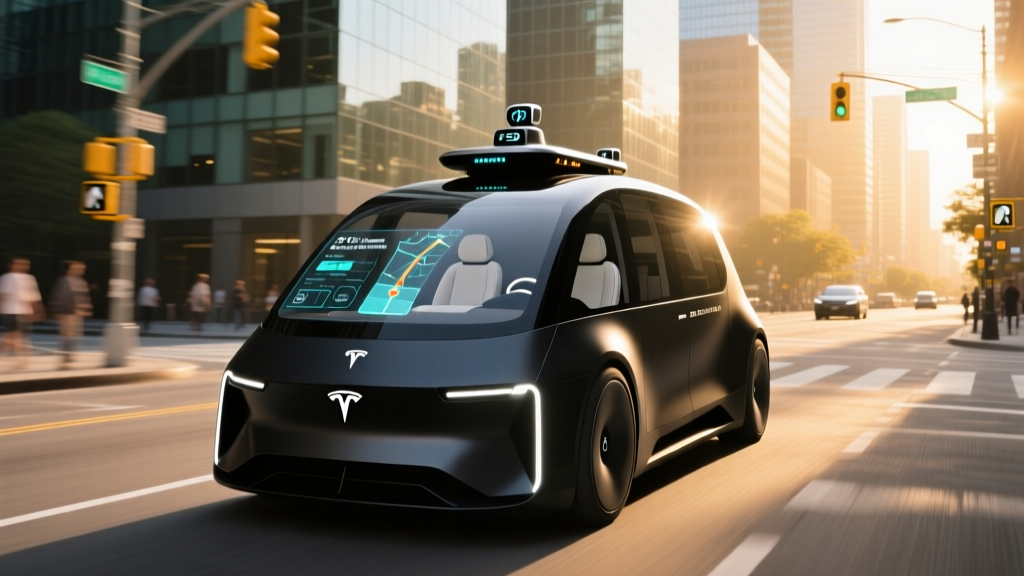
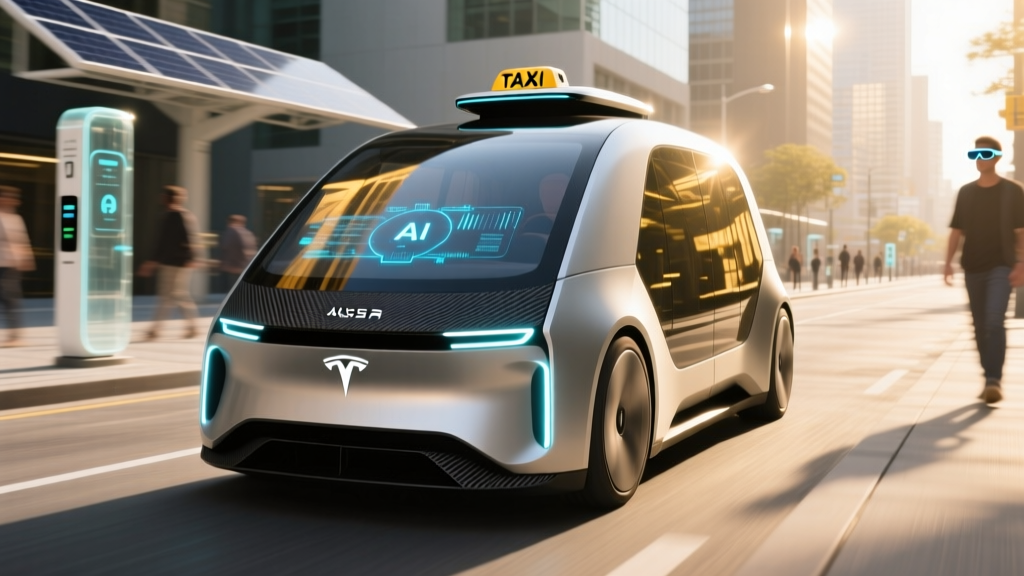
Tesla has shown concept art for a "Cybercab" without a steering wheel or pedals, but this vehicle is not yet in production. Any driverless Tesla would need to achieve Level 4 autonomy and receive regulatory approval before operating without a human driver.
What happens if I'm not paying attention while using FSD?
Tesla's cabin camera monitors your attention. If you look away from the road or close your eyes, the system issues escalating warnings. Repeated inattention results in FSD disengagement and potential temporary suspension of the feature. You remain legally responsible for the vehicle's operation.
How much does Tesla FSD cost in 2026?
Tesla FSD Supervised costs $8,000 as a one-time purchase or $99 per month as a subscription. This price has fluctuated over time and may vary by region. FSD is not eligible for federal tax credits, which apply only to vehicle purchases, not software features.
The Bottom Line: Tesla Robotaxi vs. Reality
Tesla's Full Self-Driving Supervised system represents advanced driver-assist technology, not a robotaxi service. The driver's seat must remain occupied by an attentive, licensed driver who monitors the system and intervenes when necessary. This is SAE Level 2 automation—fundamentally different from Level 4 robotaxis like Waymo that operate without any human driver.
If you're considering Tesla FSD, understand what you're buying: a sophisticated driver-assist feature that can reduce highway fatigue and handle many routine driving tasks, but still requires your full attention and judgment. You cannot use it to hail rides for others, generate income as a robotaxi, or disengage from driving responsibilities.
For true robotaxi service today, Waymo One operates in select cities with no driver present. Tesla may eventually compete in this space, but as of 2026, the company has not launched a commercial robotaxi service, received the necessary regulatory approvals, or demonstrated Level 4 autonomous capability. Until Tesla addresses the safety monitor driver's seat requirement with a system that doesn't need one, FSD remains an impressive driver-assist tool—not a self-driving solution.