When Elon Musk unveiled the Tesla Cybercab concept in late 2024, the promise was a steering-wheel-free, pedal-free robotaxi that would undercut rideshare pricing dramatically. By early 2026, Tesla has begun limited pilot operations, but the deployment strategy diverges sharply from established Level 4 robotaxi operators like Waymo. The critical difference lies in what industry analysts call the "safety monitor move" — Tesla's phased approach that initially places human safety oversight in or near the vehicle while its vision-only neural network accumulates real-world miles.
This article breaks down exactly where Tesla's robotaxi service stands in 2026, how the safety monitor model works in practice, what the data shows about safety, and how it compares to Waymo's fully driverless operations already running in multiple US cities.
The SAE Autonomy Levels: Why the Distinction Matters
The single most important thing to understand about any robotaxi claim is the SAE automation level. Marketing language often blurs these boundaries, but the engineering and legal implications are enormous.
| Level | Name | Who Drives | Example (2026) |
|---|---|---|---|
| Level 2 | Driver Assistance | Human (system assists steering/speed) | Tesla FSD (Supervised), BlueCruise, Super Cruise |
| Level 3 | Conditional Automation | System in limited conditions; human must take over when requested | Mercedes DRIVE PILOT (limited markets, ≤40 mph) |
| Level 4 | High Automation | System handles all driving within its ODD; no human needed | Waymo One, Zoox (geofenced service areas) |
| Level 5 | Full Automation | System handles all conditions everywhere | Does not exist in production (2026) |
Key distinction: Tesla's consumer FSD (Supervised) is Level 2 — the driver must remain engaged and is legally responsible. Tesla's robotaxi pilot targets Level 4 within a geofenced Operational Design Domain (ODD), meaning no driver is needed inside that zone. These are fundamentally different products with different liability frameworks.
Tesla's robotaxi safety monitor move is essentially a bridge strategy: deploying vehicles that can operate at Level 4 capability within defined areas while maintaining a remote or in-vehicle safety monitor during the initial validation phase. This differs from Waymo, which launched its Phoenix service in 2020 without any in-vehicle human after accumulating millions of mapped, sensor-rich miles first.
Where Can You Actually Use Tesla's Robotaxi in 2026?
Tesla's robotaxi pilot is geographically constrained and invitation-only as of mid-2026. Here is the current operational footprint compared to established competitors:
| Operator | Cities Live | Service Model | Public Access |
|---|---|---|---|
| Waymo One | Phoenix, San Francisco, Los Angeles, Austin (expanding) | Level 4 driverless | Open to public via app |
| Tesla Robotaxi Pilot | Austin (limited zone), Bay Area (testing) | Level 4 w/ safety monitor | Invite-only pilot |
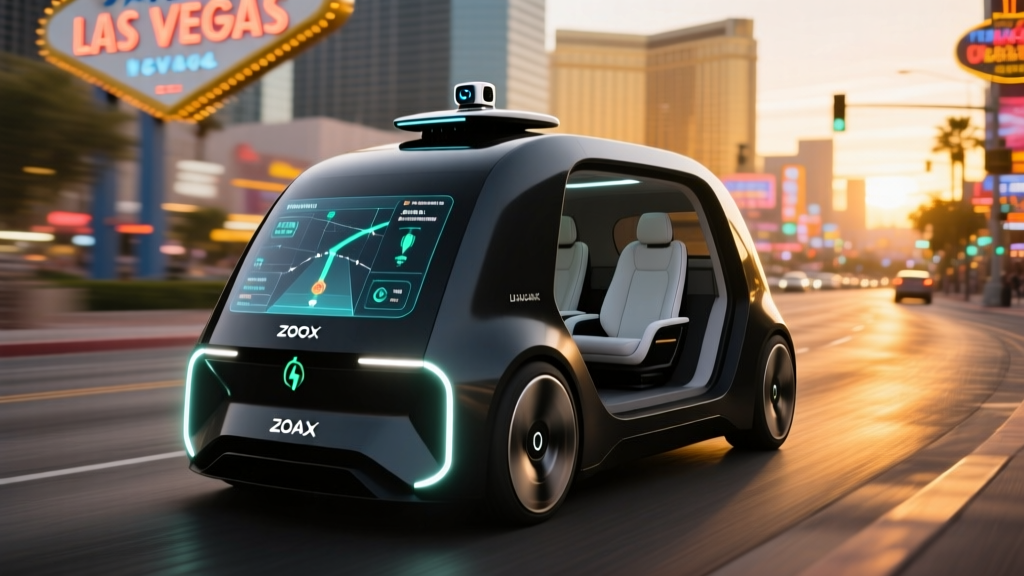
| Zoox | Las Vegas (limited corridor), Foster City (testing) | Level 4 driverless (purpose-built vehicle) | Limited public rides |
| Cruise | Suspended — gradual re-entry in select markets | Level 4 driverless | Limited / phased return |
Tesla selected Austin as its primary pilot city for several reasons: favorable Texas regulatory environment, relatively simple road geometry in the initial geofence zone, and proximity to Tesla's Gigafactory engineering teams. The initial service area covers a roughly 12-square-mile zone in central Austin, operating between 6 AM and midnight.
For comparison, Waymo One operates across a combined service area exceeding 500 square miles in Phoenix alone, with 24/7 availability. Tesla's geographic footprint is approximately 2% of Waymo's current operational area.
The Safety Monitor Move Explained: Remote vs. In-Vehicle Oversight
Tesla's safety monitor strategy represents a deliberate middle ground between two approaches:
- Waymo's approach: Extensive pre-launch validation (millions of mapped miles, simulation, safety-driver testing) followed by fully driverless deployment with remote assistance available.
- Tesla's approach: Leveraging billions of fleet miles from consumer FSD data to train models, then deploying in a limited geofence with a safety monitor (initially in-vehicle, transitioning to remote) to handle edge cases while the system matures.
Tesla Robotaxi Tech Stack (2026 Pilot Vehicle)
- Vision-only: 8-camera surround array (no lidar, no radar in current hardware)
- Compute: Tesla HW5 (AI5) inference chip, ~2,000+ TOPS estimated
- Neural network: End-to-end transformer architecture trained on fleet data
- Mapping: Lane-level HD maps within geofence; vision-based localization
- Remote assistance: Teleoperations center for edge-case escalation
- Connectivity: Dual-SIM LTE/5G redundant link for remote monitor
The safety monitor's role is not to drive the vehicle under normal conditions. Instead, the monitor (or remote operator) can intervene when the system encounters scenarios outside its confidence threshold — construction zones with novel signage, emergency vehicles with unusual approach patterns, or sensor degradation from weather. Tesla has stated it targets a remote-operator-to-vehicle ratio of 1:10 or better once the pilot phase concludes, meaning one remote operator monitors up to 10 vehicles simultaneously.
Waymo, by contrast, reports a remote-assistance ratio of approximately 1:15 to 1:20 in its mature Phoenix market, reflecting years of operational refinement.
Safety Data: What the Numbers Actually Show
Evaluating robotaxi safety requires looking at concrete incident data, not marketing claims. Here is what publicly reported data shows across major operators:
| Metric | Waymo (Phoenix/SF/LA) | Human Benchmark (US avg) | Tesla Robotaxi Pilot |
|---|---|---|---|
| Total driverless miles | ~30+ million (as of late 2025, per Waymo) | N/A | ~500K–1M (estimated, pilot phase) |
| Injury-causing crash rate vs. human | ~85% lower (per Waymo's published safety study with Swiss Re) | Baseline | Insufficient public data |
| Police-reportable crash rate | ~57% lower than human drivers in comparable urban environments | Baseline | Insufficient public data |
| Contactless interventions (vehicle stops unexpectedly) | Declining trend; ~1 per 5,000–8,000 miles in complex urban zones | N/A | Not disclosed |
Sources: Waymo Safety Reports, NHTSA, Swiss Re collaboration study. Tesla pilot data is estimated based on limited public disclosures.
Waymo's safety record benefits from over five years of fully driverless operations and a sensor suite that includes lidar, radar, and cameras — providing redundancy that Tesla's vision-only approach does not currently match. Tesla's consumer FSD fleet has accumulated billions of supervised miles, but supervised Level 2 data is not directly comparable to unsupervised Level 4 performance because the human driver serves as a fallback.
The NHTSA Standing General Order requires all operators of automated driving systems to report crashes. This is the most reliable source for incident data, though reporting lags and classification differences make direct operator-to-operator comparisons difficult.
Pricing: Tesla Robotaxi vs. Uber, Lyft, and Waymo
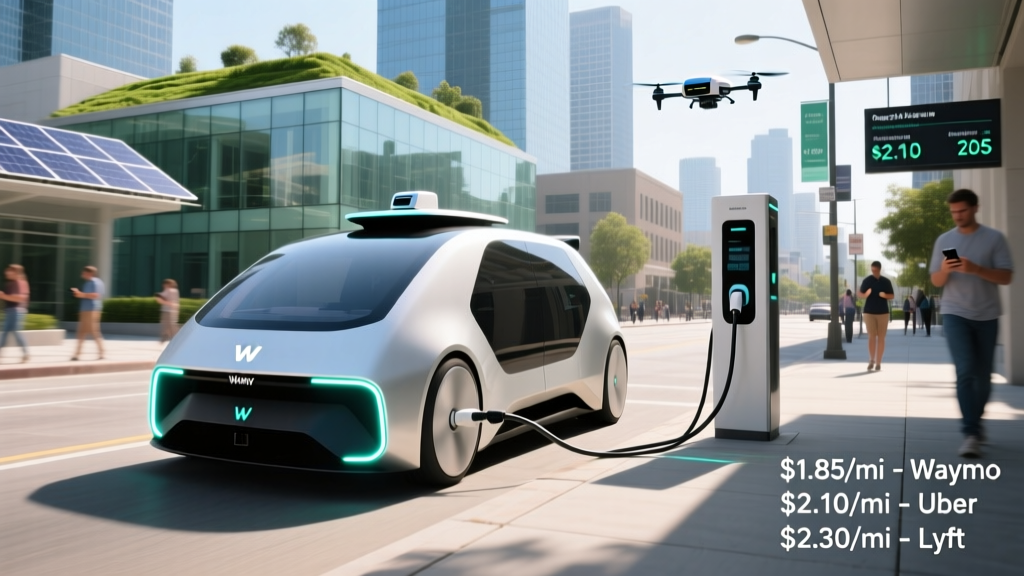
Tesla has publicly targeted a per-mile cost below $1.00 for its robotaxi service, positioning it as dramatically cheaper than human-driven rideshare. Here is how pricing compares in mid-2026:
| Service | Per-Mile Cost | Per-Minute Cost | Avg. 5-Mile Trip |
|---|---|---|---|
| UberX (human driver) | $1.50–$2.20 | $0.30–$0.50 | $12–$18 |
| Lyft (human driver) | $1.40–$2.10 | $0.28–$0.48 | $11–$17 |
| Waymo One | $1.30–$1.90 | $0.25–$0.45 | $10–$16 |
| Tesla Robotaxi (pilot pricing) | $0.80–$1.20 (promotional) | $0.15–$0.30 | $6–$10 |
Note: Tesla's pilot pricing is subsidized and may not reflect long-term economics. Waymo pricing varies by demand and time of day. Uber/Lyft include driver compensation, which represents 60–75% of fare revenue.
The pricing advantage Tesla targets comes from eliminating the driver — the single largest cost in any rideshare transaction. However, Tesla's vision-only hardware stack also costs significantly less per vehicle than Waymo's lidar-equipped fleet (estimated $30,000–$35,000 per Tesla robotaxi vs. $150,000–$200,000 per Waymo vehicle, including sensor suite). This hardware cost gap is Tesla's structural advantage if the vision-only approach proves safe enough for regulatory approval at scale.
Current Limitations: What Tesla's Robotaxi Cannot Do
Every robotaxi service in 2026 operates within significant constraints. Tesla's pilot is no exception, and its limitations differ in important ways from lidar-equipped competitors:
Geofence Constraints
- Operates only within a pre-mapped ~12 sq mi zone in central Austin
- Cannot accept origin or destination outside the geofence
- Service hours limited to 6 AM – midnight (no overnight operation during pilot)
Weather and Environmental Limits
- Heavy rain: Vision-only systems degrade significantly in heavy precipitation; service may be suspended when visibility drops below operational thresholds
- Fog: Dense fog presents similar challenges — lidar-equipped competitors (Waymo) maintain better performance in low-visibility conditions
- Direct sun glare: Camera saturation at dawn/dusk on east-west corridors can trigger conservative speed reductions or route changes
- Snow/ice: Not applicable in Austin pilot, but a critical barrier to northern US expansion
Edge Cases and No-Go Scenarios
- Unprotected left turns across multi-lane traffic remain high-latency scenarios
- Construction zones with temporary signage or lane shifts require remote assistance at higher rates
- Emergency vehicle interactions (approaching from behind, blocking the route) trigger pull-over protocols
- Unusual road users (horse-drawn carriages, oversized loads, funeral processions) may cause conservative stops
These limitations are not unique to Tesla — Waymo and Zoox also suspend or restrict service in severe weather and geofence their operations. However, Tesla's lack of lidar means its weather-related service suspensions are likely to be more frequent in rain-heavy markets like Houston or Atlanta, should it expand there.
The Regulatory Landscape: Who Approves Robotaxi Operations?
Robotaxi deployment in the United States requires navigating a patchwork of state and local regulations. There is no single federal "robotaxi license."
- Texas (Austin pilot): Texas passed autonomous vehicle legislation (HB 3026, effective 2025) that permits driverless operations without a special state permit, provided the vehicle meets federal motor vehicle safety standards (FMVSS) or receives an NHTSA exemption. Austin has local operating agreements with robotaxi companies covering curb access, data sharing, and emergency response protocols.
- California: The California Public Utilities Commission (CPUC) and the DMV jointly regulate robotaxi services. Waymo holds a CPUC permit for commercial driverless service in San Francisco and Los Angeles. Tesla would need separate CPUC approval to operate a commercial robotaxi service in California — a process that includes public comment periods and safety data reviews.
- Federal (NHTSA): The National Highway Traffic Safety Administration sets vehicle safety standards and investigates crashes. NHTSA does not "approve" robotaxi services but can issue recalls, mandate reporting, or restrict operations through enforcement actions. Tesla's Cybercab, lacking a steering wheel and pedals, requires an FMVSS exemption from NHTSA for production — a process that has historically been slow and limited to 2,500 vehicles per manufacturer per year under current law.
The FMVSS exemption cap is a significant bottleneck for Tesla's scaling ambitions. While the Cybercab pilot uses modified Model Y vehicles (which are FMVSS-compliant), the purpose-built Cybercab without steering controls cannot be mass-produced for commercial service without either a regulatory exemption or a change in federal law. Industry lobbyists, including the Alliance for Automotive Innovation, have pushed for raising the exemption cap, but as of mid-2026, no legislative change has passed.
Tesla's Vision-Only Bet vs. Multi-Sensor Redundancy
The technology stack choice is the most consequential engineering decision in the robotaxi space, and Tesla is the only major operator pursuing a pure vision-only approach at Level 4.
| Attribute | Tesla Robotaxi | Waymo 6th-Gen | Zoox Gen 3 |
|---|---|---|---|
| Cameras | 8 surround (high-res) | 29+ cameras | Multi-camera surround |
| Lidar | None | 5+ lidar units (custom) | Multi-lidar array |
| Radar | None (removed in HW4+) | 6+ radar units | Radar included |
| Ultrasonic | None (removed) | Yes (close-range) | Yes |
| Estimated vehicle cost | ~$30,000–$35,000 | ~$150,000–$200,000 | ~$100,000+ (purpose-built) |
| Weather resilience | Lower (camera-dependent) | Higher (lidar sees through rain/fog) | Higher (multi-sensor) |
Tesla's argument for vision-only is economic and philosophical: cameras are cheap, scale easily, and mirror how humans drive (using eyes and a brain). The counter-argument, supported by Waymo's operational data, is that lidar provides a depth-measurement redundancy that cameras alone cannot match in degraded visibility — and that redundancy is critical when there is no human fallback.
In practice, this means Tesla's robotaxi will likely require more frequent service suspensions in adverse weather and may face higher remote-assistance intervention rates in complex urban environments. Whether Tesla's neural network improvements can close this gap is the central open question of the 2026 pilot.
Frequently Asked Questions
Is Tesla's robotaxi truly self-driving, or is it driver-assist like FSD?
Within its geofenced service area, Tesla's robotaxi targets SAE Level 4 — meaning no human driver is needed. This is fundamentally different from Tesla FSD (Supervised), which is SAE Level 2 and requires an attentive human driver at all times. However, during the 2026 pilot phase, Tesla uses a safety monitor (in-vehicle or remote) as a transitional measure. The vehicle drives itself, but a human can intervene if the system encounters an unfamiliar scenario.
Where can I ride a Tesla robotaxi right now?
As of mid-2026, Tesla's robotaxi pilot operates in a limited zone in Austin, Texas, and is available only to invited participants. It is not yet open to the general public. Waymo One, by contrast, is available to any rider in Phoenix, San Francisco, Los Angeles, and Austin (in Waymo's case, a broader service area than Tesla's Austin geofence).
How much does a Tesla robotaxi ride cost compared to Uber?
Tesla's pilot pricing is estimated at $0.80–$1.20 per mile, compared to $1.50–$2.20 for UberX. A typical 5-mile trip would cost approximately $6–$10 in a Tesla robotaxi vs. $12–$18 in an UberX. However, pilot pricing is subsidized and may increase as the service scales. Tesla's long-term goal is under $1/mile, which would represent a 50%+ discount to current rideshare.
How safe are robotaxis compared to human drivers?
Waymo, the only operator with sufficient public data for statistical comparison, reports injury-causing crash rates approximately 85% lower than human drivers and police-reportable crash rates approximately 57% lower, based on a collaboration with reinsurer Swiss Re analyzing over 30 million driverless miles. Tesla's robotaxi pilot has not yet accumulated enough miles for a statistically meaningful comparison. The human baseline in US urban environments is approximately 1.5 police-reported crashes per million miles driven, per NHTSA data.
Can Tesla's robotaxi operate in heavy rain or snow?
Heavy rain degrades Tesla's vision-only system more than lidar-equipped competitors like Waymo. Tesla may suspend service during heavy precipitation. Snow and ice are not currently tested in the Austin pilot and represent a significant barrier to expansion in northern markets. Waymo's lidar-equipped vehicles maintain better performance in rain and light fog, though all robotaxi services reduce operations in severe weather.
When will Tesla's robotaxi be available in my city?
Tesla has not published a specific expansion timeline beyond the Austin pilot and Bay Area testing. Scaling to new cities requires: (1) sufficient pilot safety data, (2) local regulatory agreements, (3) NHTSA FMVSS exemptions for the steering-wheel-free Cybercab (limited to 2,500 units/year under current law), and (4) remote-operations infrastructure in each market. Realistic expansion to 3–5 additional cities could begin in 2027–2028 if pilot data supports it, but this is contingent on regulatory and safety milestones.