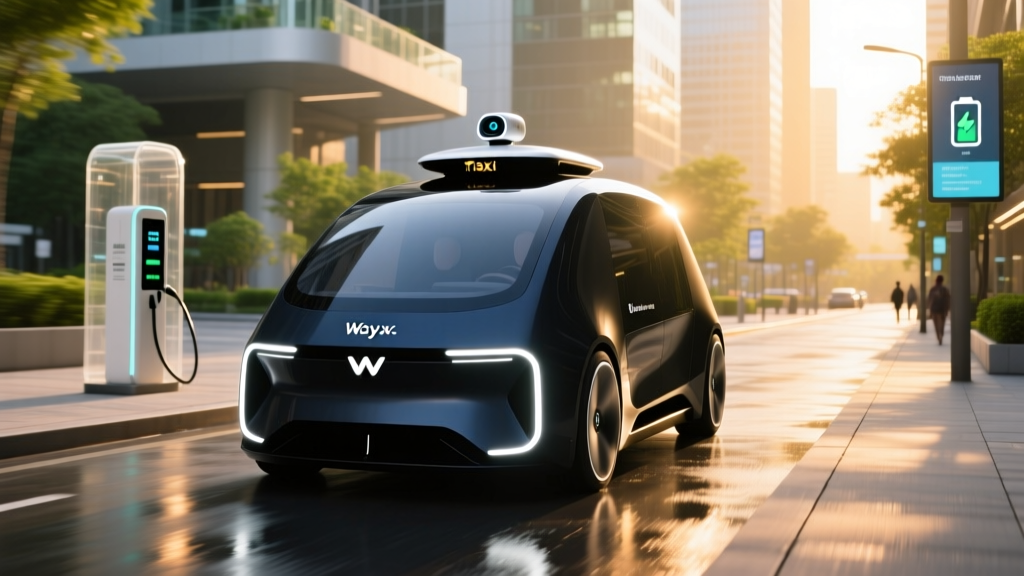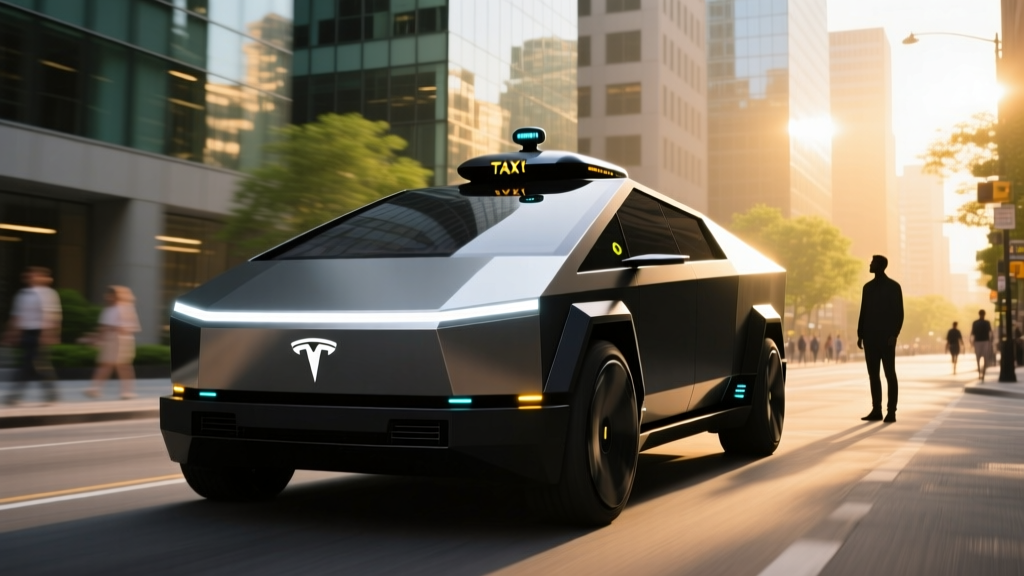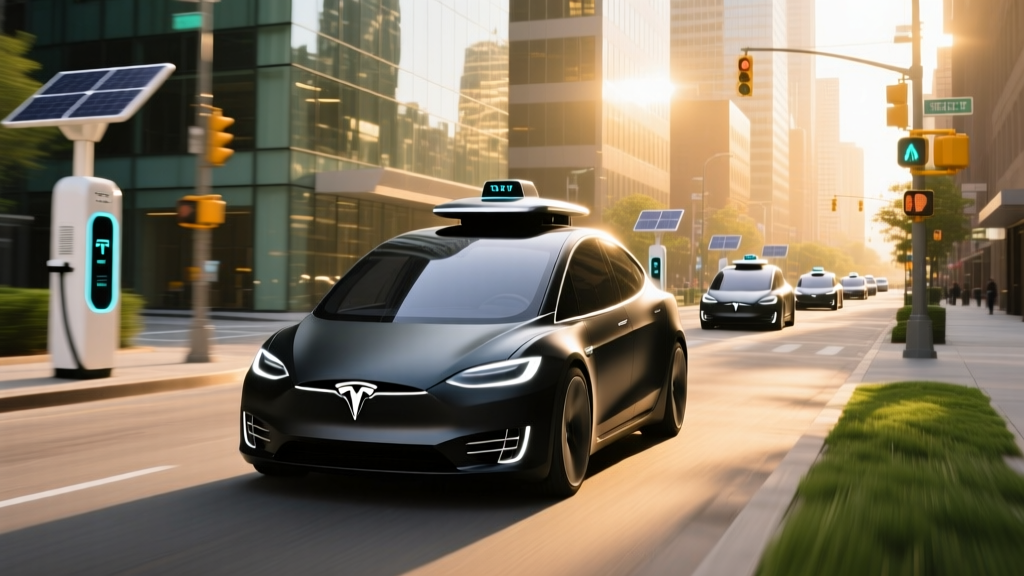
What Level of Autonomy Does the Tesla Cybercab Actually Offer?
Before evaluating Tesla robotaxi population coverage, it is essential to understand where the Cybercab sits on the SAE automation scale. As of early 2026, Tesla's consumer vehicles equipped with FSD (Supervised) remain classified as SAE Level 2 driver-assistance systems — meaning the human driver must continuously monitor the driving environment and be prepared to intervene at any moment. The Cybercab, Tesla's dedicated robotaxi platform unveiled in late 2024, is designed to operate at SAE Level 4 within geofenced operational design domains (ODDs), meaning no human driver is required within those defined boundaries.
| Level | Description | Example |
|---|---|---|
| Level 2 | Driver-assist; human must supervise at all times | Tesla Autopilot, FSD (Supervised), BlueCruise |
| Level 3 | Conditional automation; driver must take over when requested | Mercedes DRIVE PILOT (limited highways, <40 mph) |
| Level 4 | High automation within a defined ODD; no driver needed | Waymo One, Zoox, Tesla Cybercab (planned) |
| Level 5 | Full automation everywhere, all conditions | Does not exist commercially |
Source: SAE International J3016
The distinction matters enormously for population coverage analysis. A Level 4 robotaxi can only operate where its ODD has been validated and approved by regulators — which is fundamentally different from a Level 2 system that a human driver can use on any road. Tesla's stated ambition is to scale Cybercab service across major metro areas, but the path from announcement to live Level 4 operations involves regulatory approval, geofencing, and demonstrated safety performance in each jurisdiction.
Where Can You Use the Tesla Robotaxi Service Right Now?
As of mid-2026, Tesla's Cybercab robotaxi service remains in limited pilot operations, not yet available as a commercial ride-hailing service open to the general public in the way Waymo One operates in Phoenix, San Francisco, and Los Angeles. Tesla has indicated initial deployment targets, but commercial availability depends on state-by-state regulatory approval.
| Provider | Live Commercial Cities | SAE Level | Population Coverage (est.) |
|---|---|---|---|
| Waymo One | Phoenix, San Francisco, Los Angeles, Austin (expanding) | Level 4 | ~15 million (metro areas) |
| Tesla Cybercab | Pilot phase; no open commercial service yet | Level 4 (planned) | TBD — targets major metros |
| Zoox | Las Vegas, Foster City (limited); expanding | Level 4 | ~3 million (metro areas) |
| Cruise | Suspended/restructuring after 2023 incidents; limited return | Level 4 | Minimal |
Tesla's population coverage strategy differs fundamentally from Waymo's. Where Waymo maps and validates each city individually with HD lidar-based geofencing, Tesla's approach relies on its vision-only neural network stack — theoretically enabling faster geographic scaling once regulatory approval is secured. However, "theoretically faster" has not yet translated into approved commercial coverage.
The key question for prospective users: you cannot currently hail a driverless Tesla Cybercab the way you would a Waymo in Phoenix or San Francisco. Tesla has discussed launch events and pilot programs, but broad public access remains ahead on the timeline.
Tesla's Vision-Only Tech Stack vs. Lidar-Based Competitors
The technology powering Tesla's robotaxi ambitions is the same vision-only architecture used in consumer FSD (Supervised), scaled and hardened for Level 4 operation. Here is how the Cybercab's sensor suite compares to lidar-reliant competitors:
- Cameras: 8+ exterior cameras providing 360° surround view (no lidar, no radar in current production spec)
- Compute: Tesla HW4 (AI4) inference chip, ~300+ TOPS processing capacity
- AI Architecture: End-to-end neural network trained on billions of miles of real-world Tesla fleet driving data
- Mapping: Lane-level topology maps generated from fleet data (not traditional HD lidar maps)
- Geofencing: Software-defined ODD boundaries limiting where driverless mode engages
- LiDAR: Custom 6th-gen lidar units with ~200m+ range, multiple units per vehicle
- Cameras: 29+ cameras for redundancy and object classification
- Radar: Multiple radar units for velocity detection and adverse weather
- Audio sensors: External microphones to detect emergency vehicle sirens
- Compute: Custom Waymo Driver platform
- Mapping: Pre-built HD 3D maps with centimeter-level precision, maintained per-city
The trade-offs are significant. Tesla's vision-only approach is far cheaper per vehicle — no lidar units costing thousands of dollars each — and theoretically scales to any geography without the need to pre-map every street. The downside: camera-only systems face greater challenges in heavy rain, fog, direct sun glare, and low-light conditions where lidar and radar maintain performance. Tesla has addressed some of these gaps through neural network improvements and HW4's enhanced camera resolution, but the physics of optical sensing in adverse conditions remain a real constraint for ODD expansion.
Waymo's multi-sensor redundancy provides a wider operational envelope — their vehicles operate in moderate rain and at night with demonstrated reliability — but at the cost of higher per-vehicle hardware expense and the need for city-by-city HD mapping.
How Safe Are Robotaxis? Examining the Real Data
Safety is the single most important variable determining Tesla robotaxi population coverage expansion. Regulators will not approve commercial driverless service without demonstrated safety performance. Here is what the available data shows across the industry:
- Waymo: Over 30 million fully driverless miles completed as of early 2026. Published data shows a 6.1x lower fatal crash rate and 3.3x lower injury-causing crash rate compared to human benchmarks in comparable urban environments.
- Cruise: Following a severe October 2023 incident in San Francisco (pedestrian dragged ~20 feet after initial collision), California DMV suspended Cruise's deployment permit. Cruise has since restructured operations with a phased, supervised return to limited markets.
- Tesla FSD (Supervised — Level 2): Tesla's Q4 2025 safety report claimed 1 crash per ~5.9 million miles driven with FSD engaged, compared to the US average of ~1 per 670,000 miles (NHTSA data). However, these figures include highway driving with FSD, which is statistically safer than urban robotaxi operation, and direct comparison to Level 4 driverless data requires careful context.
Sources: NHTSA, Waymo Safety Report, Tesla Vehicle Safety Reports
For Tesla to achieve broad robotaxi population coverage at Level 4, the Cybercab must demonstrate safety performance comparable to or exceeding Waymo's track record in dense urban environments — not just highway statistics. This means proving reliable handling of unprotected left turns, construction zones, emergency vehicles, pedestrians stepping into roadways, and adverse weather, all without a human safety net.
The regulatory standard is effectively "demonstrably safer than a competent human driver in the same ODD," and the burden of proof rests on the operator. Waymo has met this bar in multiple cities through years of validated data. Tesla's path requires accumulating equivalent evidence for the Cybercab platform specifically.
Robotaxi Pricing: Tesla Cybercab vs. Waymo vs. Uber/Lyft
Tesla has stated a target cost of approximately $0.20 per mile for Cybercab rides, which would dramatically undercut both traditional rideshare and current robotaxi pricing. Here is how that compares to the market:
| Service | Cost Per Mile (avg.) | Typical 5-Mile Trip | Notes |
|---|---|---|---|
| Tesla Cybercab (target) | ~$0.20/mi | ~$1.00 | Announced target; not yet commercially validated |
| Waymo One | ~$1.00–$1.50/mi | ~$5.00–$7.50 | Comparable to UberX; varies by city/time |
| UberX | ~$1.20–$2.00/mi | ~$6.00–$10.00 | Varies heavily by market, surge pricing |
| Lyft | ~$1.10–$1.80/mi | ~$5.50–$9.00 | Similar to UberX; market-dependent |
Tesla's $0.20/mile target is predicated on eliminating the human driver (the largest cost in rideshare), achieving very low vehicle operating costs (electricity at ~$0.04–$0.06/mile for the Cybercab's efficient platform), and high fleet utilization rates. Whether this pricing is sustainable at scale — factoring in insurance, vehicle depreciation, remote operations staff, cleaning, and regulatory fees — remains unproven.
Waymo's current pricing is competitive with UberX in most markets, which has been sufficient to build ridership. If Tesla can deliver even half of its target pricing advantage (say, $0.50/mile), it would represent a substantial disruption. But until commercial operations begin and real per-mile economics are published, the $0.20 figure should be treated as an aspirational target, not a confirmed fare structure.
Regulatory Landscape: Who Approves Robotaxi Operations?
Tesla robotaxi population coverage is ultimately constrained not by technology alone, but by a patchwork of state and local regulatory approvals. In the United States, there is no single federal robotaxi license. Instead, the approval process works in layers:
- NHTSA (Federal): Sets vehicle safety standards (FMVSS). The Cybercab — designed without a steering wheel or pedals — requires specific exemptions from certain FMVSS requirements that assume a human driver. Tesla has engaged with NHTSA on this process.
- State DMVs / Public Utility Commissions: States like California (DMV + CPUC), Arizona, Texas, and Nevada have established specific permits for driverless testing and commercial deployment. Each state sets its own requirements for insurance, incident reporting, and operational limits.
- Local / City Authorities: Even within approved states, individual cities may impose additional requirements — speed limits for robotaxis, restricted zones (school areas, dense pedestrian districts), hours of operation, and fleet-size caps.
California's experience with Cruise demonstrates how quickly regulatory approval can be revoked. After the October 2023 San Francisco incident, the California DMV suspended Cruise's permit within days, and the company's subsequent restructuring shows how fragile regulatory trust can be. Tesla will need to build that trust from scratch in each jurisdiction where it seeks to operate the Cybercab commercially.
Arizona (particularly Phoenix) has been the most permissive environment for robotaxi operations, which is why Waymo scaled there first. Texas (Austin) is emerging as another relatively favorable regulatory environment. States like New York, Massachusetts, and Illinois have more restrictive frameworks that could significantly delay Tesla robotaxi population coverage on the East Coast and in the Midwest.
Current Limitations: Where Robotaxis Cannot Go
Understanding the limitations of Level 4 robotaxi operation is critical for evaluating realistic population coverage. Even Waymo — the most mature commercial robotaxi service — operates within significant constraints that will apply to Tesla's Cybercab as well:
- Geofencing: Operations are restricted to pre-mapped and validated zones. Stray outside the geofence and the vehicle must safely pull over or hand control back (if applicable).
- Weather: Heavy rain, snow, ice, and dense fog degrade sensor performance. Vision-only systems (Tesla) face greater constraints here than multi-sensor stacks (Waymo). Most robotaxi services reduce operations or suspend service in severe weather.
- Construction zones: Unmapped lane closures, temporary signals, and flaggers present edge cases that require either advanced real-time perception or remote human teleoperations assistance.
- Highway/freeway: Most current Level 4 robotaxi services avoid limited-access highways due to higher speeds (65-80 mph) and the severity of potential failures. Tesla has suggested Cybercab will handle highway segments, but this requires separate validation.
- Rural areas: Low-density roads with poor lane markings, no streetlights, and limited connectivity fall outside practical ODDs for the foreseeable future.
- Pedestrian-dense zones: Some cities restrict robotaxi operation near schools, stadiums during events, and high-foot-traffic districts.
For Tesla specifically, the vision-only architecture adds weather-related limitations that lidar-equipped competitors may not face to the same degree. Camera performance in heavy precipitation, direct low-angle sun, and complete darkness on unlit roads are known challenges that Tesla's neural network improvements continue to address but have not fully resolved to a Level 4 standard in all conditions.
The practical implication for population coverage: even if Tesla achieves regulatory approval in a major metro area, the actual serviceable area within that metro will be a subset — likely the well-mapped, well-lit, moderate-weather core and inner suburbs, not the full metropolitan statistical area.
What This Means for Tesla's Population Coverage Trajectory
Tesla's robotaxi population coverage potential is both its greatest promise and its most uncertain variable. The company has several structural advantages:
- Fleet data advantage: Millions of Tesla vehicles on the road generating real-world driving data to train the neural network — a dataset no competitor can match in volume.
- Manufacturing scale: Tesla's production capacity (Fremont, Austin, Shanghai, Berlin) could theoretically produce Cybercab units at volumes that dwarf Waymo's fleet of several thousand vehicles.
- Cost structure: Vision-only hardware is cheaper per vehicle, and Tesla's vertical integration (compute, software, manufacturing) gives it potential cost advantages.
- Brand recognition: Tesla does not need to build consumer awareness from scratch — the Tesla brand carries significant weight with early adopters.
But the obstacles are equally real:
- Regulatory approval per jurisdiction: No shortcuts; each state and city requires separate engagement, testing, and approval.
- Safety validation at scale: Billions of supervised FSD miles do not directly translate to proven Level 4 safety. The Cybercab must accumulate its own driverless track record.
- FMVSS exemptions: A vehicle without a steering wheel or pedals requires specific federal approvals that add time and uncertainty.
- Competition from incumbents: Waymo is not standing still — it is expanding to new cities and has years of operational experience and regulatory relationships that Tesla must build from the ground up.
Realistically, meaningful Tesla robotaxi population coverage — defined as commercial service available to the general public across multiple major metro areas — is likely a 2027–2028 proposition at the earliest, assuming successful pilot programs and regulatory approvals proceed without major safety incidents. Initial coverage will probably be concentrated in regulatory-friendly states (Arizona, Texas, Nevada) before expanding to more complex jurisdictions.
Frequently Asked Questions
Where can I use the Tesla robotaxi service right now?
As of mid-2026, Tesla's Cybercab is not available as a commercial ride-hailing service open to the general public. Tesla is conducting pilot operations in select areas, but you cannot currently hail a driverless Tesla the way you would a Waymo in Phoenix or San Francisco. Commercial launch is expected to begin in regulatory-friendly markets first.
How much does a Tesla Cybercab ride cost compared to Uber or Lyft?
Tesla has announced a target cost of approximately $0.20 per mile, which would be dramatically cheaper than UberX (~$1.20–$2.00/mile) or Waymo One (~$1.00–$1.50/mile). However, this is a target figure, not a confirmed fare. Real-world pricing will depend on insurance costs, fleet operations, and regulatory fees once the service is commercially live.
How safe are robotaxis compared to human drivers?
Waymo — the most data-rich robotaxi operator — reports a 6.1x lower fatal crash rate and 3.3x lower injury-causing crash rate compared to human benchmarks across 30+ million driverless miles. Tesla's FSD (Supervised) reports strong safety figures on highways, but Level 2 supervised driving data is not directly comparable to Level 4 driverless urban operation. The Cybercab will need to accumulate its own validated safety record before regulatory approval.
Is the Tesla Cybercab truly self-driving or is it driver-assist?
The Cybercab is designed for SAE Level 4 operation — fully driverless within its approved geofenced area. This is fundamentally different from Tesla's consumer FSD (Supervised), which is SAE Level 2 and requires a human driver to remain engaged at all times. Level 4 means no steering wheel, no pedals, and no human intervention required within the operational design domain.
What are the main limitations of Tesla's robotaxi?
Key limitations include geofencing (service restricted to pre-approved zones), weather constraints (camera-only systems face challenges in heavy rain, snow, and fog), construction zone handling, and the need for state-by-state regulatory approval. Highway operation and rural coverage are additional challenges that will take time to validate and approve.
Will Tesla's robotaxi work in bad weather?
Tesla's vision-only sensor suite is more constrained in adverse weather than lidar-equipped competitors like Waymo. Heavy rain, snow, dense fog, and extreme glare conditions may cause the Cybercab to reduce speed, modify its route, or suspend operations until conditions improve. This is a known trade-off of the camera-only approach and will affect the effective operational availability in cities with challenging weather patterns.