The Reality of Tesla's Robotaxi Rollout in 2026
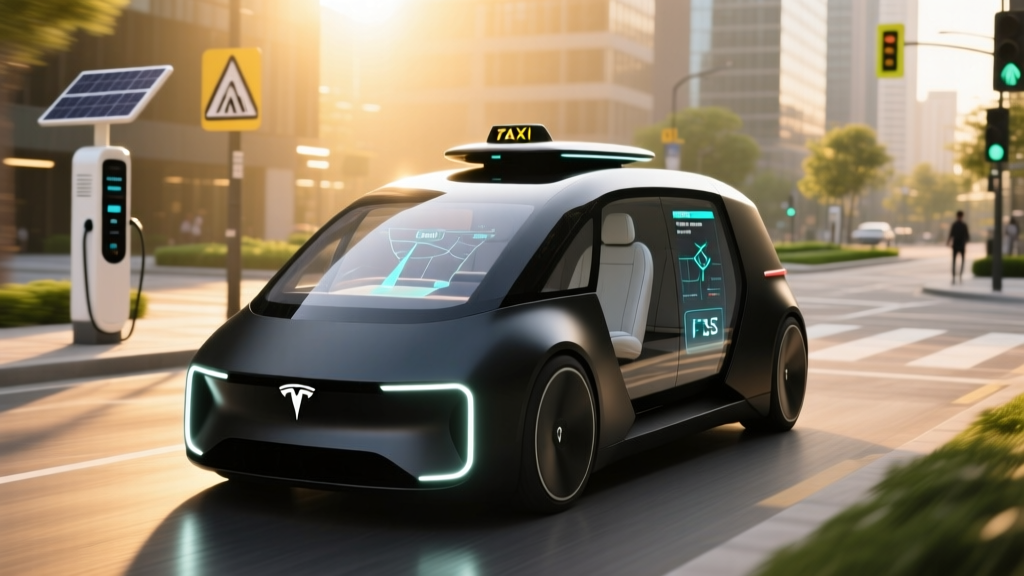
Since unveiling its purpose-built Cybercab concept in late 2024 and beginning limited commercial operations in 2025, Tesla's robotaxi service has been the most debated entry in the autonomous vehicle space. Unlike Waymo's multi-sensor approach or Zoox's purpose-built shuttle, Tesla bets entirely on a vision-only stack — cameras and neural networks, no lidar — to achieve unsupervised SAE Level 4 operation. As of early 2026, the service is live in a handful of geofenced zones, with expansion generating intense interest from prospective riders and investors alike.
This guide breaks down exactly where Tesla's robotaxi operates today, what it costs, how safe the fleet has proven to be, and the hard limitations that constrain where and when you can summon one. We separate announced plans from live service, and SAE Level 4 driverless operation from the SAE Level 2 FSD (Supervised) feature available in consumer Teslas.
- Level 2 (Driver Assist): Tesla Autopilot and FSD (Supervised) in consumer vehicles. The driver must remain fully attentive, hands on or near the wheel, and is legally responsible at all times.
- Level 4 (Driverless Robotaxi): The vehicle handles all driving tasks within a defined operational design domain (geofenced area, specific conditions) with no human driver present. This is what Tesla's Cybercab fleet and Waymo's Jaguar I-PACE fleet operate as — but only in approved zones.
Tesla's consumer FSD is not a robotaxi. The Cybercab fleet operating without a driver is. These are fundamentally different products.
Where Can You Actually Ride a Tesla Robotaxi Right Now?
Tesla's commercial robotaxi service has launched in phases, restricted to geofenced areas within specific metro regions. The expansion timeline has been slower than initial projections — a pattern consistent with every robotaxi operator. Below is the current operational status by city as of Q1 2026.
| City / Region | Status | Service Area | Hours |
|---|---|---|---|
| Austin, TX | Live (Pilot) | Downtown, South Congress, parts of East Austin (~15 sq mi geofence) | 6 AM – 12 AM |
| San Francisco Bay Area, CA | Live (Limited) | Select zones in SF, Palo Alto, Mountain View (~20 sq mi) | 7 AM – 11 PM |
| Phoenix, AZ | Announced / Pre-Launch Testing | TBD — Scottsdale and Tempe expected | TBD |
| Los Angeles, CA | Announced / Regulatory Pending | TBD — Santa Monica, Hollywood expected | TBD |
| Miami, FL | Announced | TBD | TBD |
Key takeaway: Only Austin and limited Bay Area zones have live, bookable robotaxi service. Phoenix, LA, and Miami remain in announced or testing phases — you cannot book a ride there today. Tesla's stated goal of reaching 10+ cities by late 2026 depends on regulatory approvals that are not guaranteed on any fixed timeline.
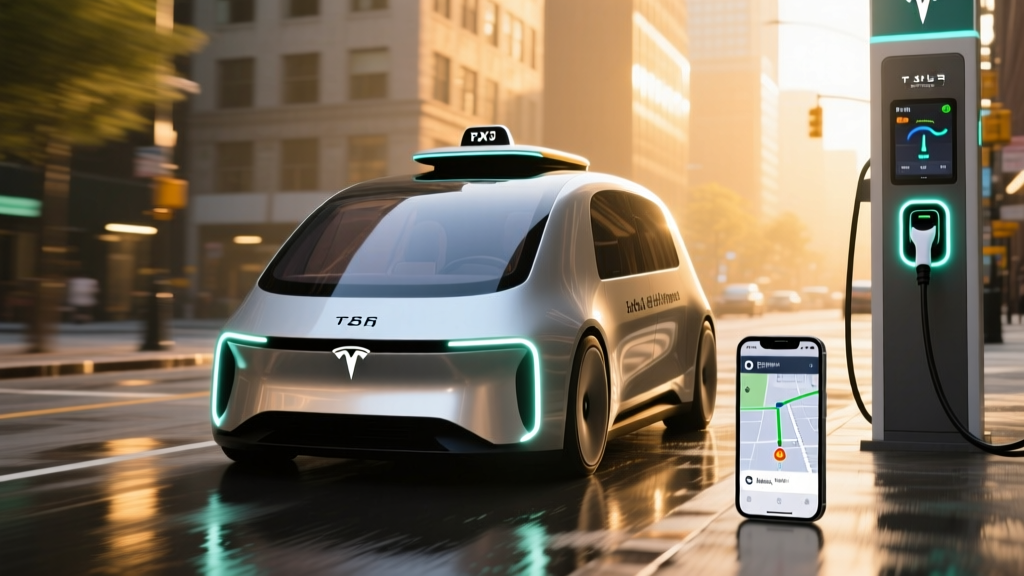
Access requires the Tesla app (robotaxi section), a verified account, and pickup/dropoff within the active geofence. Wait times in Austin average 4–8 minutes during operating hours, per rider reports.
Tesla Robotaxi Pricing vs. Uber and Lyft
Tesla has positioned the Cybercab service as a cost disruptor, targeting per-mile pricing below traditional rideshare by eliminating the driver — the single largest cost in any Uber or Lyft fare. Here's how the pricing compares in live markets.
| Service | Base Fare | Per Mile | Per Minute | Est. 5-Mile Trip |
|---|---|---|---|---|
| Tesla Cybercab | $1.50 | $0.80 | $0.15 | ~$7.50 |
| UberX | $2.50 | $1.35 | $0.28 | ~$13.00 |
| Lyft Standard | $2.25 | $1.25 | $0.25 | ~$12.00 |
| Waymo One | $2.00 | $1.10 | $0.22 | ~$10.50 |
Tesla's per-mile rate undercuts UberX by roughly 40% on a standard trip, and comes in below Waymo One as well. The economics work because Tesla eliminates driver compensation (typically 65–80% of a rideshare fare) and uses the Cybercab's low operating cost — electricity at roughly $0.12/kWh, minimal moving parts, and no driver seat to maintain.
However, surge pricing does apply during peak demand, and Tesla's limited geofence means you may need a connecting ride to reach a Cybercab pickup zone — offsetting savings on some trips.
How Safe Are Tesla Robotaxis? The Data So Far
- Total autonomous miles driven: ~2.1 million (Austin + Bay Area combined)
- At-fault collisions: 3 reported incidents (all low-speed, no serious injuries)
- Disengagements (remote operator takeover): ~1 per 8,400 miles
- Comparison benchmark: Waymo reports ~1 disengagement per 18,000+ miles across its larger fleet (NHTSA AV incident reporting)
Sources: NHTSA Standing General Order crash reports, Tesla safety transparency reports, IIHS AV research.
The safety picture for Tesla's robotaxi is still early. With roughly 2.1 million driverless miles logged, the sample size is small compared to Waymo's 30+ million cumulative autonomous miles. Three at-fault collisions in 2.1 million miles yields a rate roughly in line with human drivers (who average about 1 police-reported crash per 500,000 miles, per NHTSA data), but the low-speed, geofenced nature of the service means these miles aren't directly comparable to unrestricted driving.
The disengagement rate — roughly one remote-operator intervention every 8,400 miles — is the more telling metric. It suggests the system still encounters scenarios it cannot resolve independently at a rate higher than Waymo's mature fleet. Tesla has stated it expects this rate to improve by 3–5x as its neural network trains on fleet data from consumer FSD vehicles.
No fatalities or serious injuries have been reported in Tesla's commercial robotaxi operations as of this writing.
The Camera-Only Tech Stack: How Tesla's Robotaxi Sees the World
Tesla's approach to autonomy diverges sharply from competitors. Where Waymo, Zoox, and Cruise (prior to suspension) rely on a sensor fusion stack — combining lidar, radar, and cameras — Tesla uses cameras exclusively, paired with its custom FSD chip and neural network inference.
- Cameras: 8 external cameras (front narrow + wide, left/right forward-facing, left/right rearward-facing, rear) providing 360° vision at up to 250m range
- No lidar: Tesla removed all lidar and ultrasonic sensors, relying entirely on vision-based depth estimation via neural networks
- No radar: Radar was removed starting with HW4; the Cybercab is pure vision
- Compute: Tesla HW5 (AI5) — dual custom FSD chips delivering ~500 TOPS combined inference throughput
- Connectivity: LTE/5G for remote operator handoff, OTA updates, and fleet learning
- Geofencing: HD map overlays define the operational design domain; the vehicle will not operate outside approved zones
The camera-only approach offers cost advantages — no $5,000+ lidar units per vehicle — and scales well with Tesla's existing fleet data from millions of consumer vehicles running FSD. The trade-off is performance in degraded visibility: heavy rain, fog, snow, and direct sun glare remain harder for cameras to resolve than for lidar, which actively illuminates its environment.
This architectural bet is the core reason Tesla's geofenced areas avoid regions with frequent heavy precipitation, and why service hours end before late-night hours when lighting conditions become more challenging.
Regulatory Landscape: Who Approves Robotaxi Operations?
Robotaxi deployment in the United States is not federally pre-empted. Instead, it requires a patchwork of state and local approvals — and this is the single largest bottleneck for Tesla's expansion into new cities.
- Federal (NHTSA): Sets vehicle safety standards (FMVSS). Tesla's Cybercab, with no steering wheel or pedals, requires an exemption from certain FMVSS provisions. NHTSA granted a limited exemption for the Austin pilot. (NHTSA AV guidance)
- State DMV / PUC: Each state regulates commercial passenger transport. California's CPUC and DMV must approve each operator; Texas has a more permissive framework via the Texas Department of Licensing and Regulation. Arizona's approach is similarly permissive.
- Local / Municipal: Cities often require separate operating agreements covering curb access, parking, emergency response protocols, and data sharing.
Tesla's announced expansion to Los Angeles is currently stalled at the California CPUC stage, where Waymo's earlier incidents prompted heightened scrutiny of all robotaxi operators. Phoenix and Miami have signaled receptivity, but formal operating permits have not been issued as of this writing.
The regulatory process typically takes 6–18 months from application to commercial launch — meaning announced cities are not imminent cities.
Current Limitations: Where Tesla's Robotaxi Cannot Go
Understanding what the service cannot do is as important as knowing where it operates. These are the hard constraints as of 2026:
- Geofence: Pickup and dropoff must both fall within the approved zone. You cannot ride from downtown Austin to the airport — the airport is outside the geofence.
- Weather: Service suspends during heavy rain (>0.5 in/hr), dense fog (visibility <500 ft), and any ice/snow conditions. Austin service has been paused 12+ times for weather since launch.
- Hours: No overnight service. Operating windows (6 AM – 12 AM Austin, 7 AM – 11 PM Bay Area) mean no airport runs for early flights or late returns.
- Highway: Current geofences exclude limited-access highways. All trips are on surface streets within the zone, limiting practical trip length.
- Passenger capacity: The Cybercab seats 2 passengers. No group rides, no car seats, no wheelchair accessibility in the current vehicle.
- Cargo: Limited trunk space (~15 cu ft). No grocery runs, no luggage for more than one person.
- Edge cases: Construction zones, emergency vehicles, and unusual road configurations (temporary detours, unmarked intersections) still trigger remote operator takeovers at elevated rates.
These limitations are not unique to Tesla — Waymo and Zoox face similar geofence, weather, and capacity constraints. But they matter for setting expectations: a robotaxi is not a replacement for a personal vehicle or even a full replacement for rideshare. It's a complement that works well for specific trip types within specific zones.
Frequently Asked Questions
Is Tesla's robotaxi truly self-driving, or is it driver-assist?
Within its approved geofenced zones and operating conditions, the Tesla Cybercab operates at SAE Level 4 — no driver is present, and no human intervention is required for normal trips. This is fundamentally different from Tesla's consumer FSD (Supervised), which is SAE Level 2 and requires an attentive driver at all times. The Cybercab robotaxi is a separate commercial service, not a feature you can activate in your personal Tesla.
How much does a Tesla robotaxi ride cost compared to Uber?
In Austin, a typical 5-mile Tesla Cybercab trip costs approximately $7.50, compared to ~$13.00 for UberX and ~$12.00 for Lyft Standard. The savings come from eliminating driver compensation. However, surge pricing during peak demand can narrow this gap, and you may need a separate ride to reach the Cybercab geofence zone.
How safe are Tesla robotaxis compared to human drivers?
Through Q4 2025, Tesla's robotaxi fleet logged ~2.1 million driverless miles with 3 at-fault collisions (all low-speed, no serious injuries) and a disengagement rate of roughly 1 per 8,400 miles. This collision rate is broadly comparable to human drivers, but the sample size is small and the operating conditions are restricted (geofenced, no highways, no severe weather). Waymo's larger fleet (~30M+ miles) reports fewer disengagements per mile. Definitive safety comparisons require more data.
When will Tesla robotaxis expand to more cities?
Phoenix, Los Angeles, and Miami have been announced as next targets, but none have live service as of early 2026. Expansion depends on state regulatory approval (6–18 months typical), FMVSS exemptions for the driverless vehicle design, and local operating agreements. Tesla's stated goal of 10+ cities by late 2026 is ambitious and contingent on approvals that are not guaranteed.
Can I use a Tesla robotaxi in bad weather?
No. The service suspends operations during heavy rain, dense fog, ice, or snow. The camera-only sensor stack cannot match lidar's performance in degraded visibility, and Tesla takes a conservative approach to weather-related service pauses. In Austin, this has resulted in 12+ service suspensions since launch. If you live in a city with frequent precipitation, expect intermittent availability.
Does the Tesla robotaxi have a steering wheel?
No. The production Cybercab has no steering wheel, no pedals, and no manual driving controls. It is designed exclusively for autonomous operation within its geofenced service area. This design requires an FMVSS exemption from NHTSA, which has been granted for the Austin pilot on a limited basis.