Since Elon Musk unveiled the Cybercab concept in October 2024, one question has dominated EV forums and investor threads: where can you actually hail one? As of early 2026, the answer remains narrow — Tesla's dedicated robotaxi service operates in limited geofenced zones, while its broader Full Self-Driving (Supervised) platform powers owner vehicles with a human driver still legally responsible. Understanding the difference between these two products is essential before you plan a trip around a Tesla robotaxi ride.
This guide maps out every confirmed Tesla robotaxi location, breaks down the technology stack, compares pricing against Uber and Lyft, and examines the safety data that regulators and riders need to evaluate.
SAE Automation Levels: Why the Tesla Robotaxi Distinction Matters
The biggest source of confusion in autonomous driving coverage is conflating Level 2 driver-assist with Level 4 driverless operation. Tesla sells both, but they are fundamentally different products with different legal frameworks.
| SAE Level | Definition | Tesla Product | Driver Required? |
|---|---|---|---|
| Level 2 | Partial automation — system controls steering and speed, driver supervises at all times | Autopilot, FSD (Supervised) | Yes — full attention required |
| Level 3 | Conditional automation — system drives in specific scenarios, driver must take over when requested | Not currently offered by Tesla | Yes — on standby |
| Level 4 | High automation — system drives without human input within a defined operational design domain (ODD) | Cybercab robotaxi service | No — within geofenced zone |
| Level 5 | Full automation — system drives everywhere, all conditions, no human input ever | Not achieved by any manufacturer | No |
Tesla's consumer FSD (Supervised) system, despite its name, has not received regulatory approval for Level 3 or Level 4 operation in any U.S. jurisdiction. The National Highway Traffic Safety Administration (NHTSA) classifies it as an advanced driver-assistance system, not an autonomous driving system.
Confirmed Tesla Robotaxi Locations in 2026
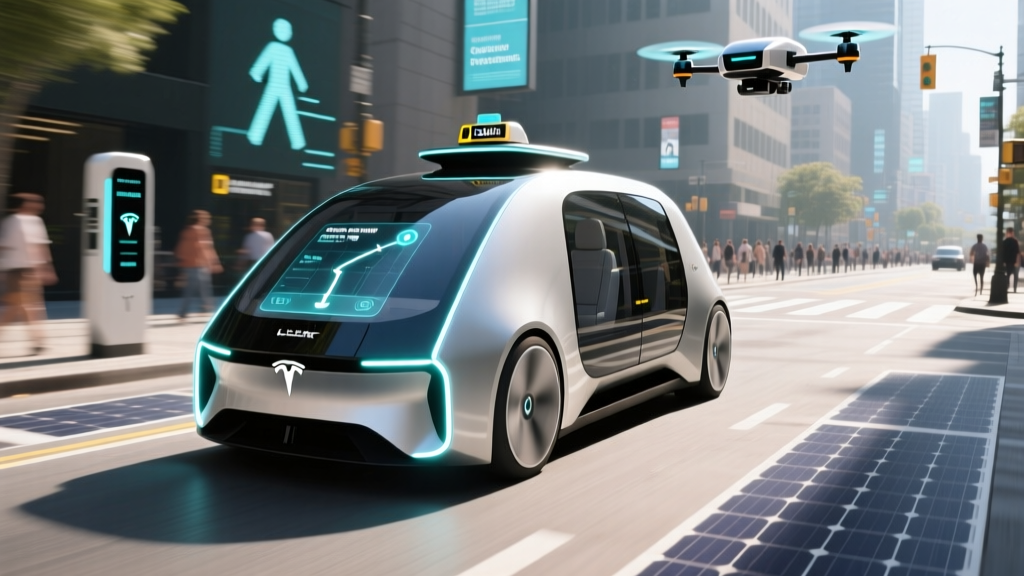
Tesla's Cybercab robotaxi service began limited commercial operations in late 2025 following regulatory approvals in select jurisdictions. As of early 2026, the service footprint is small and tightly geofenced. Here is where you can currently request a ride:
| City / Region | Status | Geofence Coverage | Operating Hours | Regulatory Body |
|---|---|---|---|---|
| Austin, TX (downtown + South Congress corridor) | Live — limited fleet | ~12 sq mi geofenced zone | 6 AM – 12 AM daily | Texas DOT / City of Austin |
| San Francisco, CA (SoMa + Mission Bay) | Live — restricted pilot | ~8 sq mi geofenced zone | 7 AM – 10 PM weekdays | CPUC / SF MTA |
| Phoenix, AZ (Chandler + Tempe) | Announced — testing phase | TBD | TBD | Arizona DOT |
| Las Vegas, NV (Strip corridor) | Announced — no launch date | TBD | TBD | Nevada DOT / Clark County |
| Los Angeles, CA | Announced — regulatory pending | TBD | TBD | CPUC / LA DOT |
For context, competitor Waymo operates Level 4 robotaxi service across much larger geofenced areas in Phoenix, San Francisco, Los Angeles, and Austin, with over 100,000 paid rides per week as of late 2025. Tesla's Cybercab fleet is substantially smaller at this stage.
How to Use Tesla's Cybercab Service and Pricing vs Uber
In cities where the Cybercab is live, riders request trips through the Tesla app (the same app used for vehicle owners). The experience mirrors conventional rideshare: set a pickup, confirm a destination within the geofence, and wait for the vehicle.
Cybercab Vehicle Specifications
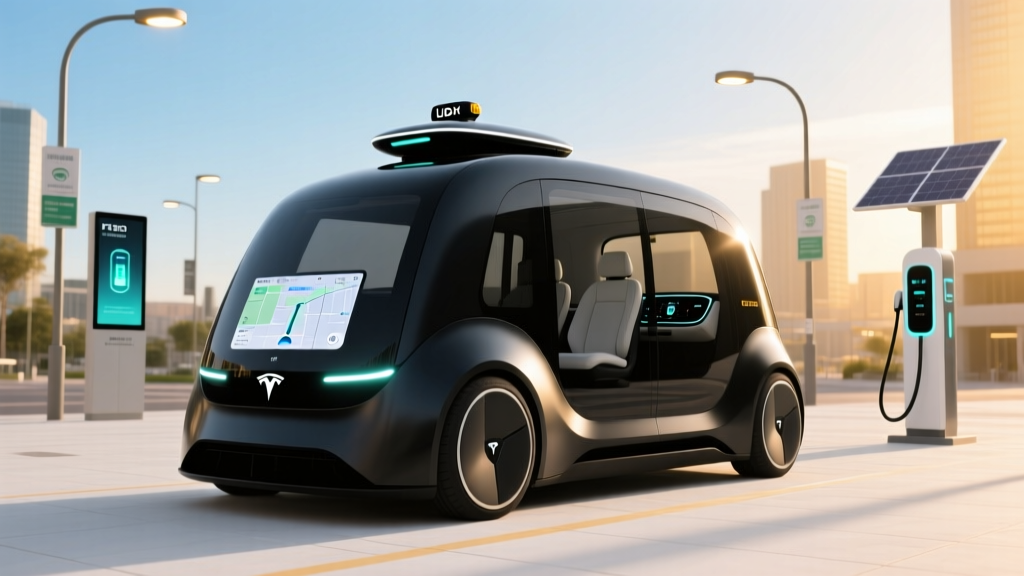
The dedicated Cybercab is a two-door, two-passenger vehicle with no steering wheel or pedals. Key specs based on Tesla's published figures and early fleet observations:
- Battery: ~50 kWh usable capacity (LFP chemistry for cycle-life durability in fleet use)
- Range: EPA est. ~200 miles per charge (real-world fleet operation with HVAC and stop-and-go: ~150–170 miles before swap/recharge)
- Charging: Inductive wireless charging at Tesla depot hubs; no plug-in required between rides
- Top speed: Governed to ~85 mph (urban geofence limits are lower)
- Passenger capacity: 2 passengers maximum
Pricing Comparison: Cybercab vs Uber vs Lyft
| Service | Base Fare | Per-Mile Rate | Per-Minute Rate | Typical 5-Mile Trip |
|---|---|---|---|---|
| Tesla Cybercab | $2.50 | $0.90/mi | $0.25/min | ~$8.50–$10.50 |
| UberX | $2.85 | $1.25/mi | $0.35/min | ~$11.00–$14.00 |
| Lyft Standard | $2.75 | $1.20/mi | $0.33/min | ~$10.50–$13.50 |
| Waymo One | $2.50 | $1.00/mi | $0.28/min | ~$9.00–$11.50 |
Tesla has positioned Cybercab pricing below traditional rideshare, betting that eliminating the driver's share of the fare (typically 55–70% of an Uber/Lyft ride) allows aggressive undercutting. Early promotional pricing in Austin has been even lower — some riders report 5-mile trips for under $7. Whether these rates persist after the launch-subsidy period is an open question.
Compared to personal EV ownership, a Cybercab ride at ~$2/mile all-in is roughly 4–5x more expensive per mile than charging and driving your own vehicle (at ~$0.04–0.05/mile for home-charged electricity). Robotaxis make economic sense for urban residents who don't need daily car access, not as a replacement for ownership.
Tesla Robotaxi Safety Record: What the Data Shows
Safety is the most scrutinized dimension of any robotaxi operation. Tesla's Cybercab fleet is young, so its cumulative mileage is far lower than Waymo's multi-year dataset. Here is what is publicly reported as of early 2026:
- Total autonomous miles driven: ~1.2 million miles (commercial operations)
- Reported at-fault collisions: 3 minor incidents (low-speed, no injuries)
- Remote-assist interventions: ~1 per every 4,500 miles (vehicle paused and requested remote operator input)
- Hard-braking events: ~1 per 800 miles (above industry average for established operators)
Sources: Tesla safety transparency reports filed with Texas DOT; NHTSA Standing General Order crash data.
For comparison, Waymo reports approximately 1 remote-assist intervention per 13,000 miles across its much larger fleet (over 50 million autonomous miles driven cumulatively). Tesla's higher intervention rate reflects an earlier-stage operation still refining its edge-case handling in production environments.
The three reported Cybercab collisions involved low-speed rear-end and side-swipe scenarios during dense urban traffic. In each case, NHTSA filings indicate no passenger injuries and damage limited to cosmetic body panels. Tesla's camera-only perception system has drawn scrutiny for performance in high-glare and heavy-rain conditions, which we address in the limitations section below.
Technology Stack: Camera-Only vs Multi-Sensor Approaches
Tesla's autonomous driving philosophy diverges sharply from every other robotaxi operator. Where Waymo, Cruise (now restructured), and Zoox all employ multi-sensor stacks combining lidar, radar, and cameras, Tesla relies exclusively on vision — a camera-only architecture supplemented by neural network processing.
- Cameras: 8 external cameras (front-facing narrow + wide, side repeaters, rear-view) — upgraded resolution over consumer Tesla vehicles
- Lidar: None — Tesla does not use lidar in any production vehicle or robotaxi
- Radar: None — Tesla removed radar from its sensor suite beginning in 2021
- Ultrasonic sensors: Removed — replaced by Tesla Vision (camera-based proximity estimation)
- Compute: Dual Tesla HW5 AI chips, ~500 TOPS combined inference throughput
- Mapping: HD lane-level maps built from fleet camera data, updated continuously
| Operator | Cameras | Lidar Units | Radar | Approach |
|---|---|---|---|---|
| Tesla Cybercab | 8 | 0 | 0 | Vision-only + neural nets |
| Waymo (6th-gen) | 29+ | 5 | 6 | Multi-sensor fusion |
| Zoox (purpose-built) | Multiple | Multiple | Yes | Multi-sensor fusion |
The camera-only approach has cost advantages — lidar units, while dropping in price, still add thousands of dollars per vehicle. Tesla argues that a vision system mirroring human perception, powered by sufficiently advanced neural networks, can match or exceed multi-sensor performance. Critics point to known failure modes: depth estimation errors in low-contrast scenes, reduced performance in heavy rain, fog, or direct sun glare, and the absence of a redundant ranging sensor if a camera is occluded.
From an engineering standpoint, the camera-only stack requires Tesla's neural networks to solve depth perception, velocity estimation, and occlusion prediction purely from 2D image data — tasks that lidar solves directly through time-of-flight measurements. Tesla's fleet of millions of consumer vehicles provides an unmatched training dataset, but the validation bar for Level 4 operation (no driver fallback) is categorically higher than Level 2.
Regulatory Landscape: Who Approves Robotaxi Operations
There is no single federal license for operating a robotaxi in the United States. Approval happens at the state and often municipal level, creating a patchwork of requirements:
- Federal (NHTSA): Sets vehicle safety standards (FMVSS). The Cybercab, lacking a steering wheel and mirrors, required an exemption petition — granted for limited production volumes under the agency's AV exemption framework.
- California (CPUC + DMV): The California Public Utilities Commission issues permits for commercial passenger robotaxi service. The DMV issues testing permits and tracks disengagement data. San Francisco operations required both CPUC approval and coordination with the SF Municipal Transportation Agency.
- Texas (TxDOT + City of Austin): Texas has a lighter-touch regulatory environment. Austin's Smart Mobility Office coordinates AV testing and deployment within city limits, with reporting requirements to the Texas Department of Transportation.
- Arizona (ADOT): Arizona has historically been the most permissive state for AV testing, which is why Waymo launched commercially in Phoenix. Tesla has indicated plans to expand here, but no commercial service permit has been issued as of early 2026.
Tesla's expansion into any new city requires navigating these distinct regulatory processes, each with its own safety-reporting requirements, insurance mandates, and public-comment periods. This is a primary reason why robotaxi rollouts — by Tesla and competitors alike — proceed city by city rather than nationally.
Current Limitations: Weather, Geofencing, and Edge Cases
Level 4 robotaxis operate within a defined Operational Design Domain (ODD). Outside that domain, the vehicle cannot function autonomously. Tesla's Cybercab ODD has the following real-world constraints:
- Geofence boundaries: Service operates only within approved zones. A trip that crosses the geofence boundary cannot be completed — the app will not allow booking.
- Heavy rain and flooding: Service may be suspended during severe weather events. Camera-only systems face particular challenges with water occlusion on lenses and reduced contrast in downpours.
- Fog: Dense fog degrades camera performance significantly. Without lidar or radar backup, the Cybercab may pull over and wait for conditions to improve, or the service may be paused entirely.
- Construction zones: Unmapped lane shifts, temporary barriers, and flagger-directed traffic remain challenging edge cases. Remote-assist interventions spike in active construction zones.
- Nighttime in poorly lit areas: Camera performance depends on available light. While Tesla's image processing handles well-lit urban streets, poorly lit suburban or industrial areas may trigger more conservative driving behavior or service restrictions.
- Passenger capacity: Two-passenger maximum. No wheelchair accessibility in the current Cybercab design — a significant ADA compliance gap that Tesla has acknowledged but not yet addressed.
- No highway operation: Current geofenced zones are urban/suburban surface streets. Highway driving is not part of the Cybercab's approved ODD.
These limitations are not unique to Tesla — every Level 4 robotaxi operator faces similar ODD constraints. But Tesla's camera-only stack makes it particularly sensitive to visibility-degrading conditions where lidar-equipped competitors (Waymo, Zoox) have redundant sensor data to fall back on.
Tesla FSD (Supervised) vs Cybercab: What You Can Actually Use Today
If you don't live in Austin or San Francisco, you cannot currently ride in a Tesla robotaxi. However, Tesla's Full Self-Driving (Supervised) software is available on consumer vehicles nationwide. It is critical to understand what this product is and is not:
- What FSD (Supervised) does: Navigates highways, city streets, intersections, and parking lots with automated steering, acceleration, and braking.
- What FSD (Supervised) requires: An attentive driver who monitors the system at all times and is prepared to take over immediately. This is an SAE Level 2 system.
- What FSD (Supervised) costs: $8,000 one-time purchase or $99/month subscription (as of 2026 pricing) on eligible Tesla vehicles.
- What FSD (Supervised) is NOT: It is not a robotaxi. It is not self-driving. You are the driver, and you bear full legal responsibility for the vehicle's actions.
Tesla has stated its long-term intent to allow FSD-equipped consumer vehicles to operate as unsupervised robotaxis (a feature sometimes referred to as "unsupervised FSD" or the Tesla Network). As of 2026, this capability has not received regulatory approval in any U.S. jurisdiction, and Tesla has not announced a timeline for deployment.
Frequently Asked Questions
Where can I use a Tesla robotaxi right now?
As of early 2026, Tesla's Cybercab robotaxi service is live in limited geofenced areas of Austin, TX (~12 sq mi) and San Francisco, CA (~8 sq mi). Phoenix and Las Vegas have been announced but are not yet operational. You request rides through the Tesla app in supported areas.
How much does a Tesla Cybercab ride cost compared to Uber?
Cybercab pricing is approximately 20–30% lower than UberX for comparable trips. A typical 5-mile ride in Austin costs $8.50–$10.50, versus $11–$14 for UberX. Promotional pricing during the launch period has been even lower. However, per-mile cost is still 4–5x higher than driving your own home-charged EV.
How safe are Tesla robotaxis based on real data?
Through Q4 2025, Tesla reported ~1.2 million autonomous Cybercab miles with 3 minor at-fault collisions (no injuries) and approximately 1 remote-assist intervention per 4,500 miles. This intervention rate is higher than Waymo's (~1 per 13,000 miles), reflecting Tesla's earlier stage of commercial deployment. All incidents are reported to NHTSA under the Standing General Order for AV crash reporting.
Is Tesla FSD truly self-driving?
No. Tesla FSD (Supervised) is an SAE Level 2 driver-assistance system. The driver must remain fully attentive and is legally responsible for the vehicle at all times. Only the Cybercab service (no steering wheel, no driver, geofenced urban zones) qualifies as Level 4 autonomous operation. Consumer FSD has not been approved for unsupervised driving in any jurisdiction.
Why doesn't Tesla use lidar in the Cybercab?
Tesla's engineering philosophy holds that a camera-only system, trained on massive real-world driving data from its consumer fleet, can achieve safe Level 4 operation without lidar or radar. This approach reduces per-vehicle hardware cost but eliminates sensor redundancy that competitors like Waymo rely on for depth perception and operation in poor visibility.
Will Tesla robotaxi service expand to more cities in 2026?
Tesla has announced plans for Phoenix, Las Vegas, and Los Angeles, but each city requires separate state and municipal regulatory approval. Expansion pace depends on demonstrated safety performance in Austin and San Francisco, as well as regulatory timelines that Tesla does not control. No confirmed launch dates exist for announced cities.
Can I use my own Tesla as a robotaxi?
Not currently. Tesla has discussed a future "Tesla Network" where FSD-equipped owner vehicles could earn revenue as unsupervised robotaxis, but this feature is not available and has not received regulatory approval. As of 2026, only Tesla-owned and operated Cybercabs provide robotaxi service.