Tesla's Cybercab concept and the promise of a driverless ride-hailing network have generated enormous interest — nowhere more than in Texas, where the company moved its corporate headquarters and where state regulators have been relatively open to autonomous vehicle testing. But search for "Tesla robotaxi license Texas" and you'll find a tangle of announcements, regulatory filings, and marketing claims that are hard to untangle.
This guide cuts through the noise. We'll explain exactly where Tesla stands with its robotaxi ambitions in Texas as of 2026, what regulatory approvals exist, how the technology compares to established Level 4 operators like Waymo, and what you can actually do today if you want a driverless ride in the Lone Star State.
Texas Robotaxi Regulations: Who Approves Driverless Services?
Understanding Tesla's robotaxi status in Texas requires knowing who holds the keys to approval. Unlike some states with a single permitting body, Texas splits autonomous vehicle oversight across multiple agencies:
- Texas Department of Transportation (TxDOT): Oversees testing permits for autonomous vehicles on public roads. Companies must register and report testing activity, disengagement data, and safety incidents.
- Texas Department of Motor Vehicles (TxDMV): Handles vehicle registration and has established rules for autonomous vehicle identification and insurance requirements.
- Public Utility Commission of Texas (PUC): Regulates transportation network companies (TNCs) like Uber and Lyft. A robotaxi service operating as a ride-hailing platform would likely need PUC approval or a new regulatory classification.
- City-level permits: Municipalities like Austin and Houston can impose additional requirements for testing and commercial operations within city limits.
Texas passed its foundational autonomous vehicle law — Senate Bill 2205 in 2017 — which legalized the operation of autonomous vehicles on public roads without a human driver, provided the vehicle meets certain insurance, registration, and safety requirements. This was a permissive framework, but it left commercial ride-hailing specifics largely to be defined later.
As of 2026, Texas does not have a single "robotaxi license" that a company applies for. Instead, operators must satisfy testing permits, commercial operation requirements, insurance mandates, and potentially TNC regulations simultaneously. This is a critical distinction: Tesla may hold testing permits in Texas without holding approval to charge passengers for driverless rides.
Where Tesla's Robotaxi Stands in Texas Right Now
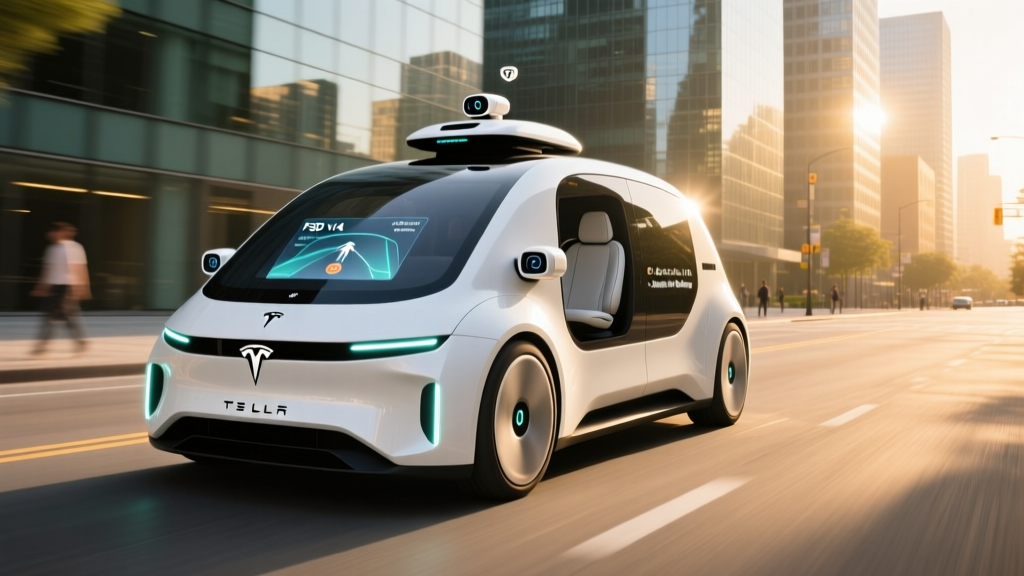
Tesla unveiled the Cybercab concept in October 2024 at its "We, Robot" event, showing a two-seat, steering-wheel-free vehicle designed specifically for autonomous ride-hailing. The company has stated intentions to launch a robotaxi service, initially in Austin and the San Francisco Bay Area, with a target timeline that has shifted multiple times.
Here is the current status breakdown for Texas:
| Category | Status (2026) |
|---|---|
| Vehicle testing on public roads | Active — Tesla has registered autonomous test vehicles with TxDOT |
| Driverless (no safety operator) testing | Limited — primarily with safety driver monitoring |
| Commercial robotaxi service (paid rides) | Not yet approved in Texas |
| Cybercab production | Announced for late 2026/2027; not yet in fleet operation |
| FSD (Supervised) ride-hailing via Tesla app | Announced pilot; requires human driver oversight (Level 2) |
The nuance here matters enormously. Tesla's Full Self-Driving (Supervised) software — which is available to consumer vehicle owners — is an SAE Level 2 driver-assistance system. The human behind the wheel is legally and functionally the driver. A robotaxi service, by definition, requires SAE Level 4 capability: the system handles all driving tasks within its operational design domain (ODD) without human intervention.
- Level 2 (Driver Assistance): System controls steering and speed; human must supervise at all times. Examples: Tesla Autopilot, FSD (Supervised), GM Super Cruise, Ford BlueCruise.
- Level 3 (Conditional Automation): System drives in specific conditions; human must be ready to take over when requested. Very limited deployment (e.g., Mercedes DRIVE PILOT in Nevada/California, under 40 mph).
- Level 4 (High Automation): System drives without human intervention within a defined ODD (geofenced area, certain weather). Examples: Waymo in Phoenix/SF/LA, Zoox in Las Vegas.
- Level 5 (Full Automation): System drives anywhere, any conditions, no human needed. No production system achieves this today.
Tesla's consumer FSD is Level 2. A true Tesla robotaxi must demonstrate Level 4 capability to regulators before carrying paying passengers without a driver.
Technology Stack: Camera-Only vs. Lidar — The Core Debate
Tesla's approach to autonomous driving diverges sharply from every other robotaxi operator. Understanding this difference is essential for evaluating the company's Texas robotaxi timeline.
Tesla's Vision-Only Stack
Tesla removed ultrasonic sensors and radar from its vehicles beginning in 2022, relying entirely on a camera suite processed by its custom FSD computer (Hardware 4, with Hardware 5 expected for Cybercab). The system uses:
- 8 cameras providing 360-degree coverage
- Neural network-based perception (occupancy networks, end-to-end learning)
- High-fidelity simulation for edge-case training
- Shadow mode data collection from millions of consumer Tesla vehicles
Waymo and Competitors: Multi-Sensor Fusion
Waymo's 6th-generation driver system uses:
- Custom lidar arrays (with ~500m range)
- Radar units for velocity and all-weather detection
- Camera arrays for classification and lane reading
- HD pre-mapped routes within geofenced areas
Regulators evaluating a robotaxi application assess redundancy — what happens when one sensor fails or encounters conditions it can't handle? Lidar provides depth data independent of lighting; radar penetrates rain and fog. Tesla's camera-only approach must demonstrate equivalent or superior reliability through data, which is a higher evidentiary bar. In Texas's variable conditions — intense sun glare, sudden heavy rain, dust storms in West Texas, and occasional ice — this is a non-trivial challenge.
Service Availability: Where Can You Actually Ride a Robotaxi in Texas?
If you're in Texas and want a driverless ride today, Tesla is not your option. Here's the current landscape of operational robotaxi services:
| Operator | Level | Texas Availability | Other Active US Cities |
|---|---|---|---|
| Waymo | Level 4 | Austin (limited pilot/testing; not full commercial as of early 2026) | Phoenix, San Francisco, Los Angeles, expanding to more cities |
| Zoox (Amazon) | Level 4 | Not available | Las Vegas, San Francisco (limited) |
| Cruise (GM) | Level 4 | Not available — operations paused/restructured after 2023 incidents | Limited restart in Phoenix, Dallas (testing) |
| Tesla (Cybercab) | Level 4 (targeted) | Not operational — testing only | None |
| Tesla FSD (Supervised) | Level 2 | Available statewide (owner-driven, not ride-hailing) | Nationwide |
Waymo remains the only company operating a commercial, fully driverless (Level 4) robotaxi service at scale in the United States. As of early 2026, Waymo has been expanding its Austin presence but has not yet launched full unrestricted commercial service comparable to its Phoenix and San Francisco operations. Cruise, after its October 2023 pedestrian-dragging incident in San Francisco, restructured its operations significantly and has been cautiously re-entering markets with limited testing.
Safety Data: What the Numbers Actually Show
Any discussion of robotaxi licensing must be grounded in safety performance. Here is what we know from published data:
- Waymo: Over 10 million fully autonomous miles driven across its fleet as of late 2025. Waymo's published safety report claims an 85% reduction in injury-causing crash rates compared to human benchmarks in comparable urban environments. The data was validated by third-party analysis from the Swiss Re insurance partnership.
- Cruise: Accumulated millions of autonomous miles prior to its October 2023 incident in San Francisco, where a pedestrian thrown into the path of a Cruise vehicle by a human-driven car was struck and then dragged. This led to California DMV permit suspension and a nationwide operational pause.
- Tesla FSD (Supervised): Tesla's quarterly safety reports publish aggregate crash-rate data for vehicles using Autopilot/FSD, but these are Level 2 systems with a human driver present. This data is not directly comparable to Level 4 robotaxi operations. Tesla has not published third-party-validated disengagement or intervention-rate data for its autonomous testing fleet.
For context, the National Highway Traffic Safety Administration (NHTSA) requires all operators of vehicles equipped with automated driving systems to report crashes under its Standing General Order. This is the most comprehensive public database of AV incidents, though it captures incidents rather than exposure data (total miles).
The honest assessment: Tesla's consumer FSD data is vast (billions of miles), but it represents supervised driving where a human can intervene. Regulators evaluating a Level 4 robotaxi license need data from unsupervised operation — a much smaller dataset for Tesla at this point.
Pricing: Robotaxi vs. Uber vs. Lyft in Texas Markets
Tesla has stated that its Cybercab robotaxi service would target a cost-per-mile of approximately $0.20, which would undercut traditional rideshare significantly. However, until a commercial service is actually running, these are projections rather than prices.
| Service | Estimated Cost/Mile (Austin) | Base Fare | Availability |
|---|---|---|---|
| Uber (standard) | $1.20 – $1.80 | $2.50 – $3.50 | Statewide |
| Lyft (standard) | $1.10 – $1.70 | $2.50 – $3.50 | Statewide |
| Waymo (Phoenix/SF) | $1.00 – $1.50 (comparable to UberX) | ~$3.00 | Not in TX commercially yet |
| Tesla Cybercab (projected) | ~$0.20 (company target) | TBD | Not operational |
Tesla's $0.20/mile target assumes extremely high fleet utilization, minimal per-vehicle maintenance costs, and no driver compensation. Industry analysts have expressed skepticism about this figure, noting that Waymo — with years of operational experience — charges rates comparable to UberX rather than a fraction of the cost. The actual launch pricing, whenever it comes, will likely be higher than Tesla's projections but could still undercut traditional rideshare if the company achieves sufficient scale.
Current Limitations: What Robotaxis Cannot Do
Every robotaxi system operating today — and every system in development — has defined limitations. For Tesla's planned Texas robotaxi service, these constraints are particularly important:
- Geofencing: Level 4 robotaxis operate within pre-mapped, approved zones. Tesla has suggested its system would not require geofencing, but regulators will likely require defined operational design domains regardless. Expect initial service to cover specific Austin neighborhoods and corridors, not statewide coverage.
- Weather restrictions: Heavy rain, flooding, ice, and dust storms degrade camera and sensor performance. Texas experiences all of these. Waymo limits operations in severe weather; Tesla would face the same constraints, potentially more acutely given its camera-only approach.
- Construction zones: Temporary lane shifts, missing lane markings, and flaggers present edge cases that remain challenging for all AV systems.
- Unprotected turns and complex intersections: Multi-lane unprotected left turns in dense traffic remain a high-difficulty scenario.
- Emergency vehicle interaction: Detecting and appropriately responding to emergency vehicles with active lights/sirens requires reliable audio and visual detection.
- Pedestrian and cyclist unpredictability: Jaywalkers, e-scooters, and erratic behavior in downtown Austin's high-foot-traffic areas present ongoing challenges.
- Airport and highway operations: Initial services typically avoid high-speed highway driving and complex airport pickup/dropoff logistics.
The Path Forward: What Needs to Happen Before Tesla Launches a Texas Robotaxi
Based on the regulatory framework and Tesla's current technology status, several milestones must be reached before you can hail a driverless Tesla in Austin:
- Cybercab production: The vehicle must enter production with the necessary sensor suite and computing hardware. Tesla has targeted late 2026 or 2027 for initial production.
- Level 4 validation data: Tesla must accumulate sufficient unsupervised driving data to demonstrate safety to TxDOT and potentially the PUC. This means millions of miles without a safety driver, likely starting with geofenced areas in Austin.
- Commercial operating permit: Beyond testing permits, Tesla needs approval to charge passengers. This may require new rulemaking by the PUC or legislative action.
- Insurance and liability framework: Level 4 operation shifts liability from the driver to the operator. Tesla must secure appropriate commercial insurance and define liability terms.
- Fleet operations infrastructure: Charging depots, cleaning/maintenance facilities, remote-assistance centers, and dispatch systems must be built out.
Realistically, even an optimistic timeline puts a commercial Tesla robotaxi service in Austin no earlier than 2027, and likely later given the regulatory and validation hurdles. This is not a dismissal of Tesla's capabilities — it's a reflection of the fact that every Level 4 operator has taken 5-10 years from initial testing to commercial launch, and Tesla is earlier in that process for unsupervised operation.
Frequently Asked Questions
Does Tesla have a robotaxi license in Texas?
Not in the way most people mean the question. Tesla holds testing permits to operate autonomous vehicles on Texas public roads, but it does not have approval to operate a commercial, driverless ride-hailing service. No company currently operates a full commercial Level 4 robotaxi service in Texas — Waymo is the closest, with an expanding pilot presence in Austin.
Can I ride in a driverless Tesla in Austin today?
No. Tesla's Full Self-Driving (Supervised) software is available to vehicle owners, but it is a Level 2 driver-assistance system that requires an attentive human driver at all times. It is not a robotaxi service, and you cannot hail a driverless Tesla through any app.
How does Tesla's camera-only approach compare to Waymo's lidar-based system?
Waymo uses lidar, radar, and cameras in a sensor-fusion approach with HD pre-mapped routes. Tesla relies exclusively on cameras and neural networks. The multi-sensor approach provides redundancy in adverse conditions (darkness, rain, fog) that cameras alone struggle with. Tesla argues its approach is more scalable and cost-effective, but it faces a higher evidentiary burden to prove equivalent safety without redundant sensing.
When will Tesla's robotaxi actually be available in Texas?
Tesla has stated intentions to launch in Austin, but the timeline has shifted multiple times. Given the need for Cybercab production, Level 4 validation miles, regulatory approvals, and fleet infrastructure, a realistic estimate is 2027 at the earliest for any limited commercial service, with broader availability likely later.
Is Tesla's FSD considered self-driving?
No. Tesla Full Self-Driving (Supervised) is an SAE Level 2 driver-assistance system. The driver must remain attentive, keep hands available for steering input, and is legally responsible for the vehicle's operation at all times. Calling it "self-driving" is both technically inaccurate and potentially dangerous — the NHTSA and multiple state regulators have flagged misleading naming as a safety concern.
What would a Tesla robotaxi ride cost compared to Uber?
Tesla has projected approximately $0.20 per mile for its Cybercab service, which would be dramatically cheaper than Uber ($1.20-$1.80/mile in Austin). However, this is a company projection, not a verified price. Industry observers expect actual launch pricing to be higher, though potentially still competitive with or below traditional rideshare rates if Tesla achieves the fleet utilization it targets.
Editor's note: Autonomous vehicle regulations and company timelines change frequently. This article reflects the status as of early 2026. For the latest on Texas AV regulations, consult TxDOT directly. For Tesla-specific updates, monitor the company's quarterly earnings calls and official announcements. Always verify ride-hailing availability through official operator apps before planning trips.