Tesla's Cybercab robotaxi concept has generated enormous speculation about a driverless future in cities like Las Vegas. But separating marketing timelines from operational reality is essential for anyone trying to understand where Tesla's autonomous ambitions actually stand in 2026 — and what you can physically hail right now on the Strip.
This guide cuts through the noise with hard data on Tesla's Full Self-Driving (FSD) technology, the regulatory landscape in Nevada, the competitive robotaxi landscape already operating in Las Vegas, and what the numbers actually say about safety and readiness.
Tesla Robotaxi Las Vegas: Where Things Stand in 2026
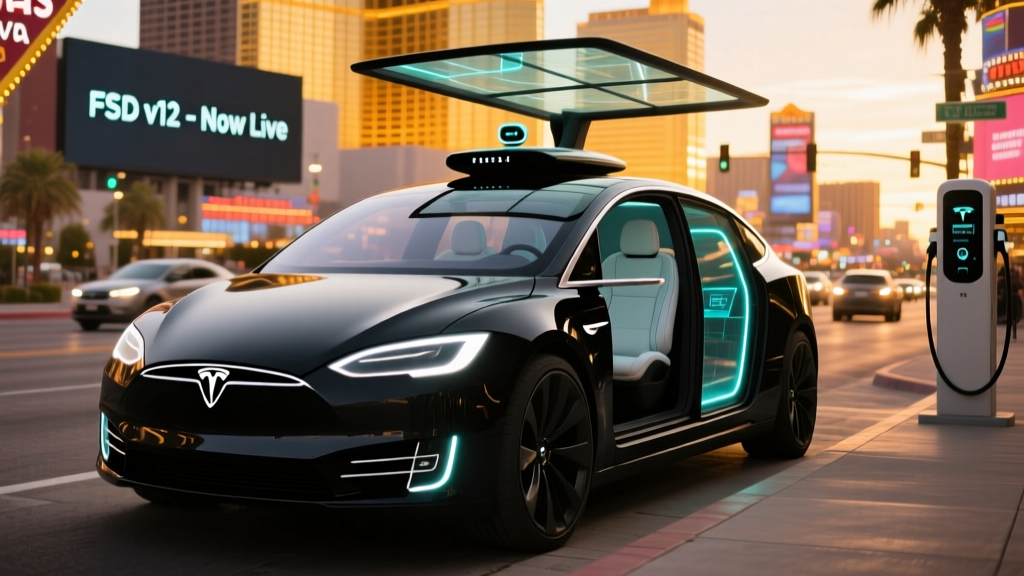
As of early 2026, Tesla does not operate a commercial robotaxi service in Las Vegas or any other U.S. city. The Tesla Cybercab — the dedicated two-seat, steering-wheel-free vehicle unveiled in October 2024 — remains in pre-production, with Tesla targeting a production start no earlier than late 2026 or 2027. Even if production begins on schedule, deploying a driverless commercial service requires regulatory approval that Tesla has not yet secured in Nevada or elsewhere.
What Tesla does offer today is FSD (Supervised), a $8,000 add-on (or $99/month subscription) available on all current Tesla vehicles. FSD Supervised is an advanced driver-assistance system — not a robotaxi. The driver must remain fully engaged, hands on or near the wheel, eyes on the road, and legally responsible for the vehicle at all times.
Tesla FSD (Supervised) operates at SAE Level 2 — partial driving automation. The human driver is the fallback and must continuously supervise. A true robotaxi (like Waymo's driverless service) operates at SAE Level 4 — high automation within a defined operational design domain, with no driver intervention required. The gap between Level 2 and Level 4 is not incremental; it represents a fundamentally different engineering, regulatory, and liability framework. No Tesla vehicle currently holds a Level 4 certification from any U.S. regulator.
What Robotaxi Services Actually Operate in Las Vegas Today?
While Tesla's robotaxi ambitions remain future plans, Las Vegas already hosts real, bookable driverless rides — just not from Tesla. Understanding the current landscape provides critical context for what a Tesla robotaxi service would need to compete against.
| Service | Operator | SAE Level | Las Vegas Status (2026) | How to Book |
|---|---|---|---|---|
| Waymo One | Alphabet/Waymo | Level 4 | Active — expanded service area covering Strip corridor, airport, and downtown | Waymo app |
| Motional | Hyundai/Aptiv JV | Level 4 | Limited — select routes via Uber/Lyft integration | Uber/Lyft app (select rides) |
| Tesla FSD (Supervised) | Tesla (private owners) | Level 2 | Not a commercial service — personal use only, driver required | Not bookable |
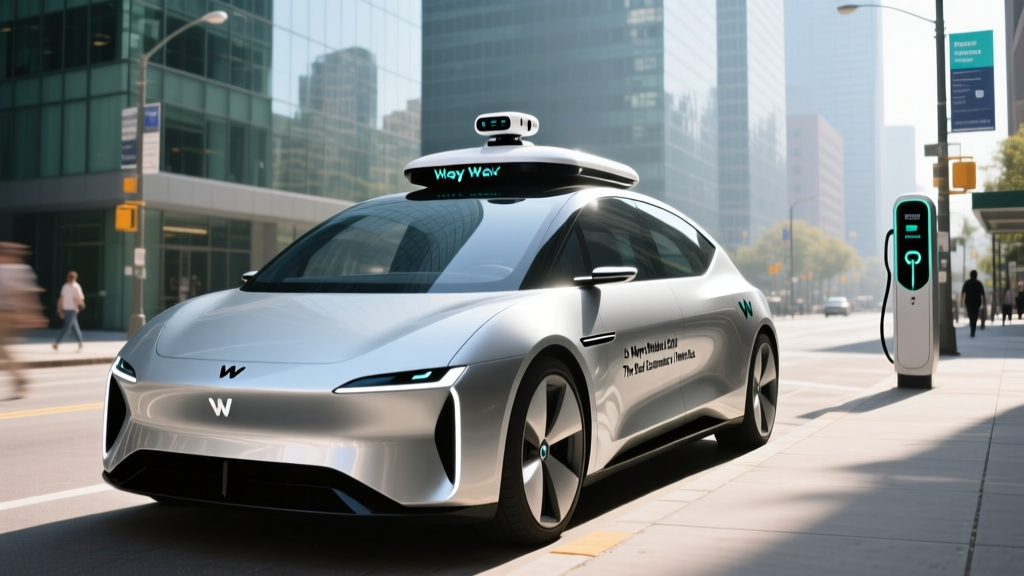
Waymo One launched in Las Vegas in 2024 and has steadily expanded its geofenced service area. As of 2026, riders can hail a fully driverless Waymo vehicle (5th-generation Jaguar I-PACE equipped with lidar, radar, and cameras) across a zone that includes Harry Reid International Airport, the Las Vegas Strip corridor, and parts of downtown. The Nevada Department of Motor Vehicles and the National Highway Traffic Safety Administration (NHTSA) are the primary regulatory bodies overseeing these operations.
Technology Stack: Camera-Only vs. Lidar — Why It Matters for Las Vegas
Tesla's approach to autonomy diverges sharply from every other robotaxi operator, and this distinction is central to understanding the timeline and feasibility of a Tesla robotaxi in Las Vegas.
Tesla: Vision-Only (Camera + Neural Networks)
Tesla removed ultrasonic sensors and radar from its vehicles starting in 2022, relying exclusively on a suite of 8 cameras and its custom FSD computer running neural-network inference. The argument: human eyes are cameras too, so cameras should suffice. The challenge: edge cases involving depth perception, low light, and occlusion remain harder to solve without active ranging sensors.
Waymo / Motional: Multi-Sensor Fusion (Lidar + Radar + Camera)
Waymo's 5th-generation hardware uses a roof-mounted lidar array providing a real-time 3D point cloud out to 300+ meters, supplemented by radar and cameras. This redundancy costs more (estimated $100,000+ per vehicle in sensor hardware) but provides independent depth verification and operates reliably in fog, rain, and darkness — conditions common in Las Vegas monsoon season and dust storms.
For a Las Vegas robotaxi specifically, the environment presents unique challenges: extreme heat (interior cabin temps exceeding 150°F parked in summer), haboob dust events reducing visibility to near zero, dense pedestrian traffic on the Strip with unpredictable jaywalking, and complex multi-lane construction zones. Waymo's lidar stack handles these scenarios today; Tesla's vision-only system has not yet demonstrated Level 4 reliability in equivalent conditions under independent testing.
Safety Data: What the Numbers Actually Show
Safety claims in the autonomous vehicle space are frequently oversimplified. Here's what concrete, reported data reveals — sourced from NHTSA incident reports, California DMV disengagement filings, and operator transparency reports.
Robotaxi Safety Record — Verified Data Points
- Waymo (cumulative through 2025): Over 30 million fully driverless miles completed. Contact rate (police-reportable incidents per million miles) approximately 85% lower than human benchmarks in operational areas, per IIHS-cited Waymo safety reports.
- Waymo disengagement rate: ~0.07 disengagements per 1,000 autonomous miles in California (2024 DMV reports), down from 0.14 in 2022.
- Tesla FSD (Supervised): Tesla does not publish disengagement data in the same format, as it is not required to file with the California DMV (not classified as an autonomous testing entity). Tesla's Q4 2025 safety report claims 1 crash per 4.7 million miles driven with FSD active — but this includes supervised driving where the human intervened, making direct comparison to Level 4 data misleading.
- NHTSA Standing General Order (SGO): Both Tesla and Waymo are required to report crashes involving Level 2+ and Level 4 systems. Between 2022 and 2025, Tesla Autopilot/FSD was involved in over 900 reported incidents nationally (reflecting the massive fleet size, not necessarily a higher per-mile rate). Waymo reported fewer than 50 incidents in the same period with a much smaller fleet.
The critical takeaway: Waymo's Level 4 vehicles have demonstrated measurable safety in driverless operation across millions of miles. Tesla's Level 2 system shows promise in supervised scenarios but has not undergone the same validation for unsupervised, driverless deployment. This gap is regulatory as well as technical.
Pricing: Robotaxi vs. Uber/Lyft in Las Vegas
For consumers, the economics of robotaxi rides determine whether the service is viable beyond novelty. Here's how current pricing compares for typical Las Vegas trips.
| Route | UberX | Lyft Standard | Waymo One | Tesla (Future) |
|---|---|---|---|---|
| Airport → Strip (4 mi) | $14–$22 | $13–$20 | $11–$16 | Not available |
| Strip → Downtown (5 mi) | $16–$28 | $15–$26 | $13–$20 | Not available |
| Strip end-to-end (7 mi) | $22–$38 | $20–$35 | $18–$28 | Not available |
Waymo One currently undercuts Uber/Lyft on many Las Vegas routes by roughly 15–25%, subsidized in part by Waymo's goal to build ridership. Tesla CEO Elon Musk has stated that a future Tesla robotaxi service could charge as little as $0.20 per mile (roughly $1–$2 per trip for short hops), but this pricing has not been validated and would require the Cybercab to achieve very high utilization rates at very low operating costs. For context, Waymo's current estimated cost per mile (including hardware amortization, remote assistance, and operations) is believed to be $1.50–$2.50/mile industry-wide.
Regulatory Landscape: Who Approves a Tesla Robotaxi in Nevada?
Deploying a driverless commercial robotaxi in Las Vegas requires navigating a multi-layer regulatory framework. Understanding this process explains why timelines stretch out even after hardware is ready.
- Nevada DMV Autonomous Vehicle Division: Issues testing and deployment permits. Requires proof of insurance ($5M minimum for driverless operations), safety driver training plans (during testing phase), and incident reporting protocols.
- Nevada Public Utilities Commission (PUCN): Regulates commercial transportation services, including any for-hire driverless vehicle fleet.
- NHTSA (Federal): Sets vehicle safety standards (FMVSS). A vehicle without a steering wheel — like the proposed Cybercab — requires an exemption from current FMVSS rules, which mandate manual controls. As of 2026, no such blanket exemption has been granted for commercial robotaxi deployment.
- Clark County / City of Las Vegas: Local ordinances govern where autonomous vehicles can operate, pick-up/drop-off zones, and coordination with first responders.
Tesla has not applied for a Nevada autonomous vehicle testing permit as of early 2026, according to Nevada DMV public records. Waymo, Motional, and Zoox all hold active Nevada permits. This suggests Tesla is still at least 12–18 months from beginning the regulatory process for Las Vegas deployment, even in a best-case scenario.
Current Limitations of Robotaxi Services
Even Waymo's operational Level 4 service has defined boundaries. Any future Tesla robotaxi in Las Vegas would face the same or greater constraints.
What Robotaxis Cannot Do Today (Including Any Future Tesla Service)
- Geofencing: All current Level 4 services operate within pre-mapped zones. Stray outside the boundary and the service won't dispatch. Waymo's Las Vegas geofence covers ~80 square miles — large, but not unlimited.
- Severe weather: Heavy rain, dust storms, and flooding ground Level 4 fleets. Las Vegas monsoon season (July–September) regularly triggers service suspensions for Waymo.
- Highway driving: Most robotaxi services avoid limited-access highways. Waymo's Las Vegas service includes some highway segments but not all.
- Construction zones: Rapidly changing road layouts can exceed the operational design domain, requiring remote operator intervention or trip cancellation.
- Accessibility: Current robotaxi fleets (Jaguar I-PACE) cannot accommodate wheelchair users without advance arrangement. Tesla's Cybercab design has not addressed ADA compliance publicly.
- No inter-city trips: Las Vegas to Henderson, Boulder City, or the Grand Canyon? Not possible with current Level 4 services.
The Road Ahead: What Would a Tesla Robotaxi Need to Succeed in Las Vegas?
For Tesla to launch a competitive robotaxi service in Las Vegas, several milestones must be achieved sequentially:
- Hardware production: The Cybercab must enter volume production — Tesla targets 2027, but Tesla production timelines have historically slipped 12–24 months.
- FMVSS exemption or regulatory change: A vehicle without a steering wheel needs federal approval for commercial use.
- State permits: Tesla must apply for and receive Nevada DMV and PUCN approvals, a process that typically takes 6–12 months after application.
- Validated Level 4 performance: Tesla must demonstrate that its vision-only system can operate without a safety driver at a safety threshold acceptable to regulators — a bar Waymo met after billions of simulation miles and millions of real-world driverless miles.
- Insurance and liability framework: As the operator, Tesla would assume full liability for vehicle actions — a fundamental shift from its current model where the driver bears responsibility.
The earliest plausible date for a Tesla robotaxi in Las Vegas, assuming no major setbacks, is late 2028 or 2029. More conservative estimates from industry analysts place it in the 2030+ range.
Frequently Asked Questions
Where can I use a Tesla robotaxi service right now?
You cannot. As of 2026, Tesla does not operate any commercial robotaxi service in any city. Tesla's FSD (Supervised) is a Level 2 driver-assist feature available to Tesla owners — it requires an attentive human driver and is not a ride-hailing service.
How much does a robotaxi ride cost vs. Uber or Lyft?
Waymo One, the only fully driverless robotaxi service in Las Vegas, typically costs 15–25% less than comparable UberX or Lyft rides. A 4-mile airport-to-Strip trip runs $11–$16 on Waymo vs. $13–$22 on Uber. Tesla has not announced pricing for a future service.
How safe are robotaxis — is there real data?
Waymo has completed over 30 million driverless miles with a contact rate approximately 85% lower than human driver benchmarks in its operational areas, per IIHS-cited reports. Tesla's FSD Supervised has a large supervised-driving dataset, but no validated driverless safety record. NHTSA's Standing General Order data shows Tesla Autopilot/FSD involved in 900+ reported incidents nationally (2022–2025), though fleet-size context matters.
What are the current limitations of robotaxi services?
Geofencing (service only in pre-mapped zones), weather suspensions (dust storms, heavy rain), limited highway access, inability to handle all construction zones, no wheelchair accessibility in most fleets, and no inter-city trips. These constraints apply to all current Level 4 services and would apply to any future Tesla robotaxi.
Is Tesla FSD truly self-driving or just driver-assist?
Tesla FSD (Supervised) is SAE Level 2 driver-assist — the driver must remain fully engaged, monitor the road, and be ready to take over instantly. It is not self-driving. A true self-driving robotaxi operates at SAE Level 4 with no human driver required. Only Waymo and a handful of other operators have achieved Level 4 in limited commercial service.
When will Tesla's Cybercab robotaxi be available in Las Vegas?
Tesla has not announced a specific Las Vegas launch date. The Cybercab is targeting production start in 2027, with regulatory approvals and city-by-city deployment following. The earliest plausible Las Vegas service date is late 2028–2029, with 2030+ being more likely based on typical Tesla timeline history and regulatory lead times.
Can I use Tesla FSD on the Las Vegas Strip today?
Yes — if you own or rent a Tesla equipped with FSD (Supervised), you can activate it on Las Vegas roads, including the Strip. However, you must remain the active driver at all times. You cannot summon an empty Tesla to pick you up as a passenger; that would require Level 4 robotaxi capability that Tesla does not currently possess.