Can You Actually Buy a Tesla Robotaxi Right Now?
If you've been searching for a "Tesla robotaxi for sale," you're not alone — the term has become one of the most queried phrases in the EV space since Tesla unveiled its Cybercab concept. But here's the reality check buyers and riders need: as of early 2026, Tesla does not sell a robotaxi to consumers, nor does it operate a driverless ride-hailing service in any U.S. city. What Tesla does offer is Full Self-Driving (Supervised) — a Level 2 driver-assistance system that requires your full attention at all times.
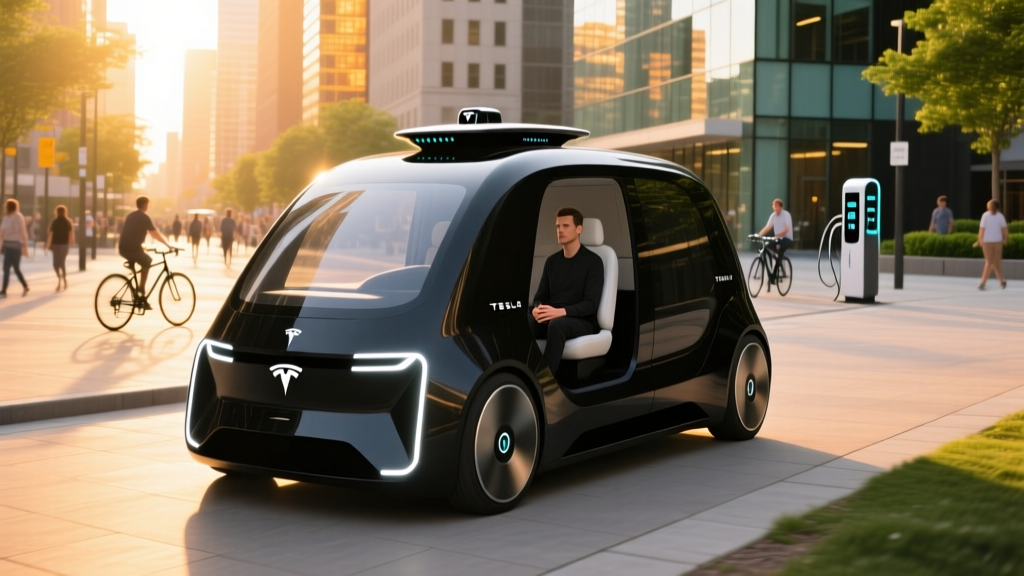
The vehicle Tesla has positioned as its future robotaxi, the Cybercab, was unveiled in October 2024 with a projected sub-$30,000 price tag and a targeted production start in late 2026 or 2027. Tesla CEO Elon Musk has stated the Cybercab will have no steering wheel or pedals, making it a purpose-built autonomous vehicle. But announced timelines in the autonomous-vehicle industry have a long history of slipping, and regulatory approval for a steering-wheel-free vehicle on public roads remains a significant hurdle.
This article separates what's real from what's promised — covering the SAE automation levels, where actual robotaxi services operate today, Tesla's technology approach, safety records across the industry, and what buying or riding in a Tesla robotaxi would actually look like if and when it launches.
SAE Automation Levels: Why Tesla's FSD Is Not a Robotaxi
The single most important distinction in the autonomous-vehicle conversation is the difference between driver-assistance and driverless operation. The Society of Automotive Engineers (SAE) defines six levels of driving automation, and misunderstanding them leads to dangerous assumptions behind the wheel.
| Level | Name | Who Drives | Examples |
|---|---|---|---|
| 0 | No Automation | Human does everything | Traditional vehicles |
| 1 | Driver Assistance | Human + one assist feature (steering OR speed) | Adaptive cruise control, lane-keeping |
| 2 | Partial Automation | Human supervises; system handles steering AND speed | Tesla Autopilot/FSD, GM Super Cruise, Ford BlueCruise |
| 3 | Conditional Automation | System drives in specific conditions; human must take over when asked | Mercedes Drive Pilot (limited markets/conditions) |
| 4 | High Automation | System drives without human in defined operational domain | Waymo One, Zoox (geofenced areas) |
| 5 | Full Automation | System drives everywhere, all conditions | Does not exist commercially |
This distinction matters enormously for anyone researching a Tesla robotaxi for sale. A consumer vehicle equipped with FSD (Supervised) is not a robotaxi — it's a car with an advanced driver-assist package that still requires you to drive it. The Cybercab, if it reaches production without a steering wheel, would need Level 4 certification to operate without a human fallback driver.
Where Can You Actually Use a Robotaxi Service Today?
While Tesla's robotaxi ambitions remain in the future, fully driverless ride-hailing services are already operating in several U.S. cities — just not from Tesla. Here's where Level 4 robotaxi services are currently available:
| Service | Operator | Operational Cities | Availability | Vehicle |
|---|---|---|---|---|
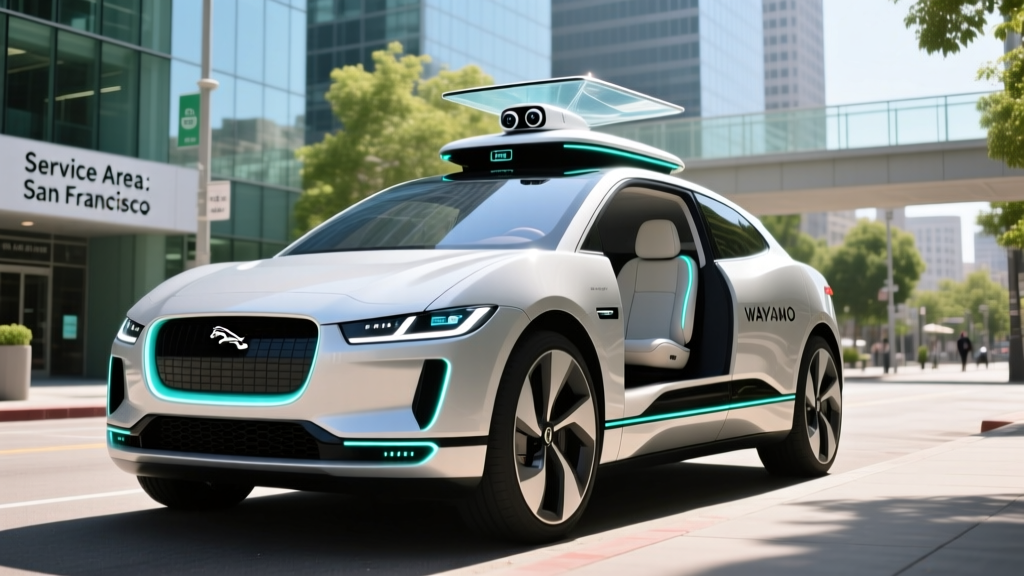
| Waymo One | Waymo (Alphabet) | Phoenix, San Francisco, Los Angeles, Austin (expanding) | 24/7 in core zones; airport service in select cities | Jaguar I-PACE (custom Waymo Driver sensor suite) |
| Zoox | Zoox (Amazon) | Las Vegas, Foster City (CA), limited SF testing | Limited hours; invitation/employee-based in some areas | Zoox purpose-built bidirectional vehicle |
| Cruise | Cruise (GM) | Operations paused/restructured post-2023 incident; limited return in select markets | Severely limited; phased restart | Chevrolet Bolt EV / Origin (paused) |
Tesla is not on this list. Tesla has discussed launching a ride-hailing network — sometimes referred to as the "Tesla Network" — where FSD-equipped Tesla owners could add their cars to a shared fleet. However, this concept faces a fundamental technical and regulatory barrier: Level 2 vehicles cannot legally operate without a human driver prepared to take control. Until Tesla achieves and certifies Level 4 autonomy, a Tesla robotaxi network cannot function as a true driverless service.
Tesla's Technology Stack: Cameras vs. Lidar and the Autonomy Debate
One of the most consequential technical decisions in the autonomous-vehicle industry is Tesla's commitment to a camera-only (Tesla Vision) sensor suite, rejecting lidar, radar, and ultrasonic sensors that competitors rely on. Understanding this choice is essential for evaluating Tesla's robotaxi prospects.
Tesla Vision (Camera-Only Approach)
- Sensors: 8 surround cameras providing 360-degree visibility (upgraded HW4 suite on newer vehicles)
- Processing: Custom Tesla FSD computer (Hardware 4) with dual neural-network processors
- Philosophy: "If humans can drive with just eyes and a brain, cameras and neural networks should suffice"
- Advantage: Lower hardware cost per vehicle; scales across millions of consumer cars for data collection
- Risk: No redundant depth-sensing; cameras can be degraded by glare, fog, heavy rain, direct sun, and low-light conditions
Waymo / Zoox Approach (Multi-Sensor Fusion)
- Sensors: Lidar arrays (roof-mounted and side-mounted), cameras, radar, external microphones
- Processing: Custom compute platforms with redundant systems
- Philosophy: Sensor redundancy is essential for safety-critical Level 4 operation
- Advantage: Lidar provides precise 3D depth mapping regardless of lighting; radar sees through fog and rain
- Risk: Higher per-vehicle cost (estimated $100,000+ per sensor suite historically, though costs have dropped significantly)
The National Highway Traffic Safety Administration (NHTSA) has not endorsed either approach, but the agency has opened investigations into Tesla's Autopilot and FSD systems following crashes involving stationary emergency vehicles and other edge cases. The camera-only approach remains unproven at Level 4 at scale, which is why no other major robotaxi operator has adopted it.
How Much Do Robotaxis Cost vs. Uber and Lyft?
For consumers in cities where robotaxis operate, the pricing comparison with traditional rideshare is a practical concern. Here's how Waymo One — the most widely available Level 4 service — compares to Uber and Lyft in early 2026:
| Scenario | Waymo One | UberX | Lyft Standard |
|---|---|---|---|
| 5-mile city ride (off-peak) | $12–$18 | $11–$17 | $10–$16 |
| 10-mile suburban ride | $22–$32 | $18–$28 | $17–$27 |
| Airport transfer (15–20 mi) | $35–$55 | $30–$50 | $28–$48 |
| Surge pricing behavior | More stable; limited by fleet size | Can spike 2–4x during peak | Can spike 2–3x during peak |
| Tipping expected? | No (no driver) | Yes ($2–$5 typical) | Yes ($2–$5 typical) |
Waymo's pricing is generally competitive with Uber and Lyft, sometimes slightly higher per mile but offset by the absence of tipping and more predictable surge behavior. Tesla has projected that its Cybercab robotaxi could eventually offer rides at under $1 per mile (roughly $0.20/mile operating cost, according to Musk's claims), which would dramatically undercut all current options. However, these figures are projections based on a vehicle that isn't yet in production, with no regulatory approval for driverless operation. Take them as aspirational, not actionable.
If Tesla does launch a paid robotaxi service, the economics would depend heavily on fleet utilization rates, insurance costs for Level 4 operation, maintenance, and the regulatory fees that cities and states are beginning to impose on autonomous-vehicle operators.
Safety Data: What the Numbers Actually Show
Safety is the most scrutinized — and most contested — aspect of robotaxi operations. Here's what the available data shows, with important context:
Tesla FSD (Level 2) Safety Context
Tesla publishes quarterly safety reports claiming that vehicles with Autopilot engaged record one crash per approximately 4–5 million miles, compared to the U.S. average of roughly one crash per 670,000 miles (per NHTSA data). However, these statistics require careful interpretation:
- Tesla's data includes primarily highway driving on Autopilot, which is inherently safer than urban driving
- NHTSA's national average includes all driving conditions, including high-risk urban intersections and impaired drivers
- Tesla's FSD system has been the subject of multiple NHTSA investigations, including a recall in late 2023 affecting over 2 million vehicles for insufficient driver-engagement safeguards
- The Insurance Institute for Highway Safety (IIHS) has rated partial-automation systems, including Tesla's, as having inadequate driver-monitoring compared to competitors like GM's Super Cruise
Cruise's 2023 Incident and Industry Impact
In October 2023, a Cruise robotaxi in San Francisco dragged a pedestrian who had been thrown into its path by another vehicle. The incident led to Cruise's California DMV permit being suspended, a nationwide operational pause, and a fundamental restructuring of the company. This event demonstrated that even Level 4 systems with extensive sensor suites can encounter edge cases with serious consequences — and it significantly increased regulatory scrutiny across the entire robotaxi sector, including Tesla's future ambitions.
Regulatory Landscape: Who Approves Robotaxi Operations?
For a Tesla robotaxi to operate legally — or for any driverless vehicle to carry paying passengers — it must clear a patchwork of federal, state, and local regulations:
Federal Level
- NHTSA sets Federal Motor Vehicle Safety Standards (FMVSS), which currently require steering wheels, mirrors, and pedals in passenger vehicles. A Cybercab with no steering wheel would need an FMVSS exemption or a rule change.
- NHTSA also oversees crash investigations and can issue recalls for automated-driving systems.
- Congress has not passed comprehensive autonomous-vehicle legislation as of early 2026.
State Level
- California (DMV + CPUC): Requires a deployment permit for driverless passenger service. Waymo holds this permit; Tesla does not.
- Arizona: Among the most permissive states; Waymo launched commercially in Phoenix with relatively light regulatory requirements.
- Texas: Austin allows AV testing and limited commercial operations under state law.
- Nevada: Permits AV testing; Zoox operates in Las Vegas.
- Many states have no specific AV legislation, creating legal uncertainty for operators.
Key Regulatory Barrier for Tesla
Even if Tesla builds the Cybercab exactly as announced — no steering wheel, no pedals — it cannot legally carry passengers without regulatory approval in every jurisdiction where it operates. The FMVSS exemption process is lengthy, and states like California have shown they will suspend permits when safety incidents occur. Tesla would need to demonstrate reliable Level 4 performance across diverse conditions before any state would grant a commercial driverless permit.
Current Limitations of Robotaxis (All Operators)
Even the most advanced Level 4 robotaxis operating today face significant operational constraints. These limitations would apply equally to a future Tesla robotaxi service:
- Geofencing: Waymo and Zoox operate within tightly mapped geographic zones. Rides that begin or end outside the zone are not available. Expanding these zones requires extensive mapping, testing, and regulatory approval.
- Weather: Heavy rain, snow, fog, and ice degrade sensor performance. Waymo reduces or suspends service during severe weather. Camera-only systems (Tesla's approach) are potentially more vulnerable to these conditions.
- Construction zones: Temporary lane changes, cones, and flaggers can confuse autonomous systems that rely on pre-mapped routes.
- Edge cases: Unusual scenarios — a person in a costume, an overturned truck, a police officer directing traffic with hand signals — remain challenging for all AV systems.
- No highway operation (most services): Waymo's commercial service is primarily urban/suburban at moderate speeds. Highway-speed autonomous operation adds significant complexity.
- Fleet size and wait times: Robotaxi fleets are currently small (hundreds to low thousands of vehicles per city), meaning wait times can exceed 10–15 minutes outside peak zones.
- Accessibility: Current robotaxi vehicles may not accommodate all wheelchair types or passengers who need assistance entering/exiting the vehicle.
What About Buying an FSD-Equipped Tesla as a "Personal Robotaxi"?
Some Tesla owners view purchasing an FSD-equipped vehicle as an investment — the idea being that Tesla will eventually enable unsupervised autonomous driving via an over-the-air software update, effectively turning your car into a revenue-generating robotaxi. Here's what to consider before spending $8,000 on the FSD package (or $99/month for the subscription) with this expectation:
- No timeline commitment: Tesla has projected "full self-driving" capability "next year" since approximately 2016. The timeline has consistently slipped.
- Hardware compatibility: Tesla has stated that vehicles with Hardware 3 (sold through early 2023) may require hardware upgrades for future FSD capabilities, potentially at the owner's expense.
- Regulatory approval is separate from software capability: Even if Tesla's neural networks achieve reliable driverless performance, each state must independently approve commercial driverless operation.
- Insurance and liability: Who is liable when an unsupervised FSD-equipped Tesla crashes? This legal question remains unresolved in most jurisdictions.
- Depreciation risk: If Level 4 autonomy arrives via a Cybercab purpose-built vehicle (no steering wheel, lower cost), a consumer Model 3 or Model Y with FSD may not be competitive as a robotaxi platform.
Is This Truly Self-Driving or Driver-Assist? The Bottom Line
A true robotaxi — the kind you summon via app, ride in with an empty driver's seat, and pay per trip — requires Level 4 automation certified by regulators. In the U.S. today, only Waymo operates this kind of service at commercial scale. Tesla's Cybercab, if it reaches production and gains regulatory clearance, could join this category. But "if" is doing heavy lifting in that sentence.
Frequently Asked Questions
Can I buy a Tesla Cybercab robotaxi right now?
No. The Tesla Cybercab was unveiled in October 2024 as a concept with a targeted production timeline of late 2026 at the earliest. It is not available for purchase or pre-order as of early 2026. Even when production begins, it will likely launch as part of a Tesla-operated fleet, not as a consumer purchase — at least initially.
How much would a Tesla robotaxi cost if it goes on sale?
Tesla has projected a sub-$30,000 price for the Cybercab, though this figure has not been confirmed with detailed specifications or a firm production date. For context, Tesla's pricing projections have historically been optimistic — the original Model 3 was announced at $35,000 but most early deliveries were significantly higher. Any consumer-purchase version would also require regulatory approval for a vehicle without a steering wheel.
Is Tesla's FSD the same as what Waymo offers?
No. Tesla FSD (Supervised) is a Level 2 driver-assist system that requires your constant attention. Waymo One is a Level 4 driverless service with no human driver present. They are fundamentally different categories of technology with different regulatory approvals, sensor suites, and safety architectures.
Where are robotaxis available right now in the U.S.?
Waymo One operates commercial driverless rides in Phoenix, San Francisco, Los Angeles, and Austin (with ongoing expansion). Zoox has limited operations in Las Vegas and the San Francisco Bay Area. Tesla does not operate a robotaxi service in any city.
Will Tesla's camera-only approach work for Level 4 autonomy?
This remains one of the biggest open questions in the autonomous-vehicle industry. Every other Level 4 operator (Waymo, Zoox, Cruise) uses lidar as a core sensor alongside cameras and radar. Tesla's argument is that camera-based neural networks, trained on data from millions of consumer vehicles, will eventually match or exceed multi-sensor systems. This has not yet been demonstrated at Level 4 in regulatory-approved commercial service.
How do I stay updated on Tesla robotaxi availability?
Monitor Tesla's quarterly earnings calls and official announcements, but verify claims against regulatory filings with NHTSA and state DMV/CPUC permit databases. Announced timelines in the AV industry have historically been unreliable — base purchasing decisions on what's available and approved today, not what's promised for tomorrow.