Tesla's promise of a driverless ride-hailing network has been one of the most anticipated—and most delayed—stories in the autonomous vehicle industry. With the Cybercab concept unveiled and limited pilot programs beginning, buyers and investors alike are asking: where does Tesla's robotaxi ambition actually stand in 2026? This Tesla robotaxi fleet update separates announced plans from operational reality, benchmarks Tesla's approach against live Level 4 services like Waymo, and gives you the hard numbers on what's available today.
Where Tesla's Robotaxi Fleet Stands Right Now
As of mid-2026, Tesla does not operate a publicly available, fully driverless robotaxi service comparable to Waymo One or Zoox. What Tesla has deployed is a limited, supervised pilot program in select markets using Model Y vehicles equipped with the latest Hardware 4 (HW4) sensor suite and FSD (Supervised) software. These vehicles still have a safety driver behind the wheel at all times.
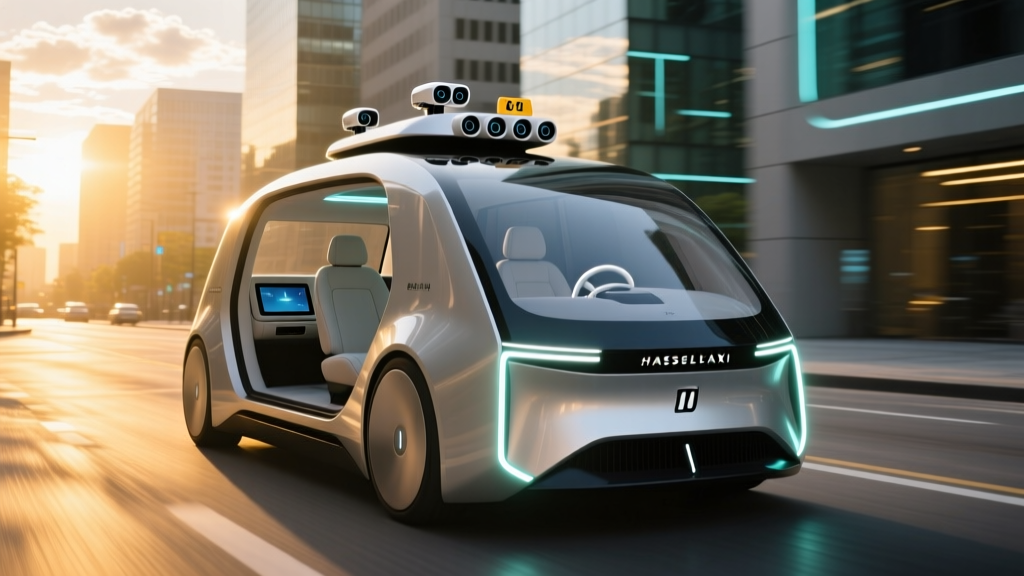
The dedicated Tesla Cybercab—a purpose-built, two-passenger vehicle with no steering wheel or pedals—remains in pre-production. Tesla CEO Elon Musk has targeted a late-2026 production start at Giga Texas, but volume availability and regulatory approval for fully driverless operation are not guaranteed on that timeline.
| Level | Description | Example |
|---|---|---|
| Level 2 | Driver-assist. Human must monitor and intervene at all times. | Tesla Autopilot, FSD (Supervised), GM Super Cruise |
| Level 3 | Conditional automation. System drives in limited scenarios; human must take over when requested. | Mercedes Drive Pilot (limited market, low speed) |
| Level 4 | High automation. No human driver needed within a defined operational design domain (geofenced area). | Waymo One, Zoox (live in select US cities) |
| Level 5 | Full automation everywhere, all conditions. Does not exist commercially. | None |
Bottom line: Tesla FSD (Supervised) is SAE Level 2. A true robotaxi requires Level 4. Tesla has not yet received regulatory certification for Level 4 operation in any US jurisdiction.
Service Availability: Where Can You Actually Ride a Robotaxi Today?
If you want to hail a fully driverless robotaxi right now—no safety driver, no steering wheel—you need to be in one of the cities where Level 4 services are commercially operational. Here's how the landscape compares:
| Service | SAE Level | Live Cities | Hours | Status |
|---|---|---|---|---|
| Waymo One | Level 4 | Phoenix, San Francisco, Los Angeles, Austin (expanding) | 24/7 | Commercial — open to public |
| Zoox | Level 4 | Las Vegas, Foster City (limited) | Limited hours | Pilot — invite/employee |
| Cruise | Level 4 | Suspended — phased restart in select markets | N/A | Restarting post-safety review |
| Tesla (Cybercab) | Level 2 (supervised pilot) | Austin (limited supervised pilot) | Limited | Not publicly available |
Where can I use a Tesla robotaxi right now? As a member of the general public, you cannot. Tesla's supervised pilot in Austin is limited to invited participants and employees. For a real, bookable driverless ride today, Waymo One in Phoenix, San Francisco, or Los Angeles is your most accessible option.
Tesla's Technology Stack: Camera-Only vs. Multi-Sensor Fusion
Tesla's approach to autonomy diverges sharply from every other Level 4 operator. Understanding this difference is critical to evaluating the Cybercab's prospects.
Tesla: Vision-Only (Camera-Based)
- Sensors: 8 cameras (HW4 suite), no lidar, no radar (removed from 2022+ vehicles)
- Compute: Custom Tesla FSD chip, ~300 TOPS (trillions of operations per second)
- Mapping: Relies on real-time perception and neural network inference rather than HD pre-mapped routes
- Geofencing: FSD (Supervised) is technically available on most US roads, but Level 4 robotaxi operation would require regulatory approval per jurisdiction
- Advantage: Lower hardware cost per vehicle (~$1,500 sensor suite vs. $30,000+ for lidar stacks), scalable across Tesla's existing fleet
- Risk: Camera-only systems face known challenges in low-visibility conditions (heavy rain, fog, direct sun glare, nighttime construction zones)
Waymo / Zoox: Multi-Sensor Fusion
- Sensors: Lidar (typically 5-6 units), radar (6+), cameras (8-29), ultrasonic
- Compute: Custom AI platforms, significantly higher power draw
- Mapping: HD pre-mapped routes with centimeter-level precision; vehicles operate only within mapped geofences
- Geofencing: Strictly limited to approved urban zones with mapped infrastructure
- Advantage: Sensor redundancy—lidar provides precise 3D depth perception regardless of lighting; radar sees through fog and rain
- Risk: High per-vehicle cost (estimated $150,000-$200,000+ per vehicle), difficult to scale beyond mapped areas
Tesla's bet is that neural networks trained on billions of miles of fleet driving data can eventually match or exceed lidar-based perception at a fraction of the cost. The jury is still out: as of 2026, no vision-only system has been certified for Level 4 driverless operation by any US regulator. Waymo's safety data and multi-sensor redundancy have so far proven more convincing to agencies like the California DMV and NHTSA.
Safety Record: What the Data Actually Shows
Safety is the single most important factor in whether regulators will approve a driverless fleet. Here's what we know from published data:
| Operator | Fully Driverless Miles | Notable Incidents | Source |
|---|---|---|---|
| Waymo One | 10M+ fully driverless miles (as of early 2026) | Minor low-speed collisions; no reported passenger fatalities. NHTSA standing general order reports filed. | NHTSA |
| Cruise | ~2M+ driverless miles before suspension (Oct 2023) | Pedestrian dragged ~20 ft after being struck by human-driven vehicle; led to CA DMV permit suspension and nationwide pause. | CA DMV |
| Tesla FSD (Supervised) | Billions of supervised miles; zero unsupervised driverless commercial miles | NHTSA has opened multiple investigations into Autopilot/FSD crashes involving emergency vehicles and work zones. | NHTSA |
Key context: Waymo's published research claims its driverless vehicles are involved in ~85% fewer injury-causing crashes per million miles compared to human benchmarks in comparable urban environments. Tesla's FSD safety data is self-reported and measures supervised operation, which is not directly comparable to driverless Level 4 performance.
How safe are robotaxis? The honest answer: Waymo's Level 4 service has demonstrated a strong safety record over millions of driverless miles, but the sample size is still small relative to the trillions of miles driven by humans annually. Tesla's supervised system has no driverless commercial safety data yet, which is the primary regulatory hurdle.
Pricing: Robotaxi Cost vs. Uber and Lyft
Tesla has projected that the Cybercab could eventually offer rides at roughly $0.20 per mile—significantly undercutting rideshare. But that's a future target based on optimistic assumptions about fleet utilization, maintenance, and no driver costs. Here's what real pricing looks like today:
| Service | Avg. Cost/Mile | Avg. 5-Mile Ride | Notes |
|---|---|---|---|
| Waymo One (Phoenix/SF) | $1.00–$1.50 | $8–$12 | Comparable to UberX; promos available |
| UberX (US avg.) | $1.00–$1.80 | $9–$15 | Varies by city, surge pricing applies |
| Lyft (US avg.) | $0.90–$1.60 | $8–$14 | Comparable to UberX |
| Tesla Cybercab (projected) | $0.20–$0.40 (target) | $2–$4 (target) | Not yet operational; depends on regulatory approval and fleet scale |
How much does a robotaxi cost vs. Uber/Lyft? Today, Waymo's pricing is roughly on par with UberX—there's no dramatic discount yet, because the vehicles are expensive and fleet sizes are limited. Tesla's $0.20/mile target would be transformative if achieved, but it assumes massive scale, low maintenance costs on a purpose-built vehicle, and no regulatory caps on fleet size. Expect initial Tesla robotaxi pricing (if and when it launches) to be closer to Waymo's current rates, with aggressive subsidies to build ridership.
Regulatory Landscape: Who Has to Approve Tesla's Robotaxi?
Unlike selling a consumer car, operating a driverless fleet requires approval from multiple layers of government. Tesla cannot simply flip a software switch and launch nationwide.
- Federal (NHTSA): Sets vehicle safety standards (FMVSS). A vehicle without a steering wheel or pedals—like the Cybercab—requires a special exemption or new rulemaking. NHTSA has not yet approved any steering-wheel-less vehicle for general commercial sale.
- State DMVs and PUCs: Each state controls autonomous vehicle testing and deployment permits. California (DMV + CPUC), Arizona, Texas, and Nevada have the most established frameworks. Tesla would need a deployment permit in each state where it wants to operate driverless.
- Local/Municipal: Cities can impose operational restrictions, geofence limits, and hours-of-operation rules. San Francisco's Board of Supervisors, for example, has debated caps on robotaxi fleet sizes.
- Insurance and liability: In a Level 4 driverless model, the fleet operator (Tesla) assumes liability for crashes. This is a fundamentally different insurance structure from Tesla's current consumer policies and will require regulatory frameworks in each operating state.
Tesla's home state of Texas has been relatively permissive on AV testing, which is why Austin is the likely first market. But scaling to California—the largest rideshare market in the US—requires navigating the CA DMV's rigorous multi-phase permitting process, which Waymo spent years completing.
Current Limitations: What Tesla's Robotaxi Cannot Do
Even if Tesla achieves Level 4 certification, the operational design domain (ODD) will be constrained. These are the hard limitations based on current technology and regulatory frameworks:
- Weather: Camera-only systems degrade significantly in heavy rain, fog, snow, and direct sun glare. Waymo's lidar-equipped vehicles handle moderate rain better but also reduce operations or pull over in severe weather. Tesla's Cybercab will likely be restricted from operating in heavy precipitation initially.
- Geofencing: Level 4 robotaxis operate only within pre-approved, mapped zones. Tesla's "anywhere" FSD vision won't apply to the robotaxi service—regulators will require defined ODDs, at least initially.
- Construction zones: Temporary lane shifts, cones, and flaggers remain among the hardest edge cases for all AV systems. Waymo vehicles frequently disengage or request remote assistance in active construction areas.
- Unprotected left turns: High-speed, uncontrolled intersections with mixed traffic are a known challenge. Intervention rates spike in these scenarios across all operators.
- Emergency vehicles: NHTSA has investigated multiple incidents of AVs (including Tesla FSD) failing to properly detect and yield to stopped emergency vehicles with flashing lights. This remains an active area of concern.
- Pedestrian prediction: Jaywalking pedestrians, cyclists emerging from blind spots, and crowded urban sidewalks require split-second prediction that remains the frontier of AV capability.
- No highway operation (initially): Most Level 4 robotaxi permits are restricted to urban surface streets at speeds under 45 mph. Highway-speed autonomous ride-hailing is not part of any current commercial deployment.
The Cybercab Vehicle: What We Know So Far
The Tesla Cybercab is a purpose-built, two-seat vehicle designed specifically for autonomous ride-hailing. Here are the announced specifications, noting that these are preliminary and subject to change:
| Spec | Value |
|---|---|
| Seating | 2 passengers |
| Steering wheel / pedals | None (requires NHTSA FMVSS exemption) |
| Battery (estimated) | ~50 kWh, LFP chemistry (cost-optimized) |
| Range (estimated) | ~200+ miles (sufficient for urban fleet duty cycles) |
| Charging | Wireless inductive charging pad (announced); no charge port shown on concept |
| Sensor suite | Camera-only (HW4 or next-gen), no lidar |
| Target production cost | Under $30,000 per vehicle (Tesla estimate) |
| Production start | Targeted late 2026, Giga Texas (announced) |
| Federal tax credit (§30D) | Not applicable — fleet/commercial vehicle; may qualify for §45W commercial clean vehicle credit |
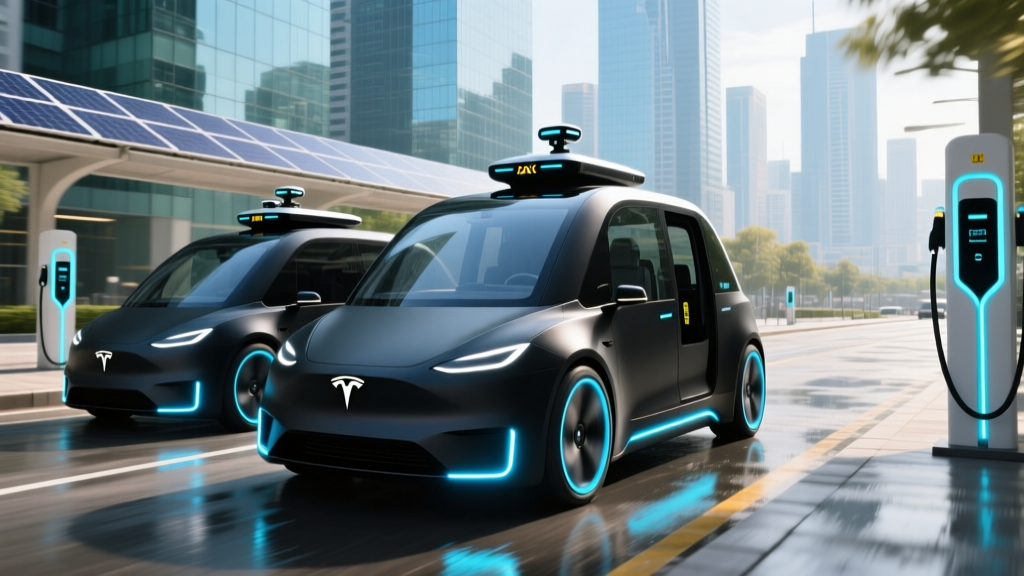
The wireless inductive charging concept is notable: it would allow Cybercabs to autonomously pull onto charging pads between rides without human plugging. However, inductive charging is typically slower (11-19 kW) than DC fast charging, which could limit fleet utilization unless Tesla develops a high-power inductive system.
Frequently Asked Questions
Is Tesla's FSD actually self-driving?
No. Tesla Full Self-Driving (Supervised) is an SAE Level 2 driver-assistance system. The driver must remain attentive, keep hands available, and be prepared to take over at any moment. It is not autonomous. Calling it "self-driving" is misleading and potentially dangerous—NHTSA and consumer safety advocates have repeatedly flagged this naming concern.
When will the Tesla Cybercab be available to the public?
Tesla has targeted late 2026 for production start, but "production start" is not the same as "available for public rides." Regulatory approval for driverless operation in specific cities will be required before any commercial launch. Based on Waymo's multi-year permitting process in California, a realistic timeline for meaningful public availability in more than one or two cities is 2027–2028 at the earliest, and only if regulators approve the camera-only approach for Level 4.
Can I buy a Cybercab for personal use?
Not initially. The Cybercab is designed as a fleet vehicle for Tesla's robotaxi network. Tesla has discussed allowing existing Tesla owners to add their vehicles to the network (an "Airbnb for cars" model), but this would also require regulatory approval and raises significant insurance and liability questions that are currently unresolved.
How does Tesla's camera-only approach compare to Waymo's lidar?
Waymo's lidar provides precise 3D depth mapping regardless of lighting conditions, offering redundancy that cameras alone cannot match in fog, heavy rain, or darkness. Tesla's argument is that human eyes are also camera-based and that sufficient neural network training on billions of real-world miles can replicate or exceed human perception. No vision-only system has yet received Level 4 certification from any US regulator, which is the practical proof point that matters.
What happened with Cruise, and does it affect Tesla's plans?
Cruise's October 2023 pedestrian-dragging incident in San Francisco led to its California DMV permit suspension and a nationwide operational pause. The incident underscored that regulators will move aggressively when AV safety failures occur. For Tesla, the Cruise situation is both a cautionary tale (regulatory approval is fragile and revocable) and a potential opportunity (a weakened Cruise means less competition in the near-term robotaxi market). Tesla's regulatory path will be scrutinized even more closely in light of what happened with Cruise.
Will Tesla's robotaxi undercut Uber on price?
Eventually, possibly—but not immediately. Tesla's $0.20/mile target assumes massive fleet scale, low vehicle costs, no driver wages, and high utilization rates. Waymo's current pricing is comparable to UberX because fleet sizes are small and vehicle costs are high. If Tesla can deploy tens of thousands of low-cost Cybercabs and regulators allow broad geographic operation, the economics could shift dramatically. But that's a multi-year scenario, not a launch-day reality.
Bottom Line: What This Tesla Robotaxi Fleet Update Means for You
Tesla's robotaxi vision is ambitious, and the Cybercab's low-cost, purpose-built design could reshape ride-hailing economics if it reaches scale. But as of 2026, the gap between Tesla's announcements and a live, driverless commercial service remains significant. The camera-only technology stack has not been proven or certified for Level 4 operation. Regulatory approval in key markets like California is unstarted. And competitors like Waymo have a multi-year head start with millions of driverless miles and established regulatory relationships.
If you're evaluating Tesla as an investment based on robotaxi potential, price in regulatory timelines and technology validation risks. If you're a consumer looking for a driverless ride today, Waymo One in Phoenix, San Francisco, or Los Angeles is the only scaled, publicly accessible option. Tesla's Cybercab is worth watching closely—but it's not a service you can book yet.