The Texas Question: Where Does Tesla's Robotaxi Actually Stand?
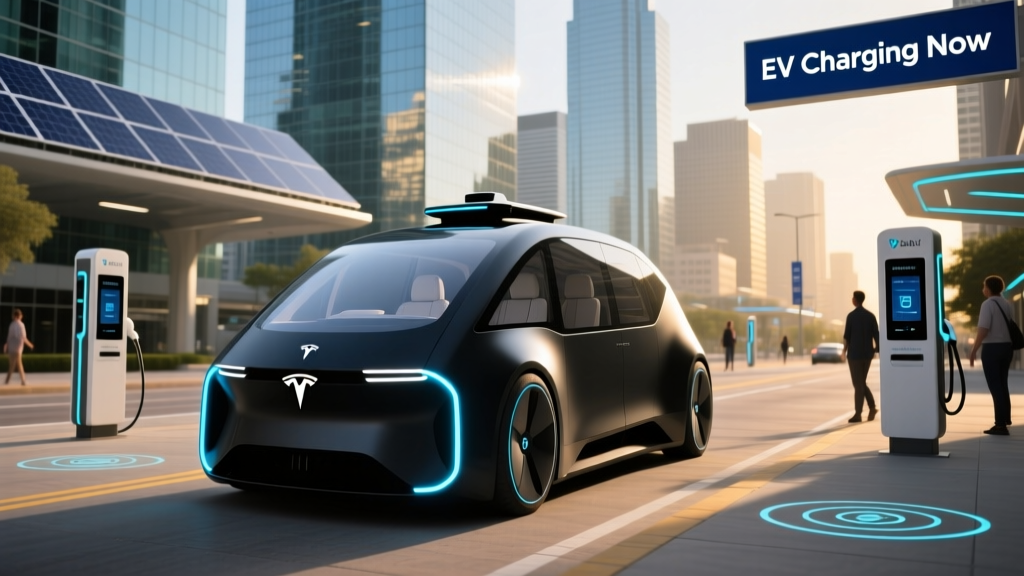
Texas has long been the epicenter of Tesla's corporate and manufacturing footprint, which makes the question of Tesla robotaxi expansion to Houston and Dallas one of the most searched topics in the autonomous vehicle space. As of mid-2026, Tesla's dedicated robotaxi — the Cybercab — remains in limited pilot operations, with Austin serving as the primary testing and early ride-hail market. Houston and Dallas have been named in Tesla's public roadmap as targeted expansion cities, but neither has launched a commercial, driverless ride-hail service as of this writing.
This article separates what Tesla has confirmed, what is operational today, and what remains announced or speculative. If you're trying to figure out whether you can hail a driverless Tesla in DFW or H-Town right now — and when that might change — here's the data-driven breakdown.
SAE Automation Levels: Why This Distinction Is Non-Negotiable
Before evaluating any robotaxi service, you need to understand the SAE International automation framework. Tesla currently operates two very different products that are frequently conflated:
| SAE Level | Description | Tesla Product | Driver Required? |
|---|---|---|---|
| Level 2 | Partial automation — steering + acceleration assisted | Autopilot / FSD (Supervised) | Yes, always. Hands on or near wheel, eyes on road. |
| Level 4 | High automation — no driver needed in defined ODD | Cybercab (Robotaxi) | No. No steering wheel or pedals in production spec. |
FSD (Supervised), even at its most capable, is a Level 2 driver-assist system. The driver is legally and operationally responsible at all times. The Cybercab robotaxi targets Level 4 — no human driver in the vehicle, within a geofenced Operational Design Domain (ODD). These are fundamentally different systems with different regulatory pathways.
This distinction matters because Tesla's consumer vehicles running FSD (Supervised) on the streets of Houston or Dallas today are not robotaxis. They are privately owned vehicles with advanced driver-assistance — the human behind the wheel is the fallback. A true Tesla robotaxi service requires Level 4 deployment: no driver, commercial ride-hail, and regulatory approval for driverless operation in that specific municipality.
Where Can You Use Tesla's Robotaxi Right Now?
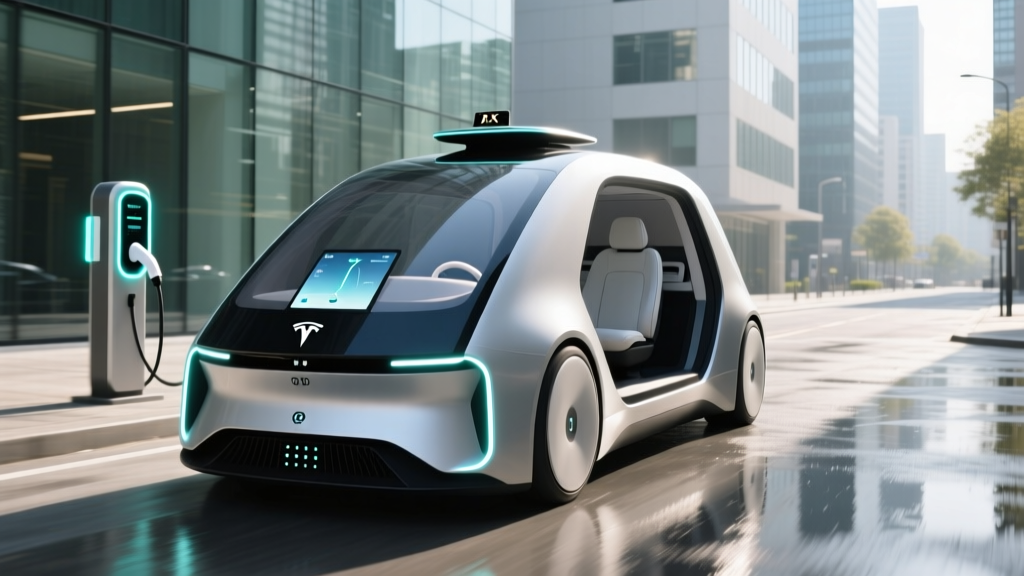
As of mid-2026, Tesla's Cybercab ride-hail pilot operates in a limited zone within Austin, Texas, accessible to a select group of early-access riders through the Tesla app. This is not an open, Uber-style service available to the general public citywide. Key details:
| City | Status (Mid-2026) | Service Type | Public Access |
|---|---|---|---|
| Austin, TX | Limited pilot / early access | Level 4 driverless (geofenced) | Invite-only via Tesla app |
| Houston, TX | Announced — targeted expansion | Not yet operational | No |
| Dallas / DFW, TX | Announced — targeted expansion | Not yet operational | No |
| San Francisco, CA | Testing / mapping phase | Not commercial | No |
| Phoenix, AZ | Under evaluation | Not announced for launch | No |
Tesla CEO Elon Musk has publicly stated a goal of scaling the Cybercab service to "roughly half the U.S. population" by the end of 2026, with Houston and Dallas among the named Texas expansion targets. However, announced expansion timelines in the AV industry have historically slipped. Waymo, the current market leader in U.S. robotaxis, took over three years to expand from Phoenix to San Francisco to Los Angeles. Tesla's timeline depends on regulatory approvals in each municipality, not just technical readiness.
Tesla's Technology Stack: Camera-Only vs. the Lidar Consensus
Tesla's Cybercab uses a fundamentally different sensor architecture than every other Level 4 robotaxi operator in the U.S. Here's the comparison:
| System | Cameras | Lidar | Radar | Ultrasonic | HD Maps |
|---|---|---|---|---|---|
| Tesla Cybercab | 8+ surround cameras | None | None (removed 2022+) | None (removed 2022+) | Minimal / vision-based mapping |
| Waymo (6th-gen) | Multiple surround | 6+ lidar units | Multiple radar | External audio sensors | Centimeter-precision HD maps |
| Zoox (Toyota-based) | Surround cameras | Multiple lidar | Multiple radar | Yes | HD maps |
| Cruise (Origin — paused) | Surround cameras | Multiple lidar | Multiple radar | Yes | HD maps |
Tesla's bet is that a vision-only system, powered by neural networks trained on billions of miles of fleet data, can achieve Level 4 reliability without the cost and complexity of lidar. The Cybercab's production target price of roughly $30,000 per vehicle depends heavily on eliminating expensive lidar arrays (which can add $5,000–$20,000+ per vehicle in competitor platforms).
The trade-off: camera-only systems face known challenges in low-light conditions, heavy rain, fog, and scenarios where depth perception is critical (e.g., distinguishing a shadow from a physical obstacle). Waymo and Zoox use lidar precisely because it provides direct, active depth measurement independent of lighting. Tesla's neural-network approach must infer depth from stereo vision and learned patterns — a harder engineering problem, but one with a lower hardware cost ceiling.
Safety Data: What the Numbers Actually Show
Evaluating robotaxi safety requires looking at concrete incident data, not marketing claims. Here's what we know as of mid-2026:
Available Safety Data Points
- Waymo (U.S. leader): Over 30 million fully driverless miles completed across Phoenix, San Francisco, Los Angeles, and Austin as of early 2026. Waymo's published safety report claims a 85% reduction in injury-causing crash rates compared to human benchmarks in comparable urban environments. (NHTSA Standing General Order data provides independent incident reporting.)
- Tesla Cybercab (Austin pilot): Tesla has not published a standalone robotaxi safety report with aggregate mileage and intervention rates for the Cybercab pilot as of mid-2026. The pilot's limited scale (estimated hundreds of thousands of miles, not millions) means statistically significant safety comparisons are not yet possible.
- Tesla FSD (Supervised — consumer vehicles): Tesla's quarterly Vehicle Safety Report publishes aggregate crash data for vehicles using Autopilot and FSD. However, this data covers Level 2 driver-assist with a human driver present — a fundamentally different operational context than driverless Level 4. The NHTSA has opened and closed multiple investigations into Autopilot/FSD incidents; consult NHTSA's investigation database for specifics.
- Cruise: Following a serious pedestrian-dragging incident in San Francisco in October 2023, Cruise suspended all driverless operations nationwide. As of 2026, Cruise has not resumed commercial robotaxi service and has been effectively wound down by GM.
The honest assessment: Tesla's Cybercab pilot is too early-stage for robust safety benchmarking. The camera-only approach has not yet been validated at scale in Level 4 driverless operation across diverse conditions. By contrast, Waymo's multi-sensor stack has accumulated tens of millions of driverless miles with published (if company-curated) safety metrics. For Houston and Dallas residents evaluating the service when it launches, insist on published intervention rates and incident data before drawing safety conclusions.
Pricing: How Would a Tesla Robotaxi Compare to Uber and Lyft?
Tesla has projected that the Cybercab will eventually offer rides at a cost of approximately $0.20 per mile to the rider, which would undercut traditional rideshare significantly. Here's the projected comparison based on Tesla's stated targets and current rideshare averages:
| Service | Estimated Cost/Mile | 5-Mile Ride Estimate | 10-Mile Ride Estimate | Notes |
|---|---|---|---|---|
| Tesla Cybercab (projected) | ~$0.20/mi | ~$1.00 + base fee | ~$2.00 + base fee | Target price; not yet validated at scale |
| Waymo One (current) | ~$0.90–$1.30/mi | ~$7–$10 | ~$13–$18 | Comparable to UberX in most markets |
| UberX (national avg.) | ~$1.00–$1.50/mi | ~$8–$12 | ~$14–$20 | Varies heavily by city, surge pricing |
| Lyft (national avg.) | ~$0.95–$1.40/mi | ~$7–$11 | ~$13–$19 | Varies heavily by city, surge pricing |
Important context: Tesla's $0.20/mile figure is a long-term target predicated on massive fleet scale, minimal operational overhead, and the low per-vehicle cost of the Cybercab (~$30,000 vs. $70,000+ for a lidar-equipped Waymo vehicle). No robotaxi operator has achieved this price point at commercial scale yet. Waymo's current pricing is broadly comparable to UberX. Expect Tesla's initial pricing in Houston and Dallas, when the service launches, to be closer to rideshare parity — with aggressive undercutting only if and when fleet density reaches critical mass.
Regulatory Landscape: Who Approves Robotaxi Expansion in Texas?
Texas is one of the more permissive states for autonomous vehicle testing and deployment, but "permissive" does not mean "unregulated." Here's the framework:
- State level: Texas passed autonomous vehicle legislation (SB 2205, effective 2017) that allows driverless AV operation on public roads, provided the vehicle is registered, insured, and complies with all traffic laws. There is no state-level permit process equivalent to California's DMV AV program — Texas relies more on local coordination.
- City level: Each municipality (Houston, Dallas, Austin) has authority over local road operations, ride-hail licensing, and first-responder coordination. Tesla's Austin pilot required coordination with Austin's transportation department and local emergency services. Houston and Dallas will require similar local agreements before commercial service can begin.
- Federal level: The NHTSA retains authority over vehicle safety standards (FMVSS). The Cybercab's lack of a steering wheel and pedals requires either an FMVSS exemption or compliance with updated standards. As of 2026, NHTSA has been working on updated rules for vehicles without traditional controls, but the exemption pathway remains case-by-case.
- Insurance: Texas requires minimum liability coverage for all registered vehicles. For driverless robotaxis, the question of liability allocation (manufacturer vs. fleet operator vs. software provider) is still evolving. Tesla has indicated it will self-insure or provide coverage through its existing insurance arm in robotaxi markets.
The practical implication: Tesla cannot simply flip a switch and launch in Houston or Dallas. Each city requires local government engagement, emergency-response protocol development, and potentially ride-hail licensing — a process that typically takes 6–18 months even in AV-friendly jurisdictions.
Current Limitations: What Tesla's Robotaxi Cannot Do
Even when the Cybercab service launches in Houston and Dallas, expect significant operational constraints. These are not unique to Tesla — every Level 4 robotaxi operator faces similar limitations — but Tesla's camera-only approach introduces some specific challenges:
- Geofencing: Service will be restricted to a mapped, approved Operational Design Domain (ODD). Expect initial coverage to be limited to core urban corridors — not full metro coverage. You will not be able to hail a Cybercab to suburbs outside the geofence.
- Weather: Heavy rain, fog, and flooding (common in Houston) degrade camera performance and may trigger service suspensions. Lidar-equipped competitors also reduce operations in severe weather, but camera-only systems are more sensitive to visibility loss.
- Construction zones: Unmapped lane shifts, temporary barriers, and flaggers present edge cases that require either remote teleoperation or service avoidance. Both Houston and Dallas have extensive, ongoing highway and urban construction.
- Night / low-light: Camera-only depth perception is less robust at night, particularly on unlit roads. Expect potential speed or area restrictions after dark in early deployment phases.
- Special events and crowd density: Large crowds, protest routes, stadium events, and parade routes typically cause robotaxi services to geofence around or suspend operations in affected areas.
- Airport and toll-road access: Negotiating airport pickup/drop-off and toll-road integration requires separate agreements with airport authorities and toll operators — a process that often lags behind street-level service launch.
Is This Truly Self-Driving or Just Driver-Assist?
This is the question that generates the most confusion, and the answer depends entirely on which Tesla product you're discussing:
Tesla FSD (Supervised) on consumer vehicles — including Model 3, Model Y, Model S, Model X, and Cybertruck — is SAE Level 2 driver-assist. The human driver must remain attentive, is legally responsible for the vehicle, and must be prepared to intervene at any moment. This is not self-driving. NHTSA and the FTC have both scrutinized Tesla's marketing language around this product for precisely this reason.
The Tesla Cybercab robotaxi is designed as an SAE Level 4 vehicle — no steering wheel, no pedals, no expectation of human intervention within its Operational Design Domain. When operating in driverless mode within its approved geofence, it is genuinely self-driving in the regulatory and technical sense. However, Level 4 autonomy is geofence-limited by definition: the vehicle cannot operate driverlessly outside its approved ODD.
Level 5 autonomy — a vehicle that can drive itself anywhere, in any condition, without any human fallback — does not exist in production anywhere in the world as of 2026. No manufacturer, including Tesla, has demonstrated or deployed Level 5 capability.
Frequently Asked Questions
Can I hail a Tesla robotaxi in Houston or Dallas today?
No. As of mid-2026, Tesla's Cybercab ride-hail pilot is limited to Austin, Texas, and is available only to a select group of early-access riders. Houston and Dallas are named expansion targets but have no operational service date.
When will Tesla's robotaxi launch in Houston and Dallas?
Tesla has not published a firm date. The company has indicated a goal of expanding to multiple U.S. cities throughout 2026 and 2027, but expansion depends on local regulatory coordination, safety validation, and fleet production ramp. Based on industry precedent (Waymo's multi-year city-by-city rollout), a realistic estimate for Houston/Dallas commercial service is late 2026 at the earliest, more likely 2027.
How much will a Tesla robotaxi ride cost compared to Uber?
Tesla's long-term target is approximately $0.20 per mile — dramatically cheaper than UberX ($1.00–$1.50/mi). However, initial pricing at launch is expected to be closer to rideshare parity. The ultra-low per-mile cost depends on achieving massive fleet scale, which will take years.
Is the Tesla Cybercab safe compared to a human driver?
There is not yet enough published, independent data to make a definitive comparison for the Cybercab specifically. Waymo's published data suggests a significant reduction in injury-causing crashes vs. human benchmarks over 30+ million driverless miles. Tesla's pilot is too early-stage for statistically meaningful safety claims. Wait for published intervention and incident data before drawing conclusions.
Why doesn't Tesla use lidar like Waymo?
Tesla's position is that a vision-only system, trained on massive real-world driving data, can match or exceed lidar-based perception at a fraction of the hardware cost. This approach enables the Cybercab's ~$30,000 target vehicle price. The trade-off is reduced performance in low-visibility conditions and a harder validation challenge for depth perception. The industry consensus outside Tesla favors multi-sensor fusion (lidar + camera + radar) for Level 4 operation.
Do I need a Tesla account or app to use the robotaxi?
Based on the Austin pilot structure, yes — rides are booked through the Tesla app, similar to how Uber and Lyft operate. Tesla has not detailed whether a separate rider account (distinct from a Tesla vehicle-owner account) will be required for non-owners.
Will the Cybercab operate on highways or just city streets?
Initial deployments are expected to focus on urban surface streets within the geofenced ODD. Highway operation at higher speeds introduces different safety and regulatory challenges. Waymo currently operates on select highway segments in Phoenix and Los Angeles, but this capability typically follows initial urban deployment.