Tesla's promise of a driverless robotaxi fleet has been one of the most anticipated—and most delayed—stories in the EV industry. For Bay Area residents who see Waymo's Jaguar I-PACE vehicles navigating San Francisco daily, the question is straightforward: Is there actually a Tesla robotaxi Bay Area service you can hail today, or is it still a future promise?
The short answer as of early 2026: Tesla does not operate a commercial driverless robotaxi service in the Bay Area or anywhere else. What Tesla does offer is Full Self-Driving (Supervised), a Level 2 driver-assistance system available on consumer-owned vehicles. The distinction matters enormously for safety expectations, regulatory oversight, and what you can actually do with the technology right now.
Here's a precise, data-grounded breakdown of where Tesla's autonomous ambitions stand, how they compare to live robotaxi services, and what Bay Area drivers and riders should realistically expect.
SAE Automation Levels: Where Tesla Actually Sits
The Society of Automotive Engineers (SAE) defines six levels of driving automation, and conflating them is the single most common source of confusion in autonomous vehicle discussions. Here's how the landscape breaks down:
| SAE Level | Name | Who Drives | Example Systems |
|---|---|---|---|
| Level 0 | No Automation | Human | Basic cruise control |
| Level 1 | Driver Assistance | Human (one feature assisted) | Adaptive cruise OR lane-keeping |
| Level 2 | Partial Automation | Human (must supervise) | Tesla FSD (Supervised), GM Super Cruise, Ford BlueCruise |
| Level 3 | Conditional Automation | System (human on standby) | Mercedes DRIVE PILOT (limited conditions) |
| Level 4 | High Automation | System (no human needed in zone) | Waymo One, Zoox (geofenced areas) |
| Level 5 | Full Automation | System (everywhere, all conditions) | Does not yet exist commercially |
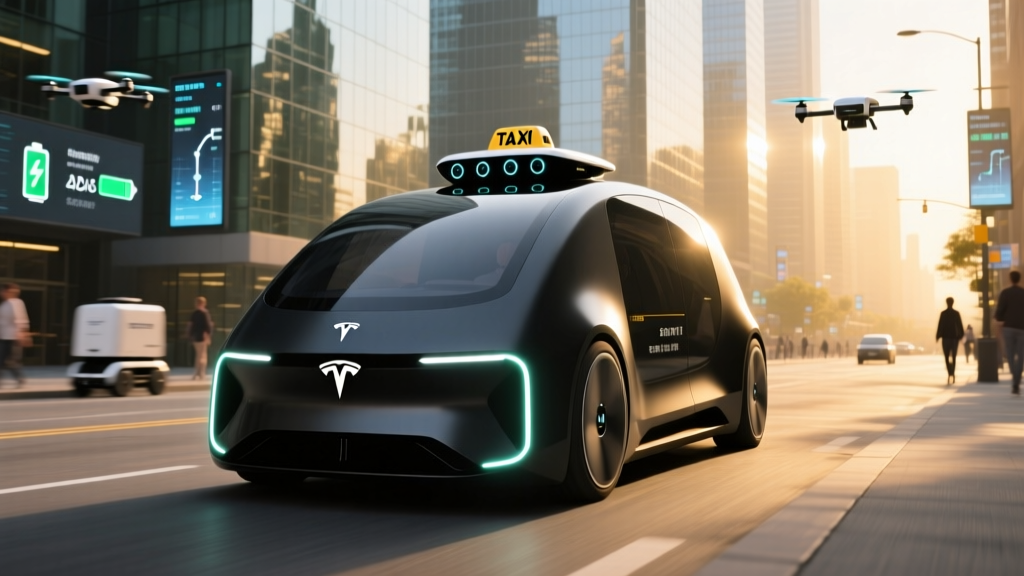
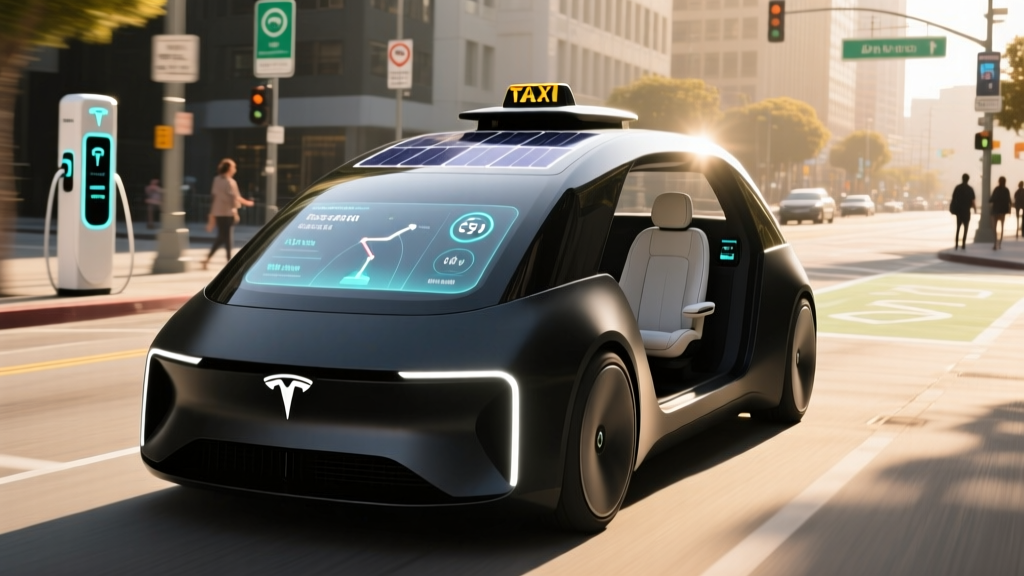
Tesla CEO Elon Musk has stated that the company's goal is to achieve unsupervised Level 4 operation, beginning with a robotaxi service in Austin, Texas, and potentially expanding to other cities including those in the Bay Area. In 2024, Tesla unveiled its purpose-built "Cybercab" robotaxi concept—featuring no steering wheel or pedals—but as of early 2026, that vehicle remains in pre-production, and no commercial driverless service has launched.
Where Can You Actually Use a Robotaxi in the Bay Area?
If you're looking for a live, driverless robotaxi you can hail right now in the Bay Area, the answer is Waymo—not Tesla.
| Service | SAE Level | Bay Area Availability | Operational Area | How to Hail |
|---|---|---|---|---|
| Waymo One | Level 4 | Live (2026) | San Francisco (citywide), parts of South Bay/Mountain View | Waymo app (iOS/Android) |
| Zoox | Level 4 | Limited pilot | Foster City, select SF streets | Invite-only / employee testing |
| Cruise | Level 4 | Suspended | SF operations paused since Oct 2023 incident; limited restart in Phoenix | Not available in Bay Area |
| Tesla FSD (Supervised) | Level 2 | Available everywhere (with driver) | Any road—no geofence | Own/lease a Tesla; activate FSD |
| Tesla Robotaxi (Cybercab) | Level 4 (announced) | Not yet launched | Austin planned first; Bay Area TBD | Not yet available |
Where can I use a Tesla robotaxi service right now? You cannot hail a driverless Tesla anywhere in the Bay Area today. Tesla's FSD (Supervised) software runs on consumer vehicles with a human driver legally responsible for the vehicle at all times. Tesla has announced plans to launch an unsupervised robotaxi service in Austin, TX, potentially in 2025-2026, but Bay Area availability has not been confirmed or dated.
Tesla FSD (Supervised) vs. Waymo: Technology Stack Comparison
The engineering philosophies behind Tesla's approach and Waymo's are fundamentally different, and understanding those differences explains why one is geofenced and the other isn't.
Tesla: Vision-Only (Camera-Based)
- Sensors: 8 cameras (surround-view), no lidar, no radar (removed in HW4 vehicles)
- Compute: Tesla HW4 (AI4) onboard computer with custom neural network processors
- Mapping: Lane-level mapping generated from fleet data; no HD pre-mapped geofence required
- Approach: End-to-end neural network trained on billions of miles of fleet driving data
- Geofencing: None—FSD (Supervised) operates on any road, but with driver supervision required
Waymo: Multi-Sensor Fusion
- Sensors: Custom lidar array (5th-gen), cameras, radar, external audio sensors
- Compute: Custom onboard computing platform
- Mapping: Centimeter-precision HD maps of every operational street, updated continuously
- Approach: Sensor fusion with redundant perception systems and HD map validation
- Geofencing: Strict—operates only in pre-mapped, approved zones with defined operational design domains (ODDs)
Tesla's camera-only approach is lower-cost per vehicle and scales without pre-mapping, but it sacrifices the redundancy that lidar and radar provide in challenging conditions (heavy rain, direct sun glare, low-contrast obstacles). Waymo's multi-sensor stack is more expensive—estimated at $100,000+ per vehicle in sensor hardware alone—but provides the perception redundancy that regulators require for truly driverless operation.
Safety Data: What the Numbers Actually Show
Safety claims in the autonomous vehicle space are frequently misleading without context. Here's what the available data says.
Waymo (Level 4, Driverless)
- Total driverless miles driven: Over 10 million paid driverless trips completed as of late 2024 (Waymo Safety Report)
- Claim rate vs. human baseline: Waymo reported a 73% reduction in injury-causing crash involvement compared to human benchmarks in their operating cities (per their 2024 insurance claims analysis with Swiss Re)
- Notable incidents: Recalls issued for software updates after minor collisions; a pedestrian-dragging incident in SF (Oct 2023) involving a Cruise vehicle (not Waymo) reshaped the regulatory landscape
Tesla FSD (Supervised, Level 2)
- NHTSA Standing General Order data: Tesla vehicles with Autopilot/FSD engaged were involved in the majority of reported Level 2 crashes nationally. However, this reflects Tesla's market dominance in Level 2 systems, not necessarily a higher per-mile rate.
- Tesla's own safety report (Q4 2024): Tesla claims 1 crash per 5.94 million miles with Autopilot engaged vs. 1 per 1.08 million miles without. Critics note this data is self-reported, lacks standardized methodology, and does not isolate FSD from basic Autopilot. (NHTSA AV Safety)
- IIHS assessment: The Insurance Institute for Highway Safety has raised concerns about driver monitoring in Level 2 systems, including Tesla's, noting that camera-based monitoring alone may not ensure adequate driver engagement.
How safe are robotaxis (real data)? Waymo's driverless vehicles have demonstrated a lower injury-crash rate than human drivers in their operating zones, based on insurance claims data. Tesla's FSD (Supervised) has accumulated billions of miles but still requires a human driver, and NHTSA has opened multiple investigations into Autopilot/FSD behavior near emergency vehicles and in low-visibility conditions. Direct comparison is difficult because Level 4 robotaxis operate in geofenced urban zones at lower speeds, while Tesla FSD runs everywhere including highways.
Pricing: Robotaxi vs. Rideshare vs. Tesla Ownership
Understanding the economics requires separating three different propositions: hailing a Waymo robotaxi today, hailing a hypothetical Tesla robotaxi tomorrow, and owning a Tesla with FSD for personal use.
| Option | Typical Cost (5-mile urban trip) | Per-Mile Range | Availability |
|---|---|---|---|
| Waymo One (SF) | $12–$18 | $1.50–$2.50/mi | Live now in SF |
| Uber/Lyft (SF baseline) | $14–$22 | $1.80–$3.00/mi | Live everywhere |
| Tesla Robotaxi (announced) | ~$8–$12 (Tesla's projected target) | ~$1.00–$1.50/mi (estimated) | Not yet launched |
| Tesla Model 3 + FSD (owner) | $0.08–$0.12/mi electricity + FSD cost amortized | Varies by usage | Available now (with driver) |
How much does a robotaxi cost vs. Uber/Lyft? Waymo One pricing in San Francisco is broadly competitive with Uber and Lyft, often 5-15% cheaper on comparable routes. Waymo has used promotional pricing to build ridership. Tesla has projected that its Cybercab robotaxi could eventually offer rides at roughly $0.20/mile operating cost, which would significantly undercut current rideshare pricing—but that vehicle and service don't exist yet, and those projections assume high utilization, low maintenance costs, and no safety driver expense.
For a Tesla Model 3 (2025 base MSRP ~$38,990) with FSD purchased outright ($8,000) or subscribed ($99/month), your personal cost per mile for electricity is roughly $0.04–$0.06 in California (at ~$0.30/kWh residential rates and ~3.5 mi/kWh efficiency). The FSD subscription cost adds $0.10–$0.20/mi depending on how much you drive. This makes personal Tesla ownership with FSD cheaper per mile than any robotaxi—but you're still the driver.
Regulatory Landscape: Who Approves Robotaxi Operations?
Deploying a driverless robotaxi in California requires navigating two state agencies and federal oversight:
- California DMV: Issues testing and deployment permits for autonomous vehicles. Companies must submit disengagement reports, safety plans, and proof of insurance. The DMV suspended Cruise's deployment permit in October 2023 following a pedestrian safety incident.
- California Public Utilities Commission (CPUC): Regulates commercial passenger service. Robotaxi operators need a TCP (Transportation Charter-Party Carrier) permit or equivalent authorization to charge fares. The CPUC approved Waymo's paid service expansion in SF.
- NHTSA (Federal): Oversees vehicle safety standards. Current Federal Motor Vehicle Safety Standards (FMVSS) require steering wheels, mirrors, and pedals—which is why Tesla's Cybercab concept (designed without any of these) would need an exemption or regulatory change before it could be sold or operated on public roads.
For Tesla to launch a driverless robotaxi service in the Bay Area, it would need: (1) a California DMV autonomous vehicle deployment permit, (2) CPUC authorization for commercial passenger service, (3) a vehicle that either meets FMVSS or receives an exemption, and (4) demonstrated safety performance sufficient to satisfy regulators. As of early 2026, Tesla has not received these approvals for driverless operation in California.
Current Limitations of Autonomous Services
Both Tesla's FSD (Supervised) and existing Level 4 robotaxis have well-documented limitations that riders and owners need to understand:
Waymo (Level 4) Limitations
- Geofencing: Cannot operate outside pre-mapped zones; won't pick up or drop off in unmapped areas
- Weather: Service suspensions during heavy fog, torrential rain, or flooding—lidar and camera performance degrade significantly
- Construction zones: May refuse routes or pull over when encountering unanticipated road changes not reflected in HD maps
- Speed: Primarily operates on surface streets under 45 mph; no highway operation
- Edge cases: Has been documented stopping unexpectedly in intersections when encountering unusual scenarios (double-parked trucks, erratic pedestrians)
Tesla FSD (Supervised, Level 2) Limitations
- Driver required: Despite the "Full Self-Driving" name, the driver must remain fully engaged—this is not optional or aspirational, it's the legal and technical reality
- Phantom braking: NHTSA has investigated reports of unexpected deceleration on highways
- Construction & temporary signage: May misread or ignore temporary lane markings and construction zone configurations
- Weather degradation: Camera-only system is more susceptible to sun glare, heavy rain, and low-light conditions than multi-sensor systems
- No regulatory approval for unsupervised use: Tesla cannot legally sell or operate FSD as a driverless system under current U.S. regulations
What Bay Area EV Owners Should Actually Do
If you live in the Bay Area and are weighing your options, here's a practical decision framework:
Choose Waymo One if: You need a driverless ride within San Francisco today and want a proven, regulated Level 4 service with a documented safety record.
Choose a Tesla with FSD (Supervised) if: You want advanced driver assistance for your personal vehicle, accept that you must remain the attentive driver, and value FSD's ability to work on any road without geofencing.
Wait on a Tesla robotaxi if: You're hoping for an affordable, driverless Tesla ride-hailing service in the Bay Area. No launch date, regulatory approval, or service boundary has been confirmed for California as of early 2026.
The Tesla Cybercab remains an announced product with a projected production start no earlier than 2026 in Austin. Even if production begins on schedule, California deployment would require separate regulatory approvals that typically take 12-24 months after an application is filed. A realistic timeline for a Tesla robotaxi in the Bay Area, if it happens at all, is 2027 at the earliest.
Frequently Asked Questions
Is Tesla FSD truly self-driving or is it driver-assist?
Tesla's Full Self-Driving (Supervised) is a Level 2 driver-assistance system. The driver must remain fully attentive, keep hands available for steering input, and be prepared to take over immediately. It is not self-driving. Only Level 4 systems like Waymo, which operate without any human in the driver's seat, qualify as truly driverless within their operational zones.
Can I hail a Tesla robotaxi in San Francisco right now?
No. Tesla does not operate a commercial robotaxi service anywhere as of early 2026. The only driverless ride-hailing service available in San Francisco is Waymo One. Tesla's announced Cybercab robotaxi is planned for Austin, TX first, with no confirmed Bay Area timeline.
How much would a Tesla robotaxi ride cost compared to Uber?
Tesla has projected operating costs as low as $0.20/mile for the Cybercab, which could translate to rides 40-60% cheaper than current Uber/Lyft pricing. However, these are pre-launch projections. For reference, Waymo One currently charges roughly $1.50–$2.50/mile in San Francisco, which is comparable to or slightly below Uber/Lyft rates.
Has Tesla applied for a California robotaxi permit?
As of early 2026, Tesla has not received a California DMV autonomous vehicle deployment permit for driverless commercial operation. Tesla holds a testing permit, but deployment for paid passenger service requires a separate application, safety demonstration, and CPUC authorization.
What's the safest autonomous vehicle option in the Bay Area today?
Waymo One is the only commercially available Level 4 driverless service in San Francisco, with published safety data showing lower injury-crash rates than human drivers in their operating zones. Tesla FSD (Supervised) can be used on any Bay Area road, but it requires an attentive human driver at all times. Safety comparisons between Level 2 and Level 4 systems are difficult because they operate under fundamentally different conditions and regulatory frameworks.
Sources: Waymo Safety Reports, NHTSA Autonomous Vehicle Safety, IIHS Advanced Driver Assistance, California DMV Autonomous Vehicle Program. Tax credit and pricing information reflects 2025-2026 model year data and current IRS §30D rules. Verify all regulatory and pricing details with official sources before making purchasing decisions.