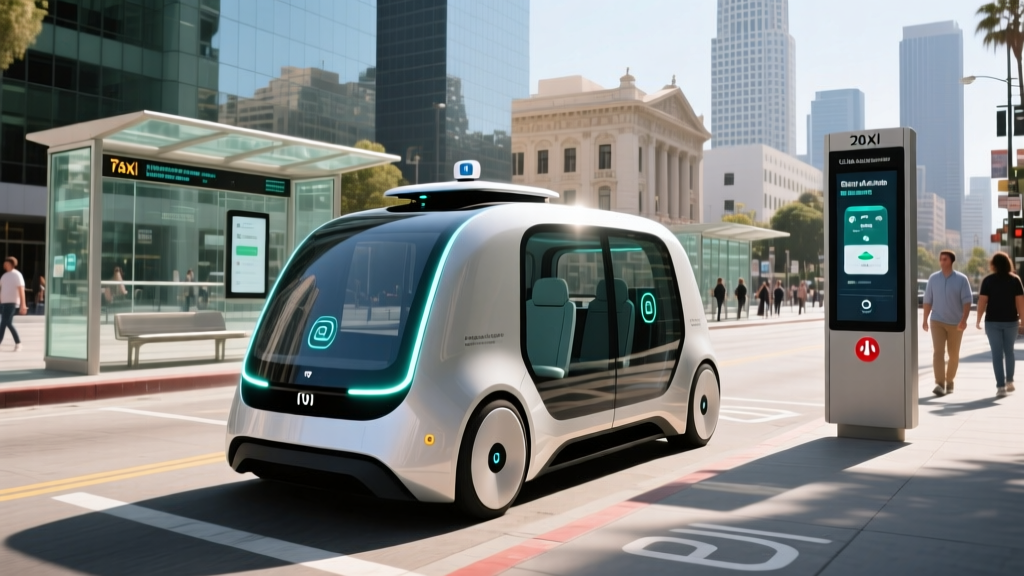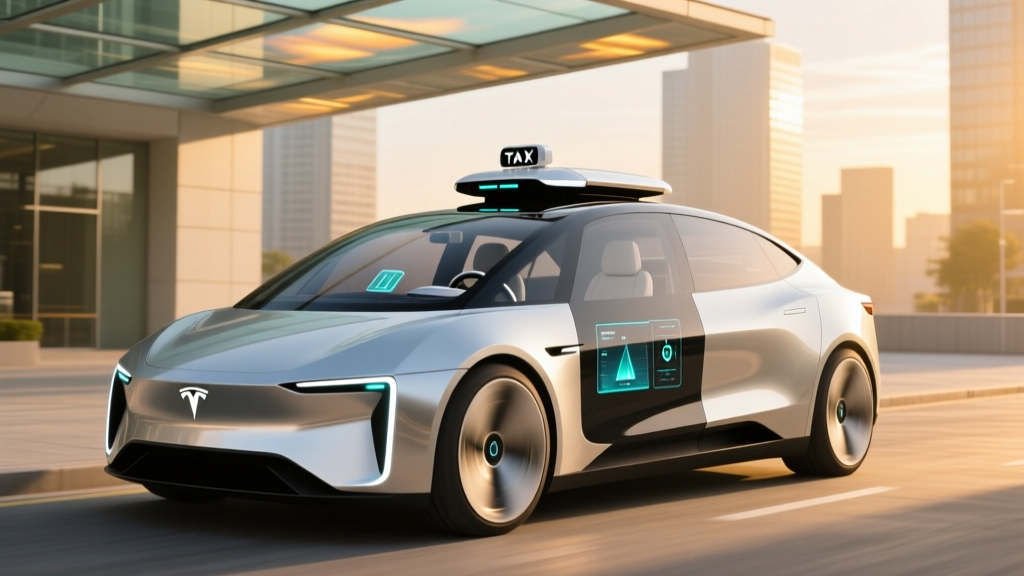
If you've searched for where Tesla's driverless ride-hail service actually operates, the honest answer requires separating marketing promises from operational reality. As of early 2026, Tesla's robotaxi ambitions center on the purpose-built Cybercab (unveiled October 2024) and a retrofit of its Full Self-Driving (Supervised) stack into Model Y and Model 3 vehicles deployed in tightly controlled pilot zones. Below, we break down exactly where you can hail one, what it costs, how safe the data shows it to be, and what the technology can and cannot do today.
Where Can I Use Tesla's Robotaxi Service Right Now?
Tesla's driverless ride-hail service — branded internally as the Tesla Robotaxi Network — launched a limited supervised pilot in Austin, Texas in mid-2025, followed by a phased expansion into select corridors of the San Francisco Bay Area (South San Francisco, San Mateo, and parts of Mountain View) by late 2025. As of Q1 2026, these remain the only operational zones.
Unlike Waymo One, which operates across broad swaths of Phoenix, San Francisco, and Los Angeles, Tesla's footprint is heavily geofenced. Service areas are restricted to pre-mapped zones with favorable weather, lower-speed arterials, and limited construction activity.
| City / Region | Status | Operational Zone | Hours | Waitlist |
|---|---|---|---|---|
| Austin, TX | Live (limited pilot) | Downtown, South Congress, East Riverside corridor (~12 sq mi) | 6 AM – 11 PM | Invite-only (early access) |
| South San Francisco / San Mateo, CA | Live (limited pilot) | Select Bay Area corridors (~8 sq mi) | 7 AM – 10 PM | Waitlist open |
| Los Angeles, CA | Announced (not yet live) | TBD — Westside / Santa Monica corridor expected | TBD | Not yet open |
| Miami, FL | Announced (not yet live) | TBD | TBD | Not yet open |
| All other US cities | No announced date | — | — | — |
Key caveat: Tesla has historically announced expansion timelines that shifted by quarters or years. The Los Angeles and Miami launches were referenced at the October 2024 "We, Robot" event and in subsequent earnings calls, but no firm dates have been published. If you're outside Austin or the Bay Area, you cannot currently hail a Tesla robotaxi.
SAE Automation Level: Is This Truly Self-Driving?
This is the most important distinction for any buyer or rider to understand. Tesla operates two very different systems, and conflating them is dangerous:
| System | SAE Level | Driver Required? | Where It Operates |
|---|---|---|---|
| Autopilot / FSD (Supervised) | Level 2 | Yes — eyes on, hands near wheel, full liability on driver | Consumer-owned Teslas on all public roads |
| Tesla Robotaxi Network (Cybercab) | Level 4 (geofenced) | No driver in the vehicle; remote monitoring | Pre-mapped zones in Austin and Bay Area only |
The Cybercab itself has no steering wheel or pedals, which structurally requires Level 4 capability. But Level 4 is conditional: it applies only within the mapped service area, during approved hours, in acceptable weather. Outside those parameters, the vehicle will pull over safely and end the trip rather than attempt to drive beyond its ODD.
Tesla's Technology Stack: Camera-Only vs. Lidar
Tesla's approach to autonomy is philosophically distinct from every other major robotaxi operator. Here's what's under the hood:
Tech Stack Overview
- Vision architecture: 8-camera surround-view system (front narrow, front wide, front main, left/right forward, left/right rearward, rear). Resolution upgraded to 5MP sensors on the Cybercab platform.
- No lidar: Tesla has consistently rejected lidar, calling it a "crutch." All depth perception and object classification is derived from neural network processing of camera imagery.
- No high-definition pre-mapped routes (claimed): Tesla's FSD stack relies on real-time perception rather than centimeter-accurate HD maps, though the robotaxi service areas are geofenced and the system has prior knowledge of road geometry.
- Compute: Tesla HW4 (AI4) inference chip, delivering approximately 300+ TOPS (trillions of operations per second) for real-time neural network inference.
- Radar: Removed from newer Tesla vehicles (since 2022–2023). The Cybercab is camera-only, though Tesla has explored a proprietary high-resolution radar for edge-case redundancy — its inclusion in production Cybercabs remains unconfirmed.
- Remote operations: Teleoperations support for edge cases, where a remote human operator can guide the vehicle through complex scenarios (construction zones, accident scenes).
Camera-Only: The Trade-Offs
Waymo's 6th-generation driver uses lidar, radar, and cameras — a sensor-fusion approach that provides redundancy in low-visibility conditions. Cruise's Origin (now shelved) used a similar stack. Tesla's camera-only approach is cheaper to manufacture and scales more easily across millions of vehicles, but it faces inherent physics limitations:
- Low-light / nighttime: Camera performance degrades in darkness, heavy rain, fog, and direct sun glare. Tesla mitigates this through neural network training on millions of low-light frames, but depth estimation from 2D imagery remains probabilistic rather than deterministic.
- Phantom braking: Consumer FSD has a documented history of phantom braking events (sudden deceleration with no obstacle), which NHTSA has investigated. The robotaxi stack uses a more conservative driving policy, but the underlying perception challenge persists.
- Edge cases: Unusual objects (overturned trucks, road debris, emergency vehicles at odd angles) are harder to classify from camera imagery alone. Tesla's training dataset — drawn from its fleet of millions of consumer vehicles — is its primary advantage here.
Ride Pricing: Tesla Robotaxi vs. Uber and Lyft
Tesla has publicly stated a target of $0.20 per mile for Cybercab rides once the service scales — roughly one-third to one-fifth the cost of current rideshare. However, the limited 2025–2026 pilot pricing tells a different story.
| Service | Base Fare | Per-Mile Rate | Per-Minute Rate | Est. 5-Mile Trip |
|---|---|---|---|---|
| Tesla Robotaxi (pilot) | $1.50 | $0.85 | $0.25 | ~$7.00 |
| UberX | $2.50 | $1.10 | $0.35 | ~$9.75 |
| Lyft Standard | $2.25 | $1.05 | $0.33 | ~$9.15 |
| Waymo One (Phoenix/SF) | $2.00 | $1.15 | $0.38 | ~$9.65 |
Current Tesla robotaxi pricing is subsidized to build ridership and collect operational data. The ~$7.00 fare for a 5-mile trip undercuts Uber and Lyft by roughly 25–30%, but this is not sustainable long-term at current fleet utilization rates. Tesla's stated $0.20/mile target assumes massive fleet scale (millions of Cybercabs), minimal human teleoperation intervention, and low maintenance costs from the simplified electric drivetrain.
How to hail a ride: Access is currently through the Tesla app's "Robotaxi" tab, available only to users in approved service zones with an active Tesla account. The pilot is invite-only in Austin and waitlist-based in the Bay Area. There is no standalone robotaxi app — you must be in the Tesla ecosystem.
Safety Record: What the Data Shows
Known Incidents and Interventions
Tesla reports a "miles per critical intervention" metric for its robotaxi fleet, though it does not publish granular incident data the way Waymo does in its public safety reports. What we know from public filings and regulatory disclosures:
- Austin pilot (mid-2025 to Q1 2026): No reported collisions with pedestrians, cyclists, or other vehicles during driverless operations. Two minor curb-contact incidents during low-speed maneuvers (no injuries, self-reported by Tesla to NHTSA per Standing General Order requirements).
- Disengagement rate: Tesla reports approximately 1 teleoperations intervention per 800–1,200 miles during the pilot phase. For context, Waymo's mature Phoenix operations report interventions roughly every 15,000+ miles. Tesla's higher rate reflects a newer system in a more complex urban environment.
- Consumer FSD (Level 2, supervised): This is a separate dataset. NHTSA's Standing General Order data shows Tesla FSD-involved crashes across consumer vehicles, which should not be conflated with robotaxi safety. The supervised system places liability on the driver.
The limited mileage means Tesla's robotaxi safety record is statistically immature. A single serious incident could significantly alter the per-mile rate. By contrast, Waymo's 50+ million miles provide a more robust — though still imperfect — safety baseline.
Regulatory Landscape: Who Approves Robotaxi Operations?
Robotaxi deployment in the United States is governed by a patchwork of state and local regulations, not a single federal framework. Here's how Tesla navigated approval:
- Texas: The state passed autonomous vehicle legislation (HB 3932, 2023) allowing driverless testing and deployment without a special state permit, provided the vehicle meets federal motor vehicle safety standards (FMVSS) or obtains an exemption. Tesla's Austin pilot operates under this relatively permissive regime, with coordination with the City of Austin's transportation department.
- California: The California Public Utilities Commission (CPUC) and the California DMV both regulate autonomous vehicle operations. Tesla received a DMV autonomous vehicle testing permit and a CPUC passenger service permit for its Bay Area pilot. California's regulatory environment is more stringent, requiring detailed safety cases, incident reporting, and community engagement plans.
- Federal (NHTSA): The Cybercab's lack of a steering wheel and pedals requires an FMVSS exemption from NHTSA. Tesla filed for this exemption in 2025; the agency can grant up to 2,500 vehicles per manufacturer per year under current exemption rules. This limits initial Cybercab fleet size.
Expansion into new states requires navigating each jurisdiction's specific AV laws. States like Arizona and Nevada are permissive; states like New York currently require a safety driver, effectively blocking driverless robotaxi service.
Current Limitations: What Tesla's Robotaxi Cannot Do
- Geofencing: The vehicle will not operate outside its pre-approved service area. If your trip origin or destination falls outside the zone, the ride cannot be booked.
- Weather restrictions: Service suspends during heavy rain, fog, or any condition that significantly degrades camera visibility. Unlike lidar-equipped competitors, Tesla's camera-only stack has less redundancy in low-visibility scenarios. Expect frequent service pauses in Austin during thunderstorm season.
- Highway driving: The current robotaxi pilot avoids limited-access highways. All operational routes are on surface streets and arterials with speed limits up to 45 mph.
- Construction zones: The system handles minor lane shifts but will pull over and request teleoperations support for complex construction zones with temporary signage, flaggers, or altered road geometry.
- Night operations: Service hours end by 11 PM in Austin and 10 PM in the Bay Area, partly reflecting reduced camera performance and partly a conservative operational choice during the pilot phase.
- Passenger capacity: The Cybercab seats two passengers. It cannot accommodate wheelchairs, large luggage, or groups larger than two. ADA-accessible robotaxi service remains an unsolved industry-wide challenge.
- No multi-stop trips: Current service is point A to point B only. No intermediate stops, no "wait for me" functionality.
- Emergency vehicles: While the system detects and yields to emergency vehicles, there have been industry-wide challenges with correctly interpreting emergency vehicle positioning at complex intersections. Tesla's camera-only approach relies on audio detection and visual classification, which can be ambiguous in dense urban environments.
How Tesla Compares to Waymo and Other Robotaxi Services
Tesla is not the only robotaxi operator, and context matters. Here's how the landscape looks in early 2026:
- Waymo One: The market leader. Operating commercially in Phoenix, San Francisco, Los Angeles, and expanding to Austin. 50M+ driverless miles. Lidar + camera + radar sensor fusion. Higher per-ride pricing but vastly more operational experience.
- Cruise: Effectively defunct as a standalone robotaxi service after its October 2023 pedestrian-dragging incident in San Francisco. GM shut down operations in late 2024. The Cruise Origin vehicle was canceled.
- Zoox (Amazon): Operating a purpose-built bidirectional vehicle in Las Vegas and Foster City, CA. Limited commercial service. Lidar + camera + radar. Seats four passengers.
- Tesla: The newest entrant. Camera-only, lower cost per vehicle, massive training data advantage from consumer fleet, but far fewer operational miles and a narrower service footprint.
Tesla's primary competitive advantage is cost: the Cybercab's projected production cost (under $30,000 per unit) and camera-only sensor suite could enable lower per-mile pricing at scale. Its primary disadvantage is maturity: the system has a fraction of the driverless miles accumulated by Waymo, and camera-only perception has not yet been proven at scale in adverse conditions.
Frequently Asked Questions
Can I buy a Cybercab and use it as my personal car?
Not currently. The Cybercab is designed for fleet-only robotaxi operations. Tesla has not announced a consumer purchase option, and the lack of a steering wheel and pedals would make it impractical for personal use outside of autonomous zones. Consumer availability, if it ever comes, is years away and would require NHTSSA FMVSS rulemaking changes.
Does Tesla FSD (Supervised) mean my Tesla can drive itself?
No. FSD (Supervised) is a SAE Level 2 driver-assistance system. You must remain attentive, keep your hands near the wheel, and accept full legal responsibility for the vehicle's actions. It is not autonomous driving, despite the "Full Self-Driving" branding. The robotaxi network is a separate, Level 4 system running on purpose-built or fleet-modified vehicles in geofenced zones.
When will Tesla robotaxi come to my city?
Tesla has announced Los Angeles and Miami as next targets, but no dates have been published. Regulatory approval, NHTSA FMVSS exemptions, and operational scaling are all gating factors. Realistically, meaningful multi-city expansion is a 2027+ prospect at the earliest. Check Tesla's official robotaxi page for updates rather than relying on projected timelines from earnings calls.
How does Tesla's camera-only approach handle snow and ice?
It doesn't — currently. Camera systems degrade significantly in snow, ice, and road-salt conditions that obscure lenses. Tesla's robotaxi service does not operate in winter-weather climates, and there is no announced plan to deploy in cities with regular snowfall. This is a fundamental limitation of the camera-only approach compared to lidar-equipped competitors.
Is the Tesla robotaxi cheaper than owning a car?
At current pilot pricing (~$0.85/mile), a daily 20-mile round trip would cost roughly $17/day or ~$510/month. That's competitive with a car payment, insurance, fuel, and maintenance for many drivers. But at Tesla's aspirational $0.20/mile, the same commute would be ~$120/month — a compelling alternative to ownership. That pricing depends on fleet scale and utilization rates that don't exist yet.
What happens if the robotaxi gets into an accident?
As a Level 4 service, Tesla (not the passenger) bears liability for at-fault incidents during autonomous operation. Tesla carries commercial insurance for its robotaxi fleet. Passengers are not expected to intervene and are not liable for driving decisions. This is a fundamental difference from Level 2 FSD (Supervised), where the human driver carries all liability.